
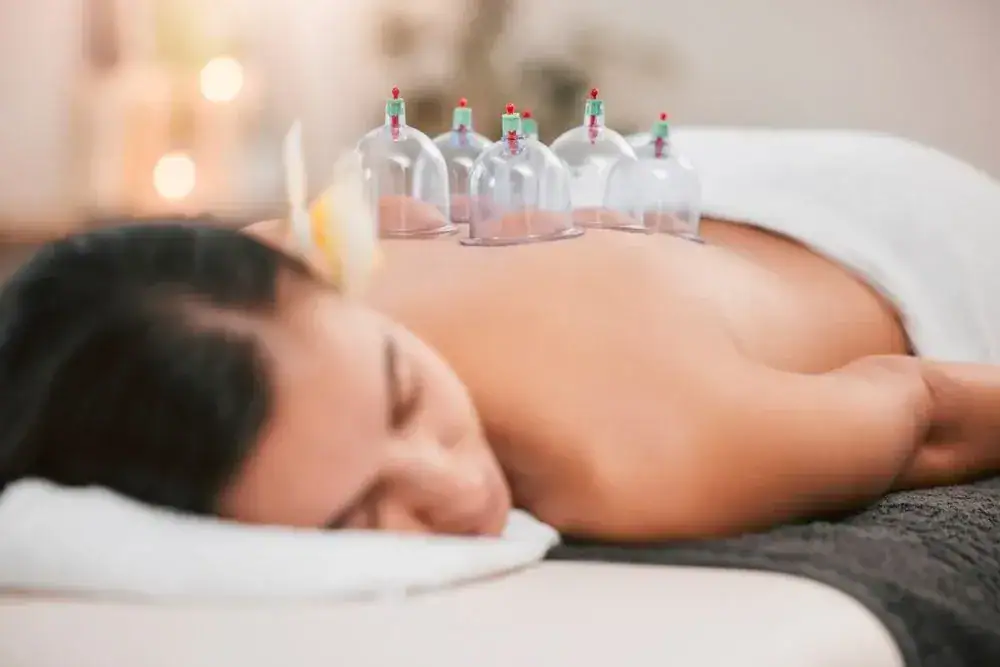

You wake up without that immediate reminder that something’s wrong. Your neck turns without resistance. Your back doesn’t seize up when you reach for something on a high shelf.
That’s what happens when muscle tension releases and blood flow improves to areas that have been tight for months or years. Cupping therapy creates space in tissue that’s been compressed, allowing your body to move the way it’s supposed to.
You’re not just masking symptoms. The suction from dry cupping lifts fascia away from muscle, breaks up adhesions, and gives your nervous system a chance to reset. Most people notice reduced stiffness after the first session. Some feel looser immediately. Others need a few treatments before the change sticks.
Either way, you’re working with a method that’s been around for centuries because it does something pharmaceuticals can’t: it changes the tissue itself.
We’ve been treating patients across Long Island for years, and we understand what brings people through the door in Baiting Hollow, NY. You’re active. You work hard. You’re not interested in being sidelined by pain that keeps coming back.
Our team includes physical therapists trained in cupping therapy and myofascial decompression techniques. We don’t just apply cups and set a timer. We assess your movement, identify restrictions, and use cupping as part of a broader plan that might also include manual therapy, corrective exercise, or other treatments that make sense for your situation.
We manage multiple locations, and every one operates with the same focus: clear communication, personalized care, and no runaround when it comes to scheduling or insurance questions. You’ll work with professionals who’ve seen your exact issue before and know how to address it.
First, we talk. You tell us where it hurts, how long it’s been going on, and what makes it worse. We assess your range of motion and check for areas of tightness or restriction.
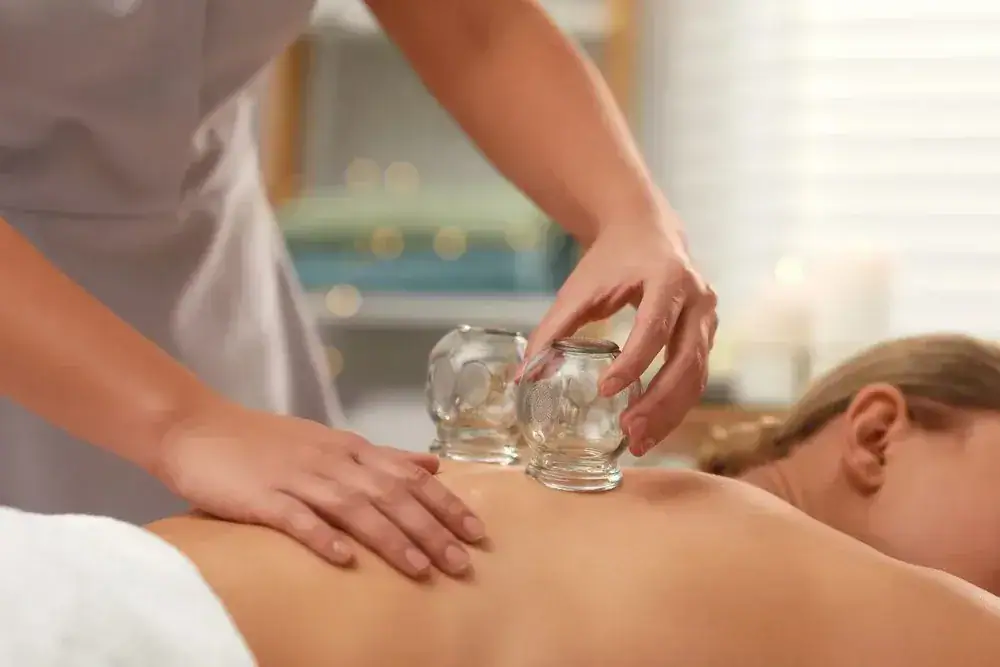
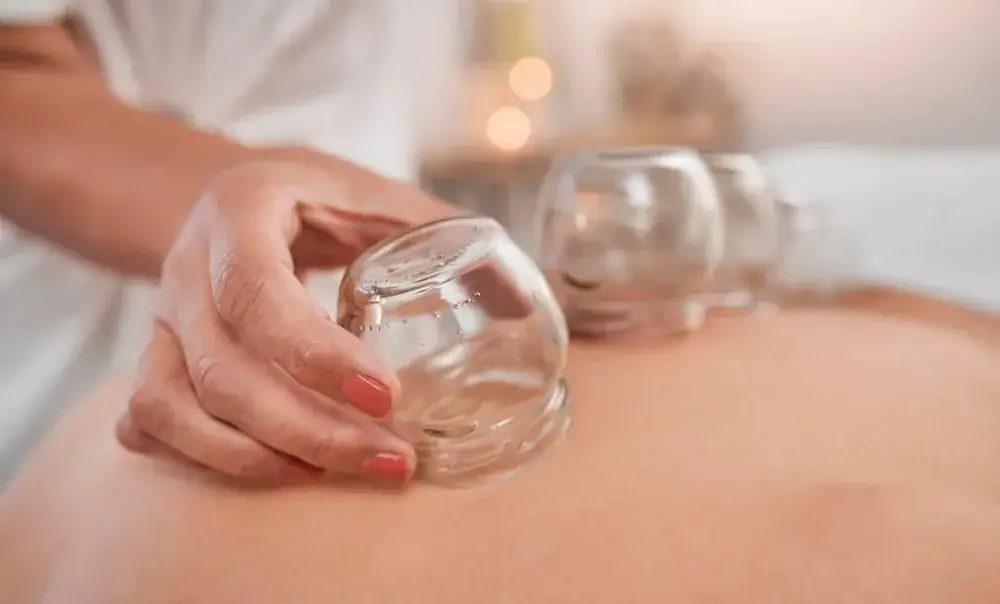
Then we apply the cups. Dry cupping uses suction to lift your skin and the tissue underneath. It’s not painful—most people say it feels like a deep pressure or a strong massage. We place cups over problem areas and leave them for several minutes, or we might move them across your skin to release fascia along a larger area.
While the cups are working, blood flow increases to the area. Tight muscles start to release. Fascia that’s been stuck begins to glide again. You might see some circular marks afterward—that’s normal and they fade within a few days.
After we remove the cups, we’ll often follow up with stretching or movement work to reinforce the changes. You’ll leave with a clear understanding of what we did, why we did it, and what to expect as your body responds.
Ready to get started?
You’re getting a full evaluation, not just a quick treatment. We look at your posture, your movement patterns, and the specific areas causing problems. Cupping is one tool, but it’s part of a complete approach.
In Baiting Hollow, NY and the surrounding North Fork area, we see a lot of repetitive strain injuries, chronic neck and shoulder tension, and lower back pain from physical work or long hours sitting. Cupping works well for all of these because it targets the soft tissue directly.
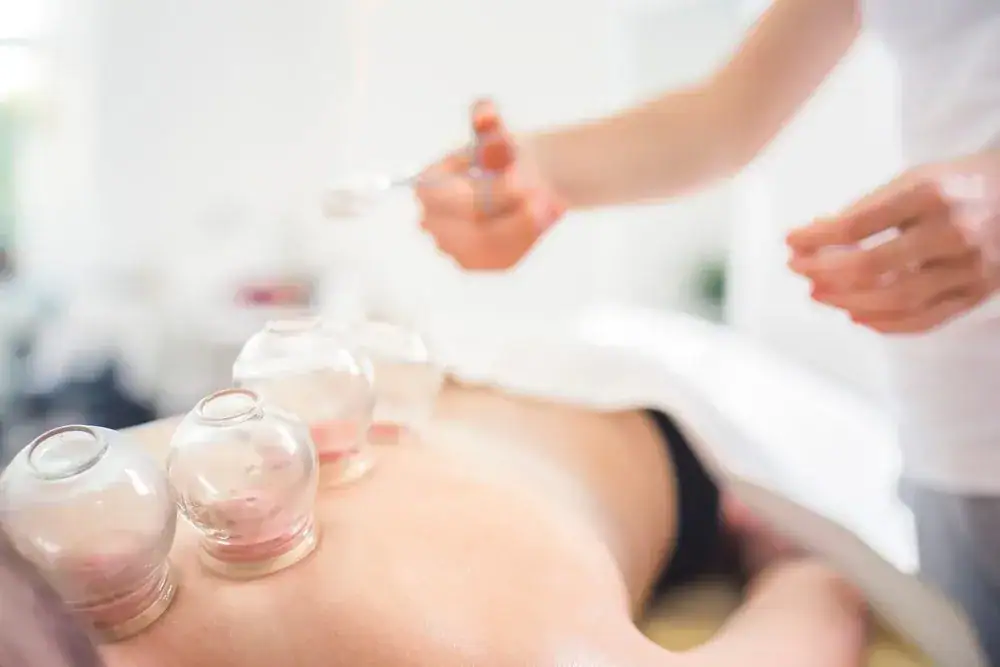
We use dry cupping in most cases because it’s effective and low-risk. The cups create negative pressure that pulls tissue up and away from underlying structures. This mechanical lift helps break up scar tissue, reduces muscle tightness, and improves circulation to areas that aren’t getting enough blood flow.
You’ll also get guidance on what to do between sessions. Cupping works faster when it’s combined with the right movement and self-care. We’ll show you what that looks like for your specific condition so you’re not dependent on coming in three times a week forever.
It works, and the research backs it up. Studies show that cupping therapy provides moderate-quality evidence for relief of chronic pain, knee osteoarthritis, low back pain, and neck pain. That means it’s not just anecdotal—it’s measurable.
The effects can be immediate for some people, especially if your pain is tied to muscle tightness or fascial restriction. A single session can reduce pain and improve range of motion right away. But if you’re dealing with something that’s been building for months or years, you’ll likely need several sessions for lasting change.
The key is that cupping doesn’t just cover up the problem. It changes the tissue. When fascia is stuck or muscles are chronically tight, blood flow decreases and waste products build up. Cupping reverses that by increasing circulation and creating space in compressed tissue. That’s why the relief tends to build over time rather than disappear as soon as you walk out the door.
Cupping works especially well for musculoskeletal pain—anything involving muscles, fascia, or joints. That includes back pain, neck pain, shoulder pain, and knee pain. If your issue involves tight muscles, restricted movement, or areas that feel stiff and achy, cupping is worth trying.
It’s also effective for conditions like arthritis and rheumatoid arthritis, where inflammation and stiffness limit your mobility. The increased blood flow and tissue decompression can reduce pain and make movement easier.
Athletes use cupping for recovery and injury prevention because it helps reduce muscle soreness and speeds up healing after intense training. If you’ve got a repetitive strain injury or you’re recovering from something like a pulled muscle or tendonitis, cupping can help break up adhesions and restore normal tissue function. We see a lot of people in Baiting Hollow, NY who work physically demanding jobs or stay active outdoors, and cupping fits well into a recovery plan for those lifestyles.
Cupping is a low-risk therapy when it’s done by a trained professional. The most common side effect is temporary circular marks where the cups were placed. These aren’t bruises in the traditional sense—they’re caused by blood being drawn to the surface—and they typically fade within a few days to a week.
Some people feel a bit sore afterward, similar to how you might feel after a deep tissue massage. That’s normal and usually goes away within 24 hours. Drinking water and moving gently after your session helps.
Dry cupping, which is what we use at Medcare Therapy Services, is safer than wet cupping because there’s no breaking of the skin and no exposure to blood. That makes it appropriate for almost everyone. We’ll talk through your medical history before starting to make sure cupping is a good fit for you, but serious complications are rare. If you have certain skin conditions, are on blood thinners, or are pregnant, we’ll adjust the approach or recommend a different treatment.
Massage pushes tissue down. Cupping pulls it up. That difference matters because some restrictions don’t respond well to compression. When fascia is stuck to underlying muscle or scar tissue has formed, the lifting action of cupping can release it in ways that manual pressure can’t.
Cupping also creates a strong increase in blood flow to a specific area, which helps with healing and reduces inflammation. The suction stimulates your nervous system differently than massage does, often triggering a release of endorphins that reduce pain perception.
That said, cupping isn’t a replacement for physical therapy—it’s a tool we use as part of physical therapy. You might get cupping during a session, and then we’ll follow it up with stretching, strengthening exercises, or manual therapy. The combination tends to work better than any single approach on its own. If you come to us in Baiting Hollow, NY, you’re getting a full physical therapy evaluation and a treatment plan that uses cupping where it makes sense, not as a standalone gimmick.
It depends on what you’re dealing with and how long you’ve had it. Acute issues—something that just flared up in the last few weeks—often respond quickly. You might feel significantly better after one or two sessions.
Chronic pain is different. If you’ve been living with tightness or discomfort for months or years, your body needs time to adapt to the changes cupping creates. Most people with chronic conditions benefit from a series of sessions over several weeks. We’ll reassess as we go and adjust the plan based on how you’re responding.
Some people use cupping as ongoing maintenance, coming in every few weeks to keep tissue healthy and prevent problems from coming back. Others do a focused series of treatments and then they’re done. We’ll be honest with you about what we’re seeing and what makes sense for your situation. The goal isn’t to keep you coming in forever—it’s to get you feeling better and give you the tools to stay that way.
In most cases, yes. Cupping therapy is typically billed as part of your physical therapy treatment, and we accept most major insurance plans. Because cupping is performed by licensed physical therapists as a component of your overall care plan, it’s usually covered the same way other physical therapy services are.
That said, every insurance plan is different. Some have limits on the number of physical therapy visits per year, and some require a copay or have a deductible you’ll need to meet first. We’ll verify your benefits before you start treatment so you know what to expect.
If you have questions about your specific plan or what your out-of-pocket costs will be, call our office. We handle insurance questions every day, and we’ll walk you through it. Our focus is on making sure you can access the care you need without surprise bills or confusion about coverage. That’s part of how we operate across all our locations, including here in Baiting Hollow, NY.
Other Services we provide in Baiting Hollow