
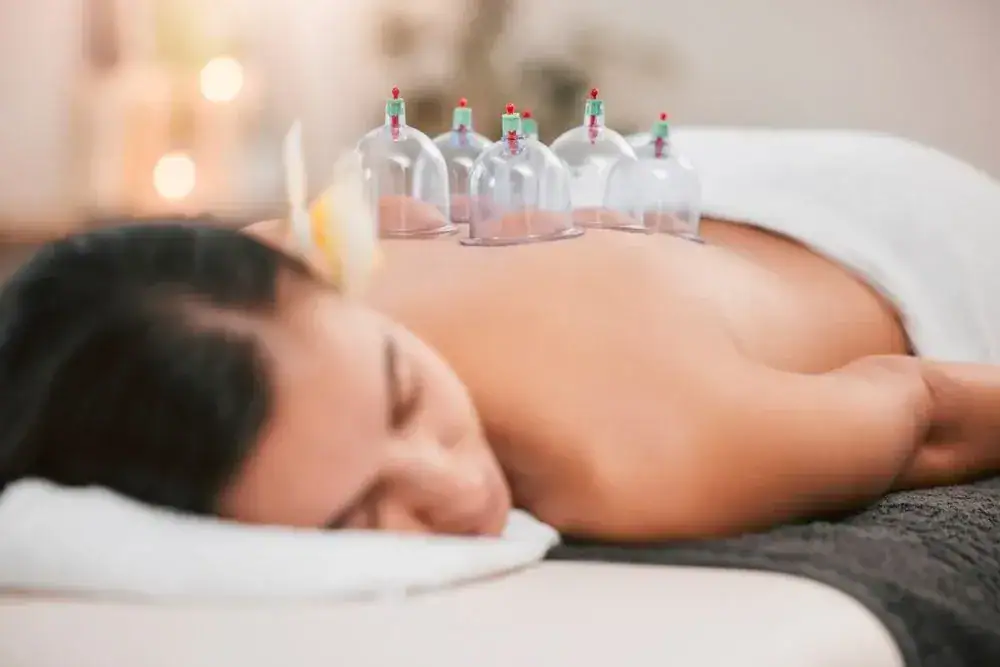

You’re not looking for temporary relief. You want to sleep through the night without waking up stiff. You want to pick up your kids without bracing yourself. You want to get back to the gym, the garden, or just walking around town without that constant ache reminding you something’s wrong.
Cupping therapy works by creating suction on your skin that pulls blood to the area, reduces inflammation, and releases tight fascia that’s been restricting your movement. It’s not magic. It’s increased circulation, improved tissue mobility, and your body doing what it’s designed to do when given the right conditions.
Most people notice less pain after the first session. Some feel looser immediately. Others need a few treatments before the deeper patterns start to shift. Either way, you’re not masking symptoms. You’re addressing what’s causing them.
We’ve been serving Amityville and the surrounding Long Island communities for years. We’re not a wellness spa offering cupping as an add-on. We’re licensed physical therapists who use cupping as part of a complete treatment plan.
Our team knows how to assess your pain, figure out what’s actually going on, and build a plan that makes sense for your body and your schedule. We don’t oversell. We don’t push packages you don’t need. We treat you like someone who deserves straight answers and real results.
Amityville residents come to us because we’re local, we’re experienced, and we don’t waste your time. You’ll work with professionals who understand both traditional physical therapy and complementary techniques like dry cupping.
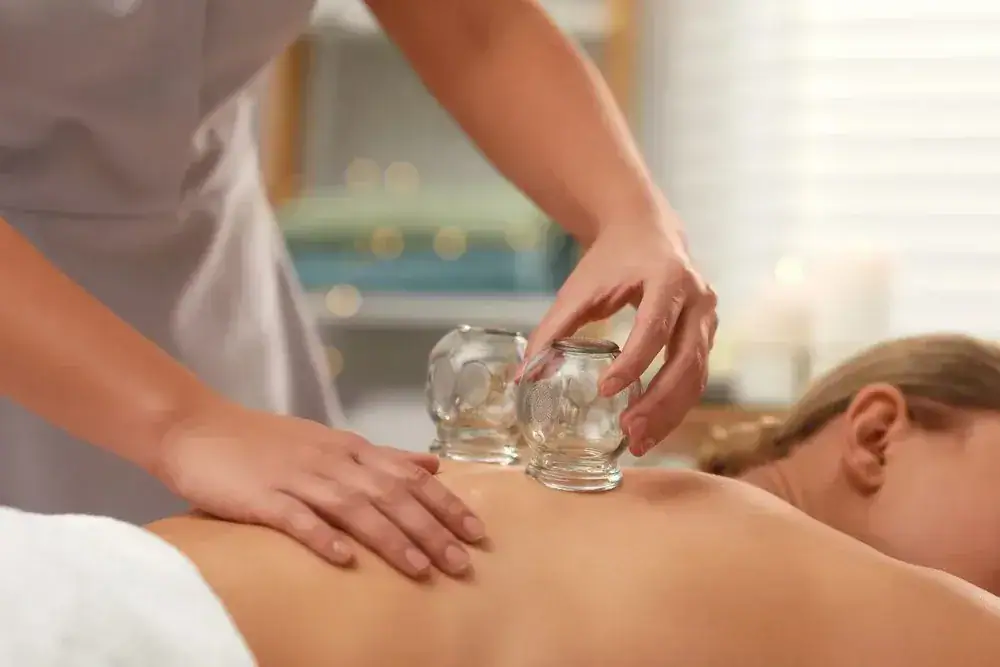
Your first visit starts with an evaluation. We ask about your pain, your history, and what you’ve already tried. We assess your movement, identify restrictions, and figure out where cupping fits into your care.
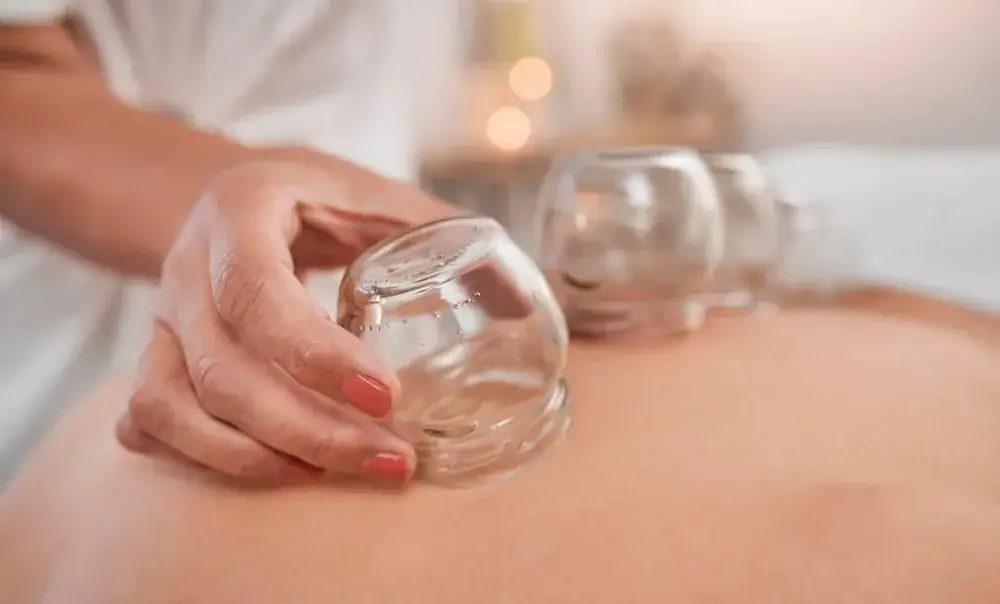
During the session, we place cups on specific areas of your body. The suction pulls your skin up slightly, which increases blood flow and releases tight tissue. Some people feel immediate relief. Others feel sore for a day or two before things improve. Both are normal.
Sessions typically last 30 to 45 minutes. You might see circular marks on your skin afterward—they’re not bruises, they’re a sign of increased circulation, and they fade within a few days. Most treatment plans involve multiple sessions over a few weeks, depending on your condition and how your body responds.
We combine cupping with other physical therapy techniques when it makes sense. Stretching, strengthening, manual therapy—whatever gets you better faster. You’re not locked into one approach. We adjust based on what’s working.
Ready to get started?
Cupping works well for chronic back pain, neck pain, shoulder tightness, and knee discomfort. If you’ve been dealing with muscle tension that won’t quit, limited range of motion, or pain that flares up after activity, this might help.
Athletes use it for recovery. People with desk jobs use it for postural pain. Others come in because they’re tired of taking ibuprofen every day and want something that actually addresses the problem. In Amityville, we see a lot of residents dealing with lower back pain from long commutes or repetitive strain from physical jobs. Cupping helps break up the tension that builds from those daily patterns.
It’s not a cure-all. It won’t fix a torn ligament or reverse arthritis. But for soft tissue pain, muscle tightness, and fascial restrictions, it’s one of the most effective non-invasive options available. And because it’s administered by licensed physical therapists, you’re getting clinical-grade care, not a trendy treatment from someone who took a weekend course.
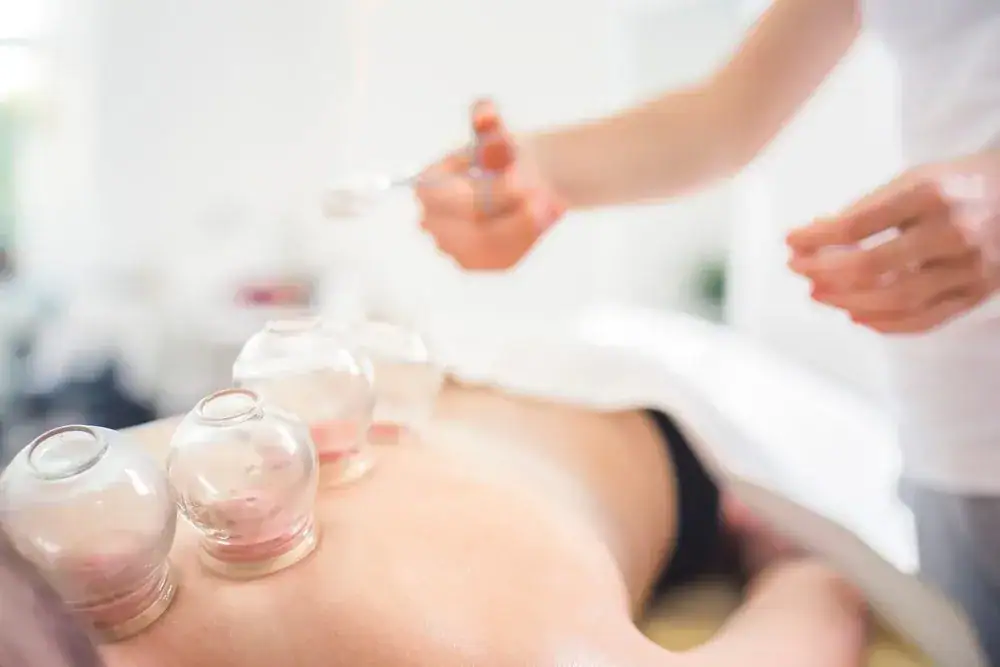
Yes, but it depends on what’s causing your pain. Research shows cupping is effective for chronic back pain, neck pain, and knee osteoarthritis. It works by improving blood flow, reducing inflammation, and releasing tight fascia that restricts movement.
If your pain is from muscle tension, overuse, or poor posture, cupping can make a real difference. If it’s from a structural issue like a herniated disc or nerve compression, cupping might help manage symptoms but won’t fix the underlying problem. That’s why we evaluate you first.
Most people feel some improvement after one or two sessions. Chronic pain usually requires a series of treatments combined with other physical therapy techniques. We don’t promise miracles, but we do see consistent results when cupping is used correctly.
Dry cupping is very safe when performed by a licensed professional. The most common side effect is circular marks on your skin that look like bruises but aren’t. They’re caused by increased blood flow to the area and typically fade within three to seven days.
Some people feel sore after their first session, similar to how you might feel after a deep tissue massage. That soreness usually goes away within 24 to 48 hours. Serious side effects are rare and usually only happen if cupping is done incorrectly or left on too long.
We adjust the suction level based on your comfort and skin sensitivity. If you have a history of blood clotting issues or are on blood thinners, let us know beforehand. Otherwise, it’s a low-risk treatment with minimal downside.
Massage pushes down into your muscles. Cupping pulls up. That difference matters because it affects deeper layers of fascia and tissue that massage can’t always reach.
Cupping also creates a stronger circulation response. The suction draws blood to the area, which speeds up healing and reduces inflammation. Massage is great for relaxation and surface-level tension. Cupping is better for stubborn knots, restricted movement, and chronic tightness that doesn’t respond to stretching or foam rolling.
We often use both in the same session. Cupping to release deep restrictions, then hands-on work to address surrounding muscles. It’s not one or the other. It’s about using the right tool for the job.
It depends on your condition and how long you’ve had it. Acute pain from a recent injury might improve in two to four sessions. Chronic pain that’s been building for months or years usually takes longer—six to eight sessions or more.
We’ll give you a realistic estimate after your evaluation. Some people feel better quickly and decide to stop. Others keep coming because they’re finally getting relief after trying everything else. There’s no pressure either way.
Treatment frequency matters too. Starting with twice a week often works better than spacing sessions too far apart. Once you’re improving, we spread them out. The goal is to get you better and keep you better, not to keep you coming indefinitely.
Yes. Cupping improves range of motion, reduces muscle soreness, and speeds recovery after intense training. A lot of athletes use it between competitions or during heavy training blocks to keep their bodies moving well.
If you’re dealing with a pulled muscle, IT band tightness, or shoulder pain from overhead movements, cupping can help break up adhesions and improve tissue quality. It’s not a replacement for rest or proper rehab, but it’s a solid addition to your recovery plan.
We work with weekend warriors, high school athletes, and people training for races or events. The approach is the same: assess what’s limiting you, treat the restriction, and get you back to performing at your best.
It depends on your plan. When cupping is part of a physical therapy treatment plan, many insurance companies cover it under your PT benefits. We bill it as part of your overall session, not as a separate service.
Before your first visit, we recommend calling your insurance to confirm your physical therapy coverage. Ask about copays, deductibles, and how many sessions are covered per year. We can also verify your benefits if you provide your insurance information ahead of time.
If you’re paying out of pocket, we’ll give you clear pricing upfront. No surprises. No hidden fees. Just straightforward care that fits your budget and gets you the results you’re looking for.
Other Services we provide in Amityville