

You’re dealing with back pain that won’t quit, shoulder tightness that limits your golf swing, or neck tension that’s become your new normal. You’ve tried rest, stretching, maybe even medications that barely touch it.
Cupping therapy works differently. It increases blood flow to restricted areas, releases fascial adhesions that keep muscles locked up, and reduces inflammation at the source. Most people feel improvement after one session—not because it’s magic, but because it addresses the mechanical restrictions causing your pain.
This isn’t about temporary relief. When fascial layers glide properly and trigger points release, your body moves the way it should. That means less compensation, fewer flare-ups, and actual function restored. You’re not managing pain—you’re eliminating the reason it exists.
Athletes use this for faster recovery between training sessions. People with desk jobs use it to undo years of postural strain. Post-surgical patients use it to regain mobility that physical therapy alone couldn’t restore. The common thread is simple: it works on the tissue level, where your problem actually lives.
We’ve been treating patients across the East End of Long Island for over two decades. That includes Amagansett, East Hampton, Montauk, Sag Harbor, and Wainscott—communities where people expect results, not excuses.
Our physical therapists integrate cupping therapy into comprehensive treatment plans. This isn’t a standalone service or a wellness trend. It’s a clinical technique we use alongside manual therapy, corrective exercise, and functional training to get you better faster.
You’ll work with licensed professionals who understand the local lifestyle—the weekend athletes, the seasonal residents pushing through summer activities, the year-round workers dealing with repetitive strain. We’ve built our reputation on transparency, accessibility, and outcomes that actually matter. Same-day appointments are available because we know your time is limited and your pain isn’t waiting.
Your therapist starts with an evaluation. Not a generic assessment—a functional look at what’s restricted, what’s compensating, and what’s causing your specific problem. This determines whether cupping therapy is appropriate and where it needs to be applied.
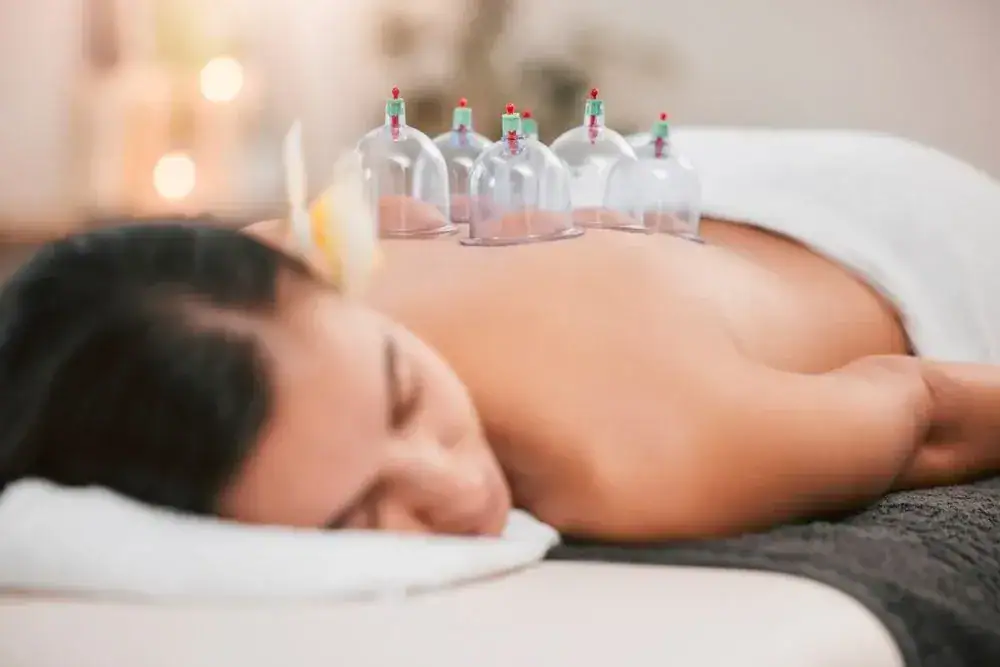
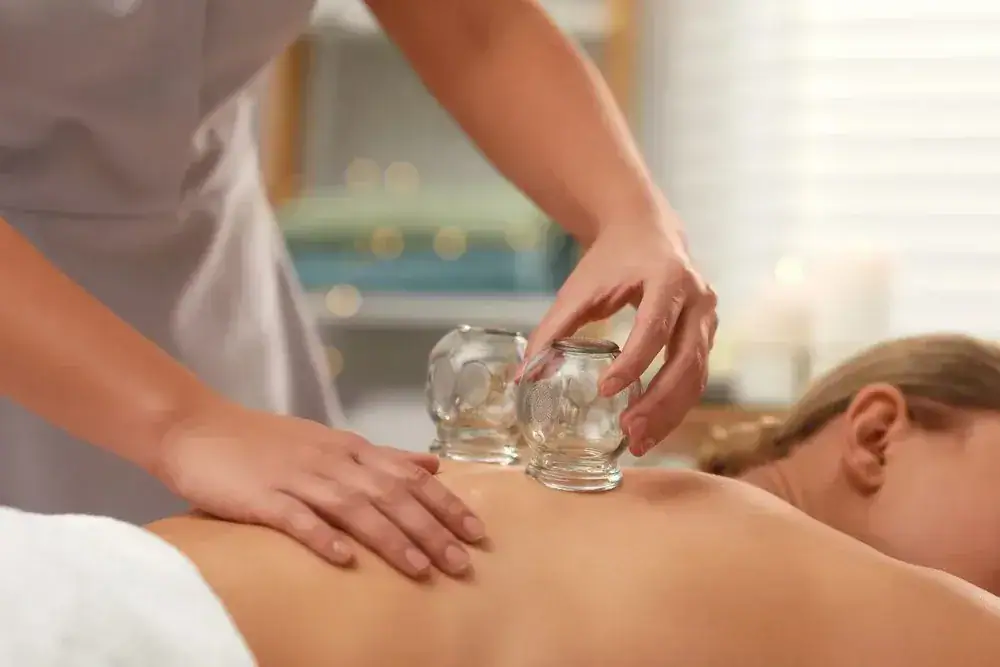
During treatment, cups create negative pressure on your skin. This suction lifts tissue away from underlying structures, increasing space between fascial layers that have been stuck together. Blood flow increases to the area. Muscle fibers that were knotted start to release. The cups may stay stationary or move across the tissue, depending on what your body needs.
You might see circular marks afterward. They’re not bruises—they’re the result of increased circulation to areas that weren’t getting enough blood flow. They fade within a few days and don’t hurt.
Most sessions last 15-30 minutes as part of a broader physical therapy appointment. Your therapist combines cupping with other techniques—joint mobilization, therapeutic exercise, neuromuscular re-education—to address the full picture. You’re not just getting cups placed on your back. You’re getting a targeted intervention that fits into a larger plan to fix what’s broken.
Ready to get started?
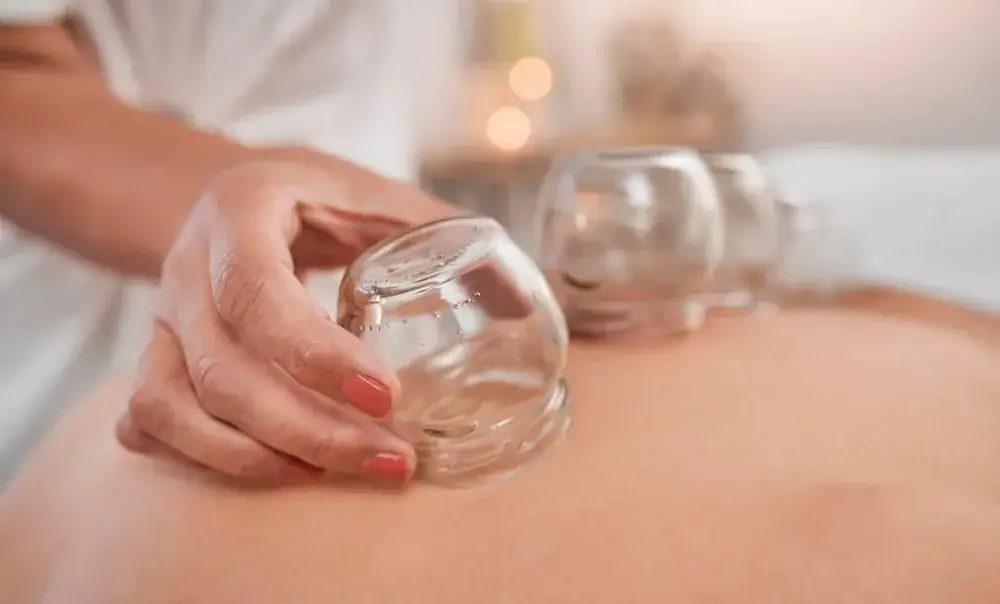
We use dry cupping—no needles, no blood, no invasive procedures. The cups create suction through either manual pumping or heat, depending on the technique your therapist selects. This is also called myofascial decompression, a term that better describes what’s happening: decompressing tissue that’s been compressed and restricted.
Treatment targets specific conditions common in Amagansett and the surrounding Hamptons communities. Rotator cuff issues from tennis and swimming. Lower back pain from long drives into the city. Knee pain from running on beach sand. Neck tension from hours spent on laptops in home offices. Trigger points that refer pain down your arm or into your hip.
Your therapist may combine cupping with manual trigger point release, instrument-assisted soft tissue mobilization, or corrective stretching. The goal is always functional: restore range of motion, reduce pain during activity, and prevent the problem from coming back.
This approach works for post-surgical rehabilitation too. Patients recovering from rotator cuff repair, knee surgery, or spinal procedures often develop scar tissue and stiffness that limits healing. Cupping improves lymphatic drainage, reduces swelling, and helps tissue move normally again—faster than passive rest alone.
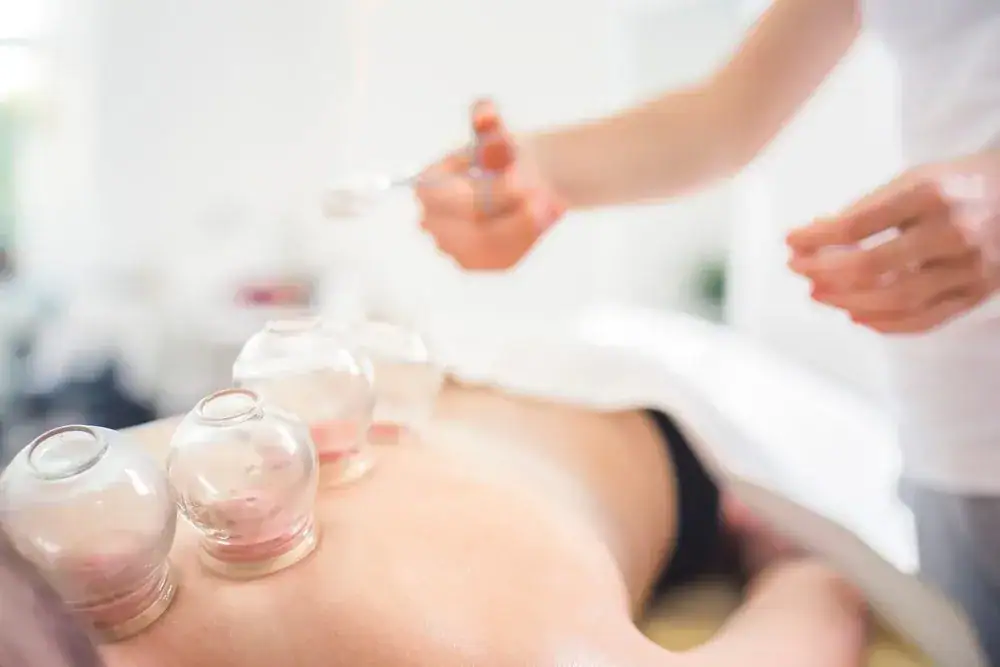
Cupping therapy has measurable effects on tissue. Research shows it improves local blood flow, reduces muscle stiffness, and decreases pain levels with low risk of adverse effects. The mechanism isn’t mysterious—negative pressure lifts tissue, creates space between fascial layers, and triggers increased circulation to areas that were restricted.
That said, it’s not a cure-all. It works best when integrated into a complete physical therapy plan that addresses why you’re in pain, not just where it hurts. If your shoulder pain comes from poor scapular mechanics, cupping alone won’t fix the underlying movement pattern. But it will reduce muscle guarding and trigger points enough that you can actually do the corrective work.
Olympic athletes use it because it speeds recovery between training sessions. Physical therapists use it because it gets results faster than manual therapy alone in many cases. The evidence is moderate, not definitive—but the safety profile is strong and the clinical outcomes are consistent enough that it’s become standard practice in sports rehabilitation and musculoskeletal treatment.
Many patients feel improvement during or immediately after the first session. That’s not an exaggeration—when you release a trigger point or decompress fascial tissue that’s been stuck for months, the change is noticeable right away. You might have better range of motion, less pain with movement, or reduced muscle tension.
But one session rarely solves a chronic problem. Most treatment plans involve 4-8 sessions over several weeks, combined with other physical therapy interventions. The timeline depends on how long you’ve had the issue, what’s causing it, and how well you follow through with home exercises.
Acute injuries respond faster. If you tweaked your back last week, a few cupping sessions alongside manual therapy might resolve it completely. Chronic conditions—pain you’ve had for years—take longer because there’s more tissue restriction, compensation patterns, and sometimes structural changes that need addressing. Your therapist will give you a realistic timeline based on your specific situation, not a generic promise.
The marks are from increased blood flow to tissue that wasn’t getting adequate circulation. When cups create suction, they draw blood and fluid to the surface. Areas with more restriction or stagnation show darker marks. Areas with better circulation show lighter marks or none at all.
They’re not bruises in the traditional sense—there’s no trauma to the tissue. They don’t hurt. Most fade within 3-7 days, though some people clear them faster depending on circulation and overall health. If you’re concerned about appearance for an event, let your therapist know beforehand and they can adjust treatment timing.
The marks are actually useful diagnostically. They show your therapist where tissue restriction is worst and help track progress over multiple sessions. As your circulation improves and fascial restrictions release, the marks typically become lighter and fade faster. Some people never develop significant marks at all, which doesn’t mean the treatment isn’t working—it just means their tissue responds differently.
When cupping is performed as part of a physical therapy treatment plan, it’s typically billed under manual therapy codes and covered by most insurance plans. It’s not billed separately as “cupping”—it’s an intervention within your broader PT session, similar to how joint mobilization or soft tissue work is coded.
Coverage depends on your specific plan, deductible, and whether you’ve met any visit limits. We verify benefits before treatment and provide transparent information about what you’ll pay. We accept most major insurance plans and can discuss out-of-pocket costs upfront if you’re paying privately.
The key difference is that you’re receiving cupping from a licensed physical therapist as part of evidence-based rehabilitation—not from a spa or wellness center where it’s considered alternative medicine. That clinical distinction matters for insurance purposes. If you have questions about your specific coverage, contact our office and we’ll check your benefits before you commit to treatment.
Yes, and that’s one of its most common applications. Athletic trainers and sports physical therapists use cupping to speed recovery after intense training, reduce muscle soreness, and treat overuse injuries. It’s particularly effective for muscle strains, tendon irritation, and fascial restrictions that limit performance.
The technique helps in several ways. It increases blood flow to muscles that are fatigued or damaged, which accelerates healing. It releases trigger points that develop from repetitive movement patterns. It improves fascial glide, which is critical for power generation and injury prevention. Many athletes report feeling less stiff and more mobile after treatment, which translates to better training quality.
You don’t have to be an Olympic swimmer to benefit. Weekend golfers dealing with elbow tendinitis, runners with IT band issues, tennis players with shoulder impingement—these are the injuries we treat regularly in Amagansett. Cupping gets you back to activity faster when combined with proper load management, corrective exercise, and movement retraining. It’s not about masking pain so you can push through. It’s about actually fixing the tissue restriction so you can train without compensation.
Cupping works best for musculoskeletal conditions involving muscle tension, fascial restriction, and trigger points. That includes chronic back pain, neck pain, shoulder impingement, knee pain, and tension headaches. It’s effective for conditions like IT band syndrome, plantar fasciitis, rotator cuff tendinitis, and muscle strains.
Post-surgical rehabilitation is another strong application. Patients recovering from orthopedic surgery often develop scar tissue adhesions and limited mobility. Cupping helps break up those restrictions and restore normal tissue movement. We use it frequently for rotator cuff repairs, knee surgeries, and spinal procedures where stiffness is limiting progress.
It’s less effective for conditions that aren’t primarily soft tissue problems. If you have a herniated disc compressing a nerve, cupping won’t fix the structural issue—though it might reduce muscle guarding around it. If you have arthritis, it won’t reverse joint damage, but it can reduce pain and improve function by addressing compensatory muscle tension. Your physical therapist will tell you honestly whether cupping is appropriate for your specific condition or if other interventions make more sense.
Other Services we provide in Amagansett