

You’ve probably tried the usual route. Medication that works for a few hours, then wears off. Appointments that eat up half your day. Treatments that feel rushed because the next patient is already waiting.
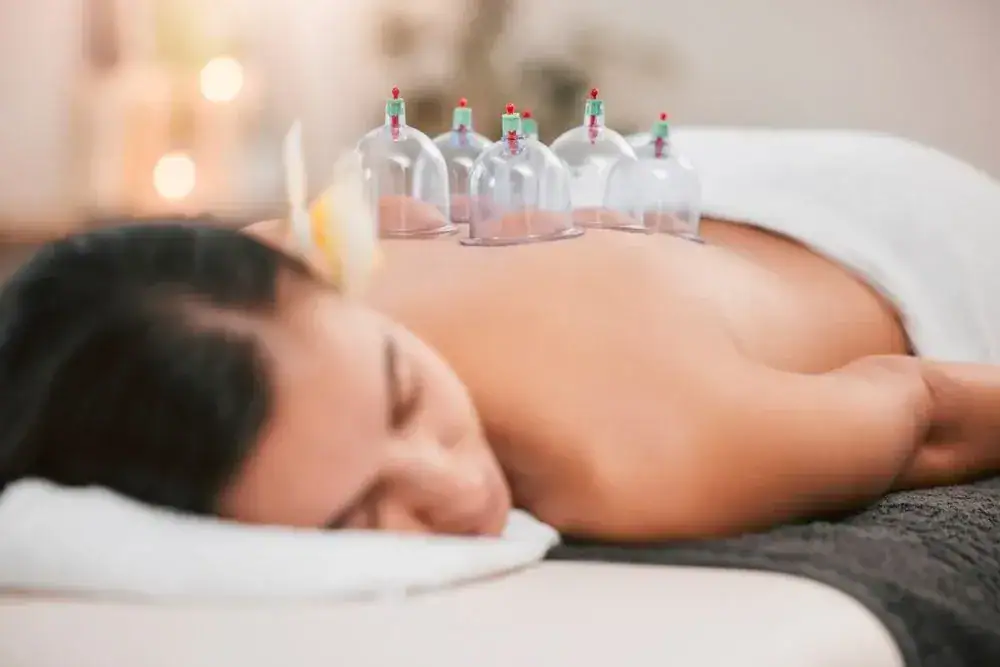
Cupping therapy works differently. The suction pulls blood to the surface, loosening tight muscle fibers and releasing tension that’s been building for weeks or months. Your circulation improves right where you need it most. Range of motion comes back. The constant ache that’s been limiting your day starts to fade.
Most people notice the difference within the first session. Not just less pain, but actual movement returning. You can reach for something without bracing yourself first. You sleep through the night. You get back to the activities you’ve been avoiding because they hurt too much.
This isn’t about masking symptoms. It’s about addressing what’s causing the pain in the first place—tight fascia, restricted blood flow, muscles that won’t release on their own. When those improve, everything else follows.
We’ve been treating patients across Long Island for over a decade. Our therapists are licensed professionals who specialize in bringing physical therapy directly to your home in Albertson and throughout Nassau County.
We accept Medicare and nearly all commercial insurance plans. Every therapist on our team is trained in cupping therapy as part of a broader physical therapy approach—not as a standalone treatment, but as one tool among many that we use based on what your body actually needs.
You’re not getting a one-size-fits-all session. You’re getting an evaluation, a plan, and treatment that adjusts as you progress. We’ve treated thousands of patients dealing with chronic back pain, neck tension, sports injuries, and mobility issues. Most of them had already tried other options before they found us.
Your therapist starts with an assessment. Where’s the pain? How long has it been there? What makes it worse? This isn’t a five-minute intake form—it’s a real conversation about what’s going on with your body.
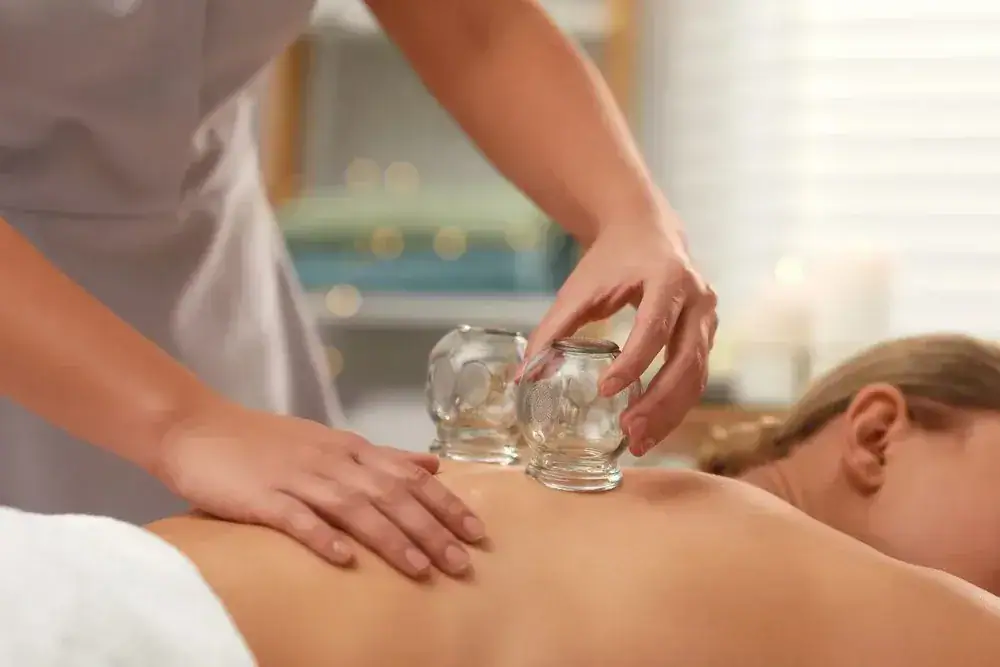
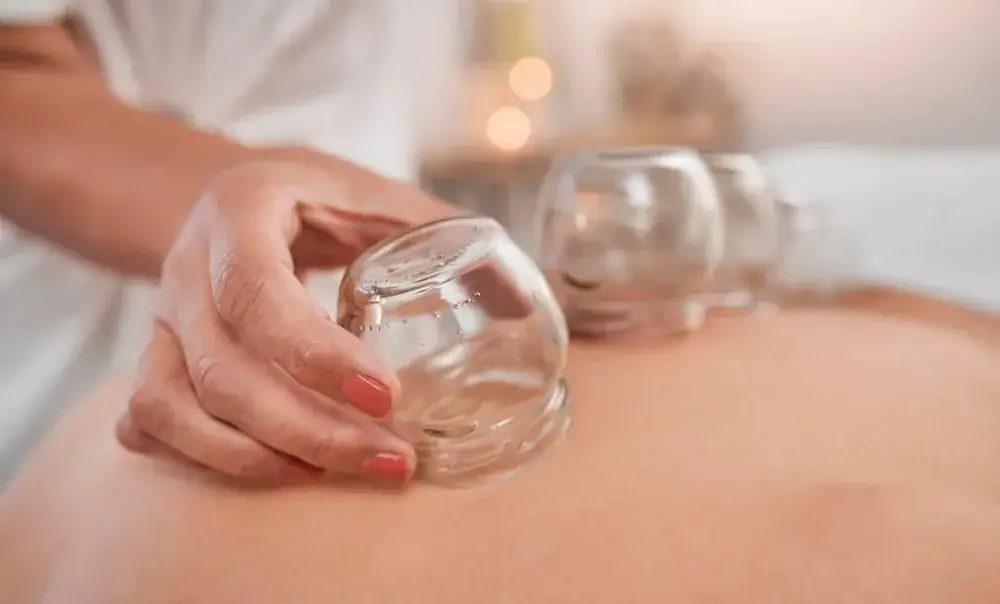
Once we understand the issue, we place cups on the affected area. These create suction that lifts the skin and fascia, increasing blood flow and encouraging those tight muscle fibers to release. You’ll feel the pull, but it shouldn’t hurt. Most people describe it as a deep pressure that actually feels relieving.
We typically leave the cups in place for 5 to 15 minutes, depending on the area and your tolerance. Some therapists use stationary cups; others move them across the muscle in a massage-like motion. Both methods work—it just depends on what your body responds to best.
After we remove the cups, you might see circular marks where they were placed. Those aren’t bruises. They’re a result of increased blood flow to the surface and usually fade within a few days. What matters more is how you feel after—less tension, better movement, and often immediate pain reduction that continues to improve over the next 24 to 48 hours.
Ready to get started?
Getting to a clinic in Albertson means dealing with parking, waiting rooms, and a schedule that probably doesn’t fit yours. Then you’re in pain on the drive home, undoing some of the benefit you just paid for.
Home-based therapy eliminates all of that. Your session happens in your living room, your bedroom, wherever you’re most comfortable. You’re not rushing. You’re not stressed about the commute. You can lie down afterward if you need to. You’re in control of your environment, which makes a real difference in how your body responds to treatment.
For older adults in Nassau County, this matters even more. One in five Americans lives with chronic pain, and that number increases significantly after 65. If getting in and out of a car is difficult, or if transportation is a barrier, home therapy isn’t just more convenient—it’s often the only realistic option.
We bring everything we need. You don’t have to prepare anything or rearrange your schedule around clinic hours. We work with your availability, your insurance, and your specific condition. It’s physical therapy built around your life, not the other way around.
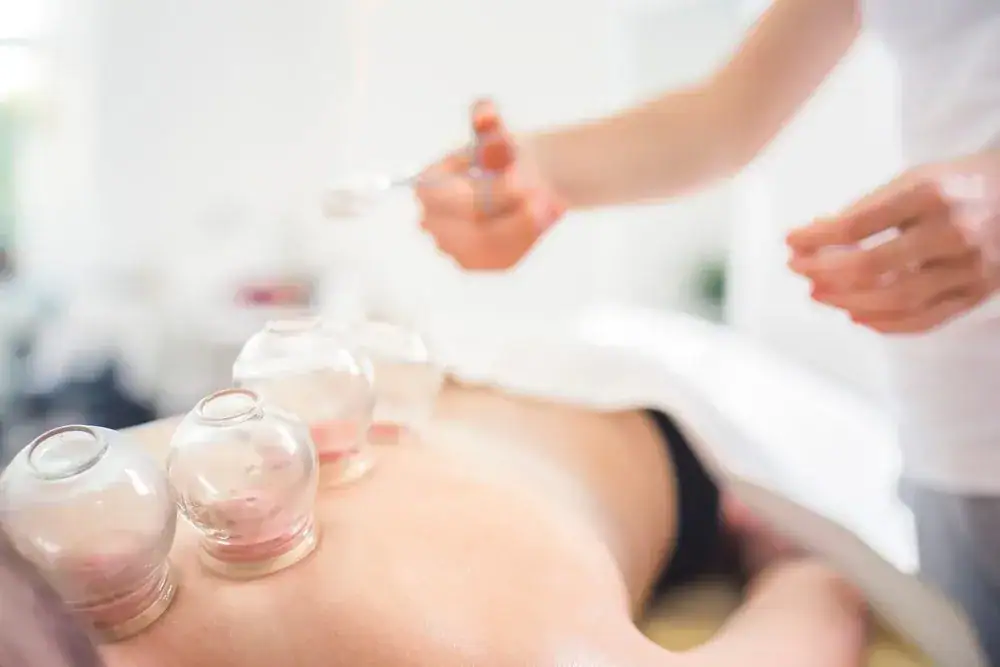
Cupping therapy has been studied extensively, and the research shows it does more than just provide short-term relief. High-quality studies demonstrate that cupping significantly reduces both pain intensity and disability, with effects that last well beyond the session itself.
Here’s why it works. Cupping increases blood circulation to the targeted area, which helps deliver oxygen and nutrients that your muscles need to heal. It also triggers your body’s natural endorphin production—your brain’s own pain control system. That’s not a temporary distraction from pain; it’s your body actually responding and regulating pain signals more effectively.
Most patients notice improvement immediately after treatment, but the effects continue to build. Studies show pain reduction at 24 hours post-treatment and again at two weeks. For chronic conditions like lower back pain or neck tension, cupping is typically used as part of a broader physical therapy plan. You’re not just masking the problem—you’re addressing restricted fascia, tight muscles, and poor circulation that contribute to ongoing pain.
Cupping is considered a low-risk therapy when performed by trained professionals like licensed physical therapists. The most common side effect is circular marks on your skin where the cups were placed. These look dramatic, but they’re not bruises in the traditional sense—they’re a result of increased blood flow to the surface.
The marks typically fade within three to seven days and don’t hurt. Some people experience mild soreness in the treated area for a day or two after the session, similar to what you might feel after a deep tissue massage. This is normal and usually indicates that tight muscles are releasing.
Serious side effects are rare. Because we use dry cupping (suction only, no incisions), there’s no risk of infection or bleeding. Your therapist will assess your skin condition and overall health before starting treatment to make sure cupping is appropriate for you. If you’re on blood thinners, have a skin condition, or are pregnant, we’ll discuss modifications or alternative treatments.
The key is working with someone who knows what they’re doing. Physical therapists are specifically trained in cupping techniques and understand how to adjust pressure, duration, and placement based on your individual needs.
It depends on what you’re treating and how long you’ve been dealing with it. Acute issues—like a recent sports injury or muscle strain—often respond quickly. You might feel significantly better after one or two sessions.
Chronic pain is different. If you’ve been living with back pain, neck tension, or joint stiffness for months or years, your body needs more time to change those patterns. Most patients with chronic conditions see noticeable improvement within three to six sessions, but lasting results usually require ongoing treatment as part of a complete physical therapy plan.
Your therapist will give you a realistic timeline during your initial assessment. We’re not going to promise that one session fixes everything, because that’s not how healing works. What we can tell you is that cupping therapy has cumulative effects—each session builds on the last, improving circulation, releasing fascia, and retraining your muscles to function without compensating for pain.
We also combine cupping with other physical therapy techniques like manual therapy, stretching, and strengthening exercises. The goal isn’t just to reduce pain temporarily; it’s to restore function so you can move better long-term.
Yes, in most cases. We accept Medicare and nearly all commercial insurance plans. Cupping therapy is covered when it’s provided as part of a physical therapy treatment plan by a licensed therapist—which is exactly how we deliver it.
Insurance companies view cupping as a complementary technique within physical therapy, not as a standalone service. That means your coverage depends on your overall physical therapy benefits, not on cupping specifically. If your plan covers outpatient physical therapy, it typically covers cupping when it’s medically necessary and prescribed as part of your care.
We handle the billing and verification process for you. Before your first session, we’ll confirm your coverage and let you know what to expect in terms of copays or deductibles. For Medicare patients, home-based physical therapy is a covered benefit when you meet the eligibility requirements—usually meaning you have difficulty leaving your home due to pain, mobility issues, or other medical conditions.
If you’re unsure about your coverage, call us. We’ll walk you through it and make sure you understand your benefits before we start treatment.
Cupping therapy is most effective for musculoskeletal pain—issues involving your muscles, fascia, and joints. Lower back pain is one of the most common conditions we treat with cupping, and the research strongly supports its effectiveness for this. Neck pain, shoulder tension, and chronic headaches also respond well.
If you’re dealing with tight muscles that won’t release, cupping helps. The suction mechanically lifts and separates the fascial layers, reducing the densification that causes stiffness and restricted movement. For people recovering from sports injuries, cupping speeds up muscle recovery by improving circulation and reducing inflammation.
Conditions like arthritis, fibromyalgia, and nerve pain can also benefit, though cupping works best when combined with other physical therapy techniques. It’s not a cure-all, but it’s a powerful tool for managing pain and improving mobility when used appropriately.
What doesn’t respond well to cupping? Issues that aren’t related to muscle tension or restricted blood flow—things like fractures, infections, or systemic illnesses. Your therapist will assess whether cupping is right for your specific condition during the initial evaluation. If it’s not the best option, we’ll tell you and recommend what will actually help.
Convenience is part of it, but it’s not the whole story. When you receive cupping therapy at home, you’re in a controlled environment where you’re already comfortable. Your stress level is lower. You’re not dealing with traffic, parking, or sitting in a waiting room while your pain gets worse.
That mental and physical comfort actually affects how your body responds to treatment. Stress and tension counteract the relaxation and muscle release that cupping is designed to create. At home, you can lie down afterward, rest as long as you need, and let the treatment continue working without immediately getting back in a car.
For older adults or anyone with mobility challenges, home therapy removes a major barrier. In Albertson and across Nassau County, many people avoid physical therapy simply because getting to appointments is too difficult. We’ve worked with patients who stopped going to clinics because the trip was more painful than helpful. Home-based care solves that problem completely.
You also get more personalized attention. We’re not squeezing you into a 30-minute slot between other patients. Your therapist is focused entirely on you, your progress, and adjusting your treatment plan based on what’s working. It’s physical therapy the way it should be—individualized, accessible, and built around your needs.
Other Services we provide in Albertson