


You shouldn’t have to plan your day around whether the floor is slippery or if you’ll make it to the bathroom safely. That’s not living—that’s surviving.
Physical therapy focused on fall prevention can reduce your risk of falling by up to 37%. You’ll notice improvements in balance and strength within four to six weeks, with the most significant gains happening around the 8-12 week mark. That means fewer close calls, less anxiety about stairs or uneven surfaces, and more confidence doing the things you used to take for granted.
Our approach combines balance training, gait training, and targeted strength work for your legs and core. We’re not just treating symptoms. We’re rebuilding the stability you need to navigate your home, your neighborhood, and your life without constantly worrying about what might happen next.
This isn’t about becoming an athlete. It’s about getting back to normal—or as close as your body will allow—so you can focus on living instead of just being careful.
We operate multiple therapy centers across Long Island, including our affiliated locations in Smithtown and Speonk. We’ve built our reputation on personalized care, not volume.
When you work with us, you’re getting a physical therapist who takes time to understand your specific situation—your health history, your home environment, your actual daily challenges. We don’t use cookie-cutter programs because your body and your goals aren’t cookie-cutter either.
Bellerose has a large senior population, and we’ve seen firsthand how falls impact not just physical health but mental well-being and independence. That’s why we focus heavily on in-home therapy services. If getting to a clinic is difficult, dangerous, or just exhausting, we come to you. You get better results when you’re comfortable, and you’re most comfortable at home.

First, we talk. Not a sales pitch—a real conversation about what’s going on, what you’ve tried, and what you’re hoping to accomplish. If in-home physical therapy makes sense, we schedule an initial evaluation at your home.
During that first visit, your physical therapist assesses your strength, flexibility, balance, and range of motion. We also look at your living space. Are there trip hazards? Poor lighting? Stairs that need attention? Your environment matters as much as your physical condition.
From there, we build a treatment plan specific to you. Maybe that’s fall prevention work with balance and proprioceptive training. Maybe it’s stroke rehabilitation or post-surgery recovery. Maybe it’s injury rehabilitation combined with neuromuscular re-education to retrain how your body moves.
Sessions typically happen two to three times per week, depending on your needs and insurance coverage. Each visit includes hands-on therapy, guided exercises, and education so you understand what’s happening and why. We also give you exercises to do between sessions—simple, practical movements that fit into your day.
Progress gets tracked and adjusted as you improve. If something isn’t working, we change it. You’re not locked into a rigid program that ignores how your body actually responds.

Ready to get started?
Our services cover the full spectrum of physical and occupational therapy needs. Fall prevention and balance training are core to what we do, especially in Bellerose where so many residents are managing age-related mobility challenges.
We also specialize in neurological rehabilitation, including stroke recovery and conditions affecting movement and coordination. If you’ve had surgery—joint replacement, spinal surgery, cardiac procedures—we provide both pre and post surgery rehabilitation to prepare your body and speed recovery.
Injury rehabilitation covers everything from sports injuries to accident recovery. Therapeutic exercise, resistance and strength training, and gait training all play a role depending on what your body needs. For chronic joint pain, we use manual therapy and targeted exercise to reduce discomfort and improve function.
One thing that sets us apart in Bellerose: we understand the local landscape. Many homes here have stairs, narrow hallways, and older layouts that weren’t designed with mobility challenges in mind. We factor that into your treatment. If you need to navigate three steps to get into your house, we make sure you can do that safely and confidently.
Every treatment plan is built around your insurance coverage, your schedule, and your real-world goals. We coordinate with your other healthcare providers so everyone is on the same page about your care.
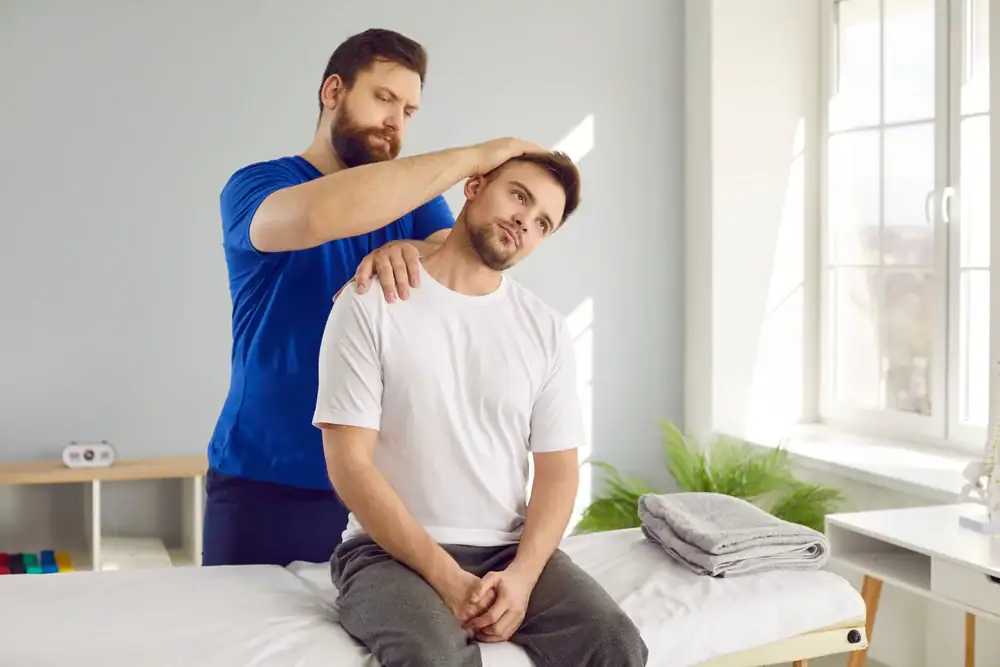
Most people notice measurable improvements in balance and strength within four to six weeks of consistent therapy. That doesn’t mean you’re fully recovered—it means you’re starting to feel steadier, more confident, and less anxious about everyday movements.
Maximum benefits typically show up around the 8-12 week mark, assuming you’re attending sessions regularly and doing your home exercises. The timeline varies based on your starting point, any underlying conditions, and how your body responds to treatment.
Here’s what matters more than speed: consistency. Two sessions a week with home exercise will get you further than three sessions a week with nothing in between. Your body needs repetition to rebuild strength and retrain movement patterns. If you’re committed to the process, the results follow.
In most cases, yes—if you meet certain criteria. Medicare Part B covers in-home physical therapy when it’s medically necessary and prescribed by your doctor. That usually means you’re homebound or have significant difficulty leaving your home due to illness, injury, or mobility limitations.
Private insurance plans vary, but many cover in-home therapy under similar conditions. Some require prior authorization or have limits on the number of visits per year. We handle the verification process and work directly with your insurance to confirm coverage before we start.
If you’re not sure what your plan covers, call us. We’ll check your benefits, explain what’s covered, and let you know about any out-of-pocket costs upfront. No surprises, no hidden fees. You’ll know exactly what you’re paying before we schedule your first session.
Physical therapy focuses on improving your strength, balance, mobility, and overall physical function. If you’re struggling to walk safely, climb stairs, or maintain your balance, a physical therapist works on the muscles, joints, and movement patterns that support those activities.
Occupational therapy focuses on helping you perform daily tasks—getting dressed, cooking, bathing, managing your home. An occupational therapist might assess your home for safety hazards, recommend assistive devices, or teach you techniques to do everyday activities more safely and independently.
For fall prevention, both can be valuable, and sometimes you need both. Physical therapy builds the physical foundation—stronger legs, better balance, improved gait. Occupational therapy makes sure your environment and daily routines support that foundation. We offer both services and can coordinate care if you’d benefit from a combined approach.
Physical therapy is one of the most effective ways to prevent falls before they happen. Research shows it can reduce fall incidents by up to 37%, and people who receive physical therapy consultation are half as likely to end up in the emergency department for fall-related injuries.
The key is addressing the root causes: weak leg muscles, poor balance, unstable gait, reduced flexibility, and lack of coordination. All of those are fixable with the right program. We use strength training, balance exercises, proprioceptive training, and functional movement work to rebuild the stability your body needs.
Falls aren’t inevitable just because you’re getting older or recovering from an injury. They happen when your body can’t handle the demands you’re placing on it. Physical therapy closes that gap. You get stronger, more coordinated, and more confident—so your body can handle stairs, uneven ground, quick movements, and all the unpredictable moments that used to feel dangerous.
Your first visit is an evaluation, not a full treatment session. Your physical therapist will spend about an hour with you, asking questions about your medical history, current symptoms, medications, and what’s been difficult for you lately.
Then comes the physical assessment. We’ll check your strength, flexibility, balance, range of motion, and how you move through basic activities like standing up, walking, and turning. If stairs are part of your daily life, we’ll assess those too. We also look at your home environment—lighting, rugs, furniture placement, bathroom setup—to identify any fall risks.
Based on what we find, we’ll outline a treatment plan and talk through what your goals are. Maybe you want to stop using a walker. Maybe you want to feel safe walking to the mailbox. Maybe you just want to stop worrying every time you stand up. Whatever it is, that becomes the target. From there, we schedule your regular sessions and get started on the actual work.
It depends on your insurance and your state. New York allows direct access to physical therapy, meaning you can see a physical therapist without a referral for up to 10 visits or 30 days. After that, you’ll need a prescription from your doctor to continue.
That said, many insurance plans—including Medicare—require a physician’s order before they’ll cover physical therapy. Even if the state allows direct access, your insurance might not reimburse you without that referral.
Our recommendation: check with your insurance first, or let us do it for you. We’ll verify your coverage, find out if a referral is needed, and walk you through the process. If you do need a prescription, we can coordinate with your doctor to get it. The goal is to remove barriers, not create more paperwork for you to manage.
Other Services we provide in Bellerose