


You’re recovering from surgery, managing chronic pain, or working to prevent another fall. Getting to a clinic twice a week feels like another obstacle when you’re already dealing with limited mobility or unreliable transportation.
In-home physical therapy removes that barrier. Your therapist comes to you with everything needed for therapeutic exercise, gait training, and balance work—right in your living room or bedroom. You’re not rushing to appointments or sitting in a waiting room. You’re working one-on-one with a licensed professional who sees your actual environment and can address the real risks in your daily routine.
The results show up in how you move through your day. Stairs feel safer. Walking to the mailbox doesn’t leave you exhausted. Research shows physical therapy after a fall-related diagnosis lowers your risk of falling again by 86%. That’s not a small number—that’s the difference between living independently and living in fear of the next accident.
We’ve been delivering Medicare-covered outpatient physical therapy across Long Island since 2010. We work with patients in Baywood and throughout Suffolk County who need professional rehabilitation but can’t easily access traditional clinic settings.
Our therapists are licensed, experienced, and focused on treating you like family—not a case number. We’re affiliated with established practices including Physical Therapy Associates of Smithtown and Speonk Physical Therapy, so you’re getting care backed by decades of clinical expertise and a reputation built on real patient outcomes.
Baywood residents benefit from our local presence and understanding of the community. We know the housing layouts, the mobility challenges specific to this area, and the concerns facing older adults who want to age in place safely.

It starts with a phone call. We verify your Medicare coverage and schedule an initial evaluation at a time that works for you—morning, afternoon, or early evening. No need to arrange rides or worry about parking.
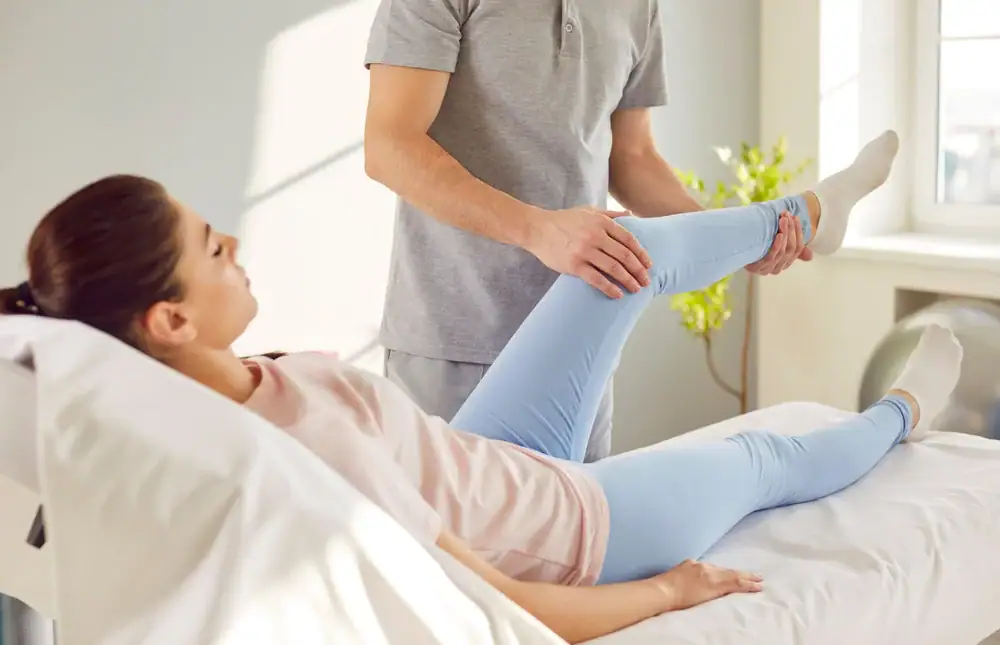
Your physical therapist arrives at your home with portable equipment for resistance training, balance exercises, and mobility assessments. During that first visit, they evaluate your current strength, range of motion, gait pattern, and any environmental hazards that could increase fall risk. You’ll discuss your specific goals—whether that’s walking without a cane, climbing stairs independently, or recovering from a stroke or joint replacement.
From there, your therapist builds a personalized treatment plan. Sessions typically happen two to three times per week, depending on your needs and doctor’s orders. Each visit focuses on progressive exercises that build strength, improve proprioceptive training, and restore functional movement. Your therapist adjusts the plan as you improve, adding challenge when you’re ready and modifying exercises if something isn’t working.
Between visits, you’ll have a home exercise program to maintain progress. Your therapist checks in on your technique, answers questions, and keeps your doctor updated on your recovery. The goal is measurable improvement—not just feeling better, but moving better in ways that reduce injury risk and restore independence.
Ready to get started?
You’re getting the same clinical-grade care you’d receive in an outpatient facility, delivered in your home. That includes fall prevention programs with balance and strength training, gait training to improve walking mechanics, joint pain treatment through manual therapy and therapeutic exercise, and pre- and post-surgery rehabilitation to speed recovery and prevent complications.
For Baywood residents recovering from neurological conditions, we provide stroke rehabilitation and neuromuscular re-education to retrain movement patterns and rebuild coordination. If you’re managing chronic conditions like arthritis or neuropathy, occupational therapy services help you adapt daily activities and maintain independence safely.
Long Island has one of the highest concentrations of adults over 65 in New York, and Baywood reflects that demographic. More than one in four older adults experiences a fall each year, and those falls cost our community millions in emergency care and hospitalization. Every dollar spent on preventive physical therapy saves four dollars in future healthcare costs—and more importantly, it keeps you out of the hospital and in your own home.
Your therapy sessions are covered by Medicare when medically necessary and prescribed by your doctor. We handle the authorization and billing, so you’re not navigating insurance paperwork on your own.
Yes, Medicare Part B covers outpatient physical therapy in your home when it’s medically necessary and ordered by your doctor. That includes therapy for fall prevention, post-surgery recovery, stroke rehabilitation, and chronic pain management.
You’ll need a physician’s referral stating that physical therapy is required for your condition. Once we have that, we verify your coverage and handle the authorization process. Most patients pay a copay or coinsurance depending on their specific Medicare plan, but the therapy itself is a covered benefit.
We work directly with Medicare, so you’re not filing claims or chasing reimbursements. If there are any coverage questions or limitations, we let you know upfront before starting treatment. The goal is to remove barriers, not create new ones.
Most patients notice improvement within two to four weeks, but the timeline depends on your starting point and specific condition. If you’re recovering from a hip replacement, you might regain basic mobility in a few weeks but need two to three months to fully restore strength and balance. Stroke rehabilitation often requires longer, with meaningful progress appearing over several months as your brain retrains movement patterns.
Fall prevention programs typically run eight to twelve weeks. Research shows that consistent balance and strength training during that period reduces fall risk by 30% to 35%. You’ll see changes in how steady you feel on your feet, how easily you navigate stairs, and how confident you are moving around your home.
Your therapist tracks measurable benchmarks—like how far you can walk, how many times you can stand from a chair, or whether you can balance on one foot. Progress isn’t just about feeling better. It’s about objective improvements that lower your risk of injury and increase your independence.
The clinical care is the same—licensed therapists, evidence-based treatment, Medicare-covered services. The difference is location and convenience. In-home therapy brings the equipment and expertise to you, which matters if you’re dealing with mobility limitations, don’t drive, or find it exhausting to leave the house multiple times per week.
There’s also a practical advantage: your therapist sees your actual environment. They can identify trip hazards in your home, recommend modifications to your bathroom or bedroom, and teach you how to navigate your specific stairs or doorways safely. That’s harder to replicate in a clinic setting where the layout doesn’t match your daily reality.
Clinic-based therapy works well if you have reliable transportation and benefit from the social aspect of a group setting. In-home therapy works better if getting to appointments is a barrier, if you’re recovering from a serious injury or surgery, or if you simply prefer the privacy and comfort of your own space. Both are legitimate options—it’s about what fits your situation.
Yes, and the data is strong. Physical therapy after a fall-related diagnosis lowers your risk of falling again by 86%. Multicomponent exercise programs that combine balance training, strength work, and gait training reduce fall risk by 30% to 35% even if you haven’t fallen yet.
Falls aren’t just about bad luck or clumsiness. They’re usually the result of declining leg strength, poor balance, reduced flexibility, or environmental hazards you’ve stopped noticing. Physical therapy addresses all of those factors. You’ll work on exercises that strengthen your legs and core, improve your reaction time, and retrain your proprioception—your body’s sense of where it is in space.
Your therapist also evaluates your home for risks: loose rugs, poor lighting, lack of grab bars, clutter in walkways. Small changes make a big difference. Combine that with a structured exercise program, and you’re not just reducing fall risk—you’re rebuilding the confidence to move freely without fear. That’s what keeps people independent.
Your first visit is an evaluation. Your physical therapist will spend about an hour asking questions about your medical history, current symptoms, and daily challenges. They’ll want to know what movements cause pain, where you feel unstable, and what activities you’re avoiding because they feel unsafe.
Then comes the physical assessment. Your therapist will check your strength, flexibility, balance, and how you walk. They might ask you to stand from a chair, reach for objects, or walk down a hallway so they can observe your gait pattern and identify areas that need work. If you’ve had surgery, they’ll assess your range of motion and any swelling or stiffness around the joint.
Based on that evaluation, your therapist will explain what they found and recommend a treatment plan. You’ll discuss how often you’ll meet, what exercises you’ll focus on, and what goals are realistic given your condition. By the end of that first visit, you’ll know what to expect and have a clear path forward. No guessing, no vague promises—just a straightforward plan built around your specific needs.
No. Your therapist brings portable equipment for resistance training, balance exercises, and mobility work. That might include resistance bands, small weights, balance pads, or a gait belt depending on your treatment plan. You don’t need to buy anything or set up a home gym.
Most exercises use your body weight, a sturdy chair, or a countertop for support. Your therapist designs the program around what’s available in your home and what’s safe for your current ability level. If there’s a specific piece of adaptive equipment that would help—like a shower chair, grab bars, or a rolling walker—your therapist will recommend it and explain where to get it.
The focus is on functional movement, not fancy equipment. You’re training for real-life activities: getting in and out of bed, walking to the bathroom, carrying groceries, navigating stairs. Your home is the perfect environment for that kind of training because it’s where you actually need to perform those tasks every day.
Other Services we provide in Baywood