


You’re walking to the mailbox again without that nagging fear of losing your balance. You’re getting dressed in the morning without needing to sit down halfway through. You’re moving through your own home with confidence instead of calculating every step.
That’s what happens when a licensed physical therapist comes to you. No fighting traffic to make an appointment. No sitting in a waiting room when you’re already in pain. Just focused, one-on-one care in the place where you actually need to function.
The goal isn’t just reducing pain or checking boxes for insurance. It’s getting you back to the activities that matter—whether that’s cooking dinner standing up, playing with grandkids on the floor, or walking around the block without second-guessing your knees. Real improvement happens when therapy fits into your life, not the other way around.
We’ve been providing in-home physical therapy across Nassau County since 2010. We’ve built our reputation in communities like Albertson by showing up consistently, treating people with respect, and actually listening to what’s not working in your daily routine.
Our therapists are licensed professionals who specialize in the conditions that make leaving home difficult—stroke recovery, neurological rehabilitation, post-surgical care, and fall prevention. We work with your physician, coordinate with Medicare, and keep everything transparent so you’re never guessing what happens next.
Albertson’s aging population deserves therapy that meets them where they are. With over 300,000 residents age 60 and older across Nassau County, we’ve seen what works and what doesn’t when helping people regain independence at home.

First, we verify your Medicare coverage and physician orders. Most people don’t realize that Medicare covers in-home physical therapy when you have difficulty getting to a clinic—and we handle that paperwork so you don’t have to chase down answers.
Next, a licensed physical therapist comes to your home for an initial evaluation. They’ll assess your mobility, strength, balance, and any specific limitations you’re dealing with. This isn’t a generic checklist. They’re looking at how you move in your actual environment—your stairs, your bathroom setup, the furniture you navigate every day.
From there, you’ll get a personalized treatment plan. Maybe that’s gait training to improve how you walk. Maybe it’s therapeutic exercise to rebuild strength after surgery. Maybe it’s fall prevention work using balance and proprioceptive training. Sessions happen on a schedule that works for you, typically two to three times per week depending on your needs.
Progress gets tracked and reported back to your doctor. You’ll know what’s improving, what needs more attention, and when you’re ready to maintain results on your own. No surprises, no runaround.

Ready to get started?
Our physical therapists provide therapeutic exercise designed to rebuild strength and range of motion after injury or surgery. You’ll also receive resistance and strength training tailored to your current ability—not some one-size-fits-all program pulled from a binder.
If balance is your concern, we offer proprioceptive training and fall prevention programs. Falls are the leading cause of injury for older adults in Nassau County, and most happen at home. We assess your specific risk factors and create exercises that address them directly.
For stroke survivors or those managing neurological conditions, we provide stroke rehabilitation, neurological rehabilitation, and neuromuscular re-education. This means retraining your body to perform movements that feel impossible right now. Gait training helps restore a normal walking pattern. Occupational therapy focuses on daily activities like dressing, bathing, and meal prep.
Joint pain treatment addresses knees, hips, shoulders, and backs without relying solely on medication. Pre and post-surgery rehabilitation gets you ready for procedures and speeds up recovery afterward. Every session is Medicare-covered when you qualify, and we serve patients throughout Albertson and surrounding Nassau County areas.
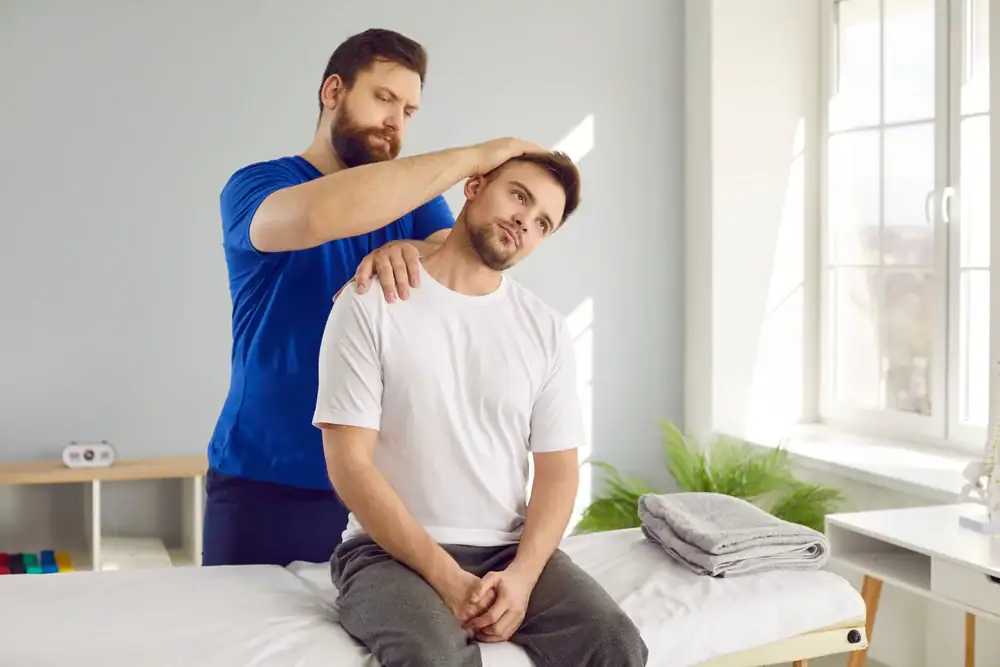
Yes, Medicare Part B covers in-home physical therapy when your doctor orders it and you meet homebound criteria. Homebound doesn’t mean you’re bedridden—it means leaving home requires considerable effort due to illness, injury, or disability.
Medicare typically covers 80% of approved costs after you meet your deductible. You’re responsible for the remaining 20%, though supplemental insurance often covers that portion. There’s no limit on the number of sessions as long as you’re showing improvement and therapy remains medically necessary.
We verify your coverage before starting treatment and handle the billing directly with Medicare. You won’t get surprise bills or have to submit claims yourself. If your situation doesn’t qualify for Medicare coverage, we’ll tell you upfront before scheduling anything.
We treat stroke recovery, joint pain, post-surgical rehabilitation, balance disorders, neurological conditions like Parkinson’s or MS, and general weakness or mobility loss. If you’ve had a hip or knee replacement, spinal surgery, or a fall that’s left you unsteady, in-home physical therapy can help.
Common reasons people call us include difficulty walking without assistance, chronic pain that limits daily activities, fear of falling, and needing to regain independence after a hospital stay. We also work with patients managing arthritis, osteoporosis, and other conditions that make getting to a clinic unrealistic.
The key factor is whether therapy will improve your function and whether getting to an outpatient clinic creates a genuine hardship. If both are true, in-home treatment is likely appropriate and covered by Medicare.
Most people notice some improvement within two to three weeks, but meaningful progress typically takes six to eight weeks of consistent sessions. It depends entirely on your starting point, your specific condition, and how well you stick to exercises between visits.
Stroke recovery and neurological rehabilitation take longer—sometimes several months—because you’re retraining complex movement patterns. Post-surgical rehab often shows faster results since you’re working with a body that’s healing rather than one affected by chronic disease. Fall prevention and balance training usually improve within four to six weeks if you’re practicing the techniques daily.
Your physical therapist will set realistic milestones during your initial evaluation. You’ll know what to expect and when to expect it. If progress stalls, we adjust the treatment plan rather than just repeating the same exercises and hoping for different results.
Physical therapy focuses on mobility, strength, balance, and pain reduction. Your physical therapist works on getting you walking better, moving more freely, and reducing fall risk. The goal is improving how your body moves through space.
Occupational therapy focuses on daily living activities—getting dressed, preparing meals, bathing, and other tasks you need to do independently. Your occupational therapist might work on hand strength for opening jars, coordination for buttoning shirts, or strategies for safely getting in and out of the shower.
Many people benefit from both. If you’re recovering from a stroke, for example, a physical therapist might help you walk again while an occupational therapist helps you regain the fine motor skills to feed yourself. We coordinate both services when needed and bill them separately through Medicare so you’re getting comprehensive care.
Yes, Medicare requires a physician’s order before we can start treatment. Your doctor needs to document that you’re homebound and that physical therapy is medically necessary for your condition. This protects you by ensuring therapy is appropriate for your situation.
If you already have a doctor who knows your medical history, we’ll coordinate with their office to get the necessary paperwork. If you don’t have a regular physician or yours isn’t familiar with home health services, we can help connect you with doctors who routinely write these orders.
The referral process usually takes a few days to a week depending on how quickly your doctor’s office responds. Once we have the order and verify your Medicare coverage, we can typically schedule your first session within three to five business days.
Most treatment plans start with two to three visits per week. Each session lasts 45 to 60 minutes depending on your tolerance and the complexity of your treatment. As you improve, frequency often decreases to once or twice weekly.
Your therapist will recommend a schedule based on your condition and goals during the initial evaluation. Someone recovering from surgery might need more frequent visits initially, while someone working on fall prevention might do well with twice-weekly sessions from the start.
You’re not locked into a rigid schedule. If you have a doctor’s appointment, family visiting, or just need a day off, we’ll reschedule. The key is consistency over time—sporadic therapy doesn’t produce results. Medicare also requires regular sessions to continue coverage, so long gaps between visits can affect your benefits.
Other Services we provide in Albertson