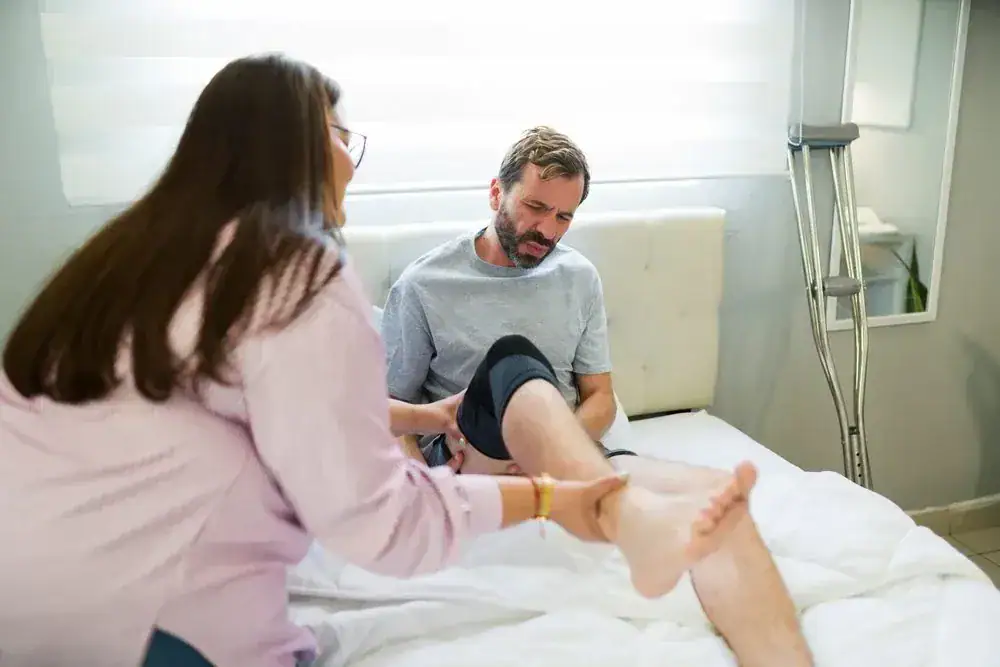
Most families don't act on fall prevention until after something goes wrong. Here's what the delay is actually costing — and what to do instead.

There’s usually a moment families can point to — a stumble on the front steps, a grab for the counter that came a little too fast, a parent who stopped walking to the mailbox without explaining why. The signs are there. But between noticing them and actually doing something, most families wait. Sometimes for weeks. Sometimes much longer. That delay is understandable. It’s also costly.
This guide explains what’s actually happening during that window of inaction, what a proper fall risk assessment looks like, and what changes when you stop waiting and start addressing the problem directly.
Most people assume a fall risk assessment is a checklist — a few questions about dizziness, maybe a balance test, and a sheet of exercises to take home. That’s not what a thorough assessment looks like, and the gap between those two things is significant.
A real fall risk assessment evaluates multiple systems at once: balance, strength, flexibility, reaction time, gait, medications, and the home environment itself. Falls are rarely caused by one thing. They happen at the intersection of several smaller deficits — a little less strength here, slightly slower reaction time there, a throw rug in exactly the wrong place.
Missing any one of those factors means the plan built around it will be incomplete. That’s why the assessment matters as much as the treatment. It tells you what you’re actually dealing with — not what you assumed you were dealing with.

When one of our therapists comes to your home for an initial evaluation, the visit looks nothing like a clinic appointment. That’s intentional. Falls happen at home — on the stairs, getting out of the tub, crossing from the kitchen to the living room — and that’s exactly where the assessment should happen too.
Our therapist will use standardized, validated tools to measure your loved one’s actual fall risk. The Timed Up and Go test, for example, measures how long it takes someone to stand from a chair, walk three meters, turn around, and sit back down. A score of 12 seconds or more is a recognized indicator of fall risk.
The Berg Balance Scale runs through 14 functional tasks — reaching forward, standing on one foot, turning 360 degrees — and produces a score that maps directly to fall risk level. These aren’t arbitrary exercises. They’re the same tools used in clinical research and recommended by the CDC’s STEADI framework for fall prevention.
Beyond the physical tests, our therapist will look at the home itself. Long Island’s housing stock — the split-levels, the ranch homes with exterior concrete steps, the narrow hallways and bathrooms that were never designed with aging in mind — creates specific hazards that a clinic-based evaluation would never catch. A loose handrail on a three-step stoop matters. So does the distance between the bedroom and the bathroom at 2 a.m.
Medications get reviewed too. Certain blood pressure medications, sleep aids, and antihistamines are known contributors to fall risk, and a good assessment flags those interactions rather than treating the physical deficits in isolation.
By the time the first visit is over, you have a clear, specific picture of where the risk is coming from — and a plan that addresses it directly. That’s a very different starting point than a generic balance routine.
Here’s something that comes up consistently in fall prevention research: most older adults significantly underestimate their own fall risk. It’s not denial in the stubborn sense — it’s that balance and strength decline gradually, and the brain adapts to those changes without flagging them as dangerous.
Your parent isn’t lying when they say they feel fine. They genuinely feel fine. That’s part of what makes the situation tricky.
Studies have found that many older adults who are at elevated fall risk don’t recognize themselves as such. They attribute a stumble to a slippery floor, a near-miss to being distracted, a slower gait to just “getting older.” And because they don’t see themselves as at-risk, they don’t seek help. Meanwhile, the underlying deficits — reduced proprioception, weakened hip stabilizers, slower protective reflexes — continue to compound quietly.
This is also why family members often notice the warning signs before the person living with them does. You see the hesitation at the top of the stairs. You notice they’re not walking as far on their evening walk. You watch them grip the car door a little longer before letting go. Those observations are clinically meaningful, even if they’re hard to name precisely.
A professional assessment cuts through the uncertainty. It doesn’t rely on self-reporting or subjective impression — it measures. And when someone who’s been quietly limiting their world to stay safe sees their actual Berg Balance Scale score or their Timed Up and Go result, it often reframes the conversation entirely. It moves from “I think I’m okay” to “here’s specifically what we’re working on.” That shift — from vague reassurance to concrete information — is where real progress starts.
Approximately 50% of older adults who fear falling have already started restricting their activities because of that fear. The irony is that reduced activity accelerates the physical decline that makes falls more likely. Waiting doesn’t make the situation safer. It makes it harder to address.
Want live answers?
Connect with a Medcare Therapy Services expert for fast, friendly support.
Clinic-based physical therapy works well for a lot of conditions. Fall prevention isn’t always one of them. The environment where someone practices their balance exercises and the environment where they actually fall are two completely different places — and that gap matters more than most people realize.
When therapy happens in your home, everything is calibrated to your actual life. Our therapist sees your specific staircase, your bathroom layout, your kitchen floor. They can adjust your program based on real hazards rather than hypothetical ones. And they can work with you in the context of your actual daily routine, which is where the risk lives.
For Long Island seniors — many of whom live in car-dependent communities where getting to a clinic requires someone else’s schedule and a level of mobility that may already be compromised — in-home therapy isn’t just more convenient. It’s often the only realistic option.
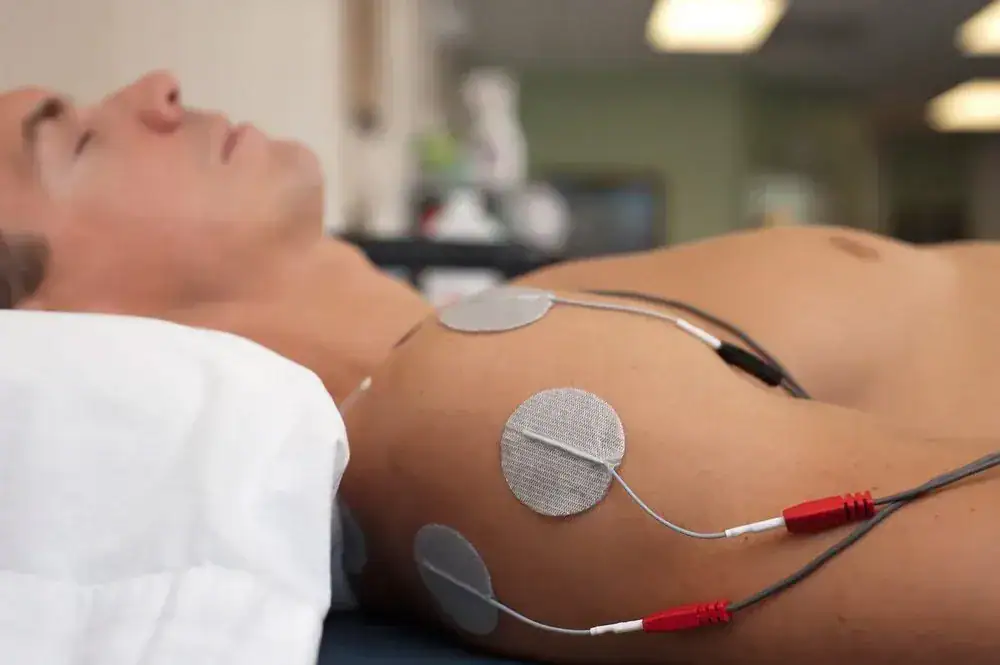
Not all fall prevention programs are built the same. There’s a meaningful difference between a therapist handing someone a printed sheet of standing exercises and a structured, evidence-based protocol with a documented clinical track record.
The OTAGO Exercise Program is the latter. Developed in New Zealand and validated through multiple randomized controlled trials, OTAGO is a progressive strength and balance program specifically designed for older adults at fall risk. Research shows a 30% to 35% reduction in falls among participants — a result that holds up across different populations and settings.
What makes OTAGO work isn’t just the exercises themselves — it’s the structure. The program is individualized, progressive, and supervised. It starts where the patient actually is, not where a generic protocol assumes they should be. Exercises increase in difficulty as strength and balance improve, which keeps the program appropriately challenging without pushing someone beyond what’s safe.
Because it’s delivered by a licensed physical therapist who’s seeing the patient regularly, adjustments happen in real time. When you’re working with the same person consistently, they notice changes you might not. They catch a slight shift in gait, recognize when something feels off, and adjust before a small problem becomes a bigger one. That kind of continuity is hard to replicate in a rotating-staff clinic model.
We bring family members into the process too. Our therapists show caregivers how to safely support exercises between sessions, what to watch for, and how to make the home environment work with the program rather than against it. Fall prevention isn’t a solo effort — it works better when the people around the patient understand what’s happening and why.
This is one of the most common questions families ask — and the uncertainty around it is one of the most common reasons people delay getting started. The short answer is yes, Medicare Part B covers physical therapy for fall prevention when it’s prescribed by a physician and delivered by a licensed, Medicare-certified therapist.
That coverage extends to in-home physical therapy. You don’t have to get to a clinic for this to be a covered benefit. Our therapist comes to you, and Medicare recognizes that as a legitimate and billable service when the clinical criteria are met.
What families often don’t know is that navigating that coverage doesn’t have to fall on them. We coordinate insurance before care begins — verifying coverage, handling the documentation, and making sure there are no surprises before the first session starts. Medicare Part B typically covers 80% of the Medicare-approved amount after your deductible is met, with patients generally responsible for the remaining 20%. We walk families through exactly what that looks like for their specific situation before anything is scheduled.
Insurance uncertainty is one of the most common reasons families put off making the call. They assume it won’t be covered, or they assume the process will be complicated and time-consuming, or they worry about unexpected bills. Those concerns are legitimate — healthcare billing can be genuinely confusing. But they’re also resolvable. One phone call is usually enough to get clear answers about what’s covered and what the process looks like.
If you’re serving a parent or loved one in Suffolk County or Nassau County, you’re in our coverage area. Our therapists work across Long Island, from the North Shore to the South Shore, and we handle the insurance coordination piece on your behalf — not something you have to figure out on your own.
Early intervention matters clinically, not just logistically. Research indicates that physical therapy within three months of a fall risk diagnosis can cut the chances of falling again by more than half. The window between a close call and the next fall is when PT is most effective. Waiting for the situation to get worse before acting doesn’t make the intervention easier — it makes it harder.
The honest answer is: before a fall happens. Not after a hip fracture. Not after an emergency room visit. Not after a parent has already started quietly shrinking their world to manage a risk they won’t name out loud.
The warning signs are usually visible long before the fall itself — the hesitation on the stairs, the slower pace, the hand that reaches for the wall. Those aren’t just signs of aging. They’re measurable deficits that a trained physical therapist can identify, quantify, and systematically address.
The difference between acting on those signs now and waiting another six months is significant, both clinically and in terms of your loved one’s quality of life.
If something in this article felt familiar — if you recognized a parent, a spouse, or yourself in any of it — that recognition is worth following. We’re here to help Long Island families take the next step, with licensed therapists, evidence-based programs, and a process designed to be as straightforward as possible. You can reach us directly at 631-866-6507.
Summary:


Article details:
Share: