


You’re not looking for temporary relief. You want to walk without worrying about falling. You want to get through your day without that constant ache in your back or knee. You want to feel confident that your body will do what you need it to do.
That’s what physical therapy should deliver. Not just exercises on a sheet of paper, but real improvement you can feel in your daily life. The kind where you’re not thinking about your pain every time you stand up or climb stairs.
Most people who come through our doors in Wading River are dealing with one of a few things: chronic joint pain that won’t quit, balance issues that make them nervous, recovery from surgery or stroke that’s moving slower than expected, or the fear of falling that’s started limiting what they do. These aren’t small problems. They affect everything.
Our approach focuses on what’s actually wrong and what it takes to fix it. That means hands-on treatment, movement training that rebuilds strength and coordination, and a plan that makes sense for your specific situation. Not cookie-cutter protocols, but therapy that addresses why you’re stuck and how to get you unstuck.
We operate multiple locations across Long Island, including our Wading River area, with affiliated centers in Smithtown and Speonk. We’re not new to this community or this work.
What sets us apart isn’t flashy equipment or marketing language. It’s that we actually manage our practice like we care about outcomes. Every therapist is licensed and trained in the specific areas we treat: neurological rehab for stroke recovery, orthopedic care for joint and injury issues, geriatric therapy for fall prevention and balance training.
We also handle the details that matter to you but often get overlooked. Insurance verification that actually works. Scheduling that respects your time. In-home therapy options when getting to a clinic isn’t realistic. Secure handling of your medical information. These aren’t extras. They’re baseline expectations, and we meet them.

First visit is an evaluation. We need to understand what’s going on, what’s causing it, and what’s realistic for your recovery. That means movement assessment, strength and flexibility testing, balance evaluation if that’s relevant, and a real conversation about your goals. Not “get better” goals, but specific ones like “walk to the mailbox without holding onto something” or “play with my grandkids without my back locking up.”
From there, we build a treatment plan. This isn’t a generic protocol. It’s based on your evaluation results and what research shows actually works for your condition. You’ll do some work in our clinic with hands-on therapy, manual techniques to improve mobility, and guided exercises that retrain movement patterns. You’ll also get a home program, because recovery doesn’t only happen during appointments.
As you progress, we adjust. If something’s not working, we change it. If you’re ahead of schedule, we advance the program. Most people see measurable improvement within the first few weeks, but full recovery timelines depend on what we’re treating. A post-surgical knee might take 8-12 weeks. Stroke rehabilitation might take months. We’re honest about that upfront.
Throughout treatment, you’ll know where you stand. We track objective measures like range of motion, strength gains, balance scores, and pain levels. You’re not guessing whether it’s working. You’ll see the data.

Ready to get started?
We treat fall prevention and balance issues, which is critical in Wading River’s older adult population. Falls are the leading cause of injury-related deaths for seniors, but the right balance and proprioceptive training can reduce fall risk by 25%. That includes gait training to improve how you walk, strength work to stabilize your legs and core, and exercises that retrain your body’s position sense.
Stroke rehabilitation is another focus area. If you or someone you’re helping is recovering from a stroke, you know how frustrating it is when progress stalls. Our neurological rehab protocols include neuromuscular re-education to restore motor control, cognitive task training that research shows improves walking and balance abilities, and functional movement work that translates to real daily activities.
We handle pre and post-surgery rehabilitation for joints and orthopedic procedures. Before surgery, we prepare your body to recover faster. After surgery, we guide you through each phase of healing with therapeutic exercise, resistance and strength training that rebuilds what was lost, and manual therapy to restore normal movement.
For chronic joint pain, injury rehabilitation, and occupational therapy needs, we use evidence-based treatment that gets 79% of patients reporting significant pain reduction. That’s not marketing language. That’s the documented success rate for properly delivered physical therapy. We also offer in-home physical therapy for patients who can’t easily travel, because accessibility shouldn’t be a barrier to getting better.
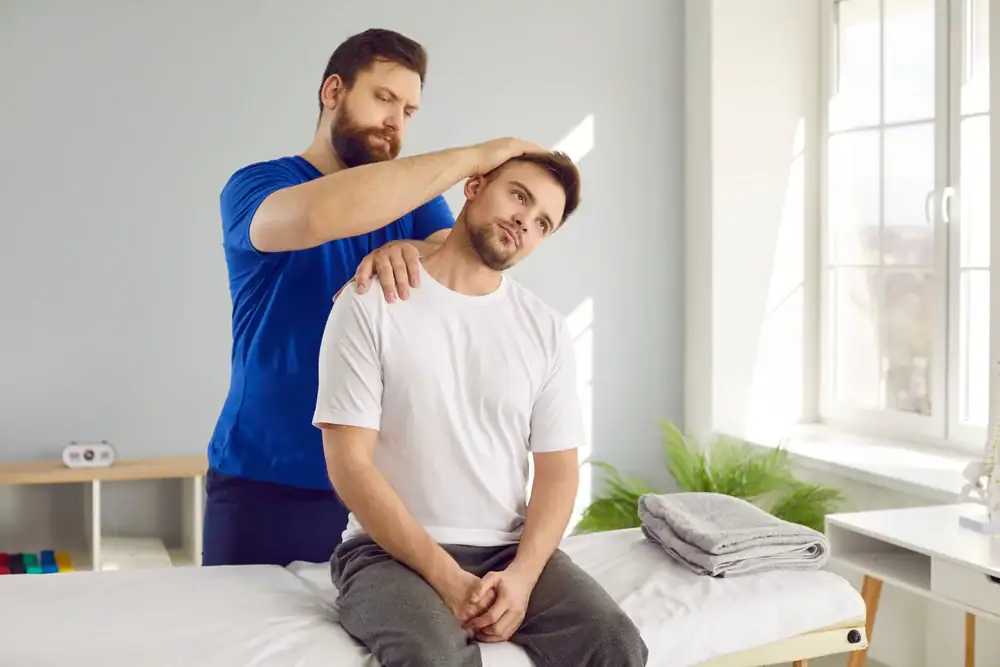
Most people notice some improvement within 2-3 weeks if they’re consistent with treatment and home exercises. That doesn’t mean you’re fully recovered, but you should feel measurable changes in pain levels, mobility, or confidence in movement.
The full timeline depends entirely on what we’re treating. A simple muscle strain might resolve in 4-6 weeks. Post-surgical rehab typically runs 8-12 weeks. Stroke recovery or complex neurological issues can take several months. We’re upfront about realistic timelines during your evaluation.
If you’re not seeing any progress after a few weeks, that’s a red flag. Either the diagnosis was wrong, the treatment approach needs adjustment, or there’s something else going on that needs medical attention. We track progress objectively, so you’ll know whether it’s working.
Most insurance plans cover physical therapy, but the specifics vary widely. Some plans cover 20-30 visits per year with a copay. Others require you to meet a deductible first. Some need a referral from your doctor, others don’t.
We verify your coverage before you start treatment so there are no surprises. That means calling your insurance company, confirming your benefits, and explaining what you’ll actually pay per visit. If your plan has visit limits, we’ll let you know upfront so we can structure your treatment accordingly.
If insurance isn’t an option or you’ve hit your visit limit, we can discuss cash rates and prioritize the most essential sessions. The goal is to get you better, not to drag out treatment for billing purposes.
The difference is diagnosis and progression. You might find exercises online that seem relevant, but if you don’t know exactly what’s wrong, you’re guessing. And guessing often makes things worse.
Physical therapists are trained to evaluate movement dysfunction, identify the root cause of your problem, and design treatment that addresses it specifically. We also use hands-on techniques that you can’t do yourself: joint mobilization, soft tissue work, neuromuscular re-education. These aren’t optional extras. They’re often what unlocks progress.
The other piece is progression. Your body adapts to exercise, so what works in week one won’t work in week four. We adjust resistance, complexity, and volume based on how you’re responding. Most people who try to self-treat either do too little and don’t improve, or do too much and get hurt. We keep you in the zone where you’re actually healing.
In New York, you can see a physical therapist without a referral for up to 10 visits or 30 days, whichever comes first. After that, you need a physician’s prescription to continue treatment.
Most people find it helpful to have their doctor involved anyway, especially if there’s an underlying condition or recent surgery. Your physician has diagnostic information and medical history that helps us treat you more effectively.
If you’re not sure whether you need a referral for your specific insurance plan, we’ll check that when we verify your benefits. Some plans require it from day one regardless of state law. We handle that communication so you don’t have to navigate it yourself.
Your first visit is mostly evaluation. We need to understand what’s wrong before we can fix it. That means a detailed discussion about your symptoms, medical history, and what you’re trying to get back to doing. Then we do a physical assessment: checking your range of motion, strength, flexibility, posture, and movement patterns.
If balance or gait is part of your issue, we’ll test that too. The evaluation usually takes 45-60 minutes. You might do some light treatment that same day if it’s appropriate, but the priority is getting an accurate picture of what’s going on.
At the end, we’ll explain what we found, what we think is causing your problem, and what the treatment plan looks like. That includes how many visits you’ll likely need, what you’ll do during sessions, and what you’ll need to do at home. You’ll leave with a clear understanding of the path forward, not vague reassurances.
Often, yes, but it depends on what’s causing the pain. Chronic pain is tricky because your nervous system can get stuck in a pain response even after the original injury heals. That doesn’t mean it’s “all in your head.” It means your body needs retraining.
Physical therapy for chronic pain focuses on gradually restoring normal movement, building strength in areas that have weakened from disuse, and teaching your nervous system that movement is safe. Research shows that 79% of physical therapy patients report significant pain reduction, and it can cut the need for opioid medication by 87%.
That said, if you’ve had pain for years, progress might be slower than acute injuries. Your body has adapted to moving in compensatory ways, and undoing those patterns takes time. But most people see enough improvement in the first month to know whether continued treatment makes sense. We’re realistic about what’s possible and honest if we think you need a different approach.
Other Services we provide in Wading River