


You shouldn’t have to choose between getting the care you need and the hassle of getting there. That’s the reality for a lot of people dealing with joint pain, recovering from surgery, or managing balance issues that make leaving home risky.
In-home physical therapy changes that. You get the same professional treatment you’d receive in a clinic, but in your own space where you can focus on recovery instead of logistics. No arranging rides, no sitting in traffic on the Northern State, no exposure to waiting room germs.
The results speak clearly. Most patients see significant pain reduction without increasing medication. Fall risk drops when you work on balance and gait training in the actual environment where you live. And you’re far more likely to stick with a program when it fits into your life instead of disrupting it.
Recovery happens faster when it happens consistently. That’s what in-home care makes possible for Saddle Rock residents who need physical therapy but face real barriers getting to a clinic.
We’ve been providing in-home physical therapy across Nassau County for over a decade. We’re not a new operation testing a concept—we’re an established practice with affiliated therapy centers including Physical Therapy Associates of Smithtown and Speonk Physical Therapy.
What matters most in Saddle Rock is accessibility. This is a community where 99% of residents own their homes and plan to age in place. That requires a different approach to healthcare—one that comes to you instead of expecting you to navigate transportation challenges, especially when mobility is already compromised.
Our physical therapists are Medicare-certified and licensed to provide the full range of outpatient services in your home. We work directly with your physician, follow evidence-based protocols, and maintain the same standards you’d expect from any top-tier clinic. The only difference is location, and for many patients, that difference is everything.

It starts with a phone call. We’ll verify your Medicare coverage, discuss your specific needs, and schedule an initial evaluation at a time that works for you. No referral runaround, no insurance mysteries—just clear answers about what’s covered and what to expect.
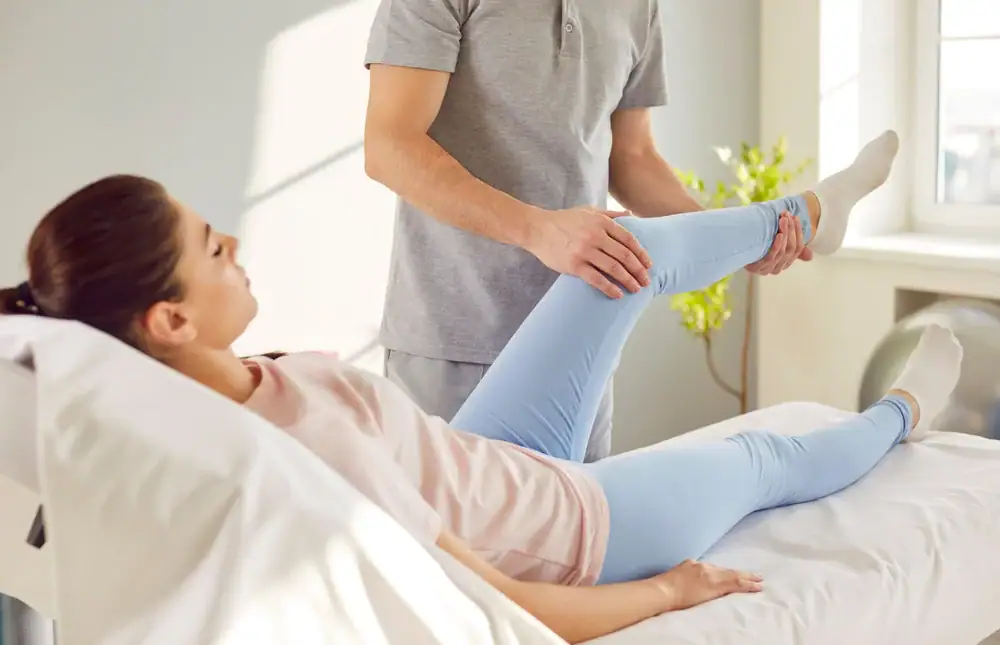
During your first visit, your physical therapist conducts a comprehensive assessment in your home. They’ll evaluate your mobility, strength, balance, and pain levels. They’ll also look at your actual living environment—the stairs you use, the bathroom setup, the walking surfaces—because that’s where real-world function matters. You’ll leave that first session with a clear treatment plan and specific goals.
Treatment sessions typically happen two to three times per week, depending on your condition and what your doctor recommends. Each visit focuses on therapeutic exercise, manual therapy, and functional training designed for your specific situation. If you’re recovering from hip surgery, we’re working on the movements you need for daily life. If you’re dealing with stroke rehabilitation, we’re focused on regaining independence with activities that matter to you.
Progress gets measured and documented throughout. You’ll know what’s improving, what needs more work, and how close you are to your goals. Your physician receives regular updates, and we adjust the treatment plan based on how you’re responding. When you’ve hit your goals and built the strength to maintain progress on your own, we transition you out of active care with a home exercise program to keep you moving forward.
Ready to get started?
Fall prevention and balance training are critical in Saddle Rock, where the median age skews older and homes often have stairs, multiple levels, and layouts that weren’t designed with mobility challenges in mind. We work on proprioceptive training and gait training to reduce fall risk—the leading cause of injury-related hospital admissions for older adults on Long Island.
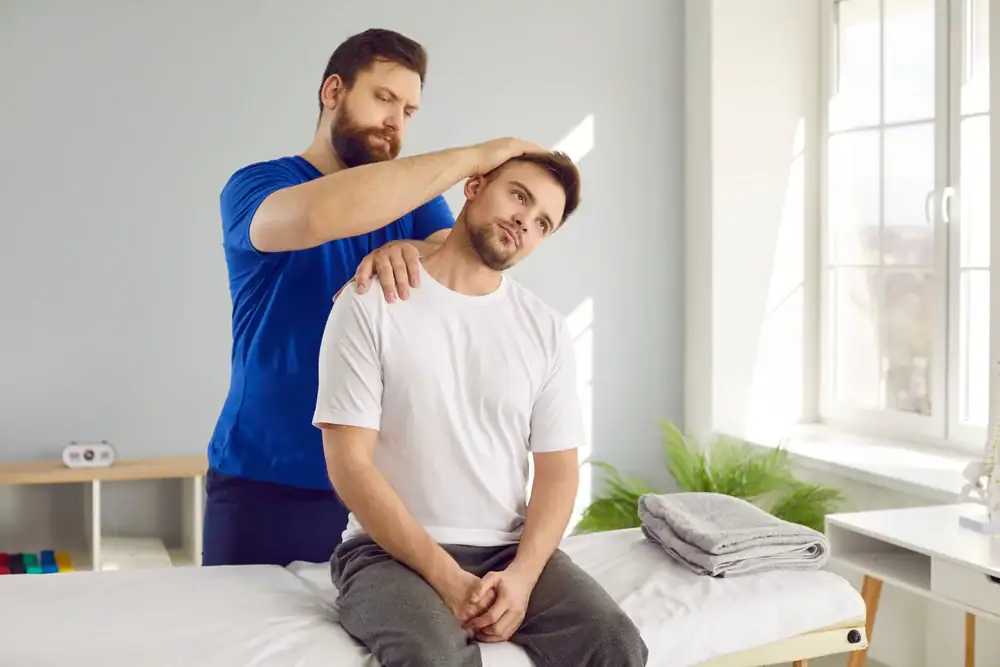
Joint pain treatment covers everything from arthritis management to post-surgical rehabilitation. If you’ve had a knee replacement, hip surgery, or rotator cuff repair, in-home therapy means you’re working on strength and range of motion without the stress of commuting while you’re still in early recovery. We also handle injury rehabilitation for sprains, strains, and orthopedic conditions that limit function.
Stroke rehabilitation and neurological rehabilitation require specialized approaches to help you regain movement, coordination, and independence after a neurological event. We focus on neuromuscular re-education—retraining your body to perform movements that may have been affected by stroke, Parkinson’s, or other neurological conditions.
Therapeutic exercise and resistance training aren’t just about getting stronger. They’re about maintaining the physical capacity to do what you want to do—whether that’s walking around the neighborhood, playing with grandchildren, or simply moving through your home safely. For Saddle Rock residents who value independence and quality of life, that’s not a luxury. It’s essential.
Yes. Medicare Part B covers outpatient physical therapy services provided in your home when it’s medically necessary and ordered by your physician. You’ll pay 20% of the Medicare-approved amount after you’ve met your deductible, which is standard for outpatient therapy regardless of location.
The key requirement is that you’re homebound or have significant difficulty leaving your home due to your medical condition. If getting to a clinic requires considerable effort, creates safety risks, or isn’t realistic given your mobility limitations, in-home therapy is typically covered. We verify your coverage before starting treatment, so you’ll know exactly what to expect.
Medicare covers a wide range of conditions including post-surgical rehabilitation, stroke recovery, balance disorders, joint pain, and injury rehabilitation. There are coverage limits based on annual caps, but medically necessary treatment can often continue beyond those thresholds with proper documentation. We handle the paperwork and work directly with Medicare to maximize your benefits.
Most treatment plans run six to twelve weeks, but the actual timeline depends entirely on your condition, your goals, and how your body responds. Someone recovering from a knee replacement might need eight weeks of intensive therapy. Someone working on balance issues to prevent falls might benefit from a longer, less frequent schedule.
Frequency matters as much as duration. Early in recovery, you might have therapy three times per week. As you improve, that often drops to twice weekly, then once weekly as you transition to independence. Each session typically lasts 45 minutes to an hour, depending on what we’re working on and your tolerance.
The goal isn’t to keep you in therapy forever. It’s to get you strong enough, stable enough, and confident enough to maintain progress on your own. When you’ve hit your functional goals—walking without assistance, managing stairs safely, returning to normal activities—we build you a home exercise program and step back. Some patients need a few weeks. Others need several months. We adjust based on real progress, not arbitrary timelines.
Physical therapy focuses on movement, strength, balance, and pain management. If your challenge is walking, climbing stairs, getting up from a chair, or managing joint pain, you’re looking at physical therapy. We work on gross motor skills—the big movements that get you from place to place and keep you physically functional.
Occupational therapy focuses on daily living activities and fine motor skills. That includes things like dressing yourself, preparing meals, bathing, and using your hands for detailed tasks. If you’re struggling with the specific activities of daily life rather than overall mobility, occupational therapy addresses those challenges.
Many patients benefit from both, especially after a stroke or major surgery. Physical therapy gets you moving and strong. Occupational therapy helps you apply that strength to real-world tasks. We offer both services and can coordinate care so you’re getting comprehensive rehabilitation. Your physician and our therapists will recommend the right combination based on your specific needs and goals.
For many conditions, yes. Research shows that physical therapy can be as effective as surgery for issues like meniscus tears, spinal stenosis, and rotator cuff problems. It’s not a miracle cure, but it’s a legitimate alternative worth trying before committing to an invasive procedure.
The mechanism is straightforward. Strengthening the muscles around a painful joint reduces stress on that joint. Improving flexibility and range of motion decreases compensation patterns that create pain elsewhere. Manual therapy and targeted exercise can address the root cause of pain rather than just masking symptoms with medication.
About 79% of physical therapy patients report significant pain reduction, and therapy can reduce the need for opioid medications by 87% according to recent data. That doesn’t mean everyone avoids surgery—some conditions truly require surgical intervention. But if conservative treatment can get you the same outcome without the risks, recovery time, and cost of surgery, it’s worth exploring. We’ll be honest about what’s realistic for your specific situation. If therapy isn’t working after a reasonable trial, we’ll tell you and work with your doctor on next steps.
Have your insurance card and photo ID ready. We’ll need to verify coverage and document your information. If you have recent imaging results, surgical reports, or medical records related to your condition, having those available helps us understand your full picture, though we’ll also coordinate directly with your physician.
Wear comfortable clothing that allows easy movement and access to the area we’re treating. If we’re working on your knee, loose shorts work better than jeans. If it’s shoulder therapy, a tank top or loose shirt makes sense. You don’t need special equipment—we bring what’s necessary for treatment.
Clear a small space where we can work. It doesn’t need to be large, just enough room to move safely and perform exercises. If we’re doing gait training, we’ll use your hallway or the route you normally walk. If balance work is the focus, we’ll use your actual living space since that’s where you need to function safely. The goal is to make therapy practical and relevant to your real environment, so don’t worry about creating a gym setup. Your home as it is works perfectly fine.
Medicare defines homebound as needing considerable effort to leave your home, or leaving home isn’t recommended due to your condition. You don’t have to be completely bedridden. If getting to appointments requires help from another person, assistive devices, or creates a safety risk due to your mobility limitations, you likely qualify.
Practical examples help clarify this. If you can’t safely drive yourself due to pain, weakness, or balance issues, that counts. If you need a wheelchair or walker and don’t have reliable transportation that accommodates those devices, that counts. If leaving home exhausts you to the point that you couldn’t participate effectively in therapy after the trip, that counts too.
You can still leave home occasionally for medical appointments or religious services and remain eligible. The standard isn’t that you never leave—it’s that leaving requires significant effort or assistance. During your initial evaluation, we’ll assess your situation and document your homebound status appropriately. If there’s any question about eligibility, we’ll work with your physician to ensure everything is properly justified before moving forward with treatment.
Other Services we provide in Saddle Rock