


You shouldn’t have to choose between getting the care you need and dealing with the hassle of getting there. That’s the reality for too many people in Roslyn dealing with mobility issues, recovering from surgery, or just trying to stay steady on their feet.
Here’s what changes when a physical therapist comes to you. You work on balance training in the same hallways you walk every day. You practice gait training on your actual stairs, not some generic clinic setup. Your therapist sees how you really move in your space and builds a plan around that.
Falls aren’t just scary—they’re expensive and dangerous. But balance and strength training can prevent 30-40% of them. You get therapeutic exercise designed for your body, your goals, and your home environment. No generic programs. No waiting rooms.
We’ve been providing in-home physical therapy across Nassau and Suffolk County since 2010. We’re not a franchise or a rotating door of contractors. We’re licensed therapists who’ve built our practice on showing up, doing the work, and helping people stay in their homes longer.
Roslyn has one of the highest concentrations of older adults on Long Island. That means more people dealing with arthritis, chronic pain, and fall risk than almost anywhere else in New York. We’ve worked with hundreds of families here who needed real help—not just exercises on a printout.
Every therapist on our team is Medicare-certified and background-checked. We manage our credentials, our digital security, and our patient data like it matters—because it does.

First, we confirm your Medicare coverage. Most people don’t realize Medicare Part B covers 80% of outpatient physical therapy when it’s medically necessary. We handle the paperwork and verification so you’re not guessing what’s covered.
Then we schedule your initial evaluation at your home in Roslyn. Your therapist assesses your mobility, balance, strength, and any pain or limitations you’re dealing with. We also look at your home setup—stairs, bathroom access, furniture layout—because that’s where the real work happens.
From there, we build a treatment plan. Maybe it’s fall prevention and proprioceptive training. Maybe it’s post-surgery rehabilitation or stroke recovery. Could be joint pain treatment or neuromuscular re-education. Whatever it is, the plan is specific to you.
Sessions typically happen two to three times a week, right in your home. Your therapist brings any equipment needed—resistance bands, balance tools, whatever makes sense. You do the work. We track progress. And we adjust as you get stronger.

Ready to get started?
Every plan starts with a full fall risk assessment. If you’ve fallen before, or you’re afraid you might, we need to know why. Weak hips? Poor vision compensation? Medication side effects? We figure it out and address it.
Balance and gait training are huge for Roslyn residents. You’ll work on standing stability, weight shifting, walking with better control, and getting up from chairs or the floor safely. These aren’t abstract drills—they’re the movements you actually need every day.
We also cover therapeutic exercise and resistance training to rebuild strength after surgery or injury. That includes pre and post surgery rehabilitation, injury rehabilitation, and occupational rehabilitation if you’re trying to get back to work or daily tasks. For stroke or neurological conditions, we provide stroke rehabilitation and neurological rehabilitation that focuses on regaining movement and function.
Joint pain treatment is another common need here. Arthritis, old injuries, chronic pain—we use manual techniques, movement therapy, and strengthening to reduce pain and improve mobility. And if you need occupational therapy support for daily tasks like dressing, cooking, or bathing, we coordinate that too.
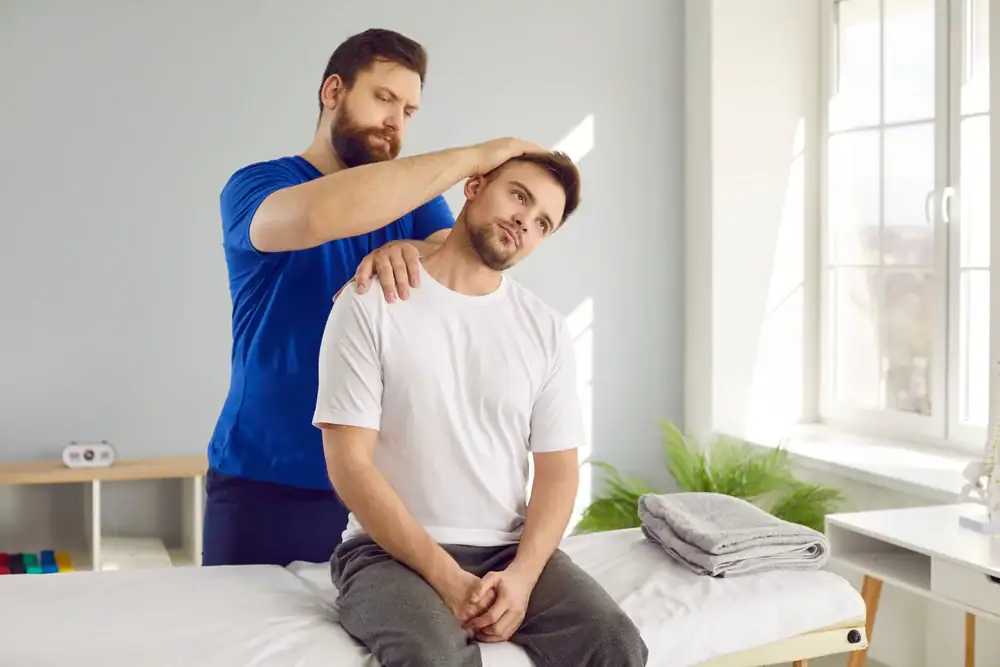
Yes, but only if it’s medically necessary and provided by a Medicare-certified therapist. Medicare Part B covers 80% of the cost for outpatient physical therapy, which includes in-home sessions. You’re responsible for the remaining 20% after your deductible.
There’s a cap—$2,330 for combined physical therapy and speech therapy in 2024. If you need more than that, your therapist has to submit an exception request with documentation showing why continued treatment is necessary. Most people don’t hit the cap, but it’s worth knowing it exists.
The key is “medically necessary.” That means your doctor has to prescribe therapy, and your condition has to require skilled intervention—not just general exercise. Things like fall risk, post-surgical recovery, stroke rehab, or neurological conditions almost always qualify.
Your therapist will spend about an hour with you. First, they’ll review your medical history, medications, and what’s been going on that led to the referral. Then comes the physical assessment—checking your strength, balance, range of motion, gait, and any pain or limitations.
They’ll also evaluate your home. Are there tripping hazards? Is the lighting good? Do you have grab bars in the bathroom? Can you navigate stairs safely? This isn’t about judging your housekeeping—it’s about identifying risks and figuring out what needs to change.
By the end of that visit, you’ll have a clear treatment plan. Your therapist will explain what they’re targeting, how often you’ll meet, what exercises you’ll do, and what progress should look like. You’ll also start some initial exercises or techniques right then so you’re not waiting another week to begin.
The biggest difference is context. In a clinic, you’re working in a controlled environment that doesn’t match your real life. At home, your therapist sees the actual stairs you struggle with, the actual bathroom where you feel unsteady, the actual furniture you use to get up and down.
That means the treatment is more specific. If you’re working on fall prevention, you’re training in the exact space where a fall would happen. If you’re doing gait training, you’re practicing on your floors, your rugs, your doorways. It’s harder to fake progress when the environment is real.
There’s also no transportation barrier. For a lot of people in Roslyn—especially older adults or anyone recovering from surgery—getting to a clinic twice a week is a nightmare. You need a ride, you’re in pain during the trip, it’s exhausting before therapy even starts. In-home care removes all of that. You save time, energy, and stress.
Absolutely. If you’ve fallen once, your risk of falling again is significantly higher—but that’s not inevitable. Physical therapy can reduce fall risk by 30-40% through targeted balance training, strength work, and gait correction.
After a fall, most people develop a fear of falling again. That fear leads to less activity, which leads to weaker muscles and worse balance, which increases fall risk. It’s a bad cycle. Therapy breaks that cycle by rebuilding your confidence and your physical capability at the same time.
Your therapist will also work with you and your family on environmental modifications and supervision techniques. Sometimes it’s as simple as removing a rug, adding a grab bar, or changing how you get out of bed. Combined with the physical training, these changes make a real difference in whether you fall again.
It depends entirely on what you’re treating and how your body responds. Post-surgery rehab might be six to eight weeks. Chronic balance issues or neurological conditions could be several months. Fall prevention programs often run eight to twelve weeks.
Your therapist will set goals with you at the start—things like walking without assistance, climbing stairs safely, or reducing pain to a certain level. As you hit those goals, therapy winds down. If progress stalls or you’re not improving as expected, the plan gets adjusted.
Medicare doesn’t put a time limit on therapy as long as you’re making progress and it’s still medically necessary. That said, the goal is always to get you strong and stable enough that you don’t need a therapist anymore. We’re not trying to keep you in therapy forever—we’re trying to get you back to your life.
Yes, and often it helps. If you have a spouse, adult child, or caregiver who’s around regularly, your therapist can teach them how to assist you safely. That might mean learning how to spot you during balance exercises, helping you with transfers, or knowing what to watch for if you’re at risk of falling.
Family involvement also helps with accountability. If someone’s checking in on whether you did your exercises or reminding you to use your assistive device, you’re more likely to stay consistent. Therapy only works if you’re doing the work between sessions.
That said, it’s your call. Some people prefer to work one-on-one with their therapist, and that’s fine too. We’re not going to force anyone into the room. But if you want support, we’ll make sure your family knows how to help without hovering or doing too much.
Other Services we provide in Roslyn