


You’re not looking for someone to tell you what’s wrong. You already know your knee hurts, your balance is off, or you’re still recovering from surgery. What you need is someone who can actually help you get back to doing what you used to do without thinking about it.
That’s where in-home physical therapy makes sense. You get a full hour with a licensed physical therapist who comes to you. No fighting traffic to get to an appointment. No sitting in a waiting room. No wondering if today’s session will be with the same person who knows your case.
The goal isn’t just less pain. It’s being able to walk your dog again without worrying about falling. Getting up from a chair without bracing yourself. Cooking dinner without your back giving out halfway through. Real life stuff that matters when you’re trying to stay independent and active in Rockville Centre.
We bring licensed physical therapists directly to homes across Rockville Centre and Nassau County. We’re not a franchise model where you’re not sure who’s showing up. Every therapist is a doctor of physical therapy with years of hands-on experience in orthopedic rehab, post-surgical recovery, and neurological conditions.
We accept Medicare Part B and most commercial insurance plans, which matters when you’re trying to figure out what’s actually covered. Our therapists work with patients recovering from joint replacements, managing chronic pain, rebuilding strength after a stroke, or just trying to prevent another fall.
Rockville Centre has plenty of therapy options, but most require you to drive there, park, check in, and wait. If getting around was easy, you probably wouldn’t need therapy in the first place. That’s why we come to you.

You call or reach out online. We verify your insurance and schedule your first visit without needing a referral. New York’s direct access laws mean you can start physical therapy right away.
Your first session is an evaluation. The therapist asks about your history, watches how you move, tests your strength and balance, and figures out what’s limiting you. Then you build a plan together based on what you actually need to get back to doing.
Each session after that is 60 minutes of one-on-one treatment. That might include manual therapy to loosen up stiff joints, gait training if your walking is off, therapeutic exercises to rebuild strength, or balance training if falls are a concern. You’re not splitting time with three other patients. It’s just you and your therapist working through your specific issues.
Progress gets tracked at every visit. If something’s not working, the plan adjusts. If you’re improving faster than expected, you move forward. The goal is always getting you back to normal as quickly as possible, not dragging out treatment longer than it needs to be.

Ready to get started?
We handle orthopedic rehab for joint pain, back pain, knee pain, and hip pain that’s keeping you from moving normally. If you’ve had surgery—knee replacement, hip replacement, rotator cuff repair—we do the post-surgical rehabilitation that gets you functional again.
For neurological conditions like stroke, Parkinson’s, or MS, we focus on neuromuscular re-education and gait training to help you regain coordination and mobility. Balance issues and fall prevention are huge in Rockville Centre’s aging population, so we bring the equipment and training needed to reduce fall risk at home.
Occupational therapy is available when you need help with daily tasks like dressing, bathing, or cooking. We also do resistance and strength training for people who’ve lost muscle mass from inactivity or illness.
Every treatment is evidence-based, meaning it’s backed by research, not guesswork. You’re involved in every decision about your care, and you can ask questions without feeling rushed. Sessions happen in your home with equipment we bring, so you don’t need a gym setup or special space.
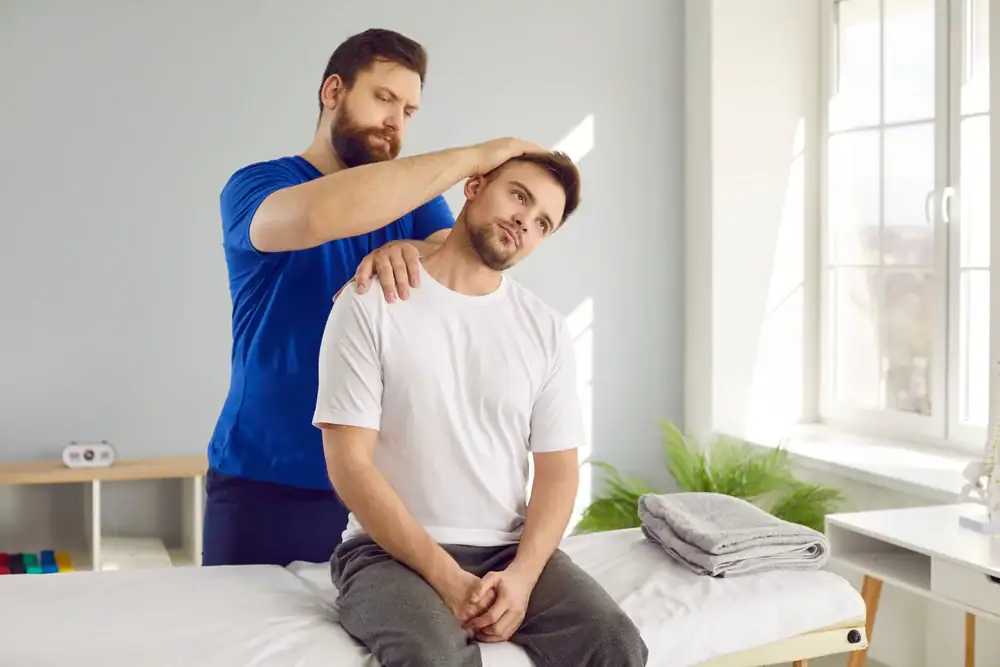
No. New York allows direct access to physical therapy, which means you can start treatment without a physician’s referral. You can call us directly and schedule an evaluation.
There’s one thing to know: if you’re using insurance, some plans still require a referral for coverage even though it’s not legally required to receive care. We verify your specific plan’s rules before your first visit so there are no surprises. Medicare Part B, for example, covers physical therapy without a referral as long as the therapist documents medical necessity.
If you’re paying out of pocket, you can start immediately. Most people don’t realize they have this option, so they wait weeks for a doctor’s appointment just to get a referral for something they could’ve started treating right away.
Each session is 60 minutes of one-on-one time with your physical therapist. That’s the full hour focused on your treatment, not 20 minutes while the therapist bounces between other patients.
Most clinics run 30-45 minute sessions and use assistants or aides to fill in the gaps. We don’t do that. You get a licensed doctor of physical therapy for the entire appointment, which means more hands-on work, better instruction, and faster progress.
The length of your overall treatment depends on your condition. A post-surgical knee might need 8-12 weeks. Chronic back pain might improve in 4-6 weeks. Stroke rehabilitation could take several months. Your therapist will give you a realistic timeline after the evaluation and adjust it as you progress.
Your first visit is an evaluation. The therapist will ask about your medical history, current symptoms, and what activities are limited by your condition. Then they’ll watch you move—standing up, walking, reaching, bending—to see where the problem is.
They’ll test your strength, range of motion, balance, and flexibility depending on what you’re dealing with. If it’s a knee issue, they’re checking how your knee moves and what makes it hurt. If it’s balance problems, they’re watching your gait and stability. Everything is specific to your situation.
At the end of the evaluation, you’ll get a clear explanation of what’s wrong, what the treatment plan is, and how long recovery typically takes. You’ll also do some initial treatment during that first visit if it makes sense. The goal is to leave with a plan you understand and some confidence that this is fixable.
Yes. Medicare Part B covers physical therapy in your home as long as it’s medically necessary and provided by a licensed therapist. You’ll pay 20% of the Medicare-approved amount after you’ve met your deductible, which is standard for Part B services.
There’s no requirement that you be homebound for outpatient physical therapy. That’s a common misconception. The homebound rule applies to home health services under Part A, not Part B therapy. As long as the therapy is reasonable and necessary for your condition, Medicare covers it.
We handle all the Medicare paperwork and billing directly. You don’t need to file claims or chase down reimbursements. Most commercial insurance plans also cover in-home physical therapy, though coverage varies by plan. We verify your benefits before starting so you know what your cost will be upfront.
Physical therapy focuses on mobility, strength, balance, and pain management. If you’re having trouble walking, getting up from a chair, or moving without pain, that’s physical therapy. The goal is to restore your ability to move and function physically.
Occupational therapy focuses on daily living activities like dressing, bathing, cooking, and using your hands for tasks. If a stroke affected your ability to button a shirt or hold a fork, that’s occupational therapy. It’s about regaining independence in everyday tasks.
There’s overlap, especially in neurological rehab where both therapists might work with the same patient. A stroke patient might need physical therapy for walking and balance, plus occupational therapy for hand function and self-care. We provide both services and coordinate care when you need more than one type of therapy.
If you’ve fallen in the past year, you’re at higher risk of falling again. Other signs include feeling unsteady when walking, needing to hold onto furniture or walls for support, difficulty getting up from a chair, or avoiding activities because you’re worried about balance.
Medical conditions like stroke, Parkinson’s, neuropathy, or inner ear problems increase fall risk. So do medications that cause dizziness or affect coordination. Muscle weakness in your legs, poor vision, and home hazards like loose rugs or poor lighting all contribute.
We can assess your fall risk with specific tests that measure balance, gait, and strength. If you’re at risk, balance training includes exercises to improve stability, gait training to correct walking patterns, and strength work to support your joints. We also evaluate your home environment and recommend changes that reduce hazards. Falls are preventable in most cases if you address the underlying issues early.
Other Services we provide in Rockville Centre