


You’re not looking for temporary relief. You want to walk without worrying about falling. You want to get in and out of your car without help. You want to feel steady on your feet when you’re out near the beach or running errands in town.
That’s what physical therapy should do. Not just reduce pain for a week, but give you back the confidence to move through your day without second-guessing every step.
In Point Lookout, where many residents are over 55 and living independently, mobility isn’t optional. It’s everything. We work with you at home because that’s where real life happens. That’s where we see how you actually move, where the risks are, and what needs to change. We focus on fall prevention, balance training, and strength work that translates to your daily routine—not just exercises that look good on paper.
You’ll work one-on-one with a licensed physical therapist who builds a plan around your goals. Whether you’re recovering from surgery, managing chronic joint pain, or rebuilding strength after a stroke, the program adapts as you improve.
Medcare Therapy Services has been serving Long Island communities for years, with locations in Smithtown and Speonk. We know Point Lookout isn’t like the rest of Nassau County. It’s quieter, older, more residential. People here value their independence and aren’t interested in cookie-cutter care.
Our team includes licensed physical therapists who specialize in geriatric rehabilitation, neurological recovery, and in-home treatment. We accept Medicare and most commercial insurance plans, and we handle the verification and billing so you don’t have to chase down paperwork.
What sets us apart isn’t flashy marketing. It’s that we show up, do the work, and don’t disappear after three sessions. You get the same therapist throughout your care, and they actually remember what you talked about last time.

First, we schedule an in-home evaluation. A licensed physical therapist comes to your house, assesses your mobility, strength, balance, and any pain or limitations you’re dealing with. This isn’t a 10-minute check-in. It’s a full evaluation covered by Medicare Part B.
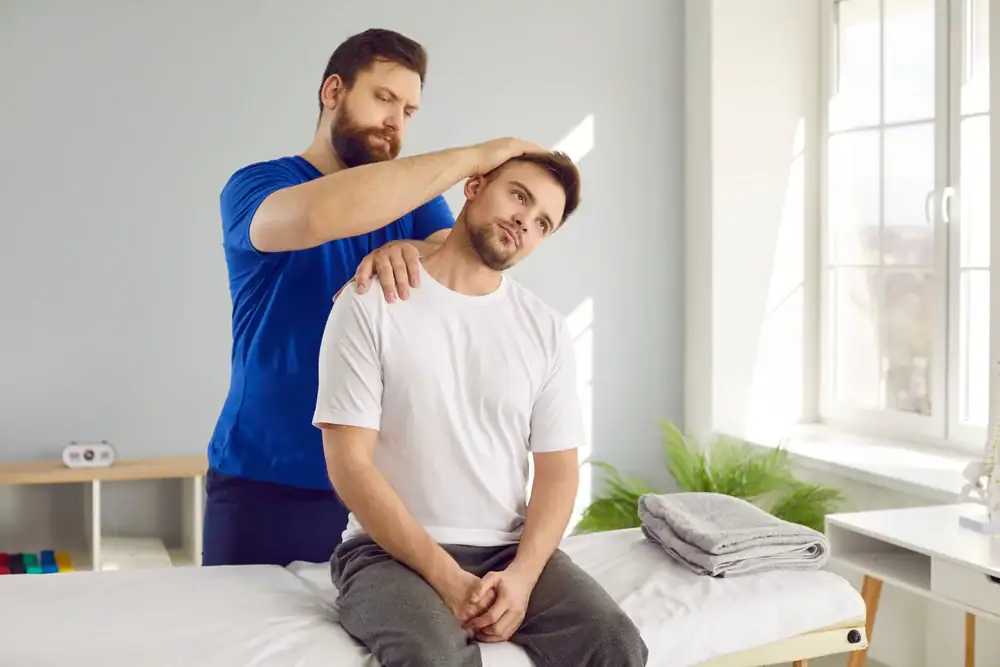
From there, we build a treatment plan based on what you need—not a generic protocol. If you’re recovering from a hip replacement, we focus on gait training and strength work. If you’ve had a stroke, we incorporate neuromuscular re-education and coordination exercises. If you’re dealing with chronic joint pain, we use manual therapy and therapeutic exercise to improve range of motion and reduce discomfort.
Sessions happen at your home, usually two to three times per week depending on your condition. Each session is one-on-one. Your therapist brings any equipment needed, tracks your progress, and adjusts the plan as you improve.
You’re not stuck in a clinic waiting room. You’re working in your own space, with your own furniture, your own stairs, your own bathroom—the real environment where you need to function. That’s how you get results that actually stick.

Ready to get started?
Every plan is different, but most include some combination of therapeutic exercise, balance and proprioceptive training, gait training, and manual therapy. If you’re at risk for falls—which affects a significant portion of Point Lookout’s aging population—we’ll work on strengthening your legs, improving your reaction time, and identifying hazards in your home.
For stroke rehabilitation, we focus on rebuilding coordination, retraining movement patterns, and helping you regain as much function as possible. Research shows that 25% of stroke patients recover with only minor impairments, and early, consistent therapy plays a major role in that outcome.
If you’re preparing for surgery or recovering from one, we offer pre and post-surgery rehabilitation. That might mean strengthening the surrounding muscles before a knee replacement or working on range of motion and scar tissue after a rotator cuff repair.
We also treat joint pain, arthritis, neurological conditions, and general deconditioning. The goal is always the same: get you moving better, feeling stronger, and living without constantly thinking about your limitations. Point Lookout residents tend to be active and independent—we want to keep it that way.
Yes. Medicare Part B covers in-home physical therapy evaluations and treatment as long as you meet the criteria for homebound status. That doesn’t mean you’re bedridden—it means leaving your home requires considerable effort or assistance.
If you have trouble getting in and out of a car, need help walking to your driveway, or feel unsteady enough that going out feels risky, you likely qualify. Most commercial insurance plans also cover in-home therapy, though coverage varies by plan.
We handle the verification and billing directly with your insurance. You won’t need to file claims or chase reimbursements. If there’s any out-of-pocket cost, we’ll tell you upfront so there are no surprises later.
It depends on what you’re treating and where you’re starting from. Some people notice improvements in pain or balance within the first two weeks. Others, especially those recovering from surgery or stroke, may need several weeks before they see significant progress.
On average, most patients work with us for six to eight weeks, with sessions two to three times per week. That’s enough time to build strength, retrain movement patterns, and make lasting changes. But it’s not a hard rule—some people need more time, some need less.
What matters more than the timeline is consistency. If you do the exercises between sessions and stay engaged in the process, you’ll see faster, more sustainable results. We’re not here to drag out treatment. We’re here to get you functional again and then step back.
Physical therapy focuses on mobility, strength, balance, and pain management. If you’re having trouble walking, getting up from a chair, or moving without discomfort, that’s physical therapy.
Occupational therapy focuses on daily living activities—things like dressing yourself, cooking, bathing, or using your hands for fine motor tasks. If you’ve had a stroke and you’re struggling to button a shirt or hold a fork, that’s occupational therapy.
We offer both. Sometimes people need one, sometimes they need both. A stroke patient, for example, might work with a physical therapist to regain walking ability and an occupational therapist to regain hand function. We coordinate care so you’re not repeating the same exercises or getting conflicting advice.
Absolutely. In fact, many of our Point Lookout patients live alone. That’s one of the reasons in-home therapy works so well—you don’t need someone to drive you to appointments or help you get ready to leave the house.
Your therapist will assess your home environment during the first visit and make sure any exercises or activities are safe for you to do independently. If there’s a fall risk or mobility concern, we’ll address it as part of the treatment plan.
Between sessions, you’ll have exercises to do on your own. These are designed to be manageable without supervision. If something feels unsafe or unclear, you can call us. We’d rather you ask than skip the exercise or do it wrong.
The first visit is an evaluation. Your therapist will ask about your medical history, current symptoms, and what you’re hoping to accomplish. Then they’ll assess your strength, balance, range of motion, and how you move through your home.
They’ll watch you walk, sit down, stand up, and navigate any stairs or tight spaces. They’ll check for environmental hazards—loose rugs, poor lighting, clutter—that could increase your fall risk. This isn’t about judging your housekeeping. It’s about making your home safer.
From there, they’ll explain what they found, what the treatment plan will look like, and how often you’ll need sessions. You’ll usually start with a few exercises that same day. The whole visit takes about an hour. Come wearing comfortable clothes you can move in, and have a list of your current medications handy.
It depends on your insurance. Medicare requires a referral or prescription from your doctor before starting physical therapy. Most commercial insurance plans do as well, though some allow direct access to a physical therapist without a referral.
If you’re not sure, we can check your plan for you. If you do need a referral, we can coordinate with your doctor’s office to get it. You don’t have to handle that part yourself.
Once we have the referral and verify your insurance, we’ll schedule your first visit. The whole process usually takes a few days, not weeks. We know you’re not looking to wait around—you want to start feeling better.
Other Services we provide in Point Lookout