


You shouldn’t have to choose between getting the care you need and dealing with the hassle of getting there. Transportation issues, mobility limitations, or just the exhaustion of another medical appointment—these barriers keep too many people from the therapy that could actually help.
In-home physical therapy removes those obstacles entirely. Your therapist comes to you, works with your space, and builds a treatment plan around your daily routine. That means more energy for the actual work of recovery and less spent on logistics.
The results speak clearly. Patients recovering at home often progress faster because they’re learning to move better in the environment where it matters most. Fall prevention exercises make more sense when you’re practicing them on your own stairs. Balance training is more effective when it’s happening in your actual kitchen, not a clinic across town.
You get one-on-one attention for the full session. No splitting time between multiple patients. No rushing through exercises because the next appointment is waiting. Just focused, personalized care that fits your life.
We’ve been providing in-home physical and occupational therapy across Nassau and Suffolk Counties for over a decade. We’re not new to this, and we’re not trying to reinvent what works.
Our therapists are licensed, experienced, and trained specifically in treating patients at home. That’s a different skill set than clinic-based therapy—it requires adaptability, resourcefulness, and a real understanding of how people actually live.
Manhasset residents know the value of quality healthcare delivered with professionalism and respect. You expect providers who show up on time, communicate clearly, and follow through. That’s exactly what we’ve built our reputation on. We accept Medicare, verify credentials properly, and manage every detail of your care with the same attention you’d expect from any trusted medical provider in this community.

It starts with a phone call. We’ll verify your Medicare coverage, get your physician’s prescription if you don’t have one yet, and schedule your initial evaluation at a time that works for you.
Your first session is an assessment. The therapist evaluates your mobility, strength, balance, and any specific issues you’re dealing with—whether that’s recovering from surgery, managing chronic pain, or preventing falls. They’ll also look at your home environment to identify risks and opportunities for safer movement.
From there, you get a personalized treatment plan. This isn’t a generic protocol. It’s based on your specific condition, your goals, and what’s realistic given your current abilities. You’ll know exactly what you’re working toward and why each exercise matters.
Sessions typically happen two to three times per week, depending on your needs and what Medicare approves. Each visit builds on the last. Your therapist tracks your progress, adjusts exercises as you improve, and keeps your physician updated on how you’re doing.
The goal is always independence. Whether that means walking without assistance, getting up and down stairs safely, or just having the confidence to move around your home without fear—we’re working toward you needing us less, not more.

Ready to get started?
Fall prevention isn’t just about balance exercises—though those are critical. It’s about understanding why falls happen and addressing each factor. We assess your gait, your strength, your home setup, and even your footwear. Then we build a plan that improves all of it.
Balance and proprioceptive training help you feel steadier on your feet. These exercises retrain your body’s awareness of where it is in space, which naturally declines with age or after injury. Research shows balance training can improve stability by 16% to 42% compared to baseline—and that translates directly to fewer falls.
For Manhasset residents recovering from stroke or dealing with neurological conditions, we offer specialized rehabilitation that addresses the unique challenges of regaining movement and function. Stroke rehabilitation focuses on relearning motor skills, improving coordination, and rebuilding strength on affected sides of the body.
Gait training corrects walking patterns that increase fall risk or cause pain. Joint pain treatment combines therapeutic exercise with manual techniques to reduce inflammation and restore range of motion. Pre and post-surgery rehabilitation gets you ready for procedures and speeds recovery afterward.
Occupational therapy addresses the practical side—how you get dressed, prepare meals, or manage daily tasks safely. Sometimes the best intervention isn’t another exercise. It’s adaptive equipment or a simple modification that makes your home safer and your life easier.
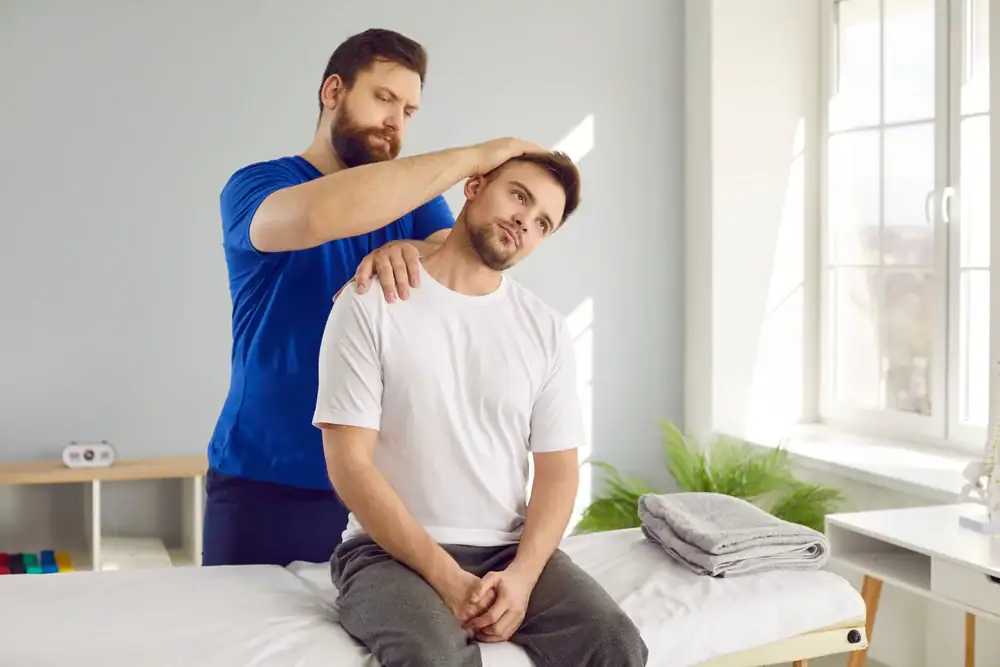
Yes. Medicare Part B covers outpatient physical therapy in your home when it’s medically necessary and prescribed by your physician. You’ll pay 20% of the Medicare-approved amount after you meet your deductible, which is standard for outpatient therapy regardless of where it’s provided.
The key requirement is that you’re homebound or have significant difficulty accessing clinic-based therapy. This doesn’t mean you can never leave your house—it means leaving requires considerable effort due to mobility issues, medical conditions, or other limitations. Most patients over 65 dealing with balance issues, post-surgical recovery, or chronic conditions qualify without any problem.
We handle the verification process directly with Medicare before starting treatment. You’ll know exactly what’s covered and what your responsibility is before the first session. If your primary physician has a contracted facility requirement, we can work with them to ensure your prescription comes through properly.
The biggest difference is context. In a clinic, you’re learning exercises in an environment that doesn’t match where you actually need to function. At home, every exercise is practiced in the space where it matters—your stairs, your bathroom, your kitchen.
That makes the training more practical and the results more immediate. You’re not trying to remember what the therapist showed you last week and translate it to your house. You’re learning it right there, with real-time feedback on the surfaces and obstacles you deal with every day.
You also get undivided attention. Clinic therapists often rotate between multiple patients during a session. At home, it’s one-on-one for the full appointment. That means more hands-on treatment, better form correction, and a plan that adapts faster to your progress. For patients who find travel exhausting or stressful, it also means you’re not worn out before therapy even starts.
We treat the full range of conditions that benefit from physical and occupational therapy. Fall prevention and balance issues are a major focus, especially for older adults who’ve had a fall or are afraid of falling. The statistics are clear—one in four adults over 65 falls each year, and physical therapy can prevent 30% to 40% of those falls.
Post-surgical rehabilitation is common, whether you’re recovering from joint replacement, spinal surgery, or other procedures. We also work with stroke patients on neurological rehabilitation, helping them regain movement, coordination, and independence. Chronic conditions like arthritis, Parkinson’s, or COPD that limit mobility benefit from ongoing therapy to maintain function and prevent decline.
Injury rehabilitation—whether from a fracture, sprain, or other acute injury—helps you heal properly and avoid compensatory movement patterns that cause new problems. Basically, if your physician believes physical or occupational therapy will help you move better, hurt less, or live more independently, we can probably treat it at home.
It depends entirely on your condition and goals. Some patients need a few weeks of intensive therapy after surgery and then they’re done. Others benefit from ongoing treatment to manage chronic conditions or prevent decline.
A typical post-surgical rehabilitation might run 6 to 8 weeks with sessions two to three times per week. Fall prevention programs often follow a similar timeline, though some patients continue with less frequent maintenance sessions if they’re at ongoing risk. Stroke rehabilitation can take months, with progress happening gradually as the brain relearns motor control.
Medicare doesn’t set arbitrary limits on how long you can receive therapy. What matters is whether you’re making progress toward functional goals and whether continued therapy is medically necessary. Your therapist documents your improvement and works with your physician to determine the appropriate duration. When you’ve reached your goals or plateaued in progress, therapy ends. If your condition changes or new issues develop, you can restart with a new prescription.
Your initial evaluation typically lasts 45 to 60 minutes. The therapist will review your medical history, current medications, and the specific issues that led to the referral. Then comes the physical assessment—testing your strength, range of motion, balance, and how you move through basic activities.
They’ll watch you walk, sit down and stand up, and perform movements relevant to your condition. If you’re dealing with fall risk, they’ll assess your home for hazards—loose rugs, poor lighting, furniture placement, bathroom safety. This isn’t about judging your housekeeping. It’s about identifying risks you might not notice because you’re used to your space.
You’ll leave that first session with a clear treatment plan, specific goals, and a schedule for follow-up visits. You’ll also usually get a few exercises to start working on between sessions. The therapist will demonstrate proper form, watch you do them, and make sure you understand why each one matters. Expect honest communication about what’s realistic, how long improvement typically takes, and what you need to do between visits to get the best results.
Yes. Physical therapy requires a physician’s prescription, whether it’s provided at home or in a clinic. This is a Medicare requirement and a standard medical practice—therapy is a treatment prescribed by a doctor, not something you just sign up for on your own.
If you don’t have a prescription yet, that’s not a problem. Contact us first, and we can coordinate with your physician to get one. Most doctors are familiar with this process and can send a prescription quickly, especially if you’re dealing with an obvious need like post-surgical recovery or recent falls.
The prescription needs to specify the type of therapy (physical therapy, occupational therapy, or both), the frequency, and the general condition being treated. Your physician doesn’t need to write out a detailed treatment plan—that’s the therapist’s job. They just need to authorize the therapy and confirm it’s medically necessary. Once we have that, we can move forward with scheduling your evaluation and getting started.
Other Services we provide in Manhasset