
You stop planning your day around pain. That’s the real marker.
When balance training and gait training actually work, you’re not second-guessing every step or avoiding stairs. You’re walking into the grocery store without mapping out where to hold on. You’re getting dressed without sitting down halfway through.
Fall prevention isn’t just about statistics. It’s about not living in fear of your own bathroom. Our programs reduce fall risk by 35-40% because we address why you’re unsteady in the first place—weak stabilizers, poor proprioception, compensation patterns you’ve built up over months or years.
Post surgery rehabilitation and injury rehabilitation get you past “good enough” and back to normal. Not modified normal. The version where you forget you ever had the injury.
We work with patients across Lake Ronkonkoma, NY and surrounding Suffolk County communities. We’re affiliated with Physical Therapy Associates of Smithtown and Speonk, and we’re part of the HSS Rehabilitation National Network—connected to the top-ranked orthopedic hospital in the world.
That matters because it means our approach is evidence-based, not guesswork. But what matters more is that we live here. We understand what it’s like to navigate healthcare on Long Island, deal with insurance questions, and just want someone who picks up the phone.
You’ll work with a physical therapist who designs your plan around your life. Not a template. Your actual goals and limitations.

You call or book online. Most insurances don’t require a referral, and we can usually get you in same-day or within 24 hours.
Your first visit is an evaluation. We’re looking at how you move, where you’re compensating, what hurts and why. You’ll leave with a clear explanation of what’s going on and a realistic timeline for improvement. No vague promises.
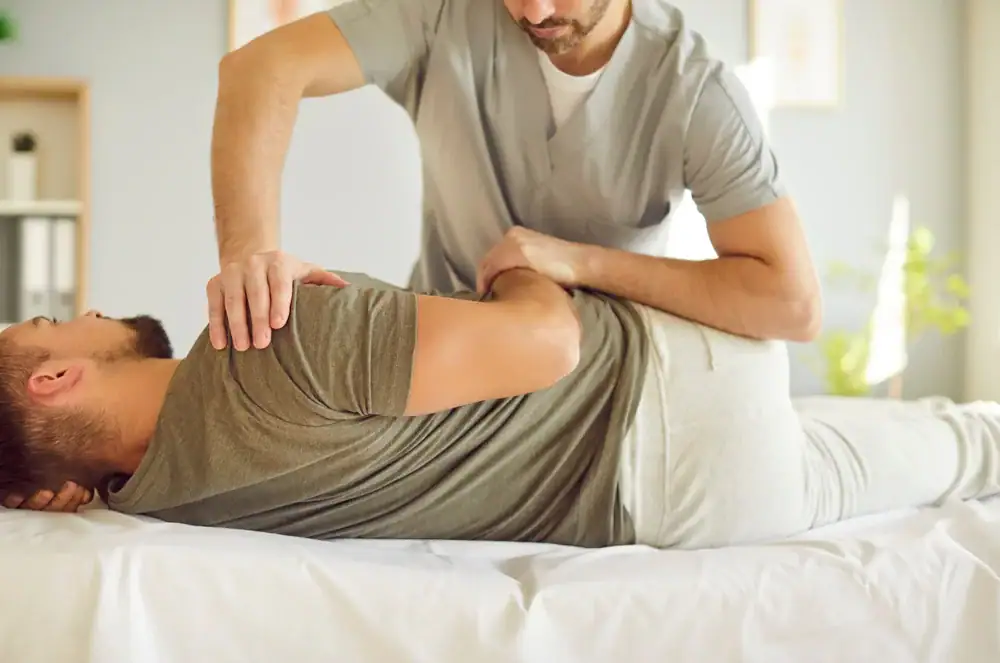
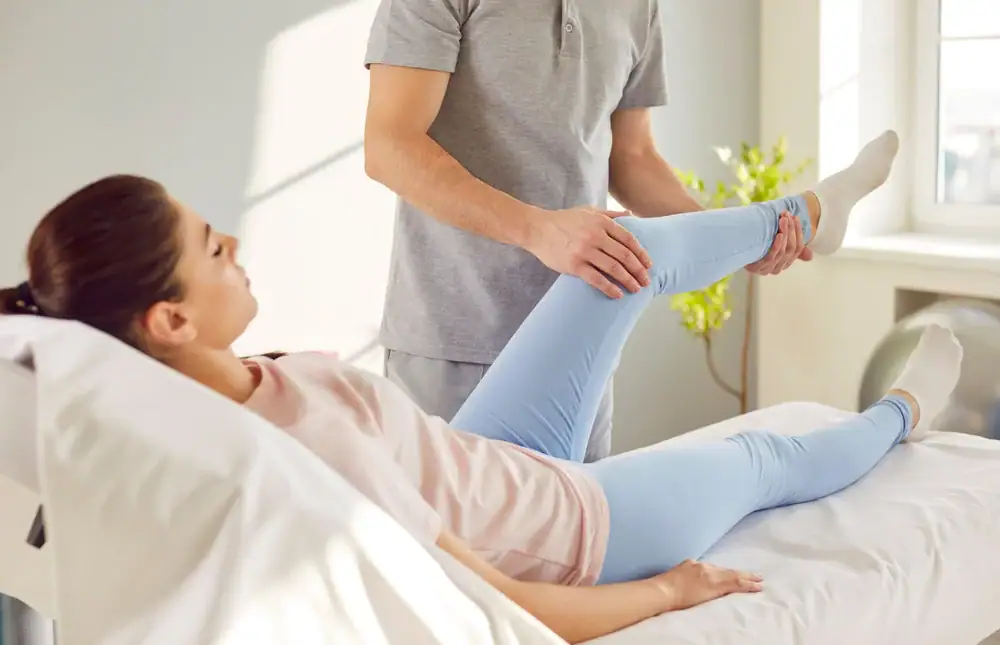
Treatment is hands-on. Depending on what you need, that might mean manual therapy, therapeutic exercise, resistance and strength training, or neuromuscular re-education to retrain movement patterns. For stroke rehabilitation or neurological rehabilitation, we’re working on coordination, balance, and rebuilding functional movement.
Sessions are usually 45-60 minutes, two to three times a week at first. As you improve, frequency drops. If getting to the clinic is hard, we offer in-home physical therapy. Same quality care, your living room.
Progress gets tracked. You’ll know when you’re improving because we measure it—range of motion, strength, balance scores, pain levels. When you’re ready, we transition you to a maintenance plan so gains stick.
Ready to get started?
Every plan includes a full movement assessment and personalized treatment designed around your specific condition. That could be joint pain treatment for a knee that’s been bothering you for months, or occupational rehabilitation to get you back to work after an injury.
For older adults in Lake Ronkonkoma, NY, fall prevention is critical. One in four adults over 65 falls each year, and the consequences go far beyond bruises. Our balance and proprioceptive training programs rebuild stability and confidence. You’ll work on weight shifting, reaction time, and real-world scenarios like stepping off a curb or reaching overhead.
Pre and post surgery rehabilitation covers everything from joint replacements to rotator cuff repairs. We coordinate with your surgeon’s protocol and adjust as you heal. The goal is full recovery, not just “better than before surgery.”
If you’ve had a stroke or deal with a neurological condition, our neurological rehabilitation focuses on regaining motor control, improving coordination, and reducing fall risk. It’s slow work, but it’s some of the most important work we do.
In-home physical therapy is available if mobility or transportation is an issue. We bring the same equipment and expertise to your home.
Most insurances don’t require a referral for physical therapy in New York. You can call and schedule directly.
There are exceptions—some plans still require a doctor’s order, and Medicare has specific rules depending on your coverage type. When you call, we’ll verify your insurance and let you know if you need anything from your doctor before the first visit.
If you do need a referral, we can coordinate with your physician’s office to get it. But in most cases, you can start treatment right away without waiting for paperwork.
It depends on what we’re treating. Acute injuries like a sprained ankle might need four to six weeks. Post surgery rehabilitation after a knee replacement could take three to four months.
You’ll usually feel some improvement within the first few sessions—less pain, better range of motion, more confidence moving. But real, lasting change takes consistency. That’s why we track progress at every visit and adjust your plan as you improve.
Chronic conditions like arthritis or long-term balance issues take longer. We’re not just treating symptoms—we’re retraining how your body moves and compensates. That takes time, but it’s also what keeps you out of our office long-term.
The treatment quality is the same. The difference is location and equipment access.
In-home physical therapy makes sense if you have mobility limitations, transportation challenges, or you’re recovering from surgery and leaving the house is difficult. We bring resistance bands, balance tools, and everything needed for your treatment. The advantage is we see how you move in your actual environment—your stairs, your bathroom setup, the layout that matters for daily life.
Clinic-based therapy gives you access to more equipment—specialized machines for strength training, parallel bars for gait training, and a controlled environment for balance work. Some people also prefer the routine of going somewhere for treatment.
We’ll recommend what makes sense based on your condition and goals. And if you start in-home and want to transition to the clinic later, that’s easy to do.
Some discomfort during treatment is normal, especially if we’re working on tight tissue or rebuilding strength. But it shouldn’t be sharp pain, and it shouldn’t last.
We’re not trying to push you through pain. If something hurts in a way that doesn’t feel right, you tell us and we adjust. The goal is to improve movement and reduce pain over time, not create new problems.
After your first few sessions, you might feel sore—like the day after a workout. That’s your body responding to new movement patterns. It fades quickly. If pain increases or doesn’t improve after a few visits, that’s a sign we need to modify your plan, and we will.
Cost depends on your insurance. Most plans cover physical therapy with a copay that ranges from $20 to $75 per visit.
We accept most major insurances, and we’ll verify your coverage before your first appointment so there are no surprises. If you have a deductible, you’ll pay out-of-pocket until that’s met, then your copay kicks in.
If you’re paying out-of-pocket without insurance, sessions typically run $100 to $200 depending on the type and length of treatment. We can discuss payment options and give you a clear estimate up front.
What matters more than cost per visit is how many visits you’ll actually need. We’re not interested in stretching treatment out. The goal is to get you better and keep you better.
Yes. The research is clear—balance and strength training reduce fall risk by 35-40% in older adults.
Falls happen for specific reasons. Weak hip stabilizers, poor ankle mobility, slow reaction time, vision changes, or medications that affect balance. A good fall prevention program addresses those factors directly. You’ll work on single-leg balance, weight shifting, stepping patterns, and strength exercises that target the muscles that keep you upright.
We also assess your home environment. Sometimes falls happen because of loose rugs, poor lighting, or bathroom setup. We’ll give you specific recommendations to reduce risk where you actually live.
The goal isn’t just to prevent falls. It’s to rebuild confidence so you’re not afraid to move. That’s what keeps people independent.
Other Services we provide in Lake Ronkonkoma