


You’re not looking for temporary relief. You want to walk without fear, recover faster after surgery, or regain the strength you’ve lost. That’s what physical therapy actually does when it’s done right.
Most people wait too long. They assume the pain will fade or the weakness will improve on its own. But delayed treatment often means longer recovery, more frustration, and a higher chance of re-injury or another fall.
Physical therapy addresses the root cause. Whether you’re recovering from a stroke, managing joint pain, or trying to prevent falls, the right treatment plan rebuilds strength, improves balance, and gives you back the confidence to move through your day. Studies show that targeted balance and strength training can reduce fall risk by up to 37%, and stroke patients who start therapy early see significantly better outcomes in mobility and independence.
You don’t have to accept limitations as permanent. With the right physical therapist, progress happens faster than most people expect.
We’ve been serving Hewlett Harbor and the surrounding Nassau County communities with personalized physical therapy that actually fits your life. We’re not a corporate chain pushing volume. We’re a local provider with multiple affiliated locations, including Physical Therapy Associates of Smithtown and Speonk, so you get consistent care close to home.
What sets us apart is how we operate. Every Google Business Profile is verified and secured. Every staff member follows strict protocols to protect your information and ensure continuity of care. We don’t hand off your treatment to a different person each week, and we don’t rush you through a 20-minute session.
Hewlett Harbor residents deal with the same challenges as the rest of Nassau County: aging in place, recovering from surgery at nearby hospitals like Stony Brook, and managing chronic pain that limits daily activity. We’ve built our practice around those real needs, and we’ve earned trust by being transparent, responsive, and results-focused.

Your first session starts with a full assessment. We look at your movement, your pain, your balance, and your goals. This isn’t a generic checklist. It’s a conversation about what’s not working and what you want to get back to doing.
From there, we build a treatment plan specific to you. If you’re recovering from a stroke, that might include gait training and neuromuscular re-education to retrain your brain and body. If you’re dealing with joint pain or post-surgery rehab, we focus on therapeutic exercise and strength training to restore function without re-injury. If falls are your concern, we use balance and proprioceptive training proven to reduce fall incidents by 23% or more.
Each session is hands-on. You’re not left alone with a sheet of exercises. Your physical therapist works with you for a full 60 minutes, adjusting your program as you improve and making sure every movement is done correctly.
Most patients start noticing improvement within four to six weeks. Some see changes sooner. The timeline depends on your condition, but the process is always the same: assess, treat, progress, and get you back to living without limits.

Ready to get started?
You’re not here for a massage or a heat pack. You need fall prevention that actually works, stroke rehabilitation that rebuilds independence, or injury rehab that gets you back to your routine. That’s what we do.
Our services include balance and proprioceptive training for anyone at risk of falling, which is especially critical in Hewlett Harbor where nearly 30% of adults over 65 experience a fall each year. We also offer neurological rehabilitation for stroke survivors and patients with movement disorders, using evidence-based techniques that improve coordination, strength, and mobility.
If you’ve had surgery or you’re preparing for one, our pre and post surgery rehabilitation programs are designed to speed recovery and reduce complications. We also treat joint pain, sports injuries, and occupational injuries with therapeutic exercise, resistance and strength training, and neuromuscular re-education.
For patients who can’t easily travel, we provide in-home physical therapy using proven programs like the Otago Exercise Program, which reduces falls by 35-40% in frail older adults. Every treatment is personalized, and every session is built around your progress, not a one-size-fits-all protocol.
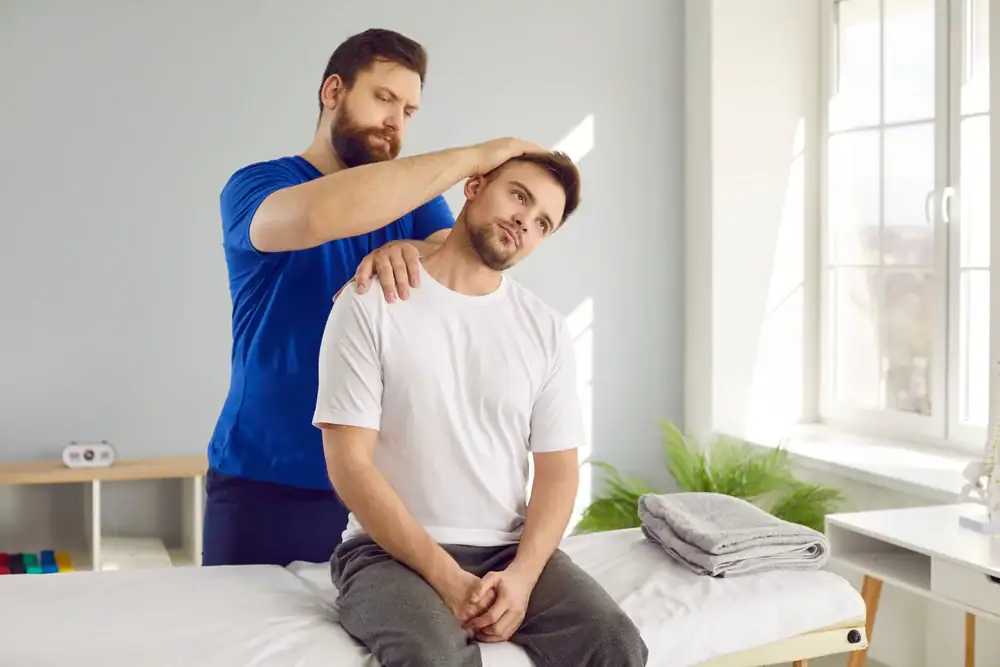
Most people start seeing improvement within four to six weeks, but the timeline depends on your condition and how consistently you follow your treatment plan. If you’re recovering from a minor injury or managing joint pain, you might notice changes sooner. Stroke recovery or neurological rehabilitation typically takes longer, but progress is measurable at every stage.
The key is consistency. Patients who attend sessions regularly and do their home exercises see faster results. Research shows that 8 to 12 weeks of targeted therapy delivers the most significant long-term benefits, especially for balance training and fall prevention.
You won’t be guessing whether it’s working. Your physical therapist tracks your progress at every session and adjusts your plan as you improve. If something isn’t helping, we change it.
Your first visit is all about understanding what’s going on and what you want to achieve. Your physical therapist will ask about your pain, your limitations, and your goals. Then we’ll do a full assessment of your movement, strength, balance, and flexibility.
This isn’t a quick exam. We take the time to identify the root cause of your problem, not just the symptoms. If you’re dealing with fall risk, we’ll test your balance and gait. If you’re recovering from surgery, we’ll assess your range of motion and strength.
From there, we’ll explain what we found and outline a treatment plan. You’ll know exactly what we’re going to do, why we’re doing it, and how long it should take. Most patients leave their first session with a clear understanding of their condition and a realistic timeline for recovery.
Some discomfort is normal, especially if you’re working through an injury or rebuilding strength after surgery. But physical therapy shouldn’t cause sharp pain or make your condition worse. If something hurts in the wrong way, you tell us, and we adjust.
The goal is to push you enough to make progress without overdoing it. Therapeutic exercise and resistance training can feel challenging, but that’s different from pain. Your physical therapist will explain the difference and make sure you’re always working within a safe range.
Most patients are surprised by how much better they feel after just a few sessions. The initial soreness fades quickly, and the improvements in mobility and strength make it worth it.
Most insurance plans cover physical therapy, but coverage varies depending on your plan and your diagnosis. We accept most major insurance providers, and we’ll verify your benefits before you start treatment so there are no surprises.
If you have a high deductible or limited coverage, we’ll work with you to create a plan that fits your budget. Some patients choose to pay out of pocket for a few sessions to get started, then transition to insurance once their deductible is met.
What matters most is that you get the care you need. We’ll handle the billing and insurance paperwork so you can focus on your recovery. If you have questions about coverage, call us before your first visit and we’ll walk you through it.
Yes. Research shows that balance and strength training can reduce fall risk by up to 37%, and programs like the Otago Exercise Program cut fall rates by 35-40% in older adults. Physical therapy is one of the most effective ways to prevent falls because it addresses the root causes: weak muscles, poor balance, and impaired coordination.
Falls aren’t just bad luck. They happen because your body can’t react quickly enough or stabilize itself when you lose your footing. Physical therapy rebuilds that stability through targeted exercises that improve proprioception, strengthen your legs and core, and retrain your reflexes.
If you’ve already fallen once, your risk of falling again is significantly higher. That’s why early intervention matters. The sooner you start therapy, the faster you regain confidence and reduce your risk. Most patients notice improvements in balance and stability within the first month of treatment.
Yes. We provide in-home physical therapy for patients who have difficulty traveling to our clinic. This includes seniors with mobility limitations, stroke survivors in early recovery, and anyone who needs care in a familiar environment.
In-home therapy uses the same evidence-based techniques as clinic-based treatment. We bring the equipment and expertise to you, and we design your program around your home layout and daily routines. This is especially helpful for fall prevention, since we can assess your actual living space and address hazards you encounter every day.
The Otago Exercise Program, which we use for many in-home patients, has been proven to reduce falls by 35-40% in frail older adults. If getting to a clinic is a barrier, in-home therapy removes that obstacle so you can start recovering without delay.
Other Services we provide in Hewlett Harbor