


You stop planning your day around what hurts. Simple things like getting out of a chair, walking without limping, or sleeping through the night become normal again instead of victories.
Most people come to us after months of managing pain with medication or avoiding activities they used to enjoy. They’re tired of temporary fixes and worried about surgery. What they want is to feel like themselves again without going under the knife or depending on prescriptions that stop working.
Physical therapy gives you a way out. It addresses the root cause of your pain through targeted movement, strength training, and hands-on treatment. You rebuild what’s been lost—whether that’s balance after a fall, mobility after surgery, or function after a stroke. The goal isn’t just less pain. It’s getting back to the life you had before the injury or condition took over.
We’ve been treating patients across Long Island for nearly four decades. We’re not a high-volume clinic that rushes you through appointments. Every session is one-on-one with a licensed physical therapist who knows your name and your goals.
Our team includes board-certified specialists—a credential fewer than 10% of physical therapists hold. We treat everything from chronic joint pain and neurological conditions to post-surgical recovery and fall prevention. And we do it in Glenwood Landing and surrounding Nassau County communities where people know us, trust us, and come back when they need help.
We also offer in-home physical therapy for patients who can’t easily travel. That matters in a community with an aging population that values independence and personalized care.

Your first visit starts with an evaluation. We assess your pain, mobility, strength, and medical history to understand what’s limiting you and why. This isn’t a quick look—it’s a detailed conversation and physical exam that gives us a complete picture.
From there, we build a treatment plan specific to your condition. That might include therapeutic exercise, gait training, balance work, manual therapy, or neuromuscular re-education depending on what you need. Every plan is different because every patient is different.
Sessions are hands-on and one-on-one. You’re not left alone with a sheet of exercises. Your therapist works directly with you to guide movement, correct form, and adjust intensity as you progress. Most patients come two to three times per week depending on severity, and we track measurable improvements at every stage.
We also coordinate with your doctor. If you’re recovering from surgery or managing a chronic condition, we make sure everyone’s on the same page. And we’re transparent about costs—you’ll know what your insurance covers and what you’re responsible for before treatment starts.

Ready to get started?
Our services cover the full spectrum of physical rehabilitation. That includes fall prevention and balance training—critical for older adults in Nassau County, where one in five people over 65 experiences a fall each year. We also treat joint pain, whether it’s from arthritis, overuse, or injury, using resistance training and therapeutic exercise to rebuild strength and range of motion.
If you’ve had a stroke or are managing a neurological condition like Parkinson’s or multiple sclerosis, we offer specialized neurological rehabilitation. This includes gait training to improve walking patterns and neuromuscular re-education to retrain your body’s movement signals. These aren’t generic programs—they’re designed around your specific deficits and goals.
We also handle pre and post-surgery rehabilitation for orthopedic procedures like joint replacements, spinal surgery, and ligament repairs. Getting you ready before surgery and recovering faster afterward can mean the difference between months of disability and weeks of focused progress. And for people dealing with workplace injuries or repetitive strain, our occupational rehabilitation gets you back to work safely without re-injury.
In-home physical therapy is available for patients who have mobility limitations or prefer treatment in a familiar environment. This is especially valuable in Glenwood Landing, where many residents are older adults who benefit from care that comes to them.
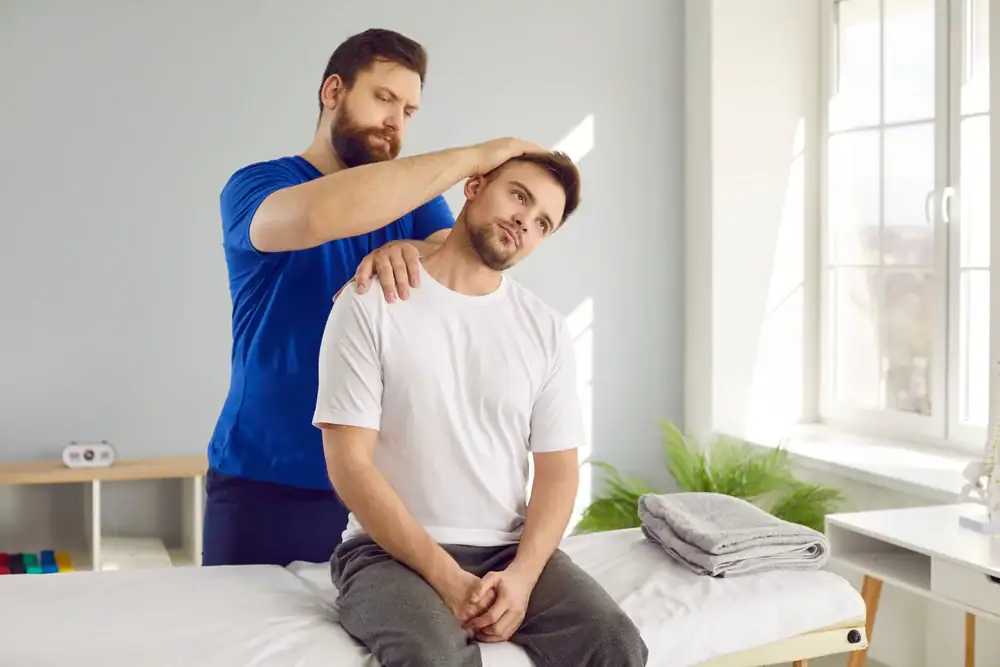
Most people start noticing improvement within two to three weeks if they’re consistent with sessions and home exercises. That doesn’t mean you’re fully recovered—it means pain decreases, movement gets easier, and daily tasks become less of a struggle.
The total timeline depends on your condition. Chronic joint pain or arthritis might take six to eight weeks of regular treatment to see significant change. Post-surgical recovery can take three to four months depending on the procedure. Neurological rehabilitation after a stroke often requires longer-term care, sometimes six months or more, because you’re retraining complex movement patterns.
What matters most is showing up and doing the work between sessions. Physical therapy isn’t passive. The exercises and techniques we teach you are designed to continue working when you’re not in the clinic. Patients who follow through recover faster and maintain results longer than those who only show up for appointments.
In many cases, yes. Studies show that patients who try physical therapy first often avoid surgery entirely, especially for conditions like herniated discs, spinal stenosis, and chronic lower back pain. Surgery should be a last resort, not a first option.
Physical therapy works by strengthening the muscles that support your spine, improving flexibility, and correcting movement patterns that contribute to pain. When your core and back muscles are stronger, they take pressure off damaged discs and joints. That reduces inflammation and pain without cutting anything open.
That said, some conditions do require surgery—like severe nerve compression that’s causing weakness or loss of bowel and bladder control. But even in those cases, physical therapy before and after surgery improves outcomes. You go into the procedure stronger and recover faster on the other side. If you’re on the fence about surgery, it’s worth trying a few months of focused physical therapy first. Worst case, you’re stronger going into the operating room. Best case, you don’t need it at all.
Yes. We accept Medicare Part B and most commercial insurance plans. Medicare typically covers physical therapy when it’s medically necessary and prescribed by a doctor, though there are annual caps and coverage limits depending on your plan.
For commercial insurance, coverage varies. Some plans require a referral from your primary care doctor, others allow direct access to physical therapy without one. We verify your benefits before you start treatment so you know exactly what’s covered and what your out-of-pocket cost will be. No surprises.
If you don’t have insurance or your plan doesn’t cover enough sessions, we offer transparent pricing. You’ll get a clear breakdown of costs upfront so you can make an informed decision. Physical therapy is often more affordable than ongoing medication, injections, or surgery—and it addresses the root cause instead of masking symptoms. Many patients find that even with some out-of-pocket cost, it’s worth it to avoid more expensive interventions down the road.
Exercise is part of physical therapy, but it’s not the same thing. Physical therapy is a medical treatment based on a clinical diagnosis. Your therapist identifies the specific impairments causing your pain or limitation—whether that’s muscle weakness, joint stiffness, poor balance, or faulty movement patterns—and designs a program to fix those problems.
Exercising on your own might make you stronger, but if you’re doing the wrong exercises or using poor form, you can make things worse. People with chronic pain or post-injury conditions often compensate in ways that reinforce bad movement habits. A physical therapist corrects those compensations in real time and progresses your treatment as you improve.
We also use hands-on techniques like manual therapy, joint mobilization, and soft tissue work that you can’t replicate at home. These techniques reduce pain, improve mobility, and prepare your body to move correctly during exercise. And if something isn’t working or causes pain, we adjust immediately. You’re not guessing or hoping you’re doing it right—you have a licensed professional guiding every step. That’s the difference between recovery and just staying busy.
Absolutely. Balance problems are one of the most common reasons older adults come to physical therapy, and for good reason—falls are the leading cause of injury in people over 65. If you’ve noticed you’re unsteady on your feet, hesitant on stairs, or you’ve already had a fall, balance training can make a real difference.
We start by assessing why your balance is off. It could be muscle weakness in your legs and core, inner ear issues, vision problems, or neurological conditions affecting coordination. Once we know the cause, we design exercises that target those deficits. That includes proprioceptive training to improve your body’s sense of position, gait training to correct walking patterns, and strength work to stabilize your joints.
The goal is to make you more confident and capable in everyday situations—walking on uneven surfaces, reaching for something on a high shelf, or getting up from a low chair without wobbling. We also teach you strategies to reduce fall risk at home, like how to navigate your environment safely and what assistive devices might help. Most patients see measurable improvement in balance and stability within four to six weeks of consistent treatment. It’s not just about preventing the next fall—it’s about living without the fear of one.
Your first appointment is an evaluation, not a full treatment session, though we’ll often start some hands-on work if time allows. It usually lasts 45 to 60 minutes. We’ll ask about your medical history, current symptoms, what makes your pain better or worse, and what activities you’re struggling with.
Then we do a physical exam. That includes testing your range of motion, strength, balance, posture, and movement patterns. If you’re recovering from surgery, we’ll look at your incision and surrounding tissue. If you’re dealing with chronic pain, we’ll assess how you move and where compensations are happening. This gives us a baseline to measure progress against.
At the end of the evaluation, we’ll explain what we found, what’s causing your symptoms, and what the treatment plan will look like. You’ll know how many sessions per week we recommend, how long treatment will take, and what your insurance will cover. We’ll also give you a few exercises to start at home. The goal of that first visit is to make sure you understand what’s wrong, what we’re going to do about it, and what realistic outcomes look like. No guessing, no vague promises—just a clear plan forward.
Other Services we provide in Glenwood Landing