


You’re not looking for temporary relief. You want to walk without worrying about falling. You want to get through your day without that constant ache in your back or knee. You want to feel steady on your feet again.
That’s what physical therapy should do. Not just manage symptoms, but actually improve how you move and feel every day.
Most patients see real pain reduction within the first few weeks. Balance improves. Strength comes back. The fear of falling starts to fade because your body remembers how to stabilize itself again.
If you’ve had surgery, stroke, or you’re dealing with joint pain that won’t quit, the right therapy program helps you rebuild what was lost. You work with someone who understands exactly what your body needs to heal, not just what insurance will cover for 20 minutes.
Recovery isn’t about doing more exercises. It’s about doing the right ones, at the right intensity, with someone who’s paying attention to how your body responds.
We bring licensed physical therapists directly to your home in Gilgo and across Long Island. No waiting rooms. No driving when you’re already in pain or unsteady.
We’ve built our reputation on doing one thing well: giving you the full attention you deserve. That means working one-on-one with a doctor of physical therapy who treats no more than eight patients a day. Your session isn’t rushed, and your treatment plan isn’t generic.
Gilgo’s older population faces real challenges with mobility and fall risk, especially in a community where many live independently in smaller households. We’ve designed our services around that reality. You get care that fits your life, your home, and your specific limitations, whether that’s recovering from a hip replacement or managing chronic pain that’s been ignored too long.

First, we come to you. A licensed physical therapist evaluates your mobility, strength, balance, and pain levels right in your home. This isn’t a 10-minute screening. We’re looking at how you actually move in your own space, where the real challenges happen.
From there, we build a treatment plan based on what your body can do now and where it needs to go. If you’re recovering from surgery, we focus on regaining range of motion and strength safely. If falls are the concern, we work on balance training, gait training, and proprioceptive exercises that retrain your body’s sense of position and movement.
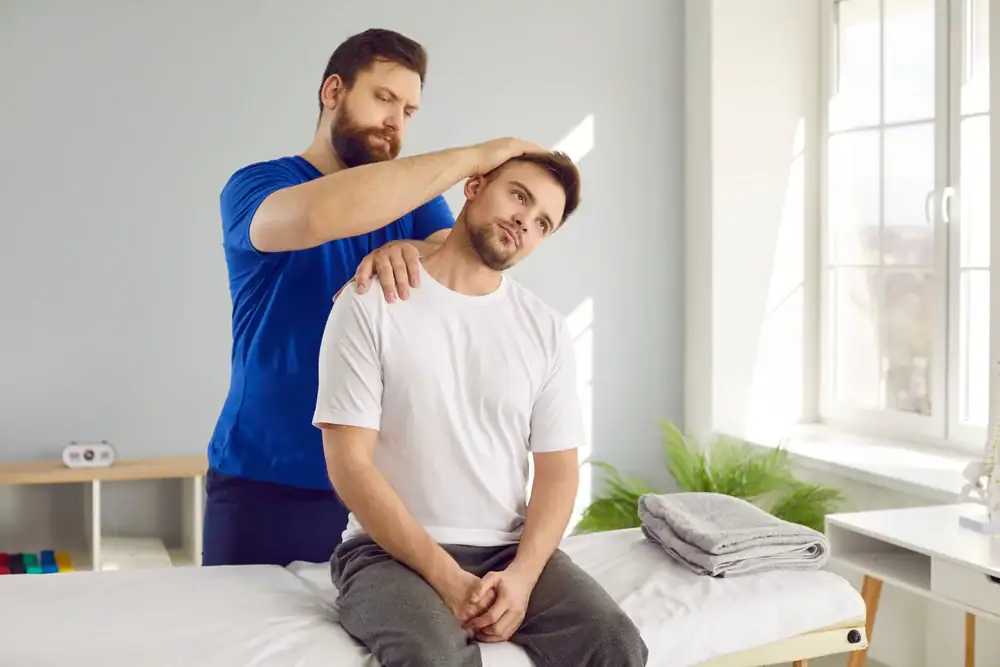
Each session is hands-on. That means manual therapy to reduce pain and improve mobility, plus therapeutic exercises you can actually do. We adjust as you progress, not when the calendar says it’s time.
You’ll also get education on fall prevention, proper body mechanics, and how to keep improving between sessions. The goal isn’t dependence on therapy forever. It’s getting you stable, strong, and confident enough to live independently again.
Most people see measurable improvement within four to six weeks, but that depends on your starting point and consistency. We work with your physician and communicate any concerns that come up, so everyone’s on the same page about your recovery.

Ready to get started?
Your care covers more than just exercises. We treat joint pain, chronic back pain, post-surgical rehabilitation, stroke recovery, and neurological conditions that affect movement. If you’ve been told you need occupational therapy or physical therapy, we handle both.
Balance and fall prevention are huge focuses here in Gilgo, where many residents live alone and a fall can mean losing independence. We use targeted balance training and gait training to reduce that risk. You’ll work on strength, coordination, and reaction time in real-world scenarios, not just standing on one foot in a clinic.
For pain relief, we combine manual therapy techniques with resistance and strength training tailored to your tolerance. The aim is to reduce or eliminate your need for pain medication while improving your quality of life. Most of our patients either pay nothing out of pocket or less than $30 per session with Medicare coverage.
We also provide neuromuscular re-education for patients recovering from stroke or dealing with neurological issues like Parkinson’s. This retrains your nervous system to control movement patterns that have been disrupted by injury or disease.
Every service is delivered in your home, which means no transportation barriers and no exposure to clinic environments if that’s a concern. You get consistent care from the same therapist who learns your goals, your limitations, and what motivates you to keep improving.
Yes, Medicare Part B covers in-home physical therapy when it’s medically necessary and ordered by your doctor. That means if you’re homebound due to illness, injury, surgery, or a chronic condition that makes leaving home difficult, you likely qualify.
Most patients pay nothing out of pocket, or a small copay under $30 per session, depending on their specific plan and whether they’ve met their deductible. We handle the billing and work directly with Medicare, so you’re not stuck figuring out paperwork on your own.
To qualify as homebound, you don’t have to be bedridden. You just need to have a condition that makes leaving home a serious effort, whether that’s due to pain, balance issues, or needing assistance to get around. If you’re unsure whether you qualify, we can review your situation during the initial call and coordinate with your physician if needed.
Most people notice some improvement within two to four weeks, but real, lasting results usually take six to eight weeks of consistent treatment. That timeline shifts depending on what you’re recovering from and how your body responds.
If you’re dealing with chronic pain that’s been building for months or years, it takes longer to retrain those movement patterns and reduce inflammation. Post-surgical recovery follows a more predictable timeline, but even then, everyone heals at their own pace.
The key is consistency. Skipping sessions or not doing the exercises between visits slows everything down. We’re not just treating you during the hour we’re there. We’re teaching your body how to move correctly again, and that requires repetition. Progress isn’t always linear, but if you’re showing up and doing the work, you’ll see measurable changes in pain levels, strength, and balance within the first month.
Physical therapy focuses on improving your movement, strength, balance, and pain levels. It’s about getting your body to function better, whether that’s walking without a limp, climbing stairs safely, or reducing chronic joint pain.
Occupational therapy focuses on helping you perform daily activities like dressing, bathing, cooking, and managing household tasks. It’s more about adapting your environment and teaching techniques to work around limitations so you can stay independent.
A lot of patients need both, especially after a stroke, major surgery, or a fall that’s affected multiple areas of function. We provide both services in your home, often coordinating between therapists to make sure your care is comprehensive. If you’re struggling with mobility and daily tasks, you’re not choosing one over the other. You’re getting a complete plan that addresses both the physical limitations and the practical challenges of living independently.
Yes, and the research backs it up. Balance training, gait training, and strength exercises significantly reduce fall risk in older adults. The key is that it has to be targeted. Generic exercises don’t work as well as a program designed around your specific weaknesses.
We assess your balance, leg strength, reaction time, and how you walk. Then we build exercises that address those exact deficits. That might mean working on ankle stability, hip strength, or improving your ability to catch yourself when you start to lose balance.
Falls happen because your body can’t react fast enough or doesn’t have the strength to stabilize when something shifts. Physical therapy retrains those responses. You practice weight shifting, stepping patterns, and movements that simulate real-world scenarios where falls happen, like turning quickly or stepping off a curb. Most patients see measurable improvements in balance and confidence within a month, and that directly translates to fewer falls and less fear of moving around their own home.
The first visit is an evaluation. Your physical therapist will ask about your medical history, current symptoms, medications, and what’s limiting you most right now. Then they’ll assess your strength, range of motion, balance, and how you move through your home.
This isn’t a quick screening. Expect it to take 45 minutes to an hour. We’re looking at how you get out of a chair, walk down your hallway, manage stairs if you have them, and any movements that cause pain or instability.
From there, we’ll talk through a treatment plan. You’ll know what we’re targeting, how often you’ll need sessions, and what kind of exercises or manual therapy we’ll be using. We usually start some light treatment during that first visit, so you leave with a clear sense of what therapy will look like moving forward. If there are safety concerns in your home, like loose rugs or poor lighting, we’ll point those out too. The goal is to set you up for success from day one, not just check boxes on an intake form.
The biggest difference is attention. In a clinic, therapists often juggle multiple patients at once. You might get 15 minutes of hands-on time and spend the rest of your session on equipment with minimal supervision.
At home, you get one-on-one care for the full session. Your therapist isn’t splitting focus between you and two other people. That means more manual therapy, more detailed feedback on your form, and adjustments in real time as your body responds.
You’re also working in your actual environment. If stairs are a problem, we’re training on your stairs. If getting in and out of your shower is hard, we’re addressing that exact movement in that exact space. There’s no guessing about whether clinic exercises will translate to real life. We’re also eliminating the barrier of transportation, which for a lot of older adults in Gilgo is the difference between getting care and skipping it. If leaving the house is painful, risky, or just exhausting, in-home therapy removes that obstacle completely.
Other Services we provide in Gilgo