


You’re not wondering how you’ll get to another appointment. You’re not sitting in a waiting room feeling worse than when you walked in. You’re recovering in the place where you’re most comfortable, with a physical therapist who shows up on your schedule and treats you like family, not a case number.
That’s what in-home physical therapy looks like in Floral Park. No transportation stress. No rushing through exercises because the next patient is waiting. Just focused, one-on-one care that meets you where you are—literally and physically.
When your physical therapist evaluates you at home, they see the real obstacles. The stairs you avoid. The bathroom layout that makes balance harder. The kitchen counter you lean on. They build your treatment plan around your actual environment, not a clinic setup that doesn’t match your daily life.
You get gait training that accounts for your hallway width. Fall prevention strategies that work with your furniture layout. Therapeutic exercise you can continue between sessions without special equipment. That’s how people regain independence faster—because the therapy fits the life you’re trying to get back to.
We’ve been providing in-home physical therapy across Nassau County since 2010. We’re not new to this. We know Floral Park’s neighborhoods, the housing layouts, the mobility challenges people face here.
Our physical therapists are licensed professionals who provide Medicare-covered outpatient services. We accept nearly all commercial insurance plans. Every therapist on our team is trained in fall prevention, balance training, stroke rehabilitation, and post-surgery recovery.
You’re working with people who’ve treated thousands of Long Island residents in their homes. We manage multiple therapy centers and maintain the kind of operational standards that keep your care consistent and your information secure. When you call, you’re reaching a team that’s been part of this community for over a decade.

You call and we verify your insurance coverage before the first visit. No surprises at appointment time. If you’re Medicare-eligible or have commercial insurance, we’ll confirm what’s covered and explain any out-of-pocket costs upfront.
Your physical therapist schedules a time that works for you and comes to your home in Floral Park. During the first visit, they conduct a full evaluation—checking your mobility, balance, strength, and pain levels. They assess your home environment to identify fall risks and movement barriers. Then they explain what they found and what the treatment plan will look like.
Each session after that builds on the last. You might do gait training in your hallway. Balance exercises using your own furniture for support. Strength training with resistance bands. Neuromuscular re-education to retrain movement patterns after injury or surgery.
Your therapist prescribes home exercises based on your evaluation findings. You’re not guessing what to do between visits. They show you exactly what helps and what to avoid. As you progress, they adjust the plan. When you hit your goals, they make sure you have the tools to maintain your gains after discharge.

Ready to get started?
You get a licensed physical therapist who specializes in home-based care. That means they’re trained to work with the space and equipment you already have. They bring what’s needed for your specific treatment—resistance bands, balance tools, measurement devices.
Treatment includes fall prevention programs designed for Floral Park homes. Many residences here were built decades ago with narrow hallways and steep stairs. Your therapist addresses those specific challenges. They teach you how to navigate your actual layout safely, not some generic clinic setup.
If you’re recovering from joint replacement surgery, you get post-surgery rehabilitation that accounts for your home’s accessibility. If you’ve had a stroke, you receive neurological rehabilitation focused on regaining the specific movements your daily routine requires. If chronic pain or arthritis is limiting your mobility, you get joint pain treatment and therapeutic exercise that reduces discomfort while rebuilding strength.
Occupational therapy is available when you need help with daily living skills—dressing, bathing, cooking, managing household tasks. The goal isn’t just to move better. It’s to live independently in your own home for as long as possible. That’s what drives every session.
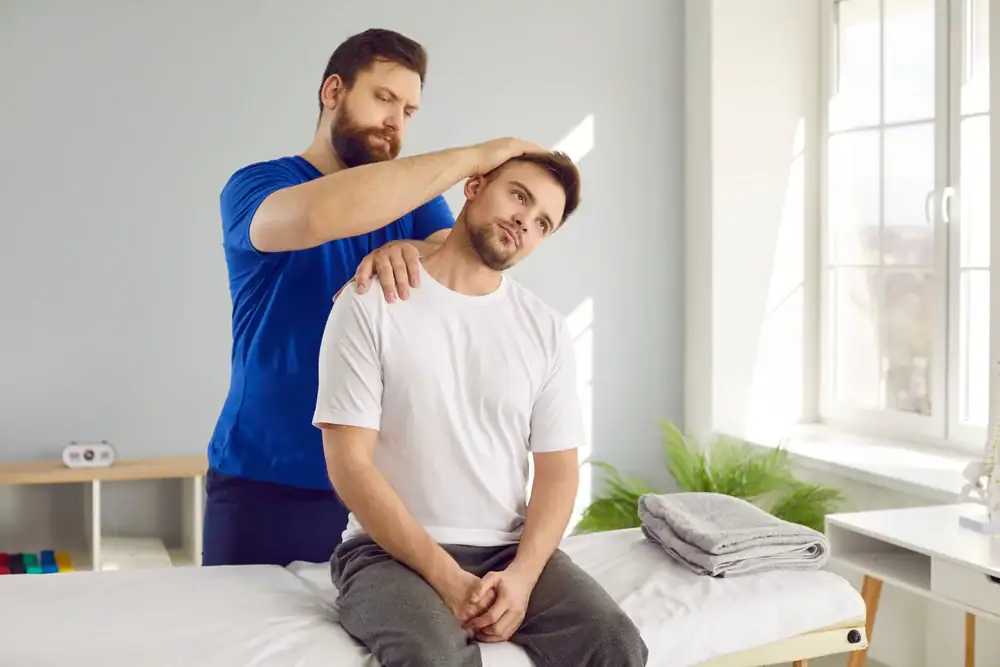
Yes. Medicare Part B covers outpatient physical therapy services when they’re medically necessary and provided by a licensed physical therapist. That includes in-home visits if you have difficulty leaving your residence due to mobility limitations, medical conditions, or safety concerns.
You’ll need a referral or prescription from your doctor stating that you require physical therapy. Medicare typically covers 80% of the approved amount after you meet your Part B deductible. You’re responsible for the remaining 20% unless you have supplemental insurance that covers it.
We verify your Medicare coverage before your first appointment and explain exactly what you’ll owe. There are no surprise bills. If you have a Medicare Advantage plan, coverage works similarly but we confirm the specifics with your plan directly. We also accept nearly all commercial insurance plans, so if you’re not on Medicare yet, we can still work with your coverage.
Most people notice some improvement within two to three weeks if they’re consistent with treatment and home exercises. But total recovery time depends on what you’re treating and how severe it is.
If you’re recovering from knee replacement surgery, you might need eight to twelve weeks of regular sessions to regain full mobility and strength. If you’re working on balance issues and fall prevention, you could see measurable improvement in four to six weeks. Stroke rehabilitation and neurological recovery often take longer—several months of consistent work.
Your physical therapist sets realistic goals during your evaluation and tracks your progress at every visit. They’ll tell you honestly where you should be at each stage. Some conditions improve quickly. Others require patience and sustained effort. What matters most is showing up for your sessions and doing the prescribed exercises between visits. That’s what separates people who recover fully from people who plateau early.
Your physical therapist adjusts the treatment plan if something causes too much pain. The goal is to challenge your body enough to make progress without pushing you into injury or unbearable discomfort.
Some pain during recovery is normal—especially if you’re rebuilding strength after surgery or injury. But sharp pain, pain that doesn’t subside after exercise, or pain that gets worse over time is a red flag. Your therapist monitors your pain levels at every session and modifies exercises accordingly.
They might reduce resistance, change the movement pattern, or focus on a different area while the painful region heals. They also teach you the difference between productive discomfort and harmful pain so you know what to push through and what to stop. If pain persists despite modifications, they communicate with your doctor to rule out complications or adjust your treatment approach. You’re never forced through exercises that are causing real harm.
Absolutely. Fall prevention works best before a fall happens. Once you’ve fallen, you’re dealing with injuries, fear, and often a much harder recovery. Preventing that first fall is the smartest move you can make.
Our physical therapists conduct balance assessments to identify your fall risk level. They test your gait, your reaction time, your strength, and how well you handle uneven surfaces or obstacles. Then they create a fall prevention program that addresses your specific weak points.
That might include balance training exercises, proprioceptive drills to improve your body’s spatial awareness, strength training to stabilize your legs and core, and gait training to correct movement patterns that increase fall risk. They also evaluate your home in Floral Park for hazards—loose rugs, poor lighting, cluttered walkways, lack of grab bars. You get practical recommendations you can implement immediately. Many people see significant improvement in stability and confidence within a month of starting a fall prevention program.
No. Your physical therapist brings what’s necessary for your treatment and designs exercises around what you already have at home. That’s one of the main advantages of in-home therapy.
You might use your kitchen counter for balance support. Your stairs for step training. A sturdy chair for sit-to-stand exercises. Resistance bands or small weights if your treatment plan requires them, but your therapist provides those. You’re not buying expensive equipment or converting a room into a home gym.
If your treatment does require something specific—like a walker, cane, or grab bars for safety—your therapist will recommend it and explain why. But most of what you need for effective physical therapy is already in your home. The goal is to make therapy practical and sustainable, not to add financial burden or clutter to your life. You focus on the exercises. Your therapist handles the rest.
Physical therapy focuses on improving your movement, strength, balance, and pain levels. Occupational therapy focuses on helping you perform daily activities and tasks that your condition has made difficult.
Your physical therapist works on gait training so you can walk safely. Your occupational therapist works on strategies so you can get dressed, cook meals, and bathe independently. Physical therapy rebuilds the physical capacity. Occupational therapy applies that capacity to real-world function.
Many people benefit from both, especially after major surgery, stroke, or neurological conditions. If you’ve had a hip replacement, physical therapy gets your hip moving and strong again. Occupational therapy teaches you how to put on your shoes without bending too far or how to get in and out of your car safely. We provide both services in your Floral Park home, and your therapist will recommend occupational therapy if they see functional limitations that PT alone won’t fully address. Sometimes you need both running at the same time. Sometimes you start with one and add the other later.
Other Services we provide in Floral Park