

You’re dealing with pain, balance issues, or recovery from surgery or stroke. Getting to appointments adds stress you don’t need. Transportation is hard. Waiting rooms are exhausting. Your energy should go toward healing, not logistics.
In-home physical therapy removes those barriers. Your therapist comes to you with everything needed for effective treatment—gait training, balance work, therapeutic exercise, strength training. You get the same quality care you’d receive in a clinic, but in the environment where you actually live and move every day.
That matters more than it sounds. Your therapist sees how you navigate your own space, where the risks are, what movements cause trouble in real life. Treatment gets tailored to your actual routine, not a generic rehab gym. And you’re more likely to stick with it when it fits into your day instead of disrupting it.
We’ve been providing in-home physical and occupational therapy across Suffolk and Nassau County for over a decade. Every therapist on our team is New York State licensed, Medicare certified, and trained in the latest therapeutic interventions.
Elwood’s demographics tell the story—median age of 47, with a third of residents between 45 and 64. That’s exactly the population dealing with chronic conditions, post-surgical recovery, fall risk, and neurological issues that benefit most from consistent, accessible therapy. You’re not alone in needing this.
We accept Medicare and nearly all commercial insurances. Our team manages every detail of verification and coverage so you don’t have to decode the rules yourself. You get clear answers about what’s covered before treatment starts.

First, we verify your insurance and Medicare coverage. You’ll know what’s covered before anyone shows up at your door. No surprises.
Your physical therapist schedules an initial evaluation at your home. They assess your mobility, strength, balance, pain levels, and functional limitations. They also observe your living space—stairs, furniture layout, bathroom setup—to identify fall risks and movement challenges specific to your environment.
From there, you get a personalized treatment plan. Could be fall prevention and balance training. Could be gait training and neuromuscular re-education after a stroke. Could be joint pain treatment and therapeutic exercise following surgery. The plan adapts to your goals, your conditions, and your progress.
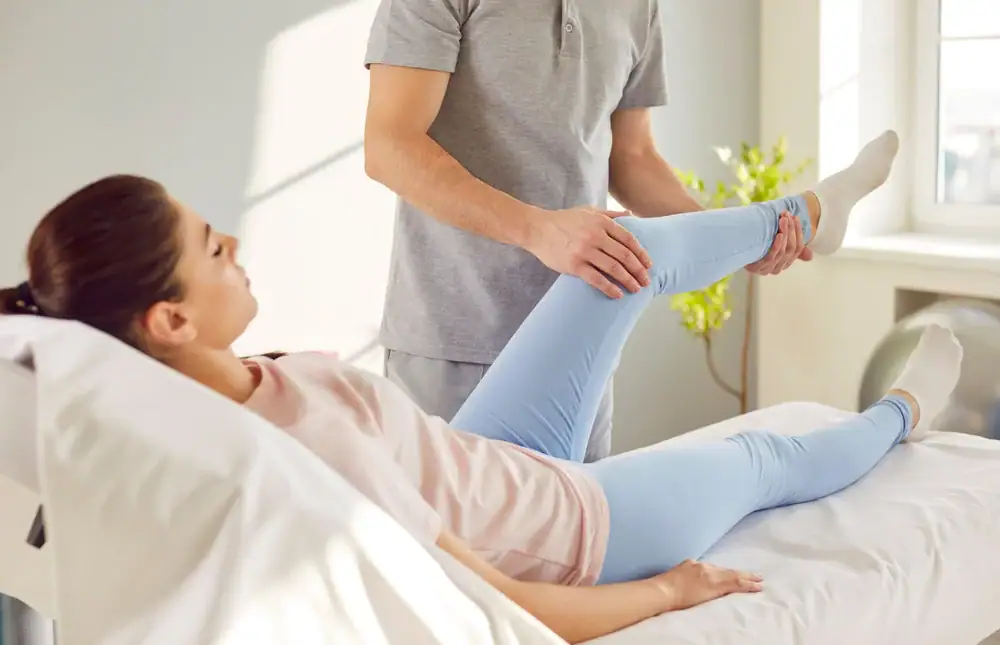
Sessions happen on a schedule that works for you. Your therapist brings any needed equipment. You work together in your home, focusing on real-world function—getting in and out of bed safely, navigating your kitchen, building strength for daily tasks. Progress gets tracked and reported to your physician.
Ready to get started?
Fall prevention is critical in Elwood. With nearly 20% of residents over 65, falls are a leading cause of injury-related death among older adults. Our therapists reduce fall risk by 25% through targeted balance and proprioceptive training, strength work, and home safety assessments.
Stroke rehabilitation and neurological rehabilitation require specialized training. Our team has extensive experience with traumatic brain injury, stroke recovery, and neurologic impairments. We focus on regaining independence—improving gait, rebuilding strength, retraining movement patterns that stroke disrupted.
Post-surgery rehabilitation gets you back to normal faster. Whether it’s joint replacement, orthopedic surgery, or injury recovery, we provide the resistance training, therapeutic exercise, and mobility work you need. Treatment happens in your space, around your schedule, with your actual daily movements in mind.
Chronic pain affects daily life. Our approach combines manual therapy, therapeutic exercise, and neuromuscular re-education to reduce pain and improve function. Seventy-nine percent of patients report significant pain reduction. Ninety percent see improved quality of life. And physical therapy can reduce opioid needs by 87%—a real alternative to prescription pain medication.
Yes, Medicare Part B covers outpatient physical therapy in your home when it’s medically necessary and ordered by your doctor. You need to be homebound or have significant difficulty leaving your residence for Medicare to approve home-based treatment.
We’re Medicare certified and handle all the verification and billing directly. You’ll know your coverage details before the first session. Most patients pay their standard Part B coinsurance—typically 20% after the deductible is met.
We also accept nearly all commercial insurance plans. Coverage varies by plan, so we verify your specific benefits upfront. No guessing, no billing surprises later.
We treat a wide range of conditions that limit mobility, cause pain, or increase fall risk. Common reasons people start home therapy include stroke recovery, balance problems, post-surgical rehabilitation, joint pain, gait abnormalities, and neurological conditions like Parkinson’s or traumatic brain injury.
If you’ve had a fall or you’re afraid of falling, that’s a major focus area. Falls are the leading cause of injury-related deaths for older adults, and physical therapy reduces that risk by 25% through targeted balance training, strength work, and home safety modifications.
Chronic conditions like arthritis, diabetes-related neuropathy, and COPD also benefit from therapeutic exercise and functional training. The goal is always the same—help you move better, hurt less, and stay independent in your own home.
The treatment techniques are the same—you get the same quality therapeutic exercise, manual therapy, gait training, and neuromuscular re-education you’d receive in a clinic. The difference is where it happens and what your therapist can observe.
At home, your therapist sees how you actually move through your day. They watch you navigate your stairs, get in and out of your shower, move around your kitchen. That real-world context makes treatment more relevant and effective because it’s tailored to your actual environment, not a generic gym.
You also avoid the physical and mental drain of getting to appointments. No arranging transportation. No waiting rooms. No using up your energy before therapy even starts. For people who are homebound or have significant mobility limitations, that’s not a convenience—it’s what makes treatment possible at all.
It depends entirely on your condition, your goals, and how you progress. Some people need a few weeks of intensive therapy after surgery. Others benefit from several months of ongoing treatment for chronic conditions or neurological recovery.
Your therapist evaluates your progress regularly and adjusts the treatment plan as you improve. Medicare and insurance companies require documentation showing that therapy is making measurable improvements in your function. As long as you’re getting better and working toward clear goals, coverage typically continues.
Most patients see us two to three times per week initially, then taper to once a week or less as they build strength and independence. Your therapist will give you exercises to do between sessions—that home program is a key part of making progress stick.
The first visit is an evaluation. Your physical therapist will spend about an hour assessing your current condition, medical history, medications, and functional limitations. They’ll test your strength, range of motion, balance, gait, and any areas of pain or weakness.
They’ll also evaluate your home environment. Where are the fall risks? Are there grab bars in the bathroom? Are rugs secured? Is lighting adequate? Are stairs manageable? This assessment helps identify safety concerns and informs your treatment plan.
By the end of that first session, you’ll have a clear picture of what therapy will focus on, how often you’ll meet, and what goals you’re working toward. You’ll also start some initial exercises or techniques—treatment begins right away, not after weeks of waiting.
Yes. Stroke rehabilitation is one of our specialty areas. Our therapists have extensive training in neurological rehabilitation and work with stroke survivors at all stages of recovery—from immediately post-hospital to years after the event.
Stroke affects everyone differently. Some people struggle with balance and walking. Others deal with weakness on one side, difficulty with fine motor tasks, or trouble coordinating movements. We assess your specific impairments and build a treatment plan around regaining the functions that matter most to you.
That might include gait training to improve walking safety and efficiency. Neuromuscular re-education to retrain movement patterns. Therapeutic exercise to rebuild strength. Balance and proprioceptive training to reduce fall risk. The work is challenging, but 90% of our patients report improved quality of life after treatment. Progress is possible.
Other Services we provide in Elwood