


You’re not looking for a gym membership. You need to move without pain, walk without fear, and do normal things again without planning your whole day around it.
That’s what physical therapy should give you. Not a temporary fix or a stack of exercises you’ll never do. Real improvement in how your body works, how confident you feel moving around, and how much energy you have left at the end of the day.
When we work with you at home, you’re getting nearly an hour of one-on-one attention focused entirely on your specific issues. Balance problems, joint pain, post-surgery recovery, stroke rehabilitation—whatever brought you here gets addressed in the environment where you actually live. That means the exercises, the modifications, and the adaptive equipment recommendations all fit your real life, not some clinic setup you’ll never recreate.
For older adults on Long Island, fall prevention isn’t optional. Nassau and Suffolk counties rank 4th and 5th statewide for fall-related incidents. One fall can change everything—your independence, your confidence, your entire living situation. Evidence-based balance and gait training reduce fall risk by 35-40%, and it saves an average of $2,144 when you factor in what a fall actually costs in medical bills, lost time, and everything else that comes with it.
We’ve been providing in-home physical therapy and occupational therapy across Long Island for over a decade. That’s not a sales pitch—it’s just what happens when you show up consistently, treat people like family, and actually help them get better.
Our physical therapists are licensed, experienced, and Medicare-approved. We work with patients in Commack and throughout Suffolk County who either can’t get to a clinic easily or just don’t want to waste half their day doing it. You’re not getting a rotating cast of providers. You’re working with the same therapist who learns your goals, your limitations, and what actually matters to you.
We’re connected to established practices like Physical Therapy Associates of Smithtown and Speonk Physical Therapy, so you’re backed by a network that’s been doing this right for 20+ years. Commack residents trust us because we make the process simple, we accept Medicare, and we don’t disappear after the first visit.

First, your doctor writes a prescription for physical therapy. If you’re dealing with Medicare restrictions that limit where you can go, we can often work within those guidelines—just call us and we’ll figure it out together.
Once we have your prescription, we schedule your initial evaluation at your home. One of our licensed physical therapists comes to you, assesses your mobility, strength, balance, and whatever specific issues you’re dealing with, and builds a treatment plan based on what you need—not a generic protocol.
From there, you’ll typically have therapy sessions once or twice a week, depending on your condition. Each visit is close to an hour of direct, hands-on work. Your therapist will guide you through therapeutic exercises, gait training, balance work, neuromuscular re-education, or resistance training. If you’re recovering from surgery or a stroke, the focus shifts to neurological rehabilitation and rebuilding functional movement.
Everything happens in your space, using your furniture, your stairs, your bathroom setup. That’s the point. When you’re training in the environment where you actually need to function, the improvements stick. Your therapist will also recommend any adaptive equipment or home modifications that make daily tasks safer and easier.
You’re not stuck in this forever. The goal is to get you stronger, more stable, and more independent—then step back. Some people need a few weeks, others need a few months. It depends on your starting point and your goals.

Ready to get started?
You’re getting Medicare-covered outpatient physical therapy and occupational therapy delivered to your home in Commack. That includes fall prevention programs using the evidence-based Otago Exercise Protocol, balance and proprioceptive training, gait training to improve how you walk, and joint pain treatment that doesn’t rely on pills.
If you’re recovering from an injury, surgery, or stroke, your treatment plan will include injury rehabilitation, pre and post surgery rehabilitation, or stroke rehabilitation depending on what you need. Neurological rehabilitation is available for conditions affecting your nervous system, and occupational rehabilitation helps you relearn daily tasks if illness or injury has set you back.
Every session includes therapeutic exercise tailored to your ability level, resistance and strength training to rebuild muscle, and neuromuscular re-education to retrain movement patterns your body has forgotten or compensated around. We’re not just running you through exercises—we’re teaching you why each one matters and how it connects to what you’re trying to do in real life.
For Long Island residents, especially in Commack where many older adults live independently, transportation is a real barrier. You might be able to drive short distances but not during rush hour. Or maybe you’re cleared to be home alone but getting to a clinic twice a week is exhausting. In-home therapy removes that obstacle entirely. You save time, energy, and the stress of coordinating rides or navigating parking.
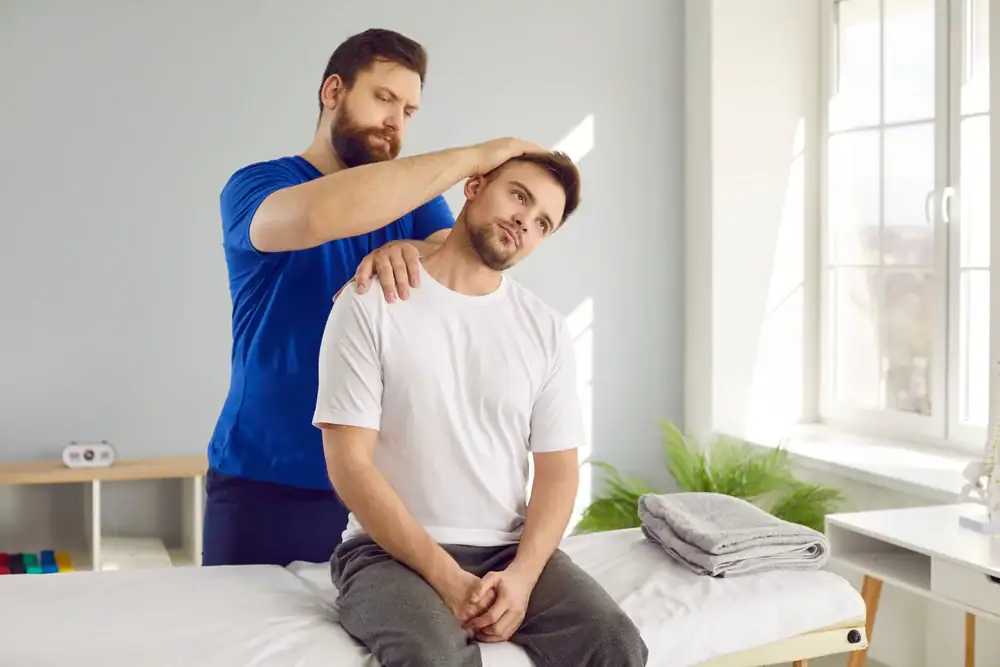
Yes. Medicare Part B covers outpatient physical therapy when it’s medically necessary and prescribed by your doctor. That includes in-home physical therapy as long as you’re working with a Medicare-approved provider, which we are.
There are some coverage limits—Medicare typically covers up to a certain dollar amount per year, though exceptions exist if your condition requires more. Your therapist will keep track of this and let you know where you stand. If you have a Medicare Advantage plan, coverage works similarly, but the specifics depend on your plan.
The key requirement is that your doctor writes a prescription and the therapy is considered reasonable and necessary for your condition. If you’re recovering from surgery, dealing with chronic pain, at risk for falls, or managing a neurological condition, you’ll likely qualify. We handle the paperwork and billing directly with Medicare, so you’re not stuck figuring that out on your own.
Your first visit is an evaluation. Your physical therapist will spend about an hour asking questions, watching how you move, testing your strength and balance, and figuring out what’s limiting you. They’ll want to know what hurts, what you’re afraid of, and what you’re trying to get back to doing.
They’ll also look around your home. Not in a nosy way—they’re checking for fall hazards, noting if your bathroom setup is safe, seeing if stairs are an issue. This matters because your treatment plan needs to fit your actual environment.
By the end of that first visit, you’ll have a clear plan. Your therapist will explain what they found, what they recommend, and how often you’ll need to meet. You’ll start some exercises right then if you’re able. It’s not a consultation where they just talk and leave—you’re beginning treatment on day one.
The biggest difference is attention. In a clinic, your therapist is often juggling multiple patients at once. You might get 20 minutes of direct care and spend the rest of your time on equipment or doing exercises they’ve already shown you. At home, you’re getting close to a full hour with your therapist every visit, and it’s just you.
The second difference is relevance. If you’re working on balance, you’re practicing on your actual floors, in your actual hallway, near the furniture you use for support. If you’re relearning how to navigate stairs after surgery, you’re using your stairs. The skills you build transfer immediately because you’re already in the environment where you need them.
Transportation is the third factor. For a lot of people in Commack, especially older adults, getting to a clinic is harder than the therapy itself. You’re dealing with traffic on the Jericho Turnpike, finding parking, walking from the lot, sitting in a waiting room. That’s exhausting before you even start. In-home therapy removes all of that. You use that energy for actual recovery instead.
It’s not oversold. Evidence-based fall prevention programs reduce fall risk by 35-40% in older adults. That’s not a marketing claim—it’s data from clinical studies, specifically the Otago Exercise Program, which combines strength and balance training.
Here’s why it works: most falls happen because of weak legs, poor balance, or slow reaction time. Physical therapy directly addresses all three. You’re doing exercises that rebuild leg strength, practicing balance challenges that retrain your stabilization reflexes, and improving how quickly your body responds when you start to tip.
On Long Island, this matters more than almost anywhere else in New York. Nassau and Suffolk counties rank 4th and 5th statewide for fall-related incidents. One in four adults over 65 falls each year nationally, but Long Island seniors are statistically at even higher risk. A fall isn’t just a bruise—it’s often the start of a downward spiral that ends in hospitalization, loss of independence, or worse. Physical therapy is one of the few interventions that actually changes the outcome, and it costs a fraction of what a fall costs you in medical bills, time, and quality of life.
That depends entirely on what you’re treating and where you’re starting from. If you’re recovering from a knee replacement, you might notice improved range of motion within two weeks. If you’re working on balance after a stroke, it could take a month or more to feel steady on your feet again.
Most people start seeing some improvement within the first few weeks if they’re consistent with their exercises. But “improvement” doesn’t always mean pain-free or back to normal—it might mean you can walk to the mailbox without holding onto something, or you can get out of a chair without using your arms. Those are real wins, even if they don’t sound dramatic.
We’ll set realistic goals with you based on your condition and your baseline. Some people finish therapy in six weeks. Others need three months. A few need ongoing maintenance if they’re managing a chronic condition. The timeline matters less than whether you’re actually getting better, and we adjust the plan if progress stalls.
You’re allowed to choose where you receive physical therapy, even if your doctor gave you a referral somewhere else. Medicare and most insurance plans don’t require you to go to a specific clinic unless you’re in a Medicare Advantage plan with a restricted network—and even then, there’s often flexibility.
If your doctor referred you to a clinic that’s contracted with a hospital system or large network, it’s usually because that’s their default, not because it’s your only option. You can ask your doctor to rewrite the prescription with us listed as the provider. Most doctors will do this without pushback, especially if you explain that in-home therapy is more practical for you.
If you’re running into resistance or you’re not sure whether your plan allows it, call us. We’ll verify your coverage, talk to your doctor’s office if needed, and figure out whether we can get you set up. The goal is to get you the care you need in the setting that actually works for your life, not to force you into a system that makes things harder.
Other Services we provide in Commack