


You’re dealing with pain that limits what you can do. Maybe it’s your back, your knee, or you’re recovering from surgery. Maybe you’ve had a fall and you’re nervous about it happening again.
Here’s what changes when you work with a physical therapist who understands your specific situation. Your pain becomes manageable. Your balance improves enough that you feel confident moving around your own home. You can get through your day without constantly thinking about what hurts.
This isn’t about doing generic exercises in a crowded clinic. It’s about a licensed therapist coming to your home in Bethpage, watching how you actually move in your own space, and building a plan around your real life. You get one-on-one attention for the full session. No waiting rooms, no rushing, no fighting traffic on the LIE when you’re already in pain.
Most of our patients tell us they notice a difference within the first few weeks. Not a miracle cure, but real improvement. The kind where you can walk to the mailbox without bracing yourself, or get up from a chair without that sharp twinge.
We’ve been providing in-home physical therapy across Nassau County for over a decade. Our therapists are licensed, experienced, and they know the Bethpage community.
We accept Medicare and most major insurance plans. No referral needed for most coverage, and we handle the paperwork. You shouldn’t have to become an insurance expert just to get treatment.
What makes us different is simple: we come to you, we give you our full attention, and we don’t rush through your session to get to the next appointment. Your treatment happens in your home, where your actual challenges are. That’s where real progress gets made.

Your first session starts with a conversation. Your therapist needs to understand what’s bothering you, what you’ve already tried, and what you’re hoping to get back to doing. They’ll watch you move, test your strength and balance, and figure out what’s actually causing the problem.
From there, you get a treatment plan. Not a printout of generic exercises, but a specific plan for your situation. If you’re recovering from a stroke, we focus on neurological rehabilitation and regaining function. If you’ve fallen or you’re worried about falling, we work on balance training and fall prevention. If it’s joint pain or post-surgery recovery, your plan addresses that.
Each session is one-on-one in your home. Your therapist brings any equipment needed. You’ll do therapeutic exercises, work on gait training if walking is an issue, and learn techniques you can practice between visits. Progress gets tracked, and your plan adjusts as you improve.
Most patients see us two to three times per week at first, then less frequently as they get stronger. The goal isn’t to keep you in treatment forever. It’s to get you functional and independent again.

Ready to get started?
We handle a wide range of conditions, but here’s what we see most often in Bethpage and across Long Island: joint pain, especially in knees, hips, and shoulders. Back pain that makes it hard to stand or walk for long. Balance issues and fall prevention for older adults. Stroke rehabilitation and neurological conditions that affect movement. Pre and post surgery rehabilitation, particularly after joint replacements.
Your treatment might include strength training to rebuild muscle you’ve lost. Gait training if your walking pattern needs work. Balance and proprioceptive training to improve stability. Neuromuscular re-education if your body needs to relearn movement patterns after an injury or neurological event.
Here’s something worth knowing: about one in four adults over 65 in Nassau County reports falling each year. Physical therapy reduces that risk by 25% according to recent data. If you’re worried about falling, or you’ve already had a fall, that’s exactly what balance training and fall prevention work addresses.
We also work with younger patients dealing with sports injuries, workplace injuries, or chronic pain conditions. If it affects how you move or how much you hurt, there’s a good chance we can help.
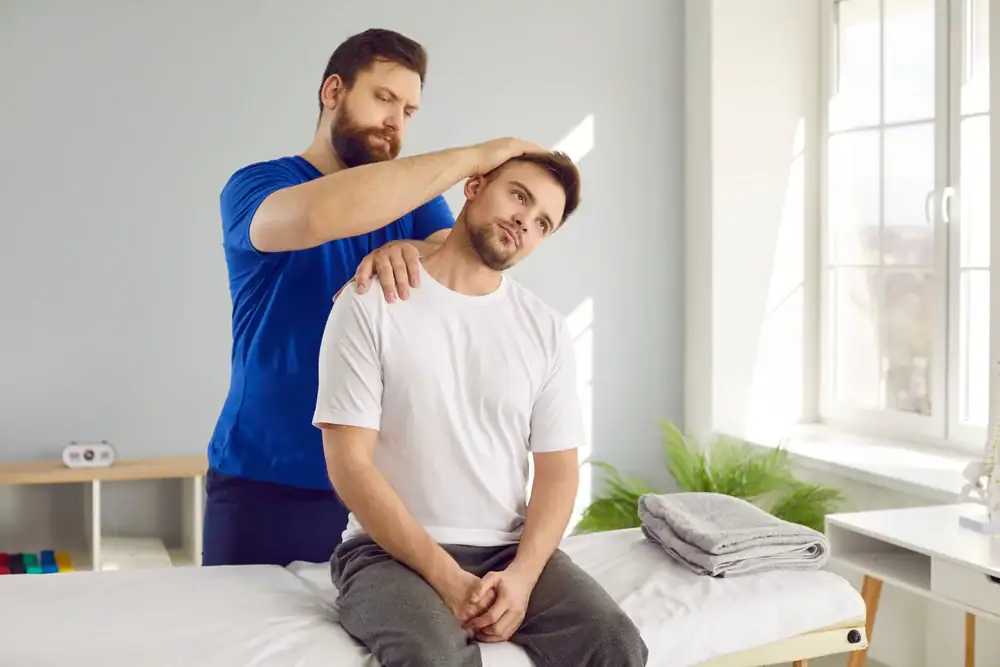
Most insurance plans don’t require a referral anymore, but it depends on your specific coverage. Medicare doesn’t require one. Most major private insurance companies in New York allow direct access to physical therapy.
That said, we always verify your benefits before your first visit. If your plan does need a referral, we’ll let you know and you can get one from your doctor. It usually takes a day or two.
The confusion around referrals keeps a lot of people from getting help when they need it. About 70% of patients think they need a referral when they actually don’t. Don’t let that stop you from calling. We’ll check your coverage and give you a straight answer about what your insurance requires.
If you have Medicare, your cost is typically your standard copay or coinsurance, same as if you went to a clinic. Most Medicare patients pay around 20% after their deductible is met. We bill Medicare directly.
For private insurance, it varies by plan. Some cover in-home therapy at 100% after your deductible. Others have a copay per visit, usually between $20 and $50. A few plans cover it the same as outpatient clinic visits.
We verify your benefits before we start so you know what to expect. No surprises on the bill. If your insurance doesn’t cover in-home therapy or your deductible is high, we can discuss private pay rates. Our goal is to make treatment accessible, not to hit you with unexpected costs after you’ve already started.
Physical therapy focuses on movement, strength, balance, and pain. If you’re having trouble walking, standing, or moving without pain, that’s physical therapy. We work on mobility, gait, fall prevention, and rebuilding strength after injury or surgery.
Occupational therapy focuses on daily activities like dressing, bathing, cooking, and managing your household. If you’re struggling with fine motor skills, coordination for daily tasks, or you need adaptive techniques to stay independent, that’s occupational therapy.
A lot of patients benefit from both, especially after a stroke or major surgery. Your physical therapist might work on getting you strong enough to walk safely, while an occupational therapist helps you relearn how to button a shirt or prepare a meal. We offer both services, and sometimes your treatment plan includes both types of therapy. Your therapist will recommend what makes sense for your situation.
Most patients notice some improvement within two to three weeks if they’re consistent with their exercises. That doesn’t mean you’re fully recovered, but you should feel less pain or more stable during that time.
Full recovery depends on what we’re treating. If you’re recovering from a knee replacement, you’re looking at several months of work. If it’s mild balance issues or joint pain from arthritis, you might see significant improvement in four to six weeks.
Here’s what matters more than timelines: consistency. Patients who do their home exercises between sessions improve faster. Patients who only work on it during our visits take longer. Your therapist will give you realistic expectations based on your specific condition, your age, and how your body responds in those first few sessions. We track your progress and adjust the plan if you’re not improving at the pace we’d expect.
Yes, and for many patients it’s actually more effective. Here’s why: your therapist sees how you move in your real environment. They can spot hazards in your home that increase fall risk. They can watch you navigate your actual stairs, not generic clinic stairs.
You also get undivided attention for the full session. In a clinic, therapists often juggle multiple patients at once. At home, it’s one-on-one the entire time. That means better assessment, more personalized treatment, and faster progress.
The research backs this up. Patient outcomes for in-home therapy are comparable or better than clinic-based therapy for most conditions, particularly for older adults and people with mobility limitations. The biggest advantage is consistency. You’re more likely to stick with treatment when you don’t have to arrange transportation or push through pain to get to appointments. And consistency is what gets results.
We serve all of Bethpage and the surrounding Nassau County communities. That includes Levittown, Hicksville, Plainview, Farmingdale, Massapequa, and other nearby Long Island towns.
If you’re not sure whether we cover your specific address, just call. Our service area is broad across Long Island, and we do our best to accommodate patients who need in-home care.
Travel is built into how we schedule, so you’re not getting charged extra because you live a few miles outside of central Bethpage. We route our therapists efficiently throughout Nassau County so we can see patients where they live without adding costs or limiting availability.
Other Services we provide in Bethpage