


You’re dealing with real limitations right now. Getting to a clinic means navigating steps, arranging rides, and spending energy you don’t have. That’s exactly why in-home physical therapy exists.
When one of our licensed physical therapists comes to your home in Bellmore, you skip the transportation stress entirely. No split-level stairs to navigate before treatment even starts. No waiting rooms. Just focused, one-on-one care in the space where you actually live and need to function.
The results show up in daily life. You’re steadier on your feet after balance training. Gait training helps you walk to the mailbox without second-guessing every step. Fall prevention work means fewer close calls and more confidence moving around your own home. Joint pain treatment gets you back to activities you’d started avoiding.
This matters more than convenience. Physical therapy within three months of a fall diagnosis cuts your risk of future falls significantly – sometimes up to a year later. For older adults in Bellmore dealing with limited mobility, that difference between therapy and no therapy can mean the difference between staying home and ending up in a facility.
We’ve provided in-home physical therapy and occupational therapy across Long Island since 2010. We’re Medicare-certified, and our therapists are licensed professionals who understand what it takes to deliver effective treatment in a home environment.
Bellmore’s housing stock presents specific challenges. Many homes here are split-levels from the 60s with stairs that become obstacles when mobility declines. We’ve treated hundreds of patients in these exact layouts. Our physical therapists know how to work with your space, your limitations, and your goals.
We’re not a revolving door of different therapists. You get consistent care from professionals who show up on time, communicate clearly, and treat you like a person – not a case number. That’s been our approach for fifteen years, and it’s why families in Bellmore keep calling us when their loved ones need help staying home safely.

First, we verify your Medicare coverage and homebound status. If you qualify – meaning leaving home takes considerable effort due to mobility limitations – we schedule an initial evaluation at your home in Bellmore.
During that first visit, one of our licensed physical therapists assesses your current mobility, strength, balance, and pain levels. They’ll watch how you move through your actual living space, identify fall risks, and ask about your specific goals. This isn’t a generic assessment. It’s based on how you function in your own home.
From there, we build a treatment plan. That might include therapeutic exercise to rebuild strength, balance and proprioceptive training to improve stability, gait training to correct walking patterns, or neuromuscular re-education after a stroke. Sessions typically run 45-60 minutes, scheduled at times that work for you.
You’ll see the same therapist consistently. They’ll bring any equipment needed for your treatment. Between sessions, they’ll give you exercises to practice – things you can actually do in your home without special equipment. Progress gets tracked and reported to your doctor.
Most patients see us 2-3 times per week initially, then less frequently as they improve. The goal isn’t endless therapy. It’s getting you stable, stronger, and safe enough to function independently at home.

Ready to get started?
Our physical therapists in Bellmore treat fall prevention as a primary focus. Falls put two Long Island seniors in the hospital every single day and cost New York $722 million annually in hospitalizations. We address this through targeted balance training, home safety assessments, and strength work that directly reduces fall risk.
Stroke rehabilitation and neurological rehabilitation require specialized skills. Our therapists have experience with complex conditions – helping patients regain movement, relearn motor patterns, and adapt to new physical limitations after neurological events. This includes neuromuscular re-education that retrains your nervous system to control movement properly.
For joint pain treatment, we use hands-on techniques, therapeutic exercise, and resistance and strength training to reduce pain and restore function. Pre and post surgery rehabilitation helps you prepare for procedures and recover faster afterward. Injury rehabilitation addresses specific traumas or overuse issues.
Occupational therapy focuses on daily activities – dressing, bathing, cooking, and other tasks that become difficult with limited mobility. This is particularly relevant in Bellmore, where aging in place means maintaining independence in homes that weren’t designed for accessibility challenges.
Medicare covers these services when you’re homebound and meet medical necessity requirements. That includes the evaluation, treatment sessions, and any skilled care needed as part of your therapy plan. We handle the Medicare paperwork and verification process.
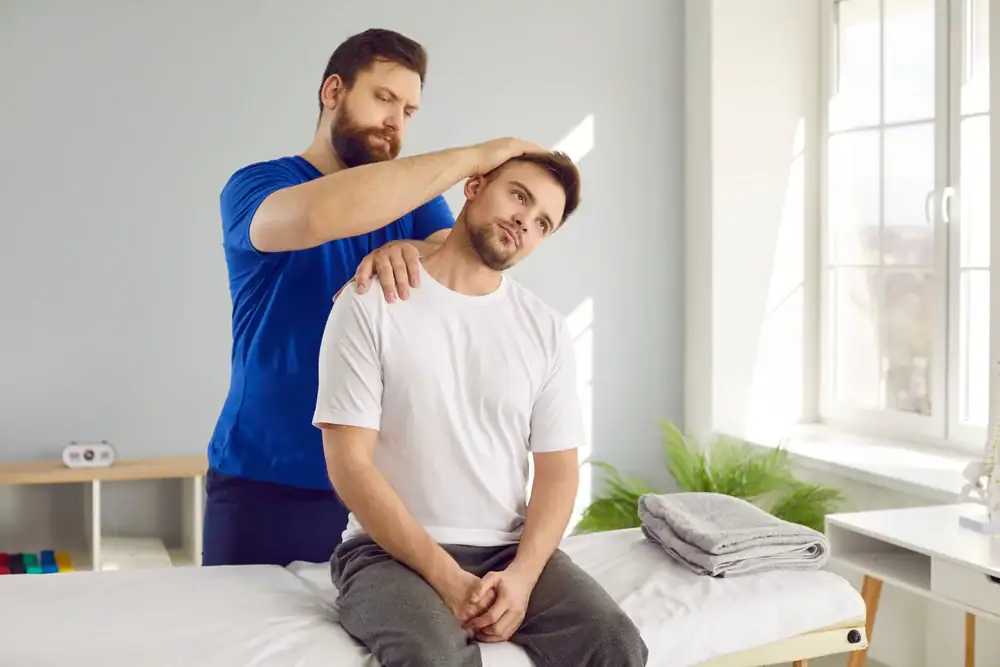
Yes, if you’re homebound and meet medical necessity requirements. Homebound means leaving your home takes considerable and taxing effort due to illness, injury, or disability. You can still leave occasionally for medical appointments or religious services and remain eligible.
Medicare Part B covers outpatient physical therapy when it’s prescribed by a doctor and provided by a licensed therapist. There’s no limit on the number of covered sessions as long as the therapy is medically necessary and you’re showing improvement. You’ll pay 20% of the Medicare-approved amount after meeting your Part B deductible.
We verify your coverage before starting treatment. If you have a Medicare Advantage plan instead of Original Medicare, coverage works similarly but we’ll confirm your specific plan details. The key requirement is that homebound status – if you can easily get to a clinic, Medicare expects you to go there instead of receiving home care.
You’re homebound if leaving home requires considerable and taxing effort. That might mean you need assistive devices like a walker or wheelchair, you need another person’s help, or you have a condition that makes leaving home medically contraindicated.
Practical examples: you can’t navigate the stairs at your split-level home in Bellmore without significant fall risk. You have severe arthritis that makes getting in and out of a car extremely painful and difficult. You’re recovering from a stroke and lack the stamina or coordination to safely travel. You have severe balance issues that make leaving home dangerous.
You don’t have to be bedridden. You can leave home for medical care, adult day care, or occasional short trips. But those outings need to be infrequent and require considerable effort. Medicare looks at whether leaving home is a major undertaking for you – not whether it’s technically possible. If you’re struggling with mobility in your own home and transportation is a legitimate barrier to getting therapy, you likely qualify.
Fall prevention starts with identifying why you’re at risk. One of our physical therapists evaluates your strength, balance, gait pattern, home environment, and medical conditions. Most falls happen due to a combination of factors – weak legs, poor balance, unsafe home layout, or medications affecting coordination.
Treatment addresses each factor directly. Strength training focuses on legs and core muscles that keep you stable. Balance and proprioceptive training improves your body’s ability to sense where it is in space and react to prevent falls. Gait training corrects walking patterns that increase fall risk – like shuffling, leaning forward, or taking uneven steps.
We also assess your home in Bellmore for hazards. Loose rugs, poor lighting, lack of grab bars, clutter in walkways – these are fixable risks. Research shows physical therapy within three months of a fall diagnosis significantly lowers your chance of falling again for up to a year. That’s not just about exercises. It’s about retraining your body’s systems, building strength where it’s weak, and removing environmental dangers that catch you off guard.
Physical therapy focuses on movement, strength, balance, and mobility. Your physical therapist works on getting you walking better, standing steadier, moving with less pain, and rebuilding strength after injury or surgery. The goal is improving how your body moves and functions physically.
Occupational therapy focuses on daily activities and tasks. Your occupational therapist helps you dress yourself, bathe safely, cook meals, and handle other activities of daily living that have become difficult. They might recommend adaptive equipment, teach you new techniques for tasks, or help you regain hand function and coordination.
You might need both. After a stroke, physical therapy helps you walk again while occupational therapy helps you button your shirt and use utensils. For severe arthritis, physical therapy addresses joint pain and mobility while occupational therapy teaches you how to open jars or get dressed despite hand limitations. We coordinate both services when needed, and Medicare covers both when you’re homebound and they’re medically necessary. Many of our Bellmore patients receive combined therapy because improving movement and improving daily function go hand in hand.
It depends entirely on your condition and goals. Post-surgery rehabilitation might run 6-8 weeks. Stroke rehabilitation often takes several months. Fall prevention and balance training might be 4-6 weeks of intensive work followed by periodic check-ins.
Most patients start with 2-3 sessions per week. As you improve, frequency drops to once or twice weekly, then eventually you’re discharged with a home exercise program to maintain your progress. We’re not trying to keep you in therapy forever – the goal is getting you functional and independent.
Medicare doesn’t set a session limit, but they do require continued improvement. If you plateau and stop making progress, coverage ends. That said, if you’re actively working toward goals and showing measurable improvement in strength, balance, mobility, or pain levels, therapy continues as long as it’s medically necessary. Your physical therapist tracks your progress and communicates with your doctor throughout treatment. When you’ve hit your goals and can safely function at home, that’s when therapy wraps up.
Possibly, yes. Homebound doesn’t mean you never leave your house. It means leaving requires considerable and taxing effort. If you can drive to the grocery store once a week but it exhausts you and you need to rest afterward, you might still qualify.
Medicare looks at the overall picture. Can you leave home easily and frequently, or is it a major undertaking that you only do when absolutely necessary? If getting to a physical therapy clinic three times a week would be genuinely difficult – whether due to pain, fatigue, mobility limitations, or the physical layout of your Bellmore home – that supports homebound status.
The key question: is traveling to appointments a legitimate barrier to getting the care you need? If you’re avoiding therapy because getting there is too hard, that’s exactly the situation home-based care is designed for. We help determine eligibility during your initial call. If you’re borderline, we’ll work with your doctor to document why home care is appropriate for your specific situation. The goal is getting you the therapy you need in the setting where you can actually participate and benefit from it.
Other Services we provide in Bellmore