
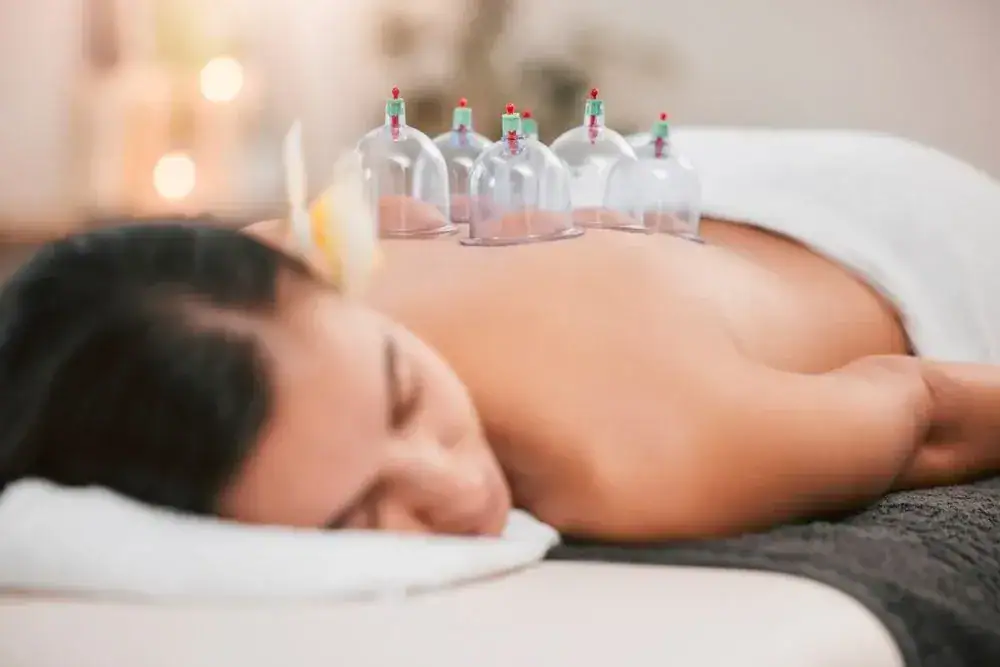

You’re dealing with back pain that won’t quit, shoulders that stay tight no matter what you try, or knees that remind you they exist every time you stand up. You’ve probably tried heat, ice, stretching, maybe even medication that didn’t do much except make you worry about taking it long-term.
Cupping therapy works differently. It pulls blood to the surface, loosens muscle fibers that have been locked up for months, and gets oxygen flowing to areas that need it most. The result isn’t just temporary relief—it’s improved range of motion, less stiffness in the morning, and the ability to do things you’ve been avoiding because they hurt too much.
Most people notice the difference within the first few sessions. Chronic tension starts to release. Movement feels easier. You’re not constantly managing pain or planning your day around what your body will let you do. That’s what actually matters—getting back to normal life without constantly thinking about what hurts.
Medcare Therapy Services has been providing home-based physical therapy across Long Island for over a decade. Our therapists are licensed, Medicare-approved, and trained in both traditional rehabilitation and complementary techniques like dry cupping.
Hampton Bays has a population where nearly half the residents are over 45, and a significant portion deal with chronic pain, arthritis, or mobility limitations. We built our practice around that reality. You shouldn’t have to drive 20 minutes to a clinic when you’re already in pain, sit in a waiting room, and rush through a session because the next appointment is waiting.
We come to you. We spend the time it takes. And we treat cupping therapy the way it should be treated—as part of a complete rehabilitation plan, not a standalone gimmick.
Your first visit starts with an evaluation. We’re looking at your pain, your movement patterns, your history, and what you’ve already tried. Cupping isn’t right for everyone, and we’re not going to use it just because you asked for it. If it makes sense for your condition, we’ll explain why and how it fits into your overall treatment plan.
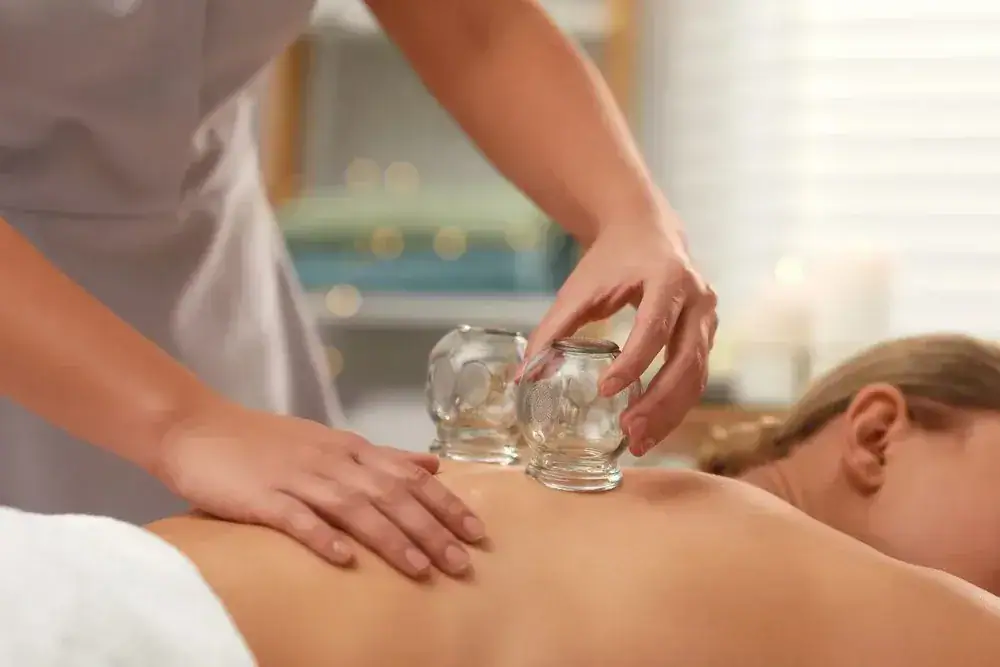
During the session, we place cups on targeted areas—usually your back, shoulders, neck, or legs depending on where the problem is. The cups create suction that draws blood to the surface and decompresses tight tissue. You’ll feel pulling, but it shouldn’t hurt. Most people find it oddly relieving once they get used to the sensation. We leave them on for 5 to 15 minutes depending on the technique and your tolerance.
After we remove the cups, we typically follow up with stretching, manual therapy, or specific exercises. Cupping is one tool. It works best when combined with movement and strengthening. You might have some circular marks afterward—they’re not bruises, they’re just blood pooling under the skin. They fade in a few days and don’t hurt.
Ready to get started?
Every session includes a full physical therapy evaluation, not just cupping. We’re addressing the root cause, not just putting cups on sore spots and calling it a day. That means hands-on manual therapy, personalized exercises, and education on how to manage your condition between visits.
We integrate cupping where it makes sense—typically for muscle tension, chronic pain, limited mobility, or inflammation. We use it alongside myofascial release, joint mobilization, and therapeutic exercise. The goal is to get you moving better and feeling better, and that takes more than one technique.
In Hampton Bays, we’re seeing a lot of people who’ve been told to just take ibuprofen and deal with it, or who’ve been on pain meds longer than they’re comfortable with. The trend toward non-pharmaceutical pain management is real, and for good reason. Cupping offers a way to manage pain naturally while we work on the underlying issue—whether that’s weak stabilizers, poor posture, or compensation patterns from an old injury.
Because we come to your home, you’re also getting convenience that matters. No fighting traffic on Montauk Highway. No rushing to make an appointment after work. We work around your schedule, and you get therapy in an environment where you’re already comfortable.
Yes, but it works best when it’s part of a broader treatment plan. Cupping improves blood flow to tight, painful muscles and helps release fascial restrictions that contribute to chronic pain. Research shows moderate-quality evidence supporting cupping for low back pain and neck pain, particularly when combined with physical therapy.
Here’s the reality: if your back pain is caused by weak core muscles, poor posture, or a movement pattern that keeps irritating the same area, cupping alone won’t fix it. But it can reduce the pain enough that you can actually do the exercises and movements that will fix it. That’s where it becomes valuable—it’s a tool that makes the rest of your rehab more effective.
Most people feel some relief after the first session, but real improvement comes over several weeks as we address both the symptoms and the cause. If someone’s promising you’ll be pain-free after one cupping session, they’re overselling it.
Cupping itself isn’t separately billed, but it’s included as part of your Medicare-covered physical therapy treatment. We’re licensed providers who accept Medicare, and cupping is one of several manual therapy techniques we use during your sessions.
What Medicare covers is the physical therapy visit—the evaluation, treatment, and therapeutic exercise. We incorporate cupping into that visit when it’s clinically appropriate. You’re not paying extra for it, and you’re not getting a separate bill for cupping services.
The key is that it has to be medically necessary and part of a documented treatment plan. We’re not doing cupping for general wellness or relaxation—we’re using it to address specific musculoskeletal conditions that qualify for physical therapy coverage. As long as your doctor has referred you for PT and your condition meets Medicare’s criteria, you’re covered.
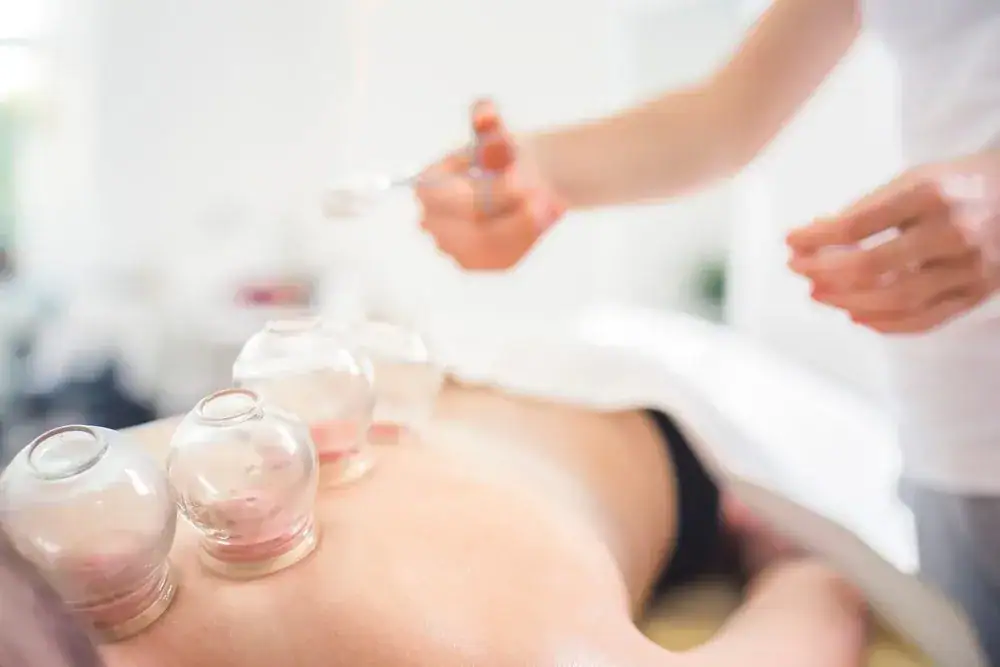
Dry cupping uses suction only—no needles, no blood, no incisions. We place cups on your skin and create a vacuum using either a pump or heat. The suction pulls tissue upward, increases blood flow, and decompresses tight muscles. That’s it.
Wet cupping involves making small cuts in the skin and drawing out blood. We don’t do that—it’s outside the scope of physical therapy practice and not necessary for musculoskeletal pain. Dry cupping is safer, less invasive, and backed by better research for the conditions we treat.
Some practitioners also do fire cupping, where they use a flame to create suction. We typically use manual or electric pumps because they’re more controlled and consistent. The effect is the same—you’re getting therapeutic suction that improves circulation and releases muscle tension. The method is just cleaner and easier to adjust based on your comfort level.
Most people notice some improvement within the first two to three sessions, but significant change usually takes a few weeks. Pain might decrease faster than function improves—you might hurt less before you move better. Both matter, but the movement piece is what keeps the pain from coming back.
A lot depends on what we’re treating. Acute muscle tension from overuse might respond quickly—sometimes in one or two sessions. Chronic conditions like arthritis pain or long-standing back problems take longer because we’re not just addressing symptoms, we’re retraining movement patterns and building strength.
We typically recommend starting with twice-weekly sessions for two to three weeks, then spacing out as you improve. Some people get where they need to be in a month. Others need ongoing maintenance every few weeks to manage chronic conditions. We’re honest about timelines—if you’re not seeing any progress after a reasonable trial, we’ll adjust the approach or refer you to someone who can help more.
Cupping is low-risk, but it’s not risk-free. The most common side effect is circular marks where the cups were placed. They look dramatic but don’t hurt and fade within three to seven days. Some people feel sore afterward, similar to how you might feel after a deep tissue massage. That soreness usually resolves within a day or two.
You shouldn’t do cupping if you’re on blood thinners, have a bleeding disorder, or have skin conditions in the treatment area. We screen for these things during your evaluation. Pregnant women need clearance from their doctor before we use cupping, and we avoid certain areas entirely during pregnancy.
Rarely, people experience dizziness during treatment or mild skin irritation. If that happens, we stop immediately and adjust. Serious complications are extremely uncommon when cupping is done by trained professionals. We’re licensed physical therapists, not weekend wellness practitioners—we know anatomy, contraindications, and how to respond if something doesn’t feel right.
Convenience matters when you’re already dealing with pain. Driving to a clinic, sitting in a waiting room, and rushing through treatment because they’re overbooked adds stress you don’t need. Home-based therapy eliminates all of that. We come to you, we’re on time, and you get our full attention without distractions.
There’s also a practical benefit—we see how you move in your actual environment. We can assess how you get out of your chair, how your workspace is set up, what your daily routine looks like. That context helps us design better treatment plans. In a clinic, we’re guessing. At your home, we know exactly what you’re working with.
For Hampton Bays residents dealing with mobility issues, transportation challenges, or busy schedules, home therapy isn’t just more convenient—it’s often the difference between getting consistent treatment and skipping sessions because it’s too much hassle. Consistency is what gets results. If coming to us makes it easier for you to stick with treatment, that’s reason enough.
Other Services we provide in Hampton Bays