
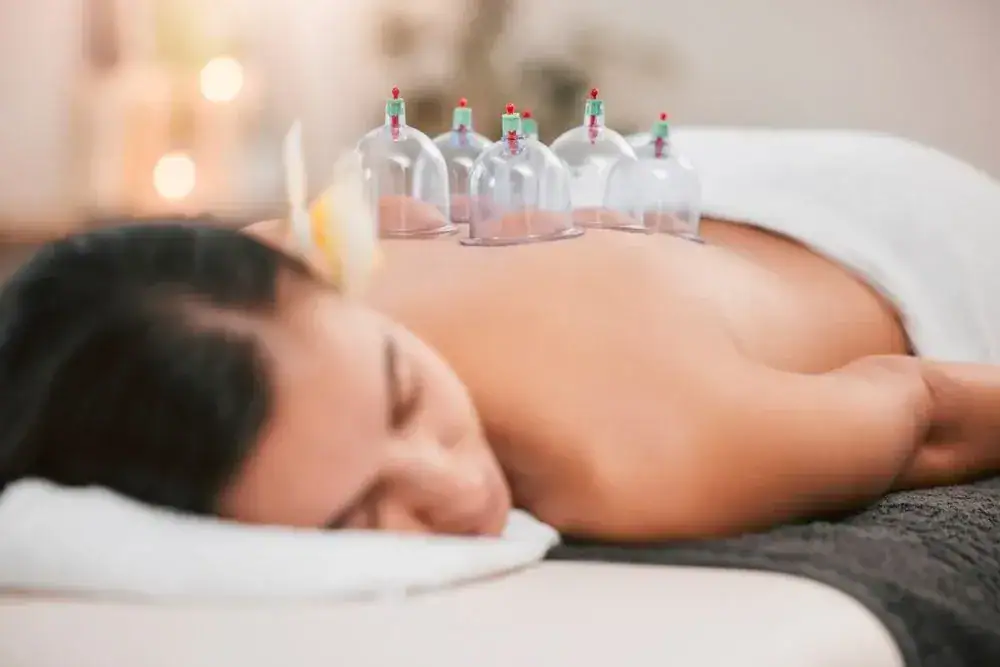

You’re dealing with pain that limits what you can do. Maybe it’s chronic neck tension that won’t quit, low back pain that’s been around for months, or that stubborn IT band issue keeping you off the road. You’ve tried rest, stretching, maybe even other treatments that didn’t stick.
Cupping therapy works differently. The suction creates negative pressure that pulls fresh blood into restricted tissue, breaks up adhesions, and gives your body what it needs to heal. You’re not masking symptoms—you’re addressing why the pain keeps coming back.
Most people notice immediate relief in range of motion. That tightness you’ve been carrying starts to let go. Within a few sessions, you’re moving better, sleeping through the night, and getting back to activities that matter. One runner with over a year of IT band pain reported being symptom-free after just two cupping sessions and returned to his normal routine.
This isn’t about managing pain forever. It’s about resolving it so you can move on.
We’ve been serving Long Island communities with evidence-based physical therapy for years. Our Greenvale patients come to us because they want results, not another appointment that wastes their time.
We use cupping as part of a broader treatment approach. That means your therapist isn’t just placing cups and walking away—they’re assessing your movement patterns, identifying restrictions, and building a plan that fits your goals. You get licensed professionals who’ve treated thousands of cases like yours.
Greenvale residents appreciate that we don’t require referrals for most insurances, and same-day appointments are often available. You’re not waiting weeks to start feeling better. Our team manages every detail—from secure patient data to transparent communication—so you can focus on recovery, not logistics.
Your first visit starts with an evaluation. We’re looking at your pain history, movement quality, and what’s actually causing the problem. This isn’t a one-size-fits-all situation. Your therapist needs to understand your body before applying any treatment.
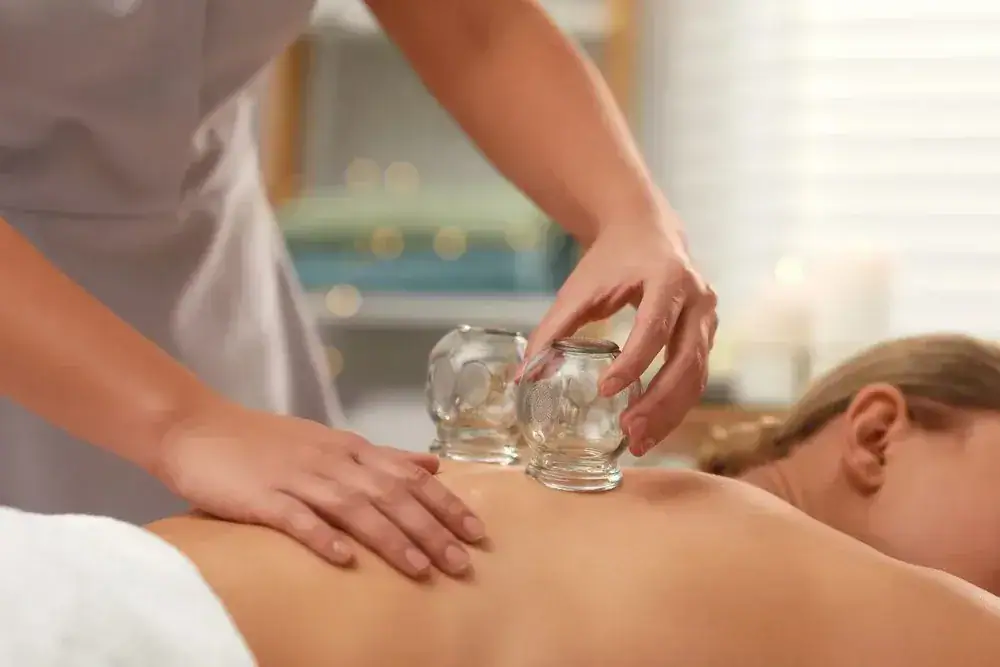
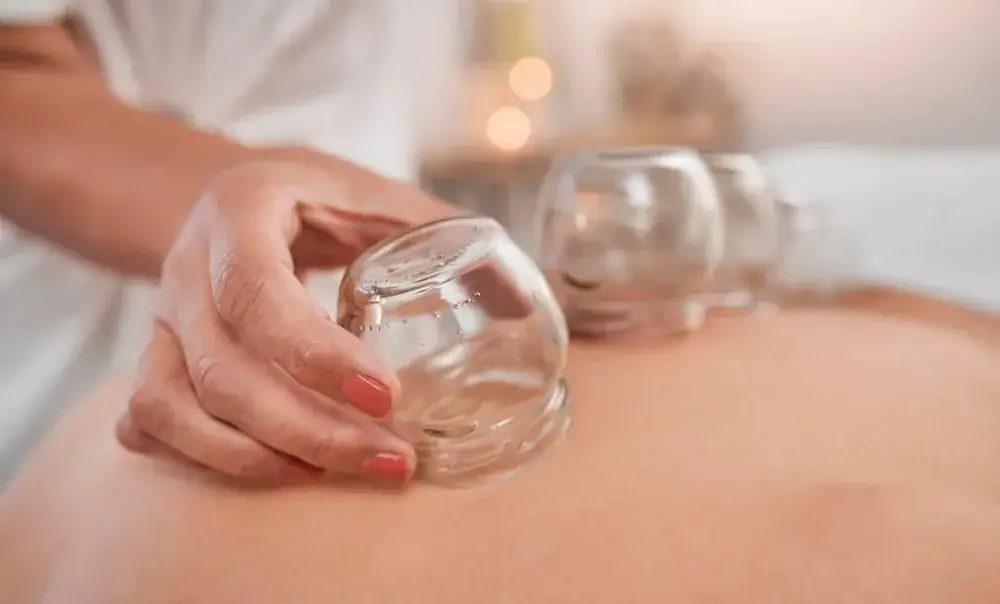
During the cupping session, we place specialized cups on targeted areas. The suction pulls tissue upward, increasing blood flow and creating space in compressed areas. There are three main techniques we use: longitudinal (gliding the cup along muscle fibers), cross fiber (moving perpendicular to the muscle), and circular motions. Most sessions use longitudinal cupping because it covers more area and releases tension efficiently.
You’ll feel the suction—it’s not painful, but you know something’s happening. Sessions typically last 10-15 minutes for cupping alone, though it’s often combined with other physical therapy techniques for better results. Some people see circular marks afterward that can last up to two weeks. That’s normal and indicates increased blood flow to the area.
After your session, your therapist will give you specific guidance on movement, activity modification, and follow-up care. Most conditions improve within 2-4 sessions, though chronic issues may need more attention.
Ready to get started?
Cupping therapy works especially well for chronic neck pain, low back pain, and fibromyalgia—all conditions where tissue restriction and poor circulation contribute to ongoing symptoms. If you’re an athlete dealing with muscle tightness, delayed recovery, or repetitive strain injuries, cupping can significantly reduce your downtime.
We also use cupping for post-surgical rehabilitation when appropriate. It helps reduce scar tissue formation and improves tissue mobility during the healing process. Many Greenvale patients combine cupping with manual therapy and targeted exercises for comprehensive treatment that addresses multiple factors at once.
There are some cases where cupping isn’t appropriate. We don’t perform cupping over open wounds, active infections, burns, or areas with acute inflammation. Your therapist will assess your condition during the evaluation and determine if cupping is the right approach for your situation.
Long Island’s active community—from weekend warriors to serious athletes—has embraced cupping as a legitimate recovery tool. It’s the same technique used by Olympic athletes, and it’s available right here in Greenvale without the wait times or runaround you’d get at larger facilities.
Yes, and there’s evidence backing it up. Research supports cupping as an effective treatment for chronic neck pain, low back pain, and fibromyalgia—three of the most common conditions we see in Greenvale.
The mechanism makes sense when you understand what’s happening. Chronic pain often involves restricted blood flow, tissue adhesions, and compressed fascia. Cupping creates negative pressure that reverses these conditions. Fresh blood moves into areas that have been starved of circulation. Adhesions break up. Compressed tissue gets space to move again.
You’re not just treating symptoms. You’re changing the tissue environment that’s causing the pain. That’s why results tend to last longer than passive treatments like heat or ice. Your body is actually healing, not just feeling temporarily better.
Most acute issues improve within 2-4 sessions. Chronic conditions that have been present for months or years typically need more—sometimes 6-8 sessions to see lasting change.
Here’s what actually determines your timeline: how long you’ve had the problem, how severe the tissue restriction is, and whether you’re doing the supplementary work between sessions. Someone with a two-week-old muscle strain will respond faster than someone with a year of chronic tension.
Your therapist will give you a realistic estimate after your evaluation. We’re not interested in stringing you along for unnecessary visits. If cupping isn’t producing measurable improvement within a few sessions, we’ll adjust the approach or recommend a different treatment. You should see some positive change—even if it’s just increased range of motion—within the first two visits.
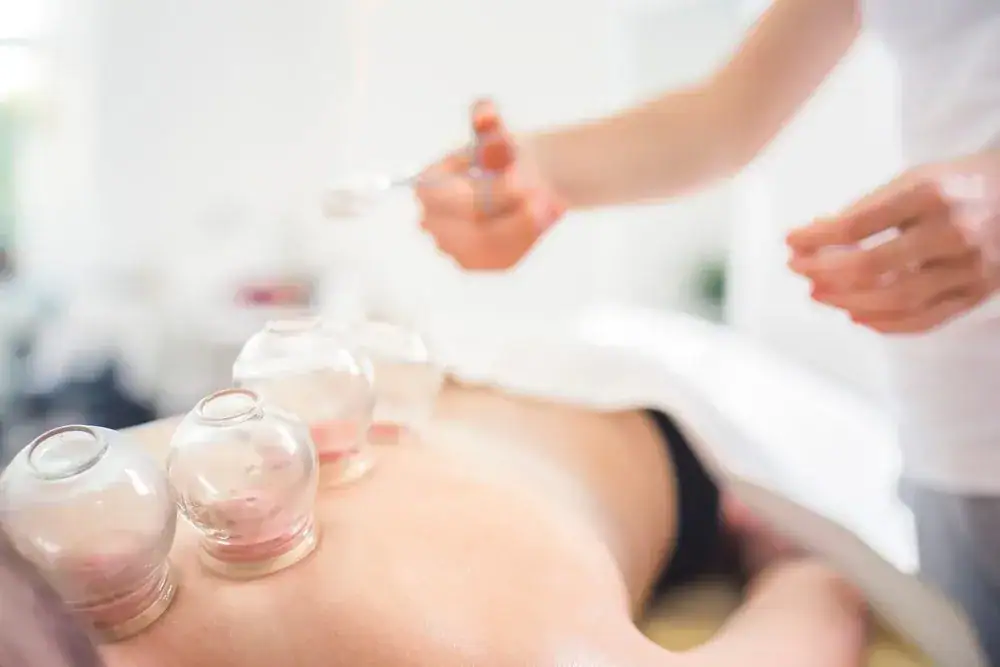
Usually, yes. The circular marks you’ve probably seen are caused by increased blood flow to the treated area. They’re not bruises in the traditional sense—there’s no tissue damage. The suction brings blood to the surface, and that shows up as discoloration.
These marks typically last anywhere from a few days to two weeks, depending on how restricted the tissue was and how much suction was used. Some people mark more easily than others. If you have an event coming up where visible marks would be a problem, let your therapist know beforehand. We can adjust technique or treat areas that won’t be visible.
The marks don’t hurt. Most people forget they’re there after leaving the appointment. If you’re concerned about appearance, plan your first session when you have time to see how your body responds before any important events.
Absolutely, and that’s usually how we get the best results. Cupping works well alongside manual therapy, therapeutic exercise, and other physical therapy techniques we use here.
Think of cupping as one tool in a larger treatment plan. It’s excellent for releasing tissue and improving blood flow, but you still need to address movement patterns, strengthen weak areas, and retrain your body to move correctly. That’s where the rest of physical therapy comes in.
A typical session might include cupping to release tight muscles, followed by hands-on manual therapy to improve joint mobility, then specific exercises to reinforce the changes we just made. This combination approach tends to produce faster, more lasting results than any single technique alone. Your therapist will design a plan that makes sense for your specific condition and goals.
When cupping is performed as part of your physical therapy treatment, it’s typically covered under your PT benefits. We don’t bill it as a separate service—it’s included in your physical therapy session.
Most insurance plans we work with in Greenvale don’t require a referral for physical therapy, which means you can start treatment without waiting for a doctor’s appointment first. Same-day appointments are often available, so you’re not stuck in pain while waiting for an opening.
During your first contact with us, we’ll verify your specific coverage and let you know what to expect for out-of-pocket costs. Every plan is different, and we’d rather give you accurate information upfront than surprise you later. If you have questions about your coverage before scheduling, call our office and we’ll walk you through it.
During the treatment, you’ll feel suction and pulling on your skin. It’s not painful, but it’s definitely noticeable. Some areas will feel more intense than others, especially where tissue is particularly tight or restricted. Most people describe it as a deep pressure sensation.
Immediately after, the treated area often feels looser and more mobile. You might notice improved range of motion right away. Some people feel slightly sore for a day or two afterward—similar to post-workout soreness. This is normal and indicates that tissue changes are happening.
You can return to normal activities the same day. We’ll give you specific guidance based on your condition, but most people don’t need to modify their routine significantly. Drink plenty of water after your session to help flush out metabolic waste products that were released from the tissue. If you experience any unusual pain or reactions, contact our office immediately.
Other Services we provide in Greenvale