

You’ve been managing it for months, maybe years. The stiffness in your lower back that makes getting out of bed harder than it should be. The neck tension that turns into headaches by afternoon. The knee pain that’s slowly taking activities off the table.
Pain medication helps for a few hours, then wears off. You’re not interested in stronger prescriptions or their side effects. Physical therapy has helped, but you’re looking for something that goes deeper—something that addresses the tightness and restricted blood flow that keeps pulling you back into the same cycle.
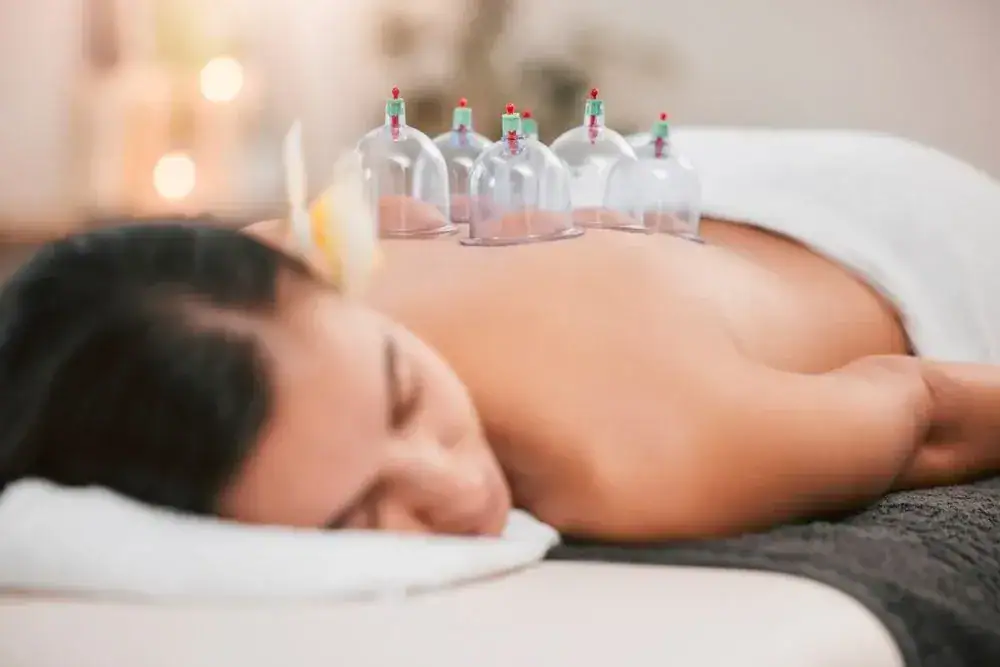
Cupping therapy works by creating suction on the skin, which draws blood to the area and helps release the fascia—the connective tissue that gets tight and restricts movement. When that tissue loosens, pain decreases. Range of motion improves. You start moving the way you used to, without compensating or bracing for discomfort.
It’s not about masking symptoms. It’s about targeting what’s causing them. Most people notice a difference in how their body feels after the first session—less tension, better mobility, and a reduction in pain that actually lasts.
We’ve been providing physical therapy across Long Island for years, with a focus on personalized care that actually fits your needs. Our team includes licensed physical therapists trained in cupping therapy and other hands-on techniques that help people reduce pain and regain function.
We’re not a high-volume clinic where you’re rushed through appointments. You’ll work with the same therapist who understands your history, your goals, and what’s working. Every treatment plan is built around what you’re dealing with—not a one-size-fits-all protocol.
Great Neck Gardens and the surrounding Nassau County area have a high concentration of adults managing chronic pain, arthritis, and mobility limitations. We see it every day. That’s why we’ve integrated cupping into our physical therapy programs—it’s another tool that helps people in this community get results without adding more pills to their routine.
Your first visit starts with an evaluation. We’ll ask about your pain—where it is, how long you’ve had it, what makes it better or worse. We’ll also assess your range of motion and identify areas where tissue restriction might be contributing to the problem.
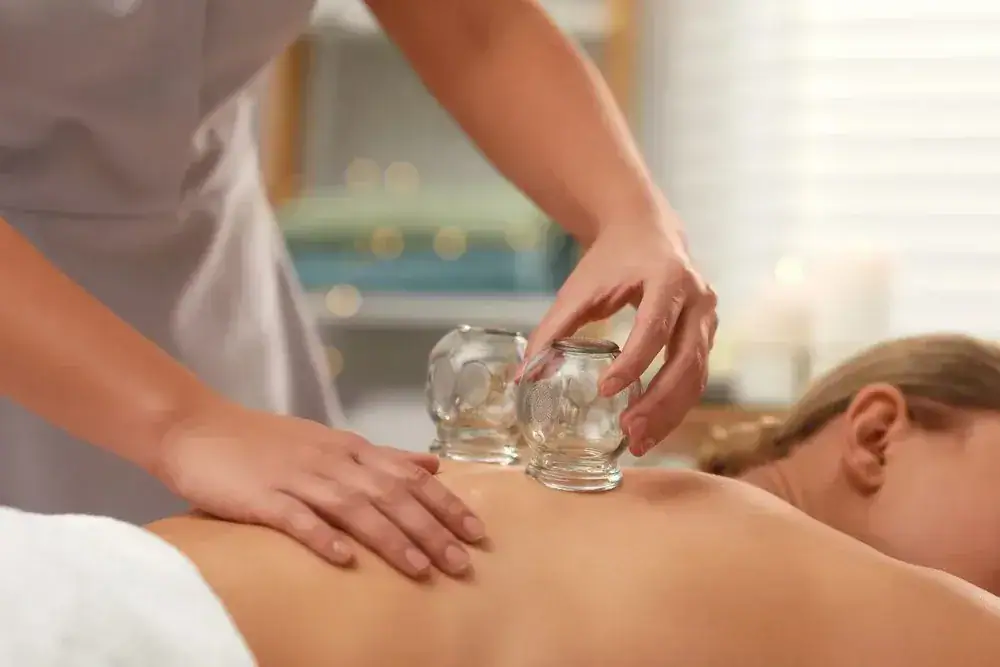
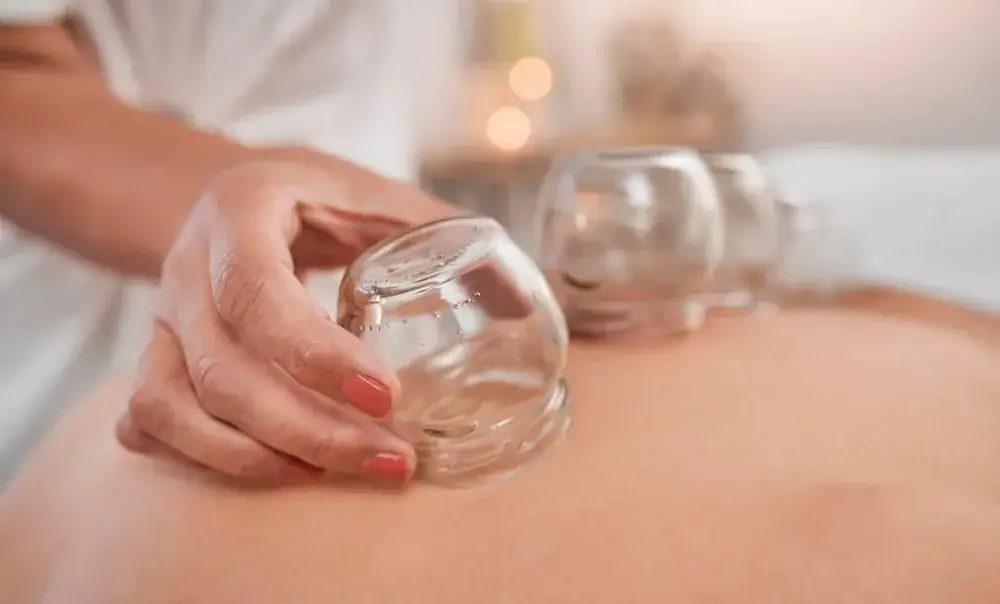
If cupping is a good fit, we’ll explain how it works before we start. We use dry cupping, which involves placing cups on your skin to create suction. The cups stay in place for several minutes, drawing blood flow to the area and lifting the fascia away from the muscle. Some people feel immediate relief. Others notice the difference over the next day or two as inflammation decreases and movement becomes easier.
Cupping is often combined with other physical therapy techniques—manual therapy, stretching, strengthening exercises—to give you a more complete approach. The goal isn’t just to reduce pain in the moment. It’s to improve how your body moves so the pain doesn’t keep coming back.
Most people start with one or two sessions per week. Depending on your condition and how you respond, that may increase or taper off. We’ll adjust based on what’s working, and you’ll always know what to expect before the next appointment.
Ready to get started?
Cupping therapy is especially effective for chronic low back pain, neck pain, knee osteoarthritis, and muscle tightness that limits your range of motion. If you’ve been dealing with pain that doesn’t fully respond to rest or standard treatment, this is worth considering.
In Great Neck Gardens and across Nassau County, we see a lot of adults over 50 dealing with arthritis, joint pain, and stiffness that makes daily tasks harder. Cupping helps by increasing blood flow to areas that aren’t getting enough circulation, reducing inflammation, and releasing the fascia that’s restricting movement.
It’s also useful for people recovering from injury or surgery who need help regaining mobility. Athletes use it to manage muscle soreness and improve recovery time. And for anyone trying to avoid long-term medication use, it offers a low-risk alternative that works with your body’s natural healing process.
You’ll still need to do the work—stretching, strengthening, movement—but cupping gives your body a better starting point. It’s one part of a bigger plan to help you feel better and function better, not a quick fix that disappears by next week.
Yes. Multiple research studies show that cupping therapy significantly reduces chronic low back pain and improves function. It works by increasing blood flow to the affected area, releasing tight fascia, and reducing inflammation that contributes to ongoing discomfort.
Most people with chronic back pain have tried rest, medication, and standard physical therapy with mixed results. Cupping adds another layer by targeting the tissue restrictions that other treatments miss. When fascia gets tight, it pulls on muscles and limits how your spine moves. The suction from cupping lifts that tissue, creates space, and allows better movement.
You won’t feel 100% after one session, but many people notice their pain level drops from an 8 to a 3 or 4 within the first few treatments. The key is consistency. Cupping works best when it’s part of a broader physical therapy plan that includes strengthening and mobility work.
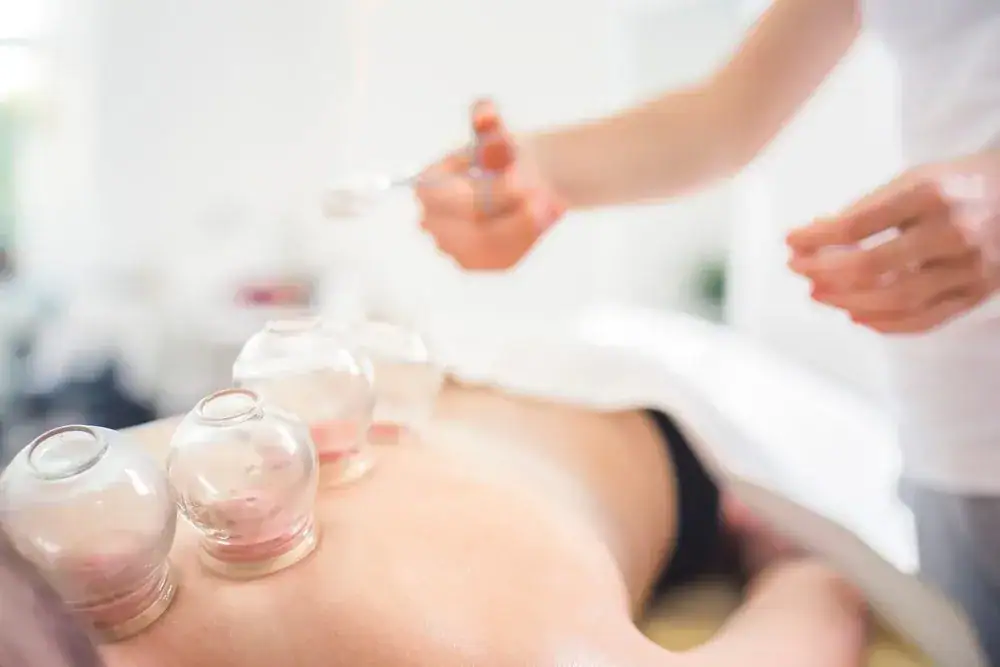
Cupping is generally very safe when performed by a licensed physical therapist. The most common side effect is temporary circular marks on your skin where the cups were placed. These aren’t bruises—they’re caused by increased blood flow to the area—and they usually fade within a few days to a week.
Some people feel mild soreness after their first session, similar to how you might feel after a deep tissue massage. That’s normal and typically goes away within 24 hours. Drinking water and moving gently afterward helps.
There are a few situations where cupping isn’t recommended. If you’re on blood thinners, have a skin condition in the treatment area, or are pregnant, let your therapist know. We’ll assess whether cupping is appropriate or if another technique makes more sense for your situation. Safety is always the priority, and we won’t use a treatment unless it’s the right fit for you.
Cupping is a technique we use within physical therapy—it’s not a replacement for it. Regular physical therapy focuses on improving strength, mobility, and function through exercise, manual therapy, and education. Cupping is one tool we use to enhance those results, especially when muscle tightness or fascial restriction is limiting progress.
Think of it this way: if your hamstrings are so tight that you can’t bend forward without pain, we could stretch them manually. Or we could use cupping to release the fascia first, which makes the stretching more effective and less uncomfortable. The suction helps prepare the tissue so the rest of the treatment works better.
Cupping also provides a different kind of sensory input that can help reduce pain perception. It activates nerve fibers that essentially tell your brain to pay less attention to pain signals. Combined with movement-based therapy, it gives your body more tools to heal and adapt. You’re not choosing between cupping and physical therapy—you’re getting both, and they work better together.
It depends on what you’re treating and how your body responds. Most people start noticing improvement within two to four sessions, but chronic conditions usually require more. If you’ve been dealing with pain for months or years, it’s not going away in one appointment.
A typical plan might include cupping once or twice a week for the first few weeks, then tapering off as your pain decreases and mobility improves. Some people continue with occasional maintenance sessions to keep things manageable. Others complete a course of treatment and move on.
We’ll reassess after every few sessions and adjust based on what’s working. If you’re not seeing progress, we’ll talk about it and consider other approaches. The goal is always to get you feeling better in the shortest reasonable time frame—not to keep you coming in indefinitely. You’ll know where you stand and what to expect at every stage.
Yes. Research shows that cupping therapy can reduce pain and improve function in people with knee osteoarthritis. It works by increasing blood flow to the joint, reducing inflammation, and releasing tight muscles around the knee that contribute to stiffness and limited range of motion.
Knee arthritis is common in Great Neck Gardens and across Long Island, especially among older adults. The pain makes it harder to walk, climb stairs, or stay active. Cupping doesn’t reverse arthritis, but it does help manage the symptoms so you can move more comfortably and maintain your quality of life.
We usually combine cupping with strengthening exercises for the muscles around your knee, which helps stabilize the joint and reduce strain. The suction from the cups helps relax the quadriceps, hamstrings, and calf muscles that get overworked when your knee isn’t moving well. Over time, that combination leads to less pain, better movement, and more confidence in your ability to stay active without making things worse.
If cupping is provided as part of a physical therapy treatment plan by a licensed physical therapist, it’s typically covered under your physical therapy benefits. That includes Medicare. The key is that it’s being used as a therapeutic technique within a broader plan of care—not as a standalone service.
When you come in for an evaluation, we’ll verify your insurance coverage and let you know what to expect in terms of copays or out-of-pocket costs. Most plans cover a certain number of physical therapy visits per year, and cupping falls under that.
If you’re unsure about your coverage, call your insurance provider and ask if physical therapy services are covered. You don’t need to mention cupping specifically—it’s considered a manual therapy technique, which is a standard part of PT. We’ll handle the billing and documentation on our end to make sure everything is submitted correctly. You shouldn’t have any surprises when it comes to cost.
Other Services we provide in Great Neck Gardens