
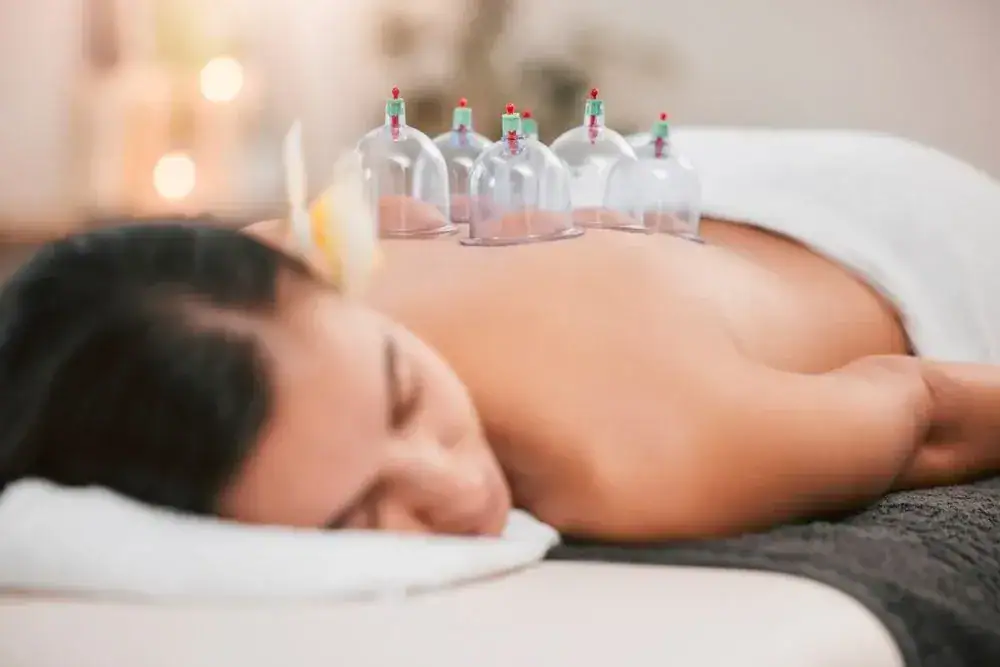

You sleep through the night without waking up to reposition. You reach for something on a high shelf without that sharp pull in your shoulder. You get through your workday without constantly shifting in your chair to find a comfortable position.
That’s what happens when chronic muscle tension and pain actually get addressed. Cupping therapy works by creating suction on your skin that pulls blood flow to tight, restricted areas. This isn’t about temporary relief that wears off in an hour—it’s about improving circulation, reducing inflammation, and giving your muscles the space they need to release and heal.
Most people notice reduced stiffness after their first session. Range of motion improves. You move more freely. The constant background ache that’s been there for months starts to fade, and you get back to doing things you’ve been avoiding because they hurt too much.
We’ve been treating patients across Long Island since 2010. Our Glen Head location brings the same level of care you’d expect from a licensed physical therapy practice—cupping isn’t offered by a massage therapist or spa technician. It’s delivered by trained PTs who understand musculoskeletal conditions and how to treat them.
We accept Medicare and most commercial insurance, so you’re not paying out of pocket for relief. Every treatment plan is built around your specific condition, your pain points, and what’s actually limiting your movement. You’re not getting a one-size-fits-all approach.
Glen Head residents already know the value of professional healthcare that doesn’t waste time. We’re here because this community expects results, not reassurances.
Your first visit starts with an evaluation. We need to understand where your pain is, what movements trigger it, and how long you’ve been dealing with it. This isn’t a quick intake form—it’s a real conversation about what’s going on with your body.
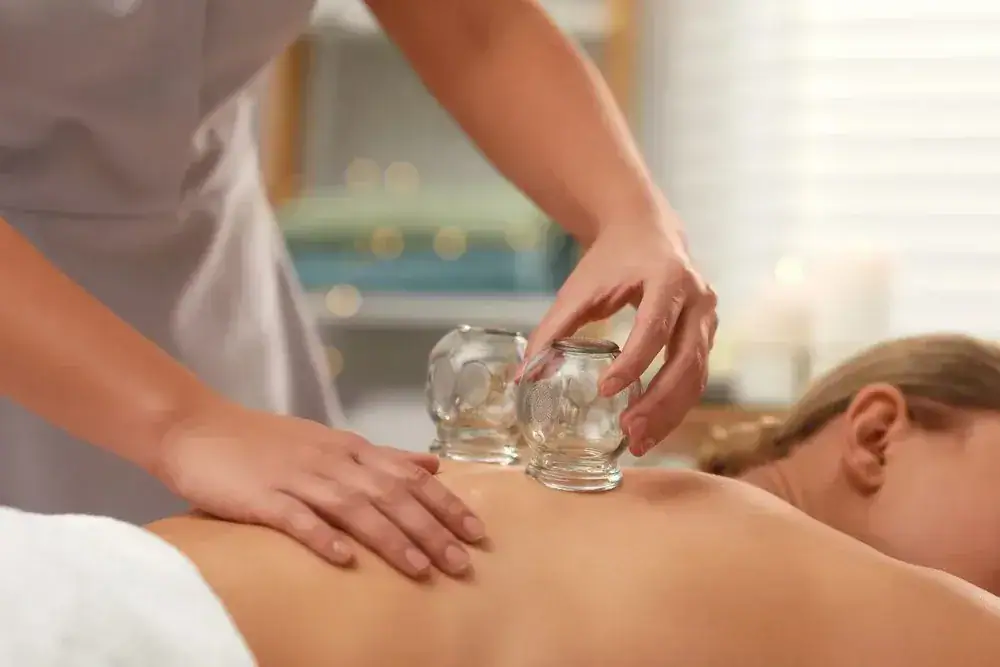
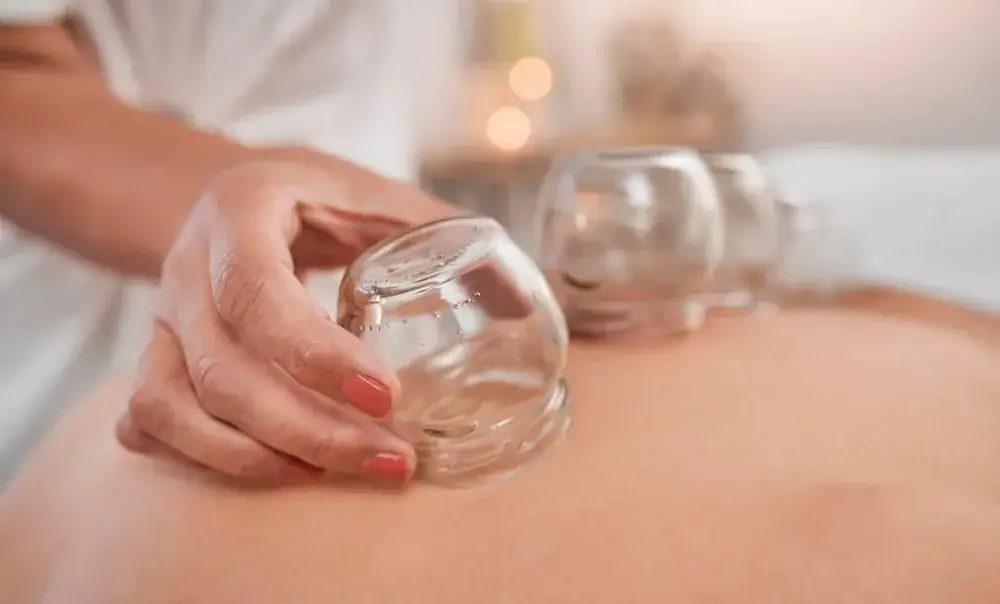
Once we know what we’re treating, we apply cups to the affected areas. These create suction that lifts the skin and underlying tissue, increasing blood flow and releasing fascial restrictions. Dry cupping is the most common method we use—it’s non-invasive, safe, and doesn’t involve needles or incisions.
You’ll feel the pull as the cups create suction, but it shouldn’t hurt. Most people describe it as a tight, stretching sensation. We leave the cups in place for several minutes, then remove them and assess how your tissue responds.
Sessions typically last 30 to 45 minutes. Some patients see improvement after one session. Others need a series of treatments, especially if you’re dealing with chronic conditions like low back pain, neck pain, or knee osteoarthritis. We’ll map out a realistic plan based on how your body responds.
Ready to get started?
Cupping therapy works well for chronic neck pain, low back pain, shoulder tension, and knee osteoarthritis—conditions that show up constantly in Glen Head because people are active, working long hours, or dealing with age-related wear and tear. If you’ve tried other treatments and they haven’t worked, this might be the missing piece.
We often combine cupping with physical therapy exercises or manual therapy techniques. It’s not a standalone miracle cure. It’s a tool that enhances your overall treatment plan by improving tissue mobility and reducing pain so you can actually do the exercises that rebuild strength and stability.
Athletes use cupping to recover faster and maintain performance. You saw it at the 2016 Olympics. But you don’t have to be an elite competitor to benefit—if you’re dealing with muscle tightness that limits your daily movement, cupping helps release that tension so your body can function the way it should.
This is a low-risk treatment. Side effects are minimal—usually just temporary circular marks where the cups were placed. They fade within a few days. What you get in return is reduced pain, better movement, and a non-pharmaceutical option that actually addresses the root problem instead of masking it.
Yes, and there’s research backing it up. Studies show that cupping therapy can provide short-term pain relief for chronic low back pain, especially when combined with other treatments like physical therapy or exercise. It’s not a permanent fix on its own, but it’s effective at reducing pain levels enough that you can move better and participate in the therapies that build long-term improvement.
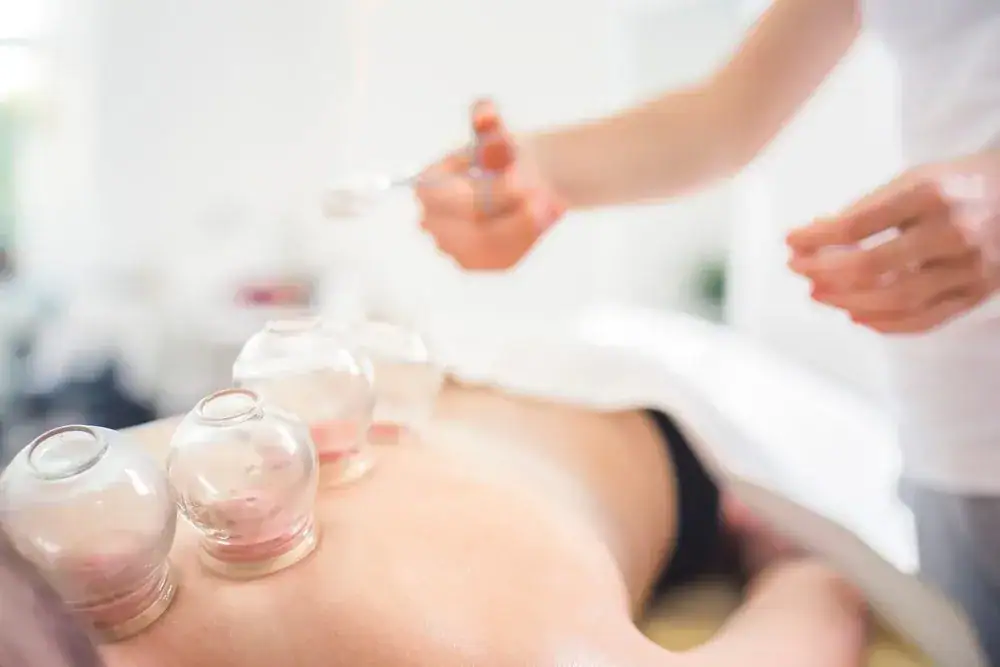
The suction from the cups increases blood flow to restricted areas and helps release tight fascia—the connective tissue that wraps around your muscles. When that tissue gets stuck or inflamed, it limits your movement and creates pain. Cupping helps break up those restrictions.
If you’ve been dealing with back pain for months or years and other treatments haven’t worked, cupping gives your body a different kind of input. Most patients notice reduced stiffness and improved range of motion after a few sessions. It won’t cure a herniated disc, but it can significantly reduce the muscle tension and pain that come with it.
Massage pushes into your muscles. Cupping pulls them up. That difference matters because some types of pain and restriction respond better to decompression than compression. If your muscles are tight and stuck to the fascia underneath, pushing harder doesn’t always release them—it can actually make things worse.
Cupping creates negative pressure that lifts the tissue, separating layers that have adhered together and allowing fresh blood flow into areas that have been restricted. This is especially useful for chronic tension, trigger points, and fascial restrictions that don’t respond well to traditional massage.
We use cupping as part of a physical therapy treatment plan, not as a standalone relaxation service. That means it’s targeted, clinical, and designed to address specific musculoskeletal issues. You’re not just getting a spa treatment—you’re getting a therapeutic intervention delivered by a licensed PT who understands anatomy and movement dysfunction.
If cupping is part of your physical therapy treatment plan, most insurance policies will cover it under your PT benefits. We accept Medicare and nearly all commercial insurance plans, and cupping is typically billed as part of your overall therapy session—not as a separate add-on service.
Coverage depends on your specific plan, your deductible, and whether you’ve met your out-of-pocket limits for the year. We recommend calling your insurance provider before your first visit to confirm your PT benefits and ask about any copays or coinsurance you’ll be responsible for.
What matters is that you’re not paying luxury spa prices for a medical treatment. Cupping at Medcare is delivered in a clinical setting by licensed professionals, and it’s coded and billed the same way other physical therapy techniques are. If you have questions about your coverage, our front desk can help verify your benefits before you schedule.
Cupping works well for chronic pain conditions where muscle tension and restricted blood flow are part of the problem. That includes chronic neck pain, low back pain, shoulder pain, knee osteoarthritis, and fibromyalgia. It’s also effective for sports injuries, muscle strains, and recovery after intense physical activity.
Research shows moderate-quality evidence supporting cupping for these conditions, especially when it’s used alongside other treatments like exercise therapy or manual therapy. It’s not a cure-all, but it’s a proven tool for reducing pain and improving mobility in people who haven’t found relief through other methods.
If you’re dealing with nerve pain, fractures, or acute injuries, cupping might not be the right fit. We’ll assess your condition during your evaluation and let you know whether cupping is appropriate for what you’re dealing with. Some people respond immediately. Others need a few sessions before they notice significant changes. It depends on how long you’ve had the problem and how severe the restriction is.
Cupping doesn’t hurt, but you’ll feel a strong pulling sensation as the suction lifts your skin and tissue. Most people find it uncomfortable at first, then get used to it within a minute or two. If it ever feels painful, we adjust the pressure. The goal is therapeutic tension, not pain.
The circular marks you see after cupping are caused by blood being drawn to the surface as the suction breaks up stagnant fluid and increases circulation. They’re not bruises in the traditional sense—they don’t hurt like bruises do. They’re more like a temporary discoloration that shows where the treatment was applied.
These marks usually fade within three to seven days, depending on how much restriction was in the tissue and how your body responds. Darker marks often indicate areas with more stagnation or tension. Lighter marks suggest better circulation. Either way, the marks are harmless and part of the process. If you’re concerned about visible marks for an event or occasion, let us know and we can adjust timing or placement.
Some people feel significant relief after one session. Others need four to six sessions before they notice lasting improvement. It depends on what we’re treating, how long you’ve had the condition, and how your body responds to treatment.
Acute issues—like a recent muscle strain or post-workout soreness—often improve quickly. Chronic conditions like long-term back pain or knee osteoarthritis usually require multiple sessions because the tissue restrictions and pain patterns have been building for months or years.
We’ll give you a realistic timeline after your evaluation. If you’re not seeing improvement after a few sessions, we’ll reassess and adjust your treatment plan. Cupping isn’t the only tool we use, and if something else would work better for your situation, we’ll tell you. The goal is to get you moving and feeling better as efficiently as possible—not to string you along for unnecessary visits.
Other Services we provide in Glen Head