
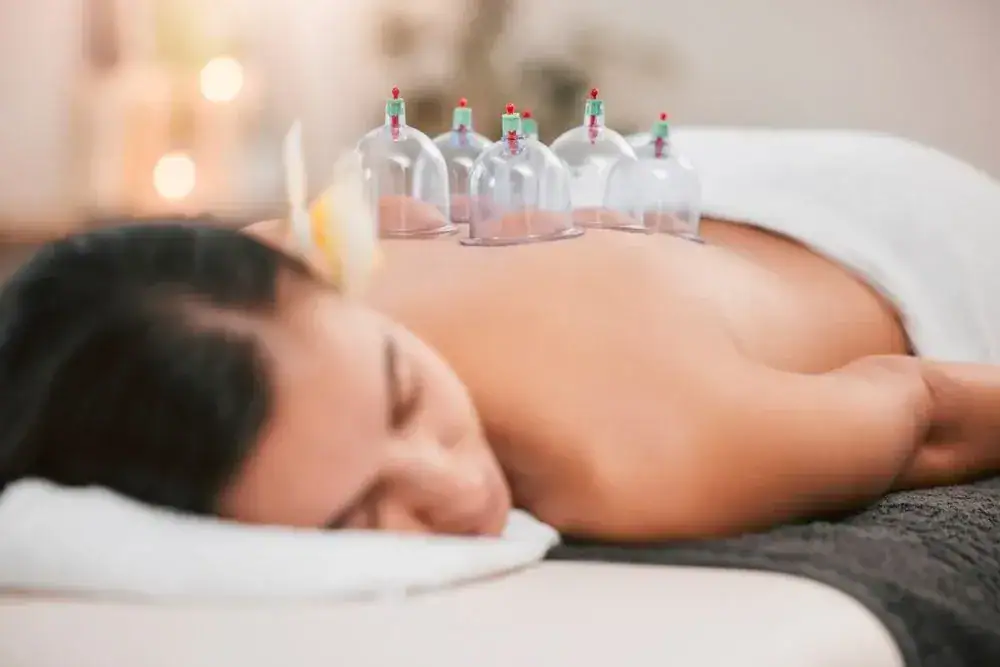

You wake up without that familiar ache in your lower back. You reach for something on a high shelf without bracing yourself first. You get through your day without counting down to the next dose of ibuprofen.
That’s what cupping therapy does when it’s done right. The suction pulls blood to tight, painful areas—breaking up the knots and adhesions that keep you stuck in the pain cycle. Your muscles loosen. Inflammation drops. Movement gets easier.
It’s not a temporary cover-up. Dry cupping addresses the tension at its source, which is why so many people feel relief that actually lasts. You’re not just managing symptoms anymore—you’re giving your body what it needs to heal.
And when a licensed physical therapist handles the treatment in your own home, you skip the commute, the waiting room, and the hassle of fitting one more appointment into an already packed schedule.
We’ve been serving Long Island for over a decade, delivering Medicare-covered physical therapy and occupational therapy where you actually need it—at home. We’re not a wellness spa offering cupping as a side service. We’re licensed therapists who integrate cupping into real treatment plans for chronic pain, muscle tension, and mobility issues.
Garden City residents deal with the same challenges as the rest of Nassau County—long work commutes, aging in place, limited access to consistent care. That’s exactly why we built our model around in-home therapy. You don’t drive to us. We come to you, with the tools and training to deliver results.
Our team manages every detail, from insurance verification to treatment scheduling, so nothing falls through the cracks. You get personalized care without the runaround.
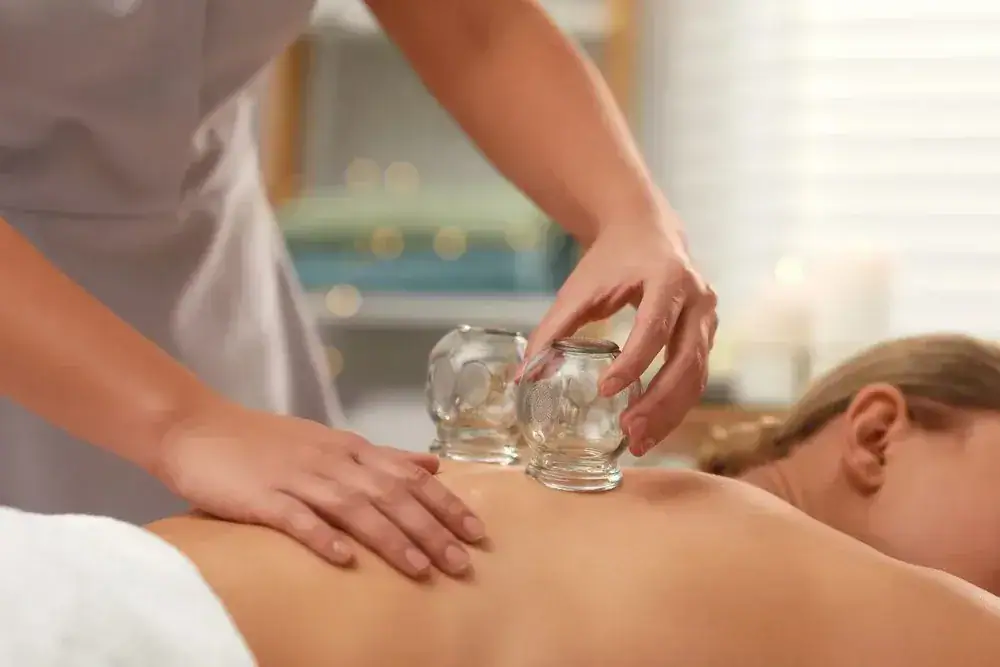
First, your therapist evaluates your pain—where it is, how long you’ve had it, what makes it worse. This isn’t a one-size-fits-all session. Every treatment is based on your specific condition and goals.
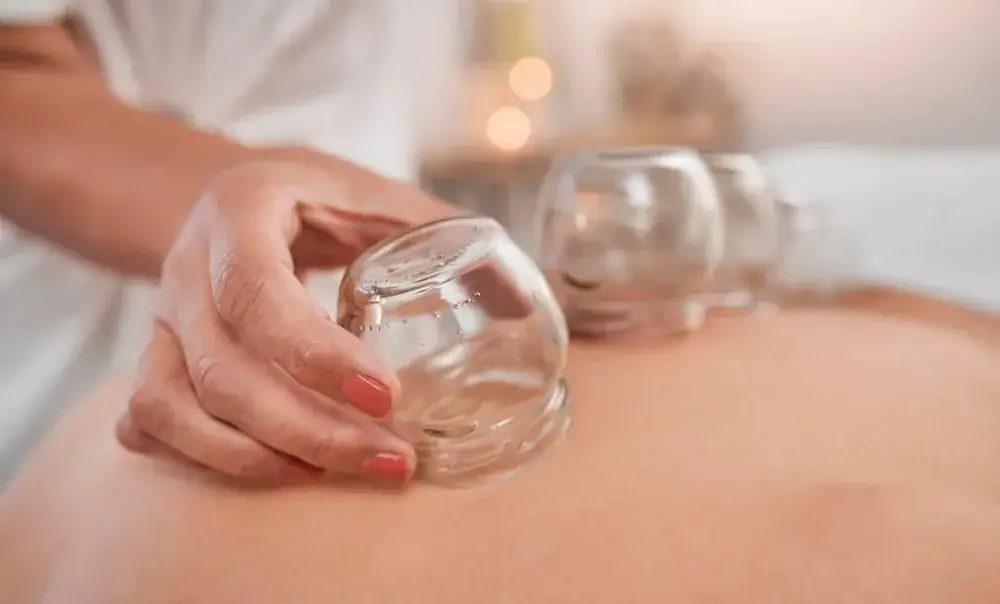
Then comes the cupping itself. Your therapist places specialized cups on targeted areas of your body, creating suction that draws blood flow to tight or injured tissue. This is dry cupping—no needles, no incisions, just controlled pressure that encourages your body to release tension and start healing.
Most people feel the difference right away. Muscles relax. Stiffness eases. Some areas might look a little red or bruised afterward—that’s normal and fades within a few days.
Sessions typically last 20 to 30 minutes, depending on what you’re treating. Your therapist will adjust the intensity and placement based on how you respond. If cupping is part of a broader physical therapy plan, it gets combined with stretching, strengthening, or other techniques to give you the most complete recovery possible.
You’re not left guessing what’s next. Every session ends with a clear plan for follow-up care and progress tracking.
Ready to get started?
You get a licensed physical therapist who comes to your home in Garden City with professional-grade cupping equipment. Not someone who took a weekend course—someone trained in musculoskeletal therapy who knows how to treat chronic pain, sports injuries, and post-surgical recovery.
The treatment itself targets muscle tension, fascia restrictions, and poor circulation. Cupping works especially well for lower back pain, neck stiffness, shoulder tightness, and fibromyalgia—all conditions that show up constantly in Nassau County’s aging and active populations.
Because this is part of a Medicare-covered therapy plan, you’re not paying out of pocket for every session like you would at a spa. Your therapist coordinates with your doctor and insurance to make sure everything is approved and documented. You get real medical care, not a luxury add-on.
Garden City’s population skews older, with many residents managing chronic conditions while trying to stay independent at home. Cupping fits into that reality. It’s effective, non-invasive, and doesn’t require you to leave your house or rely on someone else for a ride. You schedule around your life, not the other way around.
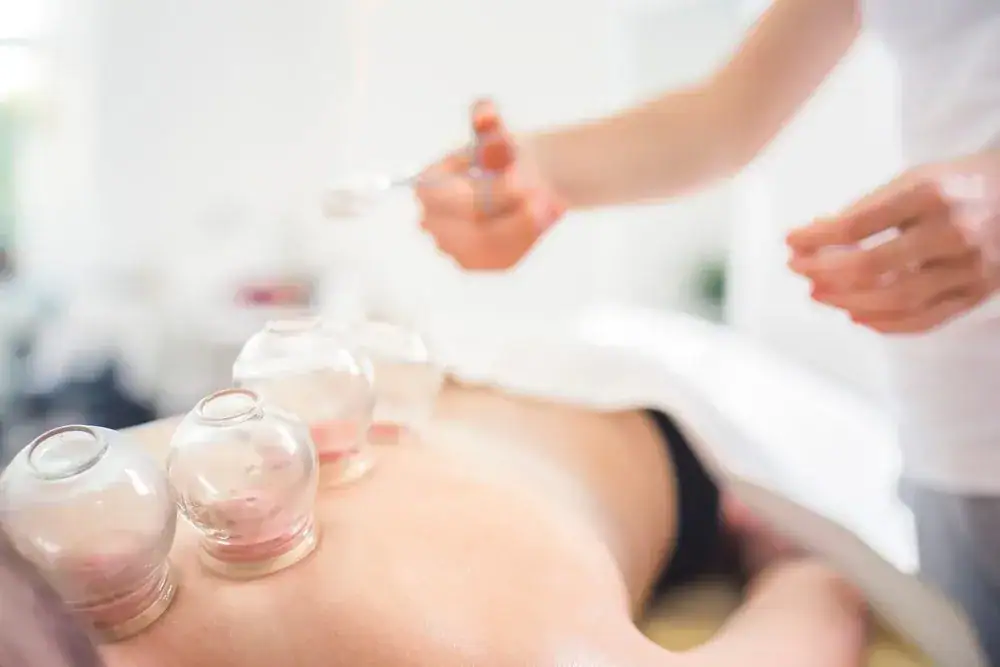
Yes, and the research backs it up. Studies show that cupping therapy can provide immediate pain reduction for chronic low back pain, which affects roughly 38% of adults at any given time. The suction increases blood flow to the affected area, helping to break up scar tissue and release tight fascia that’s been pulling on your spine for months or years.
Here’s the thing—cupping isn’t magic. It works best when it’s part of a complete treatment plan that includes stretching, strengthening, and movement education. That’s why having a licensed physical therapist deliver the treatment matters. They’re not just placing cups and walking away. They’re addressing the root cause of your pain and building a plan to keep it from coming back.
Most people feel some relief after the first session, but lasting results come from consistency. Your therapist will let you know how many sessions you’ll likely need based on your specific condition.
Yes. Dry cupping is exactly what you saw on Olympic swimmers and professional athletes a few years back—the kind that leaves those circular marks. It’s become popular in sports recovery because it helps muscles bounce back faster after intense training or competition.
The difference between what athletes do and what you’d get here is the clinical context. Athletes often use cupping for performance and recovery. You’re probably using it to manage pain, improve mobility, or reduce muscle tension that’s been limiting your daily life. Same technique, different goal.
Dry cupping is also different from wet cupping, which involves small incisions and controlled bleeding. We don’t do that. Dry cupping is non-invasive—just suction applied to the skin. It’s safer, more comfortable, and still delivers strong results for pain relief and muscle relaxation. Most people tolerate it easily, even if they’re nervous about trying something new.
If cupping is part of a Medicare-covered physical therapy treatment plan, yes—it’s typically covered. Medicare doesn’t pay for cupping as a standalone spa service, but when a licensed physical therapist uses it to treat a documented medical condition like chronic pain or limited mobility, it falls under your therapy benefits.
We work directly with your doctor and insurance to make sure everything is submitted correctly. That includes the initial evaluation, the treatment plan, and ongoing progress notes. You’re not navigating the paperwork alone.
Keep in mind that Medicare has limits on how many therapy visits you can receive per year, and those limits apply to all your therapy services combined—not just cupping. If you’re already receiving physical therapy for another condition, that counts toward your annual cap. Your therapist will keep you updated on where you stand so there are no surprises.
Most cupping sessions last between 20 and 30 minutes, depending on how many areas you’re treating and how your body responds. If cupping is combined with other physical therapy techniques—like manual stretching, joint mobilization, or strengthening exercises—the full appointment might run closer to 45 minutes to an hour.
Your therapist isn’t rushing through it. They’re checking in with you throughout the session, adjusting cup placement and suction intensity based on what you’re feeling. Some areas might need more time than others, especially if you’re dealing with multiple pain points or long-standing tension.
Because the treatment happens in your home, you also skip the travel time and waiting room delays that eat up your day at a traditional clinic. You’re not losing two hours for a 30-minute session. Your therapist shows up on time, treats you, and gives you a clear plan for next steps before they leave. It’s efficient without feeling rushed.
The most common side effect is circular marks where the cups were placed. They look like bruises, but they’re not painful—they’re just areas where blood was drawn to the surface. These marks usually fade within three to seven days. Some people get lighter marks, others get darker ones. It depends on your skin tone, how much suction was used, and how much tension was in that area.
You might also feel a little sore afterward, similar to how you’d feel after a deep tissue massage. That soreness typically goes away within 24 hours. Drinking water and moving gently can help your body process the treatment faster.
Serious side effects are rare when cupping is done by a trained professional. Burns, infections, and skin damage can happen if the equipment isn’t sterile or if someone applies too much heat or pressure—but that’s not a risk when you’re working with a licensed physical therapist who follows clinical protocols. If you have a bleeding disorder, are on blood thinners, or have fragile skin, let your therapist know ahead of time so they can adjust the treatment accordingly.
Absolutely. Cupping works well alongside other therapies like acupuncture, chiropractic care, massage, and traditional physical therapy exercises. In fact, combining treatments often leads to better outcomes than relying on just one approach. Your body responds to multiple inputs, and cupping can enhance the effects of what you’re already doing.
If you’re currently seeing another provider, let your physical therapist know. They can coordinate timing and make sure the treatments complement each other instead of overlapping in ways that might cause soreness or overtreatment. For example, if you’re getting deep tissue massage twice a week, your therapist might schedule cupping on alternate days to give your muscles time to recover between sessions.
Cupping also pairs well with at-home care like stretching routines, heat therapy, or strengthening exercises. Your therapist will give you specific guidance on what to do between sessions to keep your progress moving forward. The goal is a complete plan that fits your schedule and gets you out of pain as quickly as possible.
Other Services we provide in Garden City