

You’re not looking for temporary relief. You need something that actually works when ibuprofen doesn’t cut it anymore and you’re tired of feeling stiff by mid-morning.
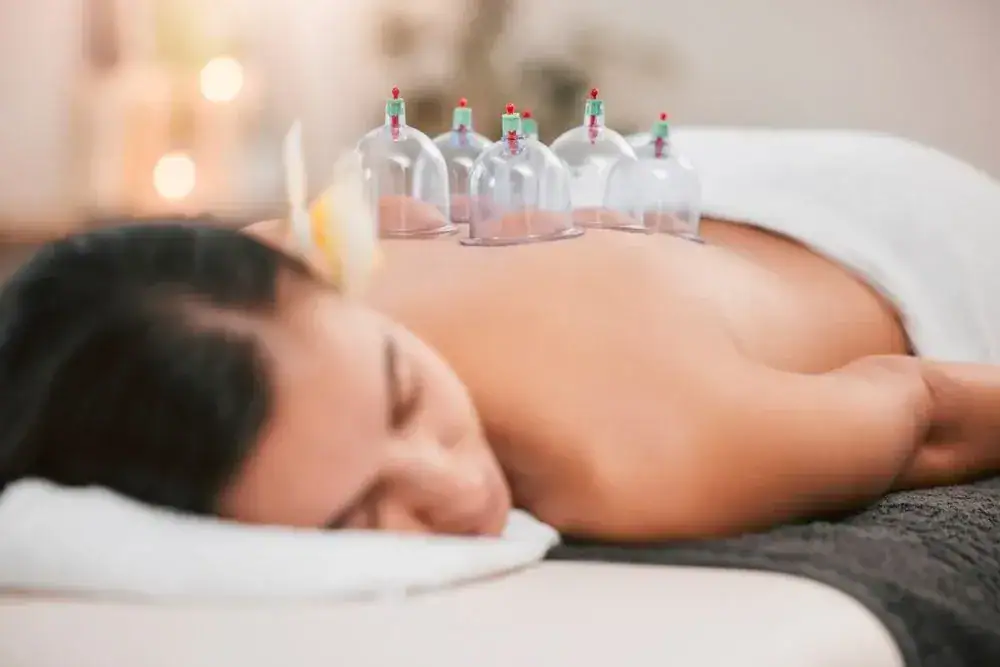
Cupping therapy improves blood flow to areas where muscles have tightened and restricted circulation. That increased blood flow brings oxygen and nutrients that help tissue heal. The suction created by the cups lifts tissue away from underlying structures, releasing adhesions and allowing muscles to move the way they should.
Most people notice they can turn their head further, bend without bracing, or get through their day without constantly adjusting their position. The tightness that’s been sitting in your shoulders or lower back starts to release. You move differently because your body isn’t fighting itself anymore.
This isn’t about managing pain forever. It’s about addressing why the pain showed up in the first place so you can actually do something about it.
We’ve been treating patients across Long Island for years, including right here in Eastport, NY. We’re the same team behind Physical Therapy Associates of Smithtown and Speonk, and we’ve built our reputation on actually listening and delivering results that last.
Eastport residents deal with specific challenges. You’re active, you work hard, and you don’t have time for treatments that don’t deliver. Whether it’s chronic back pain from long commutes or neck tension from desk work, we see it regularly and we know how to treat it.
We handle insurance verification and keep your information secure. Our team stays current on what works, and we don’t waste your time with treatments that sound good but don’t produce real outcomes.
Your first visit starts with an evaluation. We need to understand where the pain is, what makes it worse, and what you’ve already tried. That conversation matters because cupping works best when it’s part of a broader treatment plan, not used in isolation.
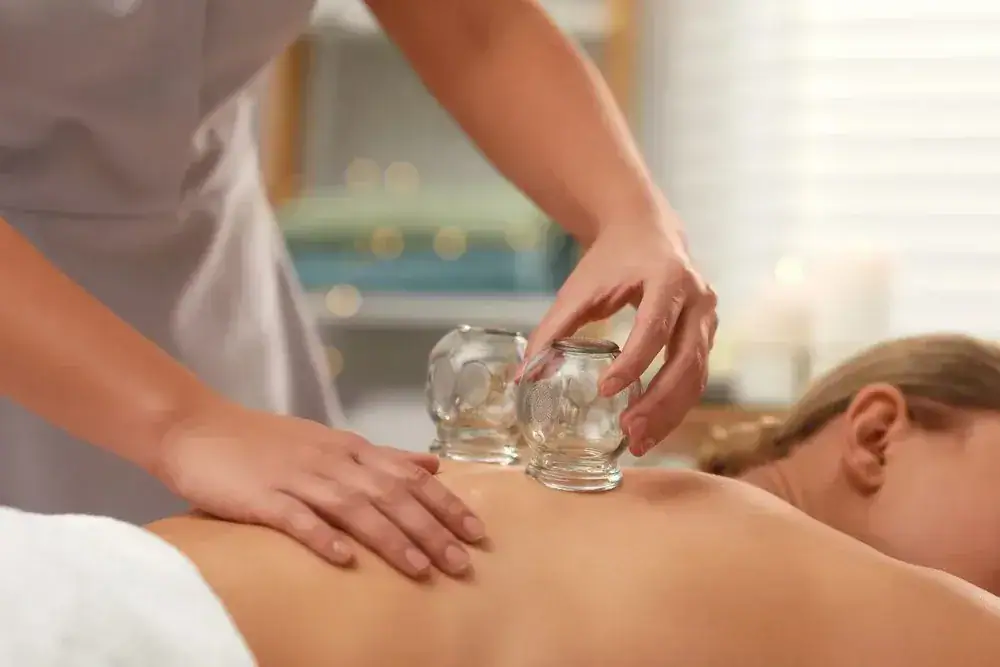
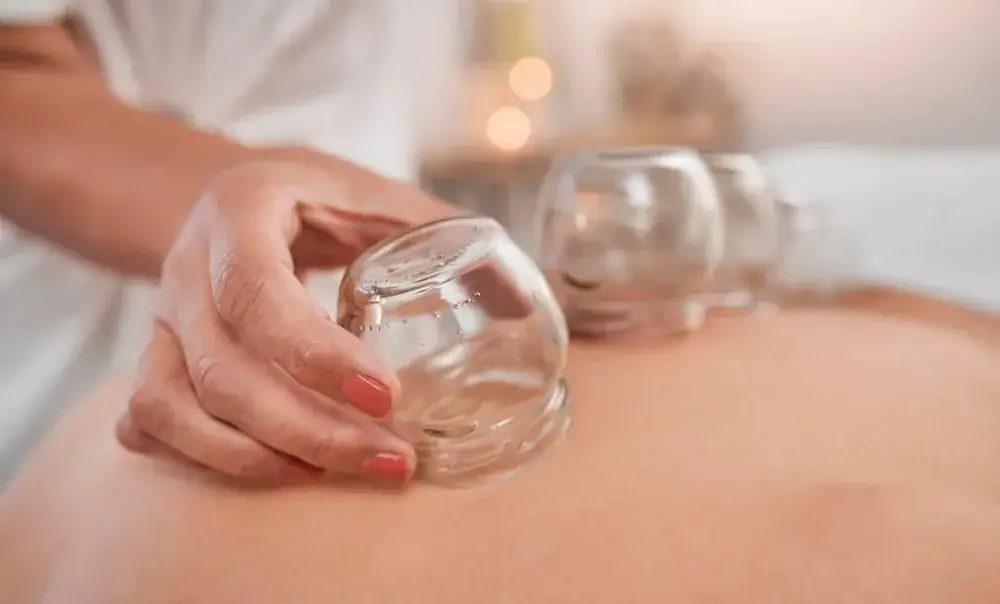
During the treatment itself, we place specialized cups on targeted areas of your body. These aren’t the fire cups you might have seen in videos. We use modern suction cups that create controlled negative pressure, lifting tissue and increasing blood flow to the area. The cups stay in place for several minutes, or we might move them across your skin in a technique called gliding cupping.
You’ll feel pulling and tightness where the cups are placed, but it shouldn’t hurt. Some people find it uncomfortable at first, others find it immediately relieving. You’ll likely see circular marks afterward that fade within a few days to a week.
Most patients need multiple sessions. We usually start with twice a week, then space treatments out as you improve. Cupping works well alongside other physical therapy techniques like manual therapy, stretching, and strengthening exercises. The goal is to get you moving better and feeling better, not to keep you coming back forever.
Ready to get started?
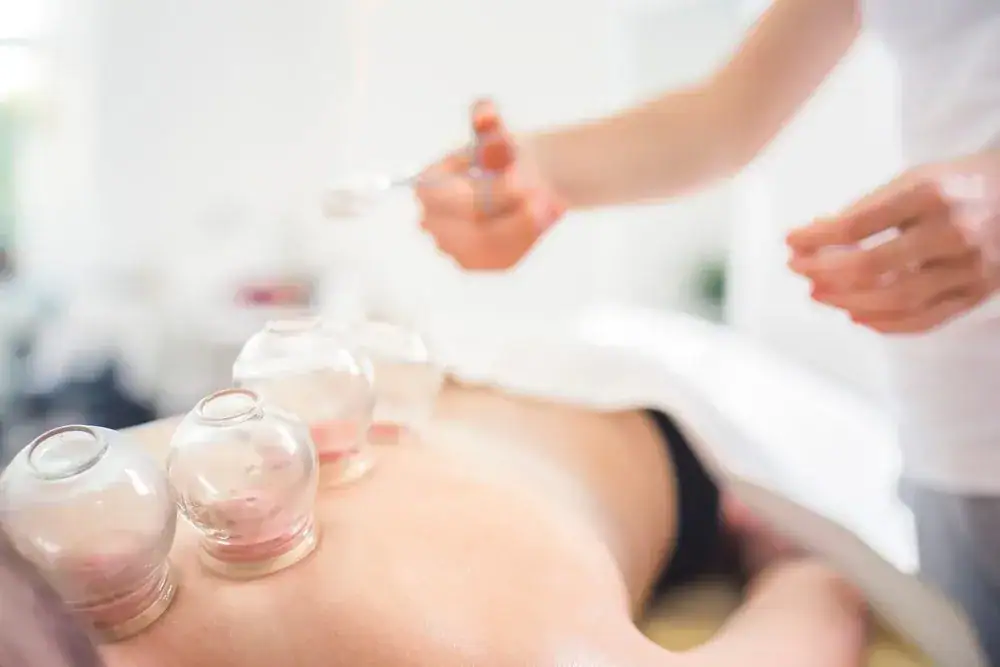
We primarily use dry cupping, which means no needles or incisions. The cups create suction that lifts tissue, increases circulation, and releases fascial restrictions. This is the same technique professional athletes use for muscle recovery and pain management.
Myofascial decompression is the clinical term for what we’re doing. Fascia is the connective tissue that wraps around your muscles. When it gets tight or adhered, it restricts movement and causes pain. The negative pressure from cupping lifts and separates those layers, allowing them to glide properly again.
In Eastport, NY, we see a lot of patients dealing with chronic lower back pain, neck and shoulder tension, and knee pain from osteoarthritis. These conditions respond well to cupping because they often involve fascial restriction and reduced blood flow. When you combine cupping with targeted exercises and manual therapy, you’re addressing both the symptoms and the underlying movement patterns causing the problem.
Treatment sessions typically last 30 to 45 minutes. We accept most major insurance plans and handle the verification process for you. You’ll work with a licensed physical therapist who’s been trained in cupping techniques, not someone who took a weekend course.
Yes, and there’s clinical evidence supporting it. Multiple research reviews have found moderate-quality evidence that cupping reduces chronic back pain more effectively than standard care alone.
Here’s why it works. Chronic back pain often involves tight muscles, restricted fascia, and poor blood flow to the affected area. Cupping addresses all three. The suction increases local circulation, bringing fresh blood and oxygen to tissue that’s been chronically tight. It also creates space between fascial layers that have become adhered, which improves how your back muscles move and function.
Most people don’t get lasting relief from cupping alone. It works best when combined with exercises that address why your back hurts in the first place. If you’re sitting all day with poor posture, cupping will help release the tightness, but you’ll need to strengthen your core and improve your movement patterns to keep the pain from coming back. That’s where physical therapy makes the difference.
You’ll have circular marks where the cups were placed, but they’re not technically bruises. Bruises happen when blood vessels break and leak into surrounding tissue. Cupping marks are caused by blood being drawn to the surface, which is part of how the treatment works.
The marks usually range from light pink to dark purple, depending on how much stagnation and restriction was in that area. Areas with more tension and poor circulation tend to mark darker. They typically fade within three to seven days, sometimes up to ten days if the marks were particularly dark.
Most people don’t find them painful. They look more dramatic than they feel. If you have an event coming up where the marks would be visible and problematic, let us know before treatment. We can adjust cup placement or modify the intensity. The marks are a normal part of the process, but they’re not required for cupping to be effective.
Massage pushes tissue down and applies compression. Cupping does the opposite by lifting tissue up and creating decompression. That difference matters when you’re dealing with fascial restrictions and adhesions.
Think of it this way: if layers of tissue are stuck together, pushing down on them might provide temporary relief, but it doesn’t create separation between those layers. Cupping lifts and separates, which allows tissue to move independently again. That’s particularly helpful for conditions like IT band syndrome, plantar fasciitis, or chronic neck tension where fascial restriction is a major component of the problem.
Cupping also increases blood flow differently than massage. The negative pressure draws blood to the area and holds it there, creating a sustained increase in circulation. This helps with healing and can reduce inflammation more effectively than compression-based techniques. We often use cupping alongside other physical therapy treatments like joint mobilization, therapeutic exercise, and manual therapy. Each technique addresses different aspects of your condition, and combining them typically produces better results than any single approach alone.
Most insurance plans cover cupping when it’s performed by a licensed physical therapist as part of your physical therapy treatment. It’s typically billed under your physical therapy benefits, not as a separate alternative medicine service.
Coverage depends on your specific plan. Some plans cover cupping without any issues. Others might have restrictions on how many physical therapy visits you get per year, which would include sessions that involve cupping. We verify your insurance benefits before you start treatment so you know what to expect.
If you have a high deductible or limited PT benefits, we’ll talk through your options. Sometimes it makes sense to space out treatments differently or combine cupping with home exercises to maximize what your insurance covers. We handle the verification process and deal with the insurance paperwork. You shouldn’t have to spend your time figuring out codes and calling your insurance company. That’s our job, and we do it for every patient.
Most people notice some improvement after two to three sessions, but lasting results usually take six to eight sessions over several weeks. That timeline varies based on how long you’ve had the problem and what’s causing it.
Acute issues respond faster. If you tweaked your back last week and you’re dealing with muscle spasm and tightness, you might feel significantly better after just a few treatments. Chronic conditions that have been building for months or years take longer because we’re addressing tissue changes and movement patterns that have become ingrained.
We typically start with twice-weekly sessions for the first two to three weeks, then reduce frequency as you improve. The goal is to get you to a point where you’re managing well on your own with occasional tune-up sessions if needed. We’re not interested in keeping you dependent on treatment. We want to give you the tools and improvements you need to handle your condition independently. If you’re not seeing meaningful progress after four to five sessions, we reassess and adjust the treatment plan. Cupping should produce noticeable changes relatively quickly, and if it’s not, we need to look at what else is going on.
Cupping is a low-risk treatment when performed by a trained professional. The most common side effects are the circular marks, temporary tightness or soreness in the treated area, and occasionally mild dizziness right after treatment if you’re sensitive to the sensation.
Serious side effects are rare but can happen if cupping is done incorrectly or on someone who shouldn’t receive it. We don’t use cupping if you’re on blood thinners, have a bleeding disorder, or have skin conditions in the treatment area. Pregnant women can receive cupping in some areas but not others, so we evaluate that individually.
The soreness you might feel afterward is similar to post-workout soreness. It usually lasts a day or two and means the tissue is responding to treatment. Staying hydrated after your session helps reduce soreness and supports the healing process. If you experience any unusual pain, increased swelling, or skin irritation after treatment, contact us immediately. Those aren’t normal responses and need to be addressed. Our physical therapists are trained in proper cupping technique and safety protocols. We monitor how your skin and tissue respond during treatment and adjust accordingly. The risk profile is low, especially compared to long-term medication use or more invasive interventions.
Other Services we provide in Eastport