


You’re dealing with pain that’s been around too long. Back pain that makes mornings miserable. Neck tension that won’t let up no matter how many times you stretch. Muscle tightness that limits what you can do at work, at the gym, or just getting through your day.
Cupping therapy works by creating negative pressure on your skin, lifting tissue away from the muscle beneath it. That suction increases blood flow to the area, helps break up adhesions in your fascia, and triggers your body’s natural healing response. You’re not masking symptoms—you’re addressing what’s causing the restriction and discomfort in the first place.
Most people notice improved range of motion after their first session. The muscle relaxation is immediate for some. For others with chronic conditions, it takes a few treatments to see lasting change. Either way, you’re working with a therapy that’s been used for thousands of years and is now backed by research showing real effectiveness for conditions like chronic neck pain, low back pain, and fibromyalgia.
We operate across multiple locations on Long Island, including East Patchogue, where we’ve built a reputation for delivering physical therapy that’s both effective and personalized. Our team includes licensed physical therapists trained in cupping techniques, and we integrate this therapy into broader treatment plans designed around your specific condition.
We’re not a spa offering cupping as a trend. This is clinical work. Every session is performed by a healthcare provider who understands musculoskeletal anatomy, pain patterns, and how to adjust treatment based on what your body is telling us. You’re in a controlled environment where patient safety, data security, and treatment outcomes are taken seriously.
East Patchogue has a strong healthcare community, and we’ve worked hard to be a trusted part of it. Our focus is on transparency, communication, and making sure you understand what’s happening at every step.
Your first visit starts with an evaluation. We’ll ask about your pain—where it is, how long you’ve had it, what makes it worse, and what you’ve already tried. That conversation helps us determine if cupping is a good fit for your condition and how to incorporate it into your overall treatment plan.
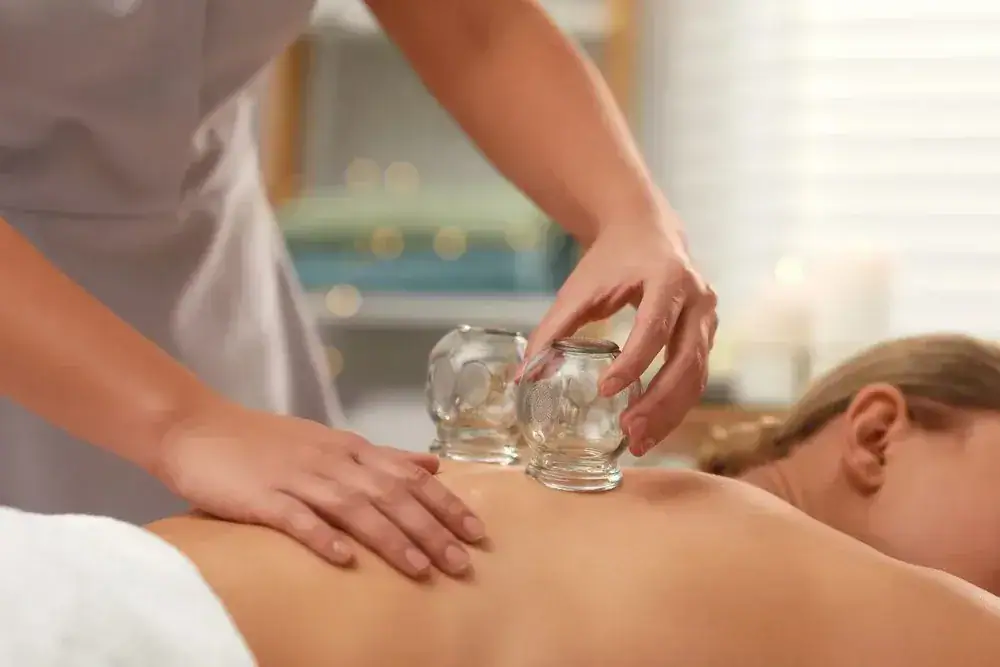
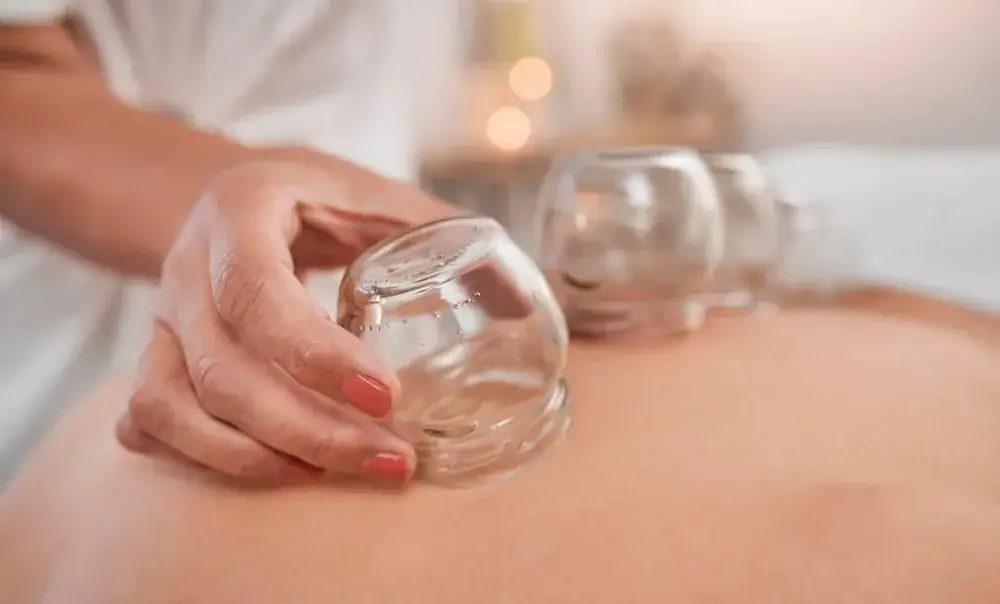
During the session, we place cups on specific areas of your body where you’re experiencing tightness or pain. We use dry cupping, which means no incisions—just suction. The cups can be left in place for several minutes, or we may glide them across your skin to release tension along larger muscle groups. This is called myofascial decompression, and it’s especially useful for breaking up scar tissue or adhesions between layers of tissue.
You’ll feel the suction, and yes, it leaves temporary marks that look like bruises. Those typically fade within a few days to a week. Most people describe the sensation as tight but not painful—more like a deep tissue massage in reverse.
After your session, we’ll talk about what you should expect. Some people feel immediate relief. Others feel sore for a day or two as the tissue responds to increased circulation. We’ll also discuss how many sessions you might need and what other therapies—like manual therapy or exercise—might support your progress.
Ready to get started?
Cupping therapy at Medcare is part of a physical therapy treatment plan, not a standalone service. That means we’re looking at the bigger picture—your movement patterns, your pain triggers, and what’s limiting your function. Cupping is one tool we use to help you get there faster.
We use dry cupping because it’s safer and just as effective as wet cupping for musculoskeletal pain. The suction helps increase hydration in your tissues, improves lymphatic drainage, and reduces inflammation. It also stimulates your nervous system in a way that can decrease pain signals and promote relaxation.
In East Patchogue and across Long Island, we see a lot of patients dealing with chronic conditions—arthritis, repetitive strain injuries, post-surgical stiffness, and athletic overuse. Cupping works well for these because it addresses restricted tissue mobility, which is often a root cause of ongoing pain. It’s also popular with athletes who need faster recovery between training sessions or competitions.
You’re not locked into one type of treatment. If cupping isn’t giving you the results we expect, we adjust. If it’s working but you need additional support, we add it. The goal is always function and pain reduction, not just checking a box.
Yes, and there’s research to support it. Studies show that cupping therapy can reduce chronic low back pain and improve function, especially when combined with other treatments like physical therapy or exercise. The suction increases blood flow to the affected area, which helps reduce inflammation and speeds up tissue healing.
That said, cupping isn’t a magic fix. If your back pain is caused by a herniated disc, nerve compression, or structural instability, cupping alone won’t solve it. But it can absolutely help manage pain, reduce muscle guarding, and improve your tolerance for movement—which makes it easier to do the exercises and stretches that will create lasting change.
Most people with chronic back pain need multiple sessions to see sustained improvement. We typically recommend starting with two sessions per week for a few weeks, then spacing them out as your symptoms improve. The key is consistency and pairing cupping with a broader plan that addresses why your back hurts in the first place.
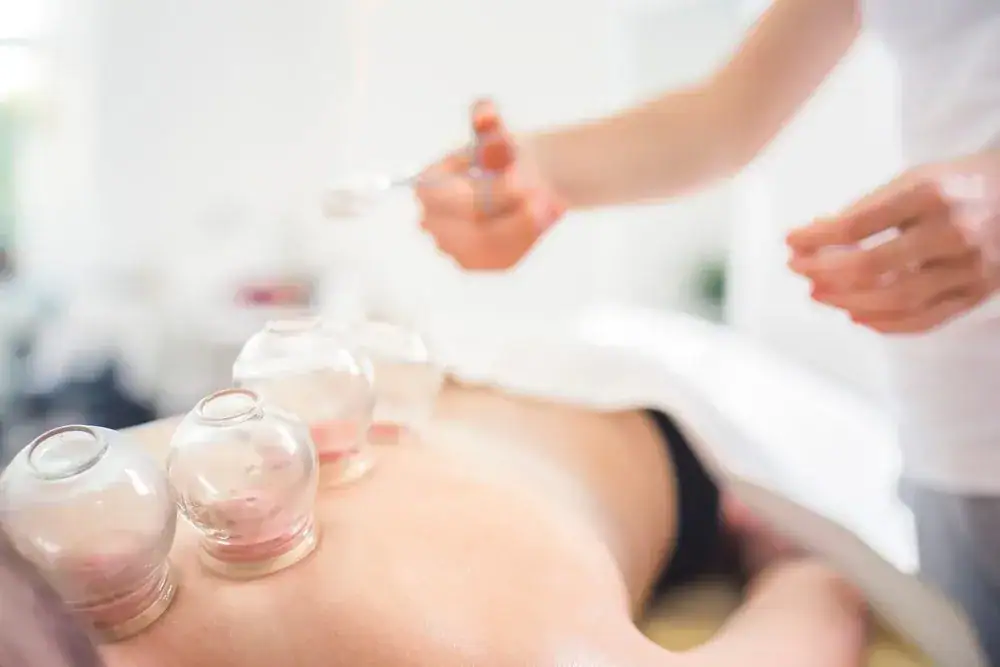
Dry cupping uses suction alone. We place cups on your skin, create a vacuum, and leave them in place or move them around to release tight tissue. There are no cuts, no blood, and no breaking of the skin. It’s non-invasive and has very few side effects beyond temporary marks.
Wet cupping involves making small incisions in the skin before applying the cups, which draws out a small amount of blood. The idea is that removing stagnant blood helps detoxify the area and promote healing. Some practitioners prefer this method, but it carries a higher risk of infection and scarring, and most research suggests that dry cupping is just as effective for pain relief.
At Medcare, we use dry cupping because it’s safer, cleaner, and better suited for integration with physical therapy. You get the benefits—improved circulation, reduced muscle tension, better range of motion—without the added risk. If you’ve heard about wet cupping and are curious, we’re happy to explain why we’ve chosen the approach we use and what results you can expect.
Some people feel relief immediately after their first session. Muscle tightness decreases, range of motion improves, and pain levels drop. For others, especially those dealing with chronic conditions or long-standing restrictions, it takes a few sessions before the benefits become noticeable.
The timeline depends on what we’re treating. Acute muscle strain or post-workout soreness might respond in one or two sessions. Chronic neck pain, fibromyalgia, or arthritis usually requires a series of treatments over several weeks. We’re working with tissue that’s been tight or inflamed for months or years, so it takes time to create lasting change.
We’ll give you a realistic expectation during your evaluation. If you’re not seeing progress after a reasonable number of sessions, we’ll reassess and adjust your treatment plan. The goal is always forward movement—less pain, better function, and a clear understanding of what’s working and what’s not.
Yes, cupping leaves marks that look like circular bruises. They’re caused by the suction pulling blood to the surface of your skin, and they’re a normal part of the process. The marks aren’t painful, but they can be dark—ranging from light pink to deep purple depending on how much tension or stagnation is in the tissue.
These marks typically fade within three to seven days. Some people’s skin clears up faster, others take a bit longer. If you have an event coming up where you’ll be wearing something that shows your back or shoulders, just let us know and we can adjust timing or placement.
The marks aren’t a sign of injury or damage. They’re actually an indicator that blood flow has increased to the area, which is part of what makes cupping effective. If you’re concerned about how they look or how long they’re lasting, we can talk through what’s normal and what might need attention.
Absolutely. Cupping has become popular with athletes because it helps reduce muscle soreness, improve circulation, and speed up recovery between training sessions or competitions. You probably saw Olympic athletes with cupping marks back in 2016—that wasn’t just for show. They were using it because it works.
The therapy helps release trigger points, reduce inflammation, and improve tissue mobility, all of which matter when you’re pushing your body hard and need to bounce back quickly. It’s especially useful for athletes dealing with repetitive strain, overuse injuries, or tightness in specific muscle groups that limit performance.
We work with recreational and competitive athletes in East Patchogue who use cupping as part of their regular recovery routine. Some come in after big training blocks. Others use it to manage chronic tightness that flares up during their season. Either way, it’s about keeping you functional, reducing injury risk, and making sure your body can handle what you’re asking it to do.
It depends on your insurance plan and how the treatment is billed. When cupping is part of a physical therapy session at Medcare, it’s often covered under your PT benefits. We bill it as part of your overall treatment, not as a separate service, which means your co-pay and coverage work the same way they would for any other physical therapy visit.
That said, every insurance plan is different. Some cover alternative therapies more generously than others. Some require prior authorization or have limits on how many PT visits you get per year. We recommend calling your insurance company before your first visit to confirm your benefits and understand what your out-of-pocket cost will be.
Our team can also help verify your coverage and answer billing questions. We want you to know what to expect financially before you start treatment, so there are no surprises. If insurance doesn’t cover it or you’ve hit your visit limit, we’ll talk through your options and help you decide what makes sense for your situation.
Other Services we provide in East Patchogue