
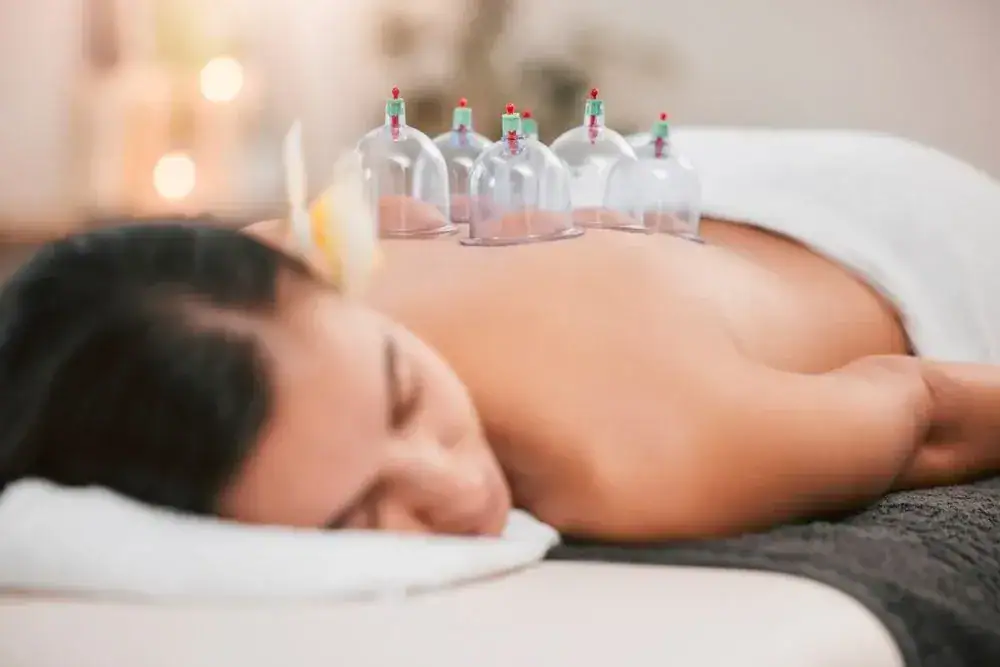
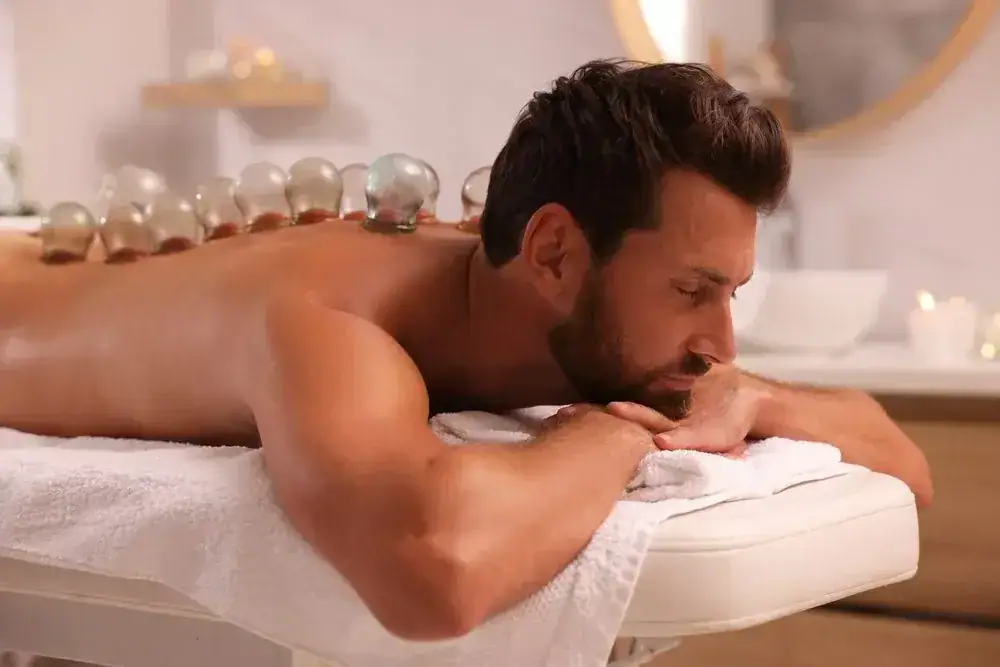
You stop planning your day around what hurts. That’s the difference.
When chronic back pain, neck stiffness, or shoulder tension isn’t dictating your schedule anymore, you get your life back. You can pick up your grandkids without wincing. You can sleep through the night. You can go to the store without wondering if you’ll make it back to the car.
Cupping therapy works by increasing blood flow to tight, painful areas—bringing oxygen and nutrients that help muscles relax and inflammation go down. It’s not a temporary cover-up. It’s about giving your body what it needs to actually heal.
Most people notice less pain after the first session. Some feel looser right away. Others find that stiffness they’ve lived with for years starts to fade over a few weeks. Either way, the goal is the same: you move better, hurt less, and stop losing time to pain.
This isn’t about managing symptoms forever. It’s about getting back to normal.
We’ve been serving Long Island for over a decade. We’re licensed physical therapists who integrate cupping therapy into comprehensive treatment plans—not as a gimmick, but as a proven tool for pain relief and muscle recovery.
Our services are Medicare-covered for qualifying patients. We manage every detail of your care with the same attention we give to protecting your information and keeping your records secure.
Commack has one of the highest concentrations of older adults on Long Island, and we know what that means: more arthritis, more chronic pain, more people who’ve tried everything and still hurt. We built our practice around that reality. You’re not walking into a one-size-fits-all clinic. You’re working with therapists who understand what you’re dealing with because we see it every day.
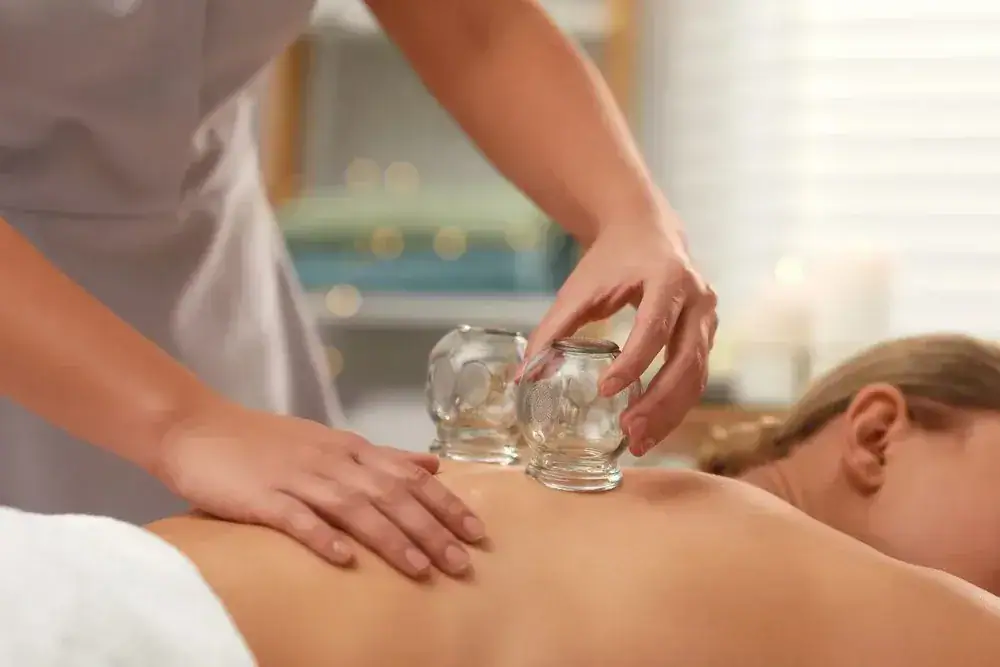
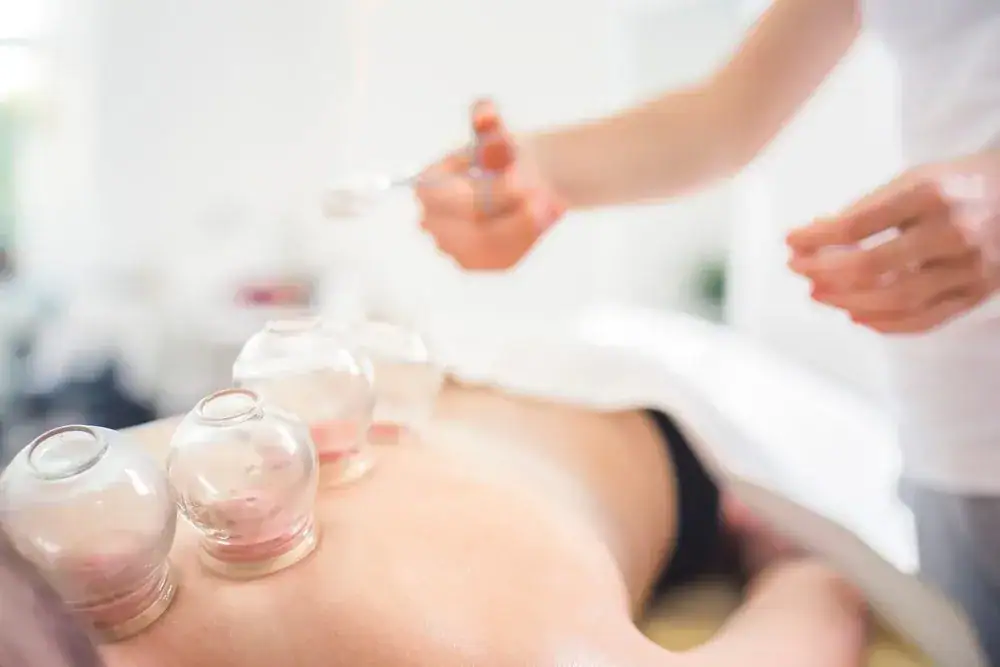
First, your physical therapist evaluates where you’re hurting and how you’re moving. Cupping isn’t random—it’s targeted. We place cups on specific areas where muscles are tight, blood flow is restricted, or pain is concentrated.
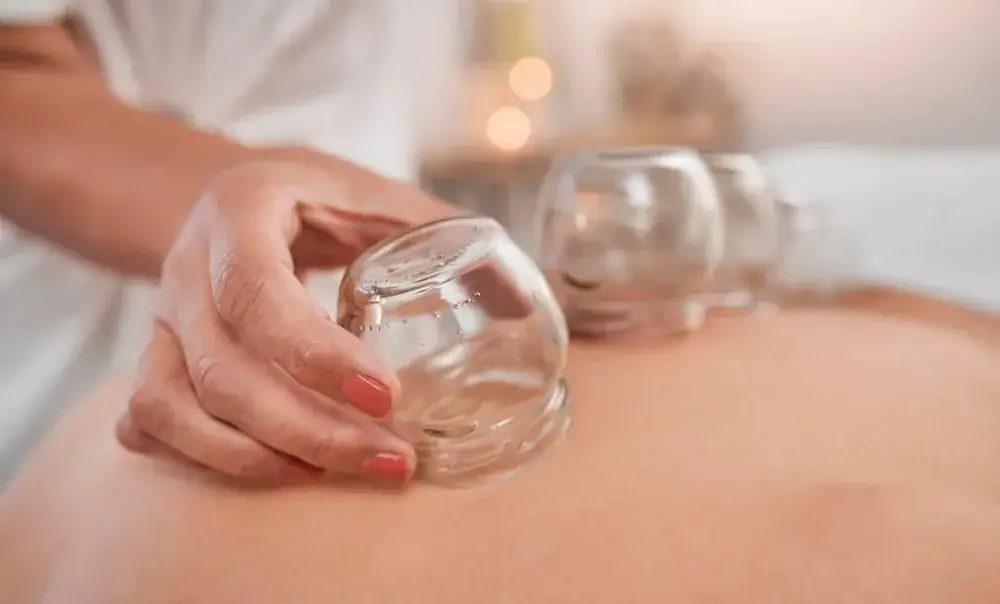
The cups create suction that pulls tissue upward, increasing circulation to that spot. You might feel a pulling sensation, but it shouldn’t hurt. Most people say it feels like a deep tissue massage. The cups stay on for 5 to 15 minutes depending on what we’re treating.
After we remove the cups, you’ll likely see circular marks on your skin. They’re not bruises—they’re a sign of increased blood flow. They fade in a few days.
Some patients feel immediate relief. Others notice gradual improvement over several sessions as inflammation decreases and muscles start to release. We track your progress and adjust treatment as you improve. If something’s not working, we change it.
Cupping is part of a broader physical therapy plan. We combine it with stretching, strengthening exercises, and movement training so you’re not just feeling better temporarily—you’re building strength and mobility that lasts.
Ready to get started?
We use dry cupping, which means no needles, no incisions, and no invasive procedures. It’s one of the lowest-risk therapies available for chronic pain, muscle tension, and restricted movement.
Cupping therapy helps with conditions like arthritis, chronic back pain, neck pain, shoulder pain, knee pain, and even migraines. It works by relaxing tight muscles, reducing inflammation, and improving range of motion. For a lot of people in Commack dealing with mobility limitations—and 20% of adults here do—that makes a real difference.
Here’s what matters locally: over 30% of adults aged 65 and older in Suffolk County report chronic pain. That number climbs even higher in suburban areas like Commack, where access to specialized care can be limited and people are looking for alternatives to medication.
You’re not just getting cupping. You’re getting a licensed physical therapist who knows how to integrate it into a treatment plan that addresses your specific condition. We’re not a spa. We’re a Medicare-approved therapy provider with over a decade of experience treating pain that doesn’t go away on its own.
Yes, and the research backs it up. Studies show that a single session of dry cupping can immediately reduce pain levels, and regular sessions over a few weeks lead to longer-term relief.
Cupping increases blood flow to the muscles in your back, which helps them relax and reduces the inflammation that’s causing pain. It also stimulates your nervous system to release endorphins—your body’s natural painkillers. That’s why a lot of people feel better right after their first session.
Chronic back pain usually isn’t just one thing. It’s tight muscles, poor posture, limited mobility, and sometimes arthritis all working together. Cupping addresses the muscle tension and circulation issues, while the rest of your physical therapy plan works on strength and movement patterns. You’re not just masking the pain—you’re treating the underlying problem.
Yes, when it’s provided by a licensed physical therapist as part of your outpatient therapy plan. We’re a Medicare-approved provider, which means qualifying patients can receive cupping therapy as part of their covered physical therapy services.
Medicare typically covers physical therapy when it’s medically necessary—meaning your doctor has referred you for treatment of a specific condition like chronic pain, arthritis, or limited mobility. Cupping is billed as part of your overall therapy session, not as a separate service.
If you’re not sure whether your plan covers it, we can check your benefits before your first appointment. We handle the paperwork and work directly with Medicare so you’re not stuck figuring it out on your own. Most of our patients in Commack are Medicare beneficiaries, so this is something we do every day.
It feels like a strong pulling or suction on your skin—similar to a deep tissue massage, but in one concentrated spot. Most people find it relaxing, not painful. If the suction ever feels too intense, we can adjust it immediately.
You will see circular marks where the cups were placed. They look like bruises, but they’re not. They’re caused by increased blood flow to the area, which is exactly what we want. The marks are usually dark red or purple and fade within 3 to 7 days.
Some people don’t mind the marks. Others prefer to schedule sessions when they won’t be wearing sleeveless shirts or shorts for a few days. Either way, the marks are temporary and they’re a sign the therapy is working. If you have an event coming up or concerns about visible marks, let us know and we can plan around it.
It depends on what we’re treating and how long you’ve been dealing with it. Some people feel significant relief after one or two sessions. Others need 6 to 8 sessions over a few weeks to see lasting improvement.
Acute pain—like a pulled muscle or recent injury—usually responds faster. Chronic conditions like arthritis or long-term back pain take longer because we’re not just reducing pain, we’re retraining your muscles and improving mobility.
We evaluate your progress after every session. If you’re improving, we keep going. If something’s not working, we adjust the treatment plan. You’re never locked into a set number of sessions. The goal is to get you better, not to keep you coming back forever.
Most patients in Commack come once or twice a week at first, then taper off as they improve. Once you’re feeling better, we teach you exercises and stretches to maintain the progress at home.
Yes, especially when combined with physical therapy exercises. Cupping won’t cure arthritis, but it can significantly reduce the pain and stiffness that make it hard to move.
Arthritis causes inflammation in your joints, and that inflammation leads to tight muscles around the joint as your body tries to protect the area. Cupping increases blood flow to those muscles, helping them relax and reducing the pressure on the joint. That means less pain and better range of motion.
A lot of our patients in Commack have rheumatoid arthritis or osteoarthritis in their knees, hips, shoulders, or hands. They come in because medication isn’t enough and they’re trying to avoid surgery. Cupping gives them another option—one that’s low-risk, non-invasive, and works alongside whatever else they’re already doing.
We also teach you how to move in ways that don’t aggravate your arthritis. The cupping helps in the short term, but the movement training is what keeps you functional long term.
Yes, for most people. Cupping is considered one of the safest pain management therapies available, with very few side effects. That’s why it’s a good option for older adults who may already be taking multiple medications or managing other health conditions.
That said, there are some situations where we’d avoid cupping or modify the treatment. If you’re on blood thinners, have a skin condition in the treatment area, or have very fragile skin, we’ll talk through whether cupping is right for you. Sometimes we adjust the suction level or use a gentler approach.
Before your first session, we review your full medical history and any medications you’re taking. If you have diabetes, heart disease, or other chronic conditions, we take that into account when designing your treatment plan. Your safety is the priority, and we don’t move forward with anything unless we’re confident it’s appropriate for your situation.
Most of our patients are over 60, and many have multiple health issues. We’re used to working with complex cases, and we coordinate with your doctor if needed.
Other Services we provide in Commack