
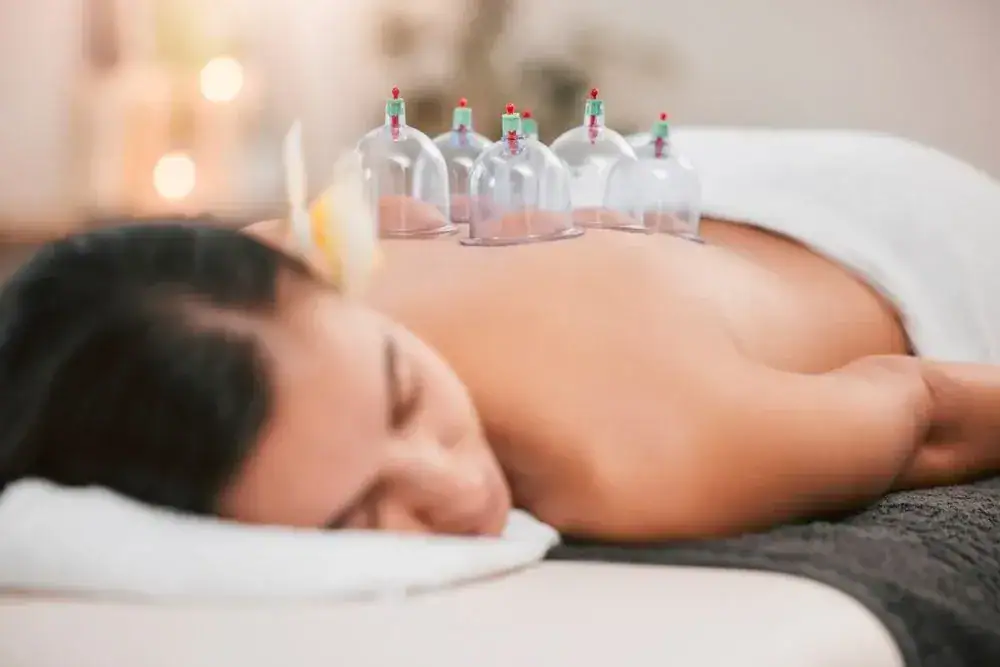

You wake up without that stiffness in your neck. You reach for something on a high shelf without wincing. You finish your workout without that nagging pull in your back.
That’s what happens when cupping therapy addresses the root cause instead of masking symptoms. The negative pressure lifts your skin and fascia into the cup, creating space for tight muscles to release. Blood flow increases to the area, bringing nutrients that speed up tissue healing.
Most people notice relief during their first session. A runner with over a year of IT band pain reported instant relief after just three minutes of cupping. After two sessions, he was back to his normal running routine, symptom-free.
Cupping works especially well for chronic neck pain, low back pain, fibromyalgia, and sports injuries. The treatment releases trigger points, decompresses tight fascia, and improves your body’s ability to move the way it should. You’re not just getting temporary relief—you’re addressing the compensation patterns that caused the problem in the first place.
We employ licensed physical therapists trained in cupping therapy, myofascial decompression, and manual therapy techniques. Every treatment plan starts with understanding what’s not working in your body and why.
Cold Spring Harbor residents deal with specific challenges—long commutes create postural issues, active lifestyles lead to overuse injuries, and desk work compounds existing pain. We account for these factors when building your treatment plan.
We use cupping alongside other proven techniques like soft tissue mobilization, neuromuscular re-education, and therapeutic exercise. You’re not getting a one-size-fits-all approach. You’re getting a treatment plan designed around your body, your schedule, and your goals.
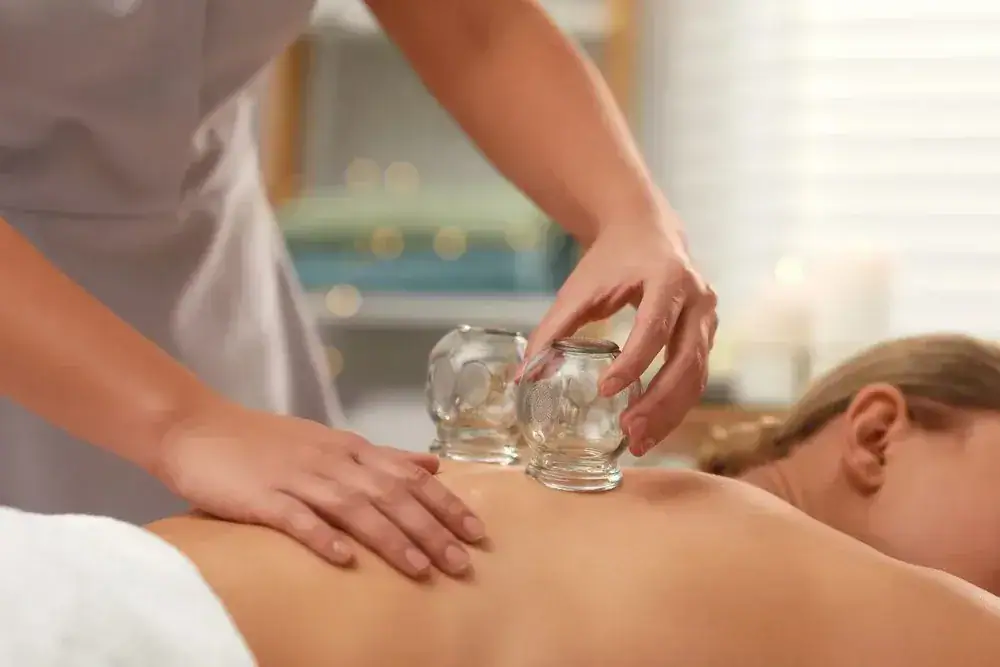
Your first visit starts with an assessment. We evaluate your movement patterns, identify areas of restriction, and explain what’s causing your pain. You’ll know exactly what the treatment will address before any cups touch your skin.
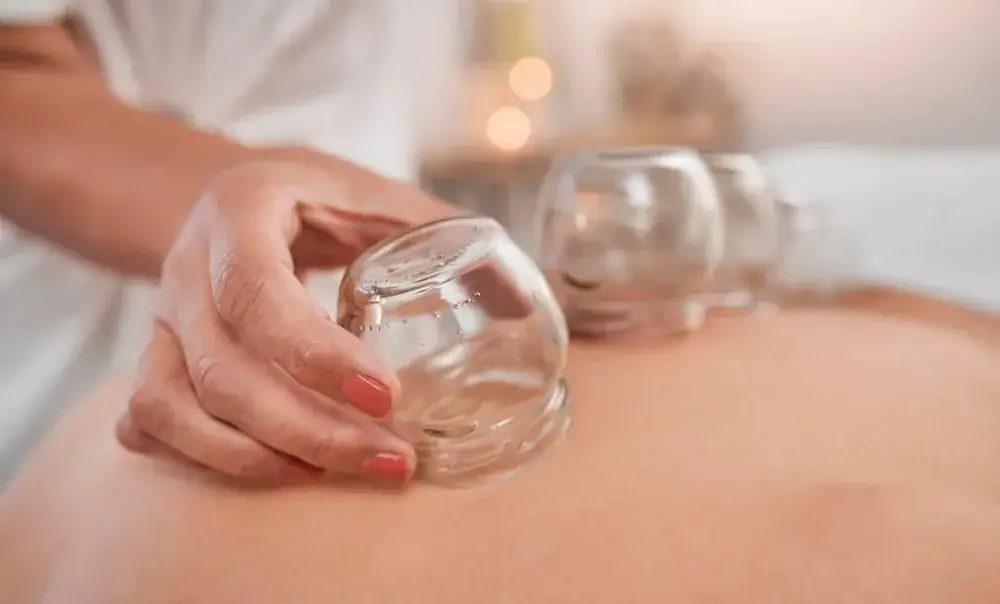
During the session, cups are placed on specific areas where your fascia is restricted or muscles are tight. The suction creates negative pressure—it feels like a backwards deep tissue massage. Most people find it relaxing, not painful. We may leave cups in place or move them across your skin, depending on what your body needs.
Sessions typically last 30 to 45 minutes. Cupping is often combined with other physical therapy techniques during the same visit at no extra cost. You might have some circular marks afterward—they’re not bruises, they’re a sign of increased blood flow to the area. They fade within a few days.
You’ll receive specific aftercare instructions: hydration guidelines, movement recommendations, and what to expect as your body responds to treatment. Most people feel immediate relief, though some soreness is normal as your muscles adjust. We’ll schedule follow-up sessions based on how your body responds and what your recovery timeline looks like.
Ready to get started?
We use both stationary cupping and myofascial decompression with movement. Stationary cupping places cups on trigger points and areas of muscle tension for several minutes. Myofascial decompression adds movement—you’ll actively move the affected area while the cups are in place, which retrains your body’s movement patterns.
Your treatment plan is built around your specific condition. Chronic neck pain from desk work requires a different approach than a sports injury or post-surgical recovery. We adjust cup size, suction intensity, and treatment duration based on your tissue response and pain tolerance.
Cold Spring Harbor residents often deal with repetitive strain injuries from commuting and computer work. Cupping addresses these patterns by releasing fascial restrictions in your neck, shoulders, and upper back. Athletes training for events or dealing with overuse injuries benefit from cupping’s ability to accelerate recovery and improve tissue quality.
Each session includes hands-on assessment, cupping treatment, and complementary techniques like manual therapy or corrective exercise. You’re not paying extra for cupping—it’s integrated into your physical therapy session. We track your progress and adjust your treatment plan as your body heals and your goals change.
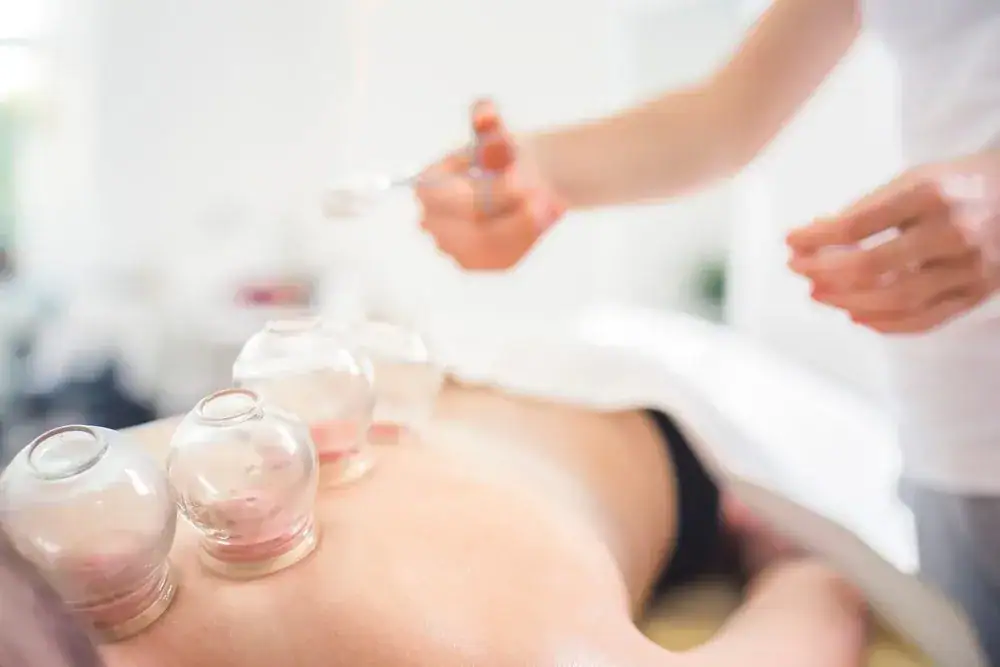
Yes, and there’s research backing it up. Studies show cupping effectively treats chronic neck pain, low back pain, and fibromyalgia. The treatment works by creating negative pressure that lifts tissue, increases blood flow, and releases fascial restrictions.
Here’s what that means for you: when your fascia is tight or adhered to underlying muscle, it restricts movement and causes pain. Cupping decompresses that tissue, giving your muscles room to relax and function properly. Blood flow brings oxygen and nutrients that speed healing.
The effectiveness depends on proper technique and accurate diagnosis. Our physical therapists are trained in myofascial decompression and know where to place cups, how much suction to use, and how to combine cupping with other treatments for better results. You’re not just getting cups slapped on your back—you’re getting targeted treatment based on what’s actually wrong.
Most people notice some relief during their first session. Lasting results typically require multiple sessions as your body relearns proper movement patterns and tissue quality improves.
Most people describe it as a pulling sensation—like a backwards massage. The cups create suction that lifts your skin and fascia, which feels unusual at first but not painful. Many patients find it relaxing once they get used to the sensation.
We control the intensity. If the suction feels too strong, we adjust it immediately. The goal is therapeutic pressure, not discomfort. Some areas are more sensitive than others—tight trigger points might feel tender when the cup is first applied, but that sensation usually decreases as the muscle releases.
You might feel sore afterward, similar to how you feel after a deep tissue massage. This is normal and typically resolves within 24 to 48 hours. The circular marks left by the cups aren’t bruises—they’re caused by increased blood flow to the area. They don’t hurt and fade within a few days to a week.
If you have concerns about pain or sensitivity, tell us before treatment starts. We’ll adjust our approach based on your comfort level and tissue response.
It depends on what you’re treating and how long you’ve had the problem. Acute injuries often respond quickly—sometimes in two to three sessions. Chronic pain that’s been present for months or years typically requires more sessions to address underlying movement patterns and tissue restrictions.
We’ll give you a realistic timeline after your initial assessment. We’re looking at tissue quality, movement restrictions, and how your body responds to the first treatment. Some people feel significant relief immediately and need just a few sessions. Others need ongoing treatment to maintain results, especially if their daily activities keep recreating the problem.
A runner with IT band pain was symptom-free after two sessions. Someone with years of chronic neck pain from desk work might need six to eight sessions to fully resolve the issue and retrain their posture. We adjust your treatment plan based on your progress, not a predetermined schedule.
Most patients start with once or twice weekly sessions, then space them out as symptoms improve. We’ll tell you when you’re ready to reduce frequency or transition to maintenance care.
Cupping is typically covered when it’s part of your physical therapy treatment. Insurance companies don’t usually cover cupping as a standalone service, but when a licensed physical therapist includes it in your treatment plan, it’s billed as part of your physical therapy session.
We include cupping at no extra cost during your physical therapy visits. You’re not paying separately for the technique—it’s integrated into your overall treatment. Your out-of-pocket cost depends on your insurance plan’s physical therapy benefits: copay amounts, deductible status, and coverage limits.
Before your first visit, contact your insurance company to verify your physical therapy benefits. Ask about copay amounts, how many visits are covered per year, and whether you need a referral from your primary care doctor. Our staff can also help verify your benefits and explain what you’ll owe.
If you don’t have insurance or your plan doesn’t cover physical therapy, ask about self-pay rates. Some people find that paying out of pocket for a few targeted sessions costs less than months of copays for treatments that aren’t working.
Yes, especially for soft tissue injuries, muscle strains, and overuse conditions. Athletes use cupping to speed recovery, reduce muscle tension, and improve tissue quality. The 2016 Rio Olympics put cupping in the spotlight when several athletes competed with visible cupping marks.
Cupping works for sports injuries because it addresses the fascial restrictions and muscle tension that limit your movement and slow healing. When you have a strain or overuse injury, surrounding tissue often tightens up to protect the area. That compensation pattern restricts blood flow and creates additional problems. Cupping releases those restrictions and restores normal movement.
We combine cupping with movement—you’ll actively use the injured area while cups are in place. This retrains your body’s movement patterns and prevents compensation issues that lead to re-injury. It’s more effective than passive treatment alone.
Common sports injuries that respond well to cupping include IT band syndrome, rotator cuff strains, hamstring pulls, and shin splints. We’ll assess your injury, identify contributing factors like muscle imbalances or training errors, and build a treatment plan that gets you back to your sport safely. You’re not just treating the injury—you’re addressing why it happened in the first place.
Drink more water than usual. Cupping increases circulation and helps your body release metabolic waste from tight tissues. Proper hydration supports that process and reduces post-treatment soreness. Aim for at least 64 ounces of water in the 24 hours after your session.
Avoid intense exercise immediately after treatment. Light movement is fine—walking, gentle stretching, normal daily activities. But skip the heavy lifting or high-intensity workout for at least 24 hours. Your muscles are in a recovery state, and pushing them too hard too soon can cause unnecessary soreness.
The circular marks from cupping will fade on their own. Don’t scrub them or apply ice. They’re not bruises, so they don’t need treatment. Loose clothing over the treated area is more comfortable than tight fabric rubbing against sensitive skin.
We’ll give you specific exercises or stretches to do between sessions. Actually doing them makes a significant difference in how quickly you improve. These aren’t optional—they’re part of your treatment plan. If something doesn’t feel right or causes pain, contact us before your next scheduled visit rather than waiting and hoping it resolves on its own.
Other Services we provide in Cold Spring Harbor