
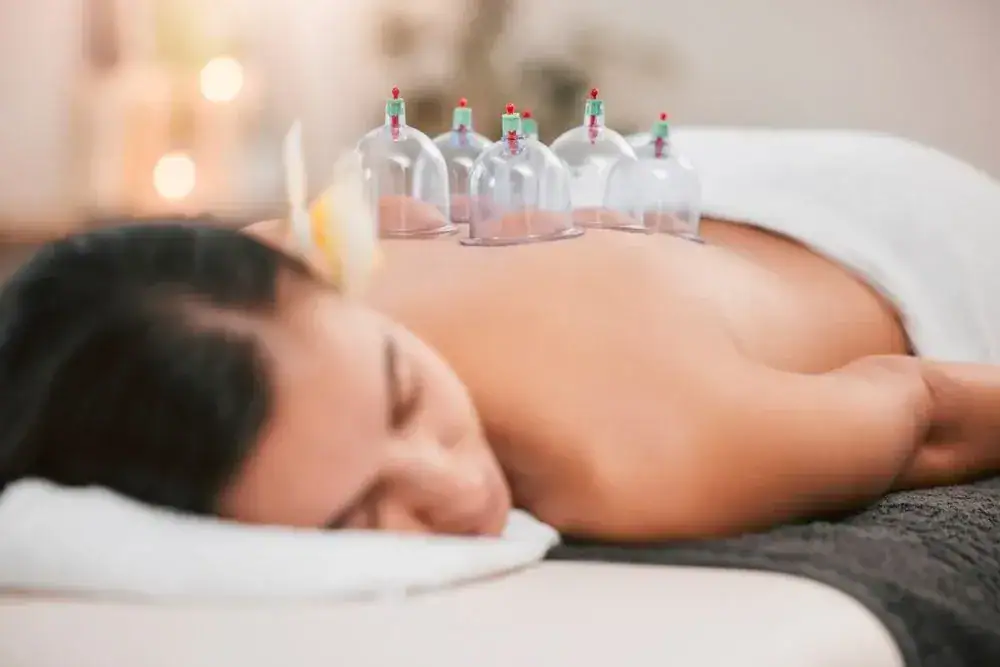

You’ve tried heat. You’ve tried massage. You’ve stretched until you’re tired of stretching. But that knot in your shoulder is still there, and your lower back still tightens up by mid-afternoon.
Cupping therapy works differently. It creates suction that pulls blood flow to the area, releases fascia that’s been locked down, and gives your muscles permission to let go. You’re not just masking pain—you’re addressing what’s keeping it stuck.
Most people notice improved range of motion after the first session. That doesn’t mean one visit fixes everything, but it does mean your body responds when you give it the right kind of help. Less stiffness in the morning. Easier movement during your workout. Fewer days where you’re compensating around the pain.
This isn’t about trends or Instagram circles on your back. It’s about getting your body to move the way it should so you can do what you need to do without thinking about it.
We’ve been treating patients across Long Island for years, and cupping is one tool in a much larger approach. You’re not walking into a spa. You’re working with licensed physical therapists who understand anatomy, movement patterns, and how to integrate cupping into a treatment plan that actually makes sense for your condition.
Centereach has plenty of therapy options, and the professional population here knows the difference between real care and something that just sounds good. That’s why we focus on what works—not what’s trendy. Our therapists are trained in myofascial decompression techniques and use cupping alongside manual therapy, exercise, and education.
We’ll be straightforward about what cupping can and can’t do. If it’s right for your situation, we’ll tell you. If something else makes more sense, we’ll tell you that too.
Your first visit starts with an evaluation. We need to understand what’s going on—where the pain is, how long you’ve had it, what makes it better or worse. Cupping isn’t a one-size-fits-all treatment, and we don’t use it that way.
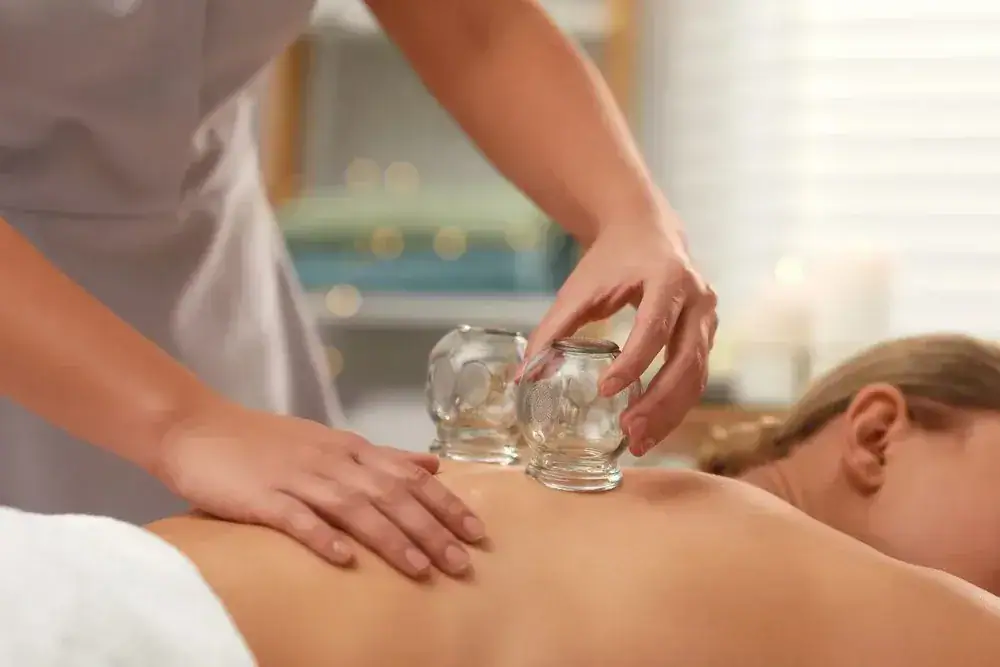
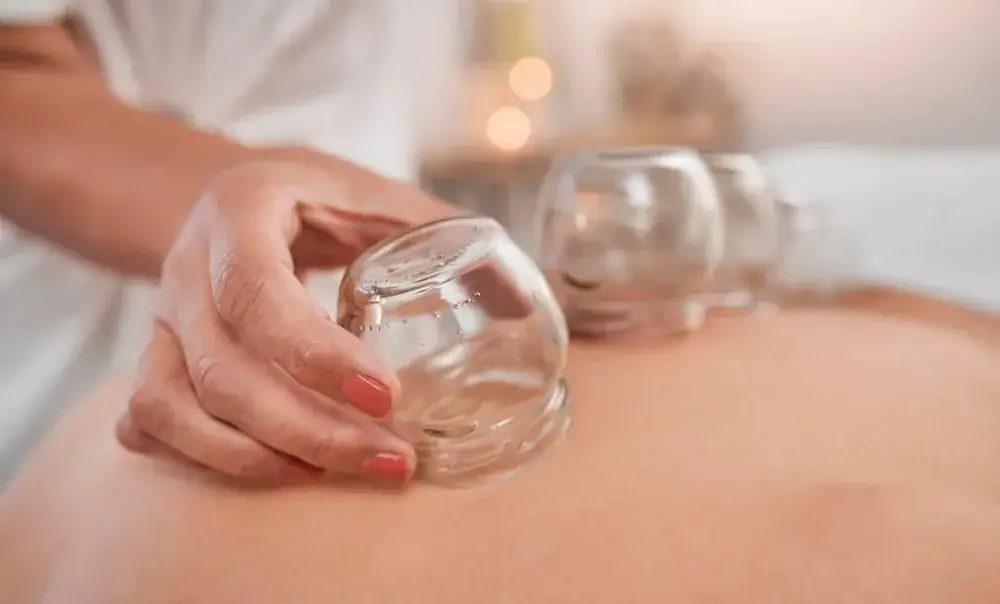
Once we determine cupping makes sense for you, the process is simple. We place cups on specific areas where you’re holding tension or experiencing pain. The suction pulls tissue upward, increasing blood flow and creating space in compressed areas. Most people describe the sensation as a tight pull—not painful, just different.
We might leave the cups stationary or move them across your muscles depending on what we’re treating. Sessions typically last 10 to 15 minutes as part of your broader physical therapy appointment. You’ll likely see circular marks afterward—they’re not bruises, they’re a result of the suction, and they fade within a few days.
After your session, you should feel looser. Some people feel immediate relief. Others notice the difference over the next day or two as inflammation decreases and movement improves. We’ll talk through what you’re feeling and adjust your treatment plan as you progress.
Ready to get started?
Cupping works particularly well for chronic muscle tension—the kind that builds up from sitting at a desk all day or repetitive movement at work. If you’re part of Centereach’s large professional workforce, you know exactly what that feels like. Neck pain from staring at screens. Shoulder tightness that creeps up by Thursday. Lower back discomfort that never fully goes away.
Athletes use cupping for recovery after training. It helps reduce delayed onset muscle soreness and gets you back to activity faster. If you’re dealing with limited range of motion in your shoulder, hip, or back, cupping can help restore mobility by releasing restricted fascia.
We also use it for headaches related to neck tension, knee pain from overuse, and general inflammation that’s slowing your recovery. The key is that cupping works best when it’s part of a complete plan—not as a standalone treatment. You’re getting the benefit of professional assessment, hands-on therapy, targeted exercise, and techniques like cupping that support your body’s natural healing process.
Centereach residents have access to quality healthcare, and most people here expect treatments that are evidence-based and professionally delivered. That’s what you’re getting—no gimmicks, just effective therapy that helps you feel better and move better.
Yes, but it’s not magic. Research shows cupping increases blood circulation to treated areas, which helps reduce inflammation and promotes healing. It also creates mechanical changes in your fascia and muscle tissue—basically giving tight, compressed areas room to relax.
What cupping does well is release muscle tension that’s been stuck for a while. If you’ve had chronic tightness in your neck, shoulders, or back, cupping can provide relief that stretching alone doesn’t touch. It’s particularly effective when combined with other physical therapy techniques.
That said, cupping isn’t a cure-all. It won’t fix structural problems or replace the need for strengthening and movement retraining. But as part of a broader treatment plan, it’s a legitimate tool that helps many people reduce pain and improve function. You’ll know pretty quickly if it’s working for you—most people feel a difference within the first couple of sessions.
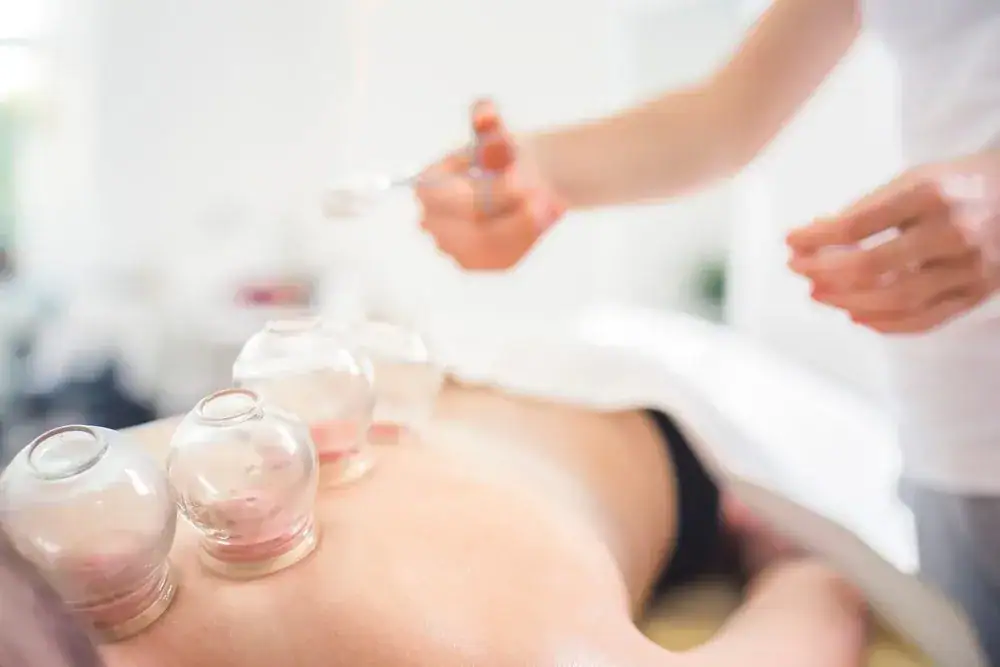
Dry cupping is what we use at Medcare. It involves placing cups on your skin to create suction—no cutting, no blood. The cups stay in place or get moved around depending on what we’re treating. It’s non-invasive and low-risk.
Wet cupping involves making small incisions in the skin before applying the cups, which draws out a small amount of blood. It’s used in some traditional medicine practices, but it’s not something we offer or recommend. Dry cupping gives you the therapeutic benefits—improved circulation, reduced muscle tension, better mobility—without any of the added risk or complexity.
For physical therapy purposes, dry cupping is what makes sense. It integrates easily into your treatment session, doesn’t require any special preparation or aftercare beyond staying hydrated, and it’s safe when performed by trained professionals. That’s what you’re getting here.
Yes, usually. The suction pulls blood to the surface, which often leaves circular marks that can range from light pink to deep purple depending on how much tension and stagnation is in the area. They look dramatic, but they’re not bruises in the traditional sense—there’s no tissue damage.
These marks typically fade within three to seven days. Some people’s marks disappear faster, others take a bit longer. It depends on your circulation and how your body responds. The marks don’t hurt, and most people forget about them after a day or two.
If you have an event coming up where you’ll be wearing something that shows your shoulders or back, just let us know. We can adjust timing or placement. But for most people, the marks are a non-issue—a temporary trade-off for feeling significantly better.
It depends on what we’re treating and how your body responds. Some people feel significant relief after one or two sessions. Others need several weeks of consistent treatment to see lasting change, especially if you’re dealing with chronic pain or long-standing muscle tension.
Cupping isn’t typically a standalone treatment. It’s part of your physical therapy plan, which might include manual therapy, exercise, and other techniques. We’ll assess your progress as we go and adjust frequency based on what’s working.
Most patients start with once or twice a week, then space sessions out as symptoms improve. The goal isn’t to keep you coming forever—it’s to get you feeling better and give you the tools to maintain that improvement on your own. We’ll be honest about what you need and what you don’t.
If cupping is part of your physical therapy treatment plan, it’s typically covered under your PT benefits. We don’t bill cupping as a separate service—it’s a technique we use during your regular therapy session, just like manual therapy or therapeutic exercise.
Your coverage depends on your specific insurance plan and whether you’ve met your deductible. We recommend calling your insurance provider to confirm your physical therapy benefits before your first visit. Our team can also help verify coverage and answer questions about what to expect.
What matters most is that you’re getting effective treatment. If cupping helps you recover faster and reduces your overall number of visits, that’s a win for both your body and your wallet. We focus on getting you better efficiently, not dragging out care you don’t need.
Absolutely. In fact, that’s how we prefer to use it. Cupping works best when it’s integrated with other therapies that address your specific condition. We might use cupping to release tight muscles, then follow up with targeted stretching and strengthening exercises to retrain movement patterns.
Manual therapy, therapeutic exercise, and cupping complement each other well. Cupping creates the space and blood flow your muscles need to relax. Exercise and movement retraining teach your body how to maintain that improvement. Together, they’re more effective than either approach alone.
Your treatment plan is customized based on what you need. Some sessions might include cupping, others might not. We use what makes sense for where you are in your recovery. The goal is always the same—get you moving better, feeling better, and back to doing what you need to do without pain getting in the way.
Other Services we provide in Centereach