
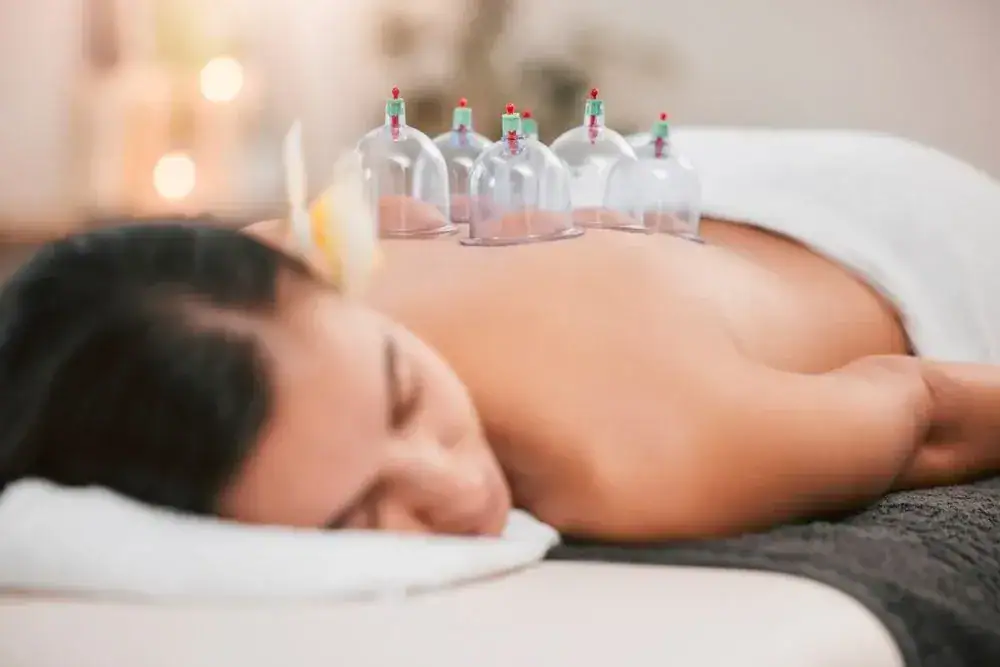

You’re not just looking for temporary relief. You want to sleep through the night without waking up stiff. You want to reach for something on a high shelf without that sharp pull in your shoulder. You want to finish a workout or a long day at work without your back locking up.
Cupping therapy works by creating suction that pulls blood to the surface, loosening muscle fibers that have been holding tension for weeks or months. That tightness you’ve been living with starts to release. Range of motion improves because the fascia—the connective tissue wrapping your muscles—gets the space it needs to move freely again.
This isn’t about masking symptoms. It’s about addressing what’s causing the restriction in the first place. When circulation improves and muscles relax, your body can actually heal instead of just coping. You move better. You recover faster. You stop planning your day around what hurts.
We’ve been treating patients across Long Island for years, with locations in Center Moriches, Smithtown, and Speonk. Every therapist on our staff is licensed, trained in cupping techniques, and focused on creating treatment plans that actually fit your schedule and goals.
Center Moriches has over 130 physical therapy specialists in the area, and most are focused on traditional rehab. We integrate cupping therapy into comprehensive physical therapy treatment because it works—especially when combined with other modalities. You’re not getting a spa experience. You’re getting clinical-grade care from professionals who understand musculoskeletal pain.
We don’t hand off your care to different people every visit. You work with the same therapist who knows your history, tracks your progress, and adjusts your plan as you improve.
Your first visit starts with an evaluation. We ask about your pain—where it is, how long you’ve had it, what makes it worse. We assess your range of motion and identify which muscles or fascia are restricted. Then we explain whether cupping therapy is a good fit for your specific condition.
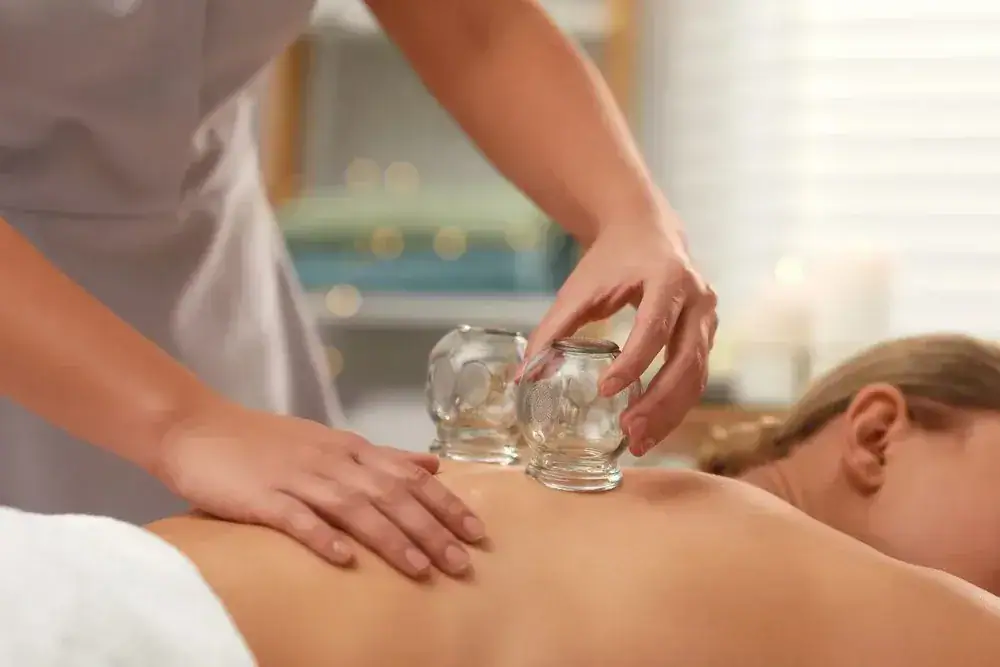
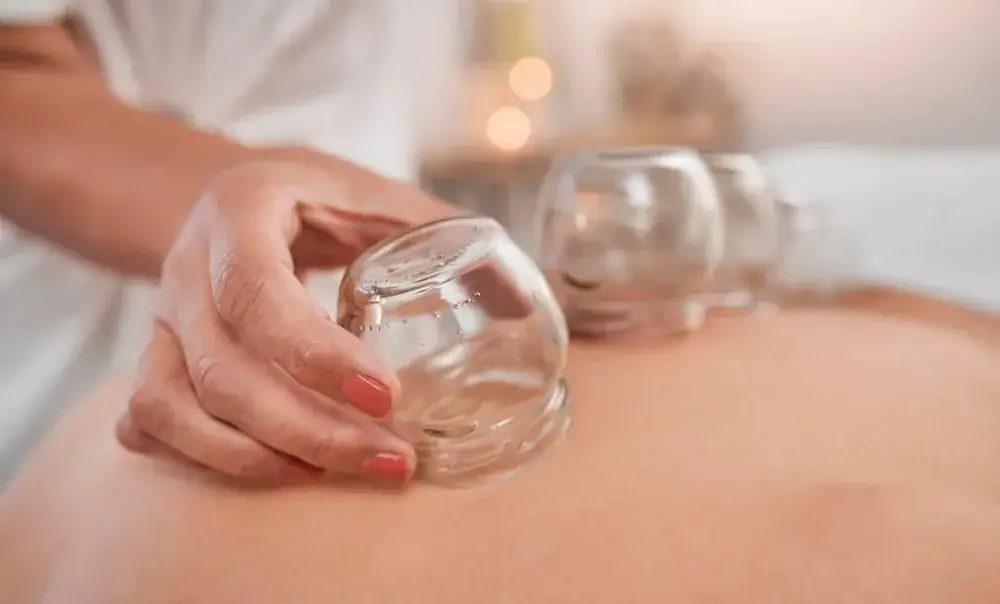
During the session, we place cups on targeted areas of your body. The suction pulls your skin up slightly, increasing blood flow to that spot and mechanically lifting the fascia away from the muscle. Most people feel immediate relief as tight areas start to release. Some describe it as a deep stretch. Others say it feels like pressure, but not pain.
Sessions typically last 15 to 30 minutes, depending on how many areas we’re treating. You might see circular marks on your skin afterward—that’s normal and fades within a few days. We often combine cupping with other physical therapy techniques like manual therapy or targeted exercises to reinforce the results. You’ll leave with a clear plan for what comes next and how many sessions you’ll likely need.
Ready to get started?
Cupping therapy is effective for chronic back pain, neck stiffness, shoulder tension, and muscle strains that won’t seem to heal. It’s also used for sports injuries—hamstring tightness, hip mobility issues, and post-workout soreness that lingers too long. Research shows significant improvement in joint mobility and pain reduction, especially when cupping is part of a broader treatment plan.
In Center Moriches, we see a lot of patients dealing with repetitive strain from physical jobs or long commutes. Sitting in traffic for an hour each way takes a toll on your lower back and hips. Cupping helps release that built-up tension and improves circulation to areas that have been compressed all day.
We also treat patients recovering from injuries who’ve hit a plateau with traditional physical therapy alone. Cupping can break through that sticking point by addressing fascial restrictions that limit movement. It’s not a replacement for rehab exercises or manual therapy—it’s an addition that makes everything else work better. You’re getting a complete approach, not just one technique applied in isolation.
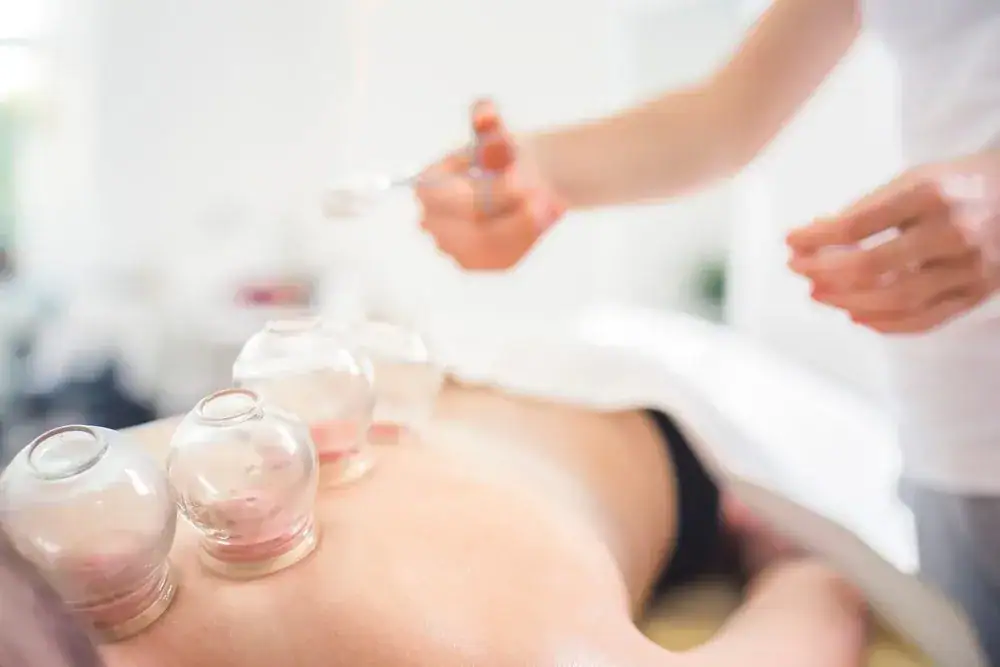
Cupping doesn’t hurt, but you’ll feel a pulling sensation as the suction draws your skin upward. Most people find it comfortable—some even say it’s relaxing. The pressure is adjustable, so if it feels too intense, your therapist can reduce the suction immediately.
You will likely see circular marks on your skin after treatment. These aren’t bruises in the traditional sense—they’re caused by blood being drawn to the surface, which is part of how cupping works. The marks are usually dark red or purple and fade within three to seven days. They don’t hurt and you can go about your normal activities right after your session.
If you’re concerned about visible marks for an upcoming event, let your therapist know. We can adjust the intensity or focus on areas that won’t be exposed. The marks are a normal part of the process and indicate increased circulation to the treated area.
It depends on what you’re treating and how long you’ve been dealing with the problem. Acute issues like a recent muscle strain might improve in two to four sessions. Chronic pain that’s been building for months or years typically requires six to eight sessions before you see lasting change.
Some patients feel relief immediately after their first session. Others notice gradual improvement over the course of a week as inflammation decreases and mobility increases. We track your progress at each visit and adjust the treatment plan based on how you’re responding.
Cupping works best when combined with other physical therapy techniques and home exercises. If you’re only doing cupping and not addressing the underlying movement patterns or weaknesses, the pain will likely return. We build a complete plan so the results stick, not just a quick fix that wears off.
Cupping therapy is often covered when it’s part of a physical therapy treatment plan, which is how we provide it at Medcare. We bill it as part of your overall PT visit, not as a separate service. Your coverage depends on your specific insurance plan and whether you’ve met your deductible.
We verify your benefits before your first visit so you know what to expect. Most plans cover physical therapy with a copay or coinsurance, and cupping is included in that session. If you’re paying out of pocket, we provide transparent pricing upfront—no surprises after the fact.
If you’re unsure about your coverage, call your insurance provider and ask if physical therapy services are covered and what your copay is. Then contact us and we’ll handle the rest. We work with most major insurers and can walk you through the details during scheduling.
Yes, especially if your lower back pain is caused by muscle tightness, fascial restriction, or poor circulation to the area. Cupping increases blood flow, releases tension in the muscles along your spine, and helps separate fascial layers that have become stuck together. Research shows cupping can significantly reduce chronic back pain when used alongside other treatments.
Lower back pain often involves more than just one tight muscle. Your hips, glutes, and hamstrings all play a role in how your back feels and moves. We assess the entire kinetic chain to figure out what’s contributing to your pain, then use cupping on the areas that need it most. Sometimes that means treating your hips or legs, not just your back.
Cupping alone won’t fix chronic pain if there are underlying issues like weak core muscles or poor posture. We combine it with corrective exercises and manual therapy to address the root cause. You’ll get a treatment plan that’s designed to keep the pain from coming back, not just make it feel better for a few days.
Cupping at a spa is usually focused on relaxation and general wellness. It’s not targeted to treat specific injuries or pain conditions. At a physical therapy clinic like ours, cupping is part of a clinical treatment plan designed to address musculoskeletal problems. We’re treating fascia restrictions, muscle strains, and chronic pain—not just providing a relaxing experience.
Our therapists are licensed physical therapy professionals who understand anatomy, biomechanics, and how to integrate cupping with other evidence-based treatments. We assess your condition, identify the root cause of your pain, and use cupping strategically on the areas that will give you the most benefit. It’s not a one-size-fits-all approach.
You also get the advantage of working with someone who can track your progress over multiple sessions and adjust your treatment as you improve. If cupping isn’t working or if another technique would be more effective, we change the plan. The goal is measurable improvement in pain and function, not just a temporary feel-good session.
Cupping therapy is very safe when performed by trained professionals using sterile equipment. The most common side effect is the circular marks left on your skin, which fade on their own. Some people feel mild soreness in the treated area for a day or two, similar to how you might feel after a deep tissue massage.
Serious side effects are rare. Burns can occur if heat is used improperly, but we use dry cupping with suction only—no fire or heat involved. There’s also a small risk of skin irritation if you have sensitive skin, but your therapist will check for any reactions during your first session and adjust accordingly.
Cupping isn’t recommended if you have certain conditions like active skin infections, open wounds, or bleeding disorders. We screen for these during your initial evaluation. If you’re on blood thinners or have any medical concerns, let us know upfront so we can determine if cupping is appropriate for you. Safety and proper technique are non-negotiable in a clinical setting.
Other Services we provide in Center Moriches