

You’ve tried stretching. You’ve tried rest. The tightness comes back, the pain lingers, and you’re stuck managing instead of living.
Cupping therapy works differently. It uses controlled suction to pull blood flow directly into restricted tissue, breaking up adhesions that keep muscles locked down. That means less pain when you move, better range of motion in joints that felt stuck, and actual relief that lasts beyond the appointment.
This isn’t about relaxation or temporary comfort. Dry cupping addresses the mechanical restrictions causing your discomfort—whether that’s chronic low back pain, neck stiffness from desk work, or muscle soreness that won’t quit after workouts. Research shows cupping reduces pain intensity in conditions like osteoarthritis, myofascial pain, and sports-related muscle strain.
You’ll notice muscles feel looser after treatment. Movement that used to hurt doesn’t. And because cupping improves local circulation and tissue mobility, your body can actually start healing the underlying problem instead of just compensating around it.
We operate across multiple locations on Long Island, including affiliated centers in Smithtown and Speonk. Every therapist providing cupping therapy here is a licensed physical therapist trained in myofascial decompression techniques—not just someone who took a weekend course.
Brookville residents deal with specific challenges: long commutes create neck and shoulder tension, active lifestyles on the North Shore mean sports injuries need proper recovery, and an aging population faces chronic joint pain that limits daily function. Cupping fits into comprehensive treatment plans here because it addresses soft tissue restrictions that other methods miss.
You’re not walking into a spa. This is clinical treatment delivered by professionals who understand musculoskeletal conditions, verify every patient’s profile for security and continuity, and build personalized plans based on what’s actually wrong—not what’s trendy.
Your first session starts with an assessment. Your therapist evaluates your pain patterns, movement restrictions, and treatment history to determine if cupping makes sense for your condition. Not everyone needs it, and you won’t get it just because you asked.
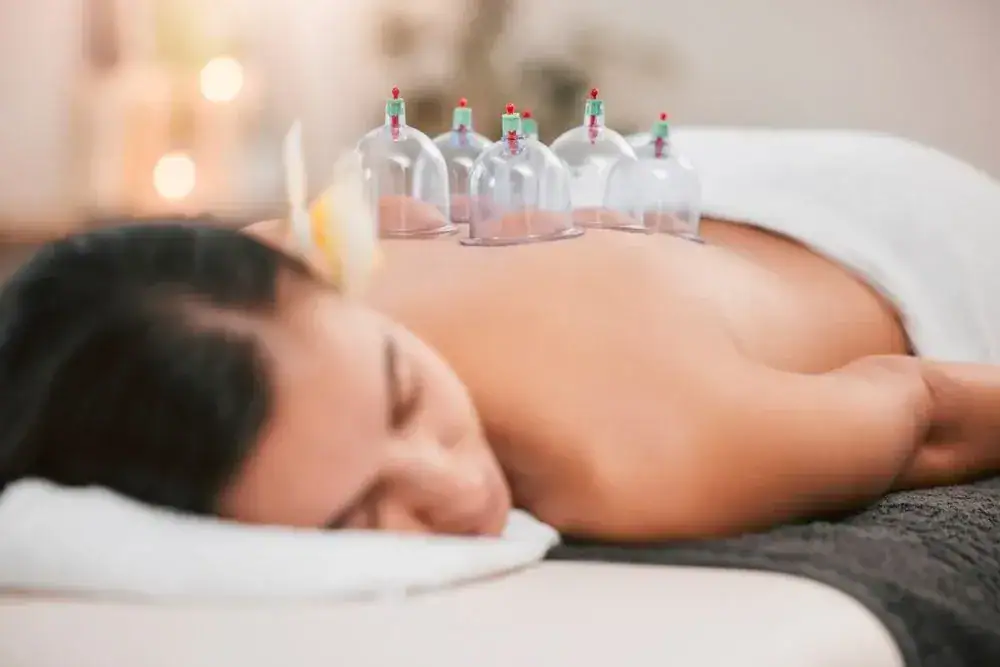
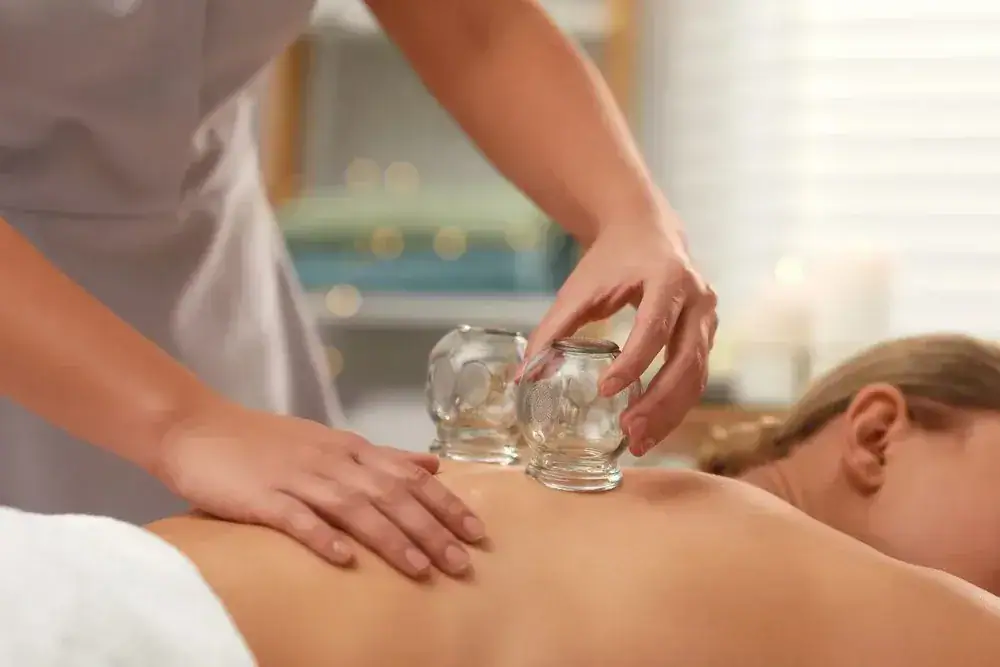
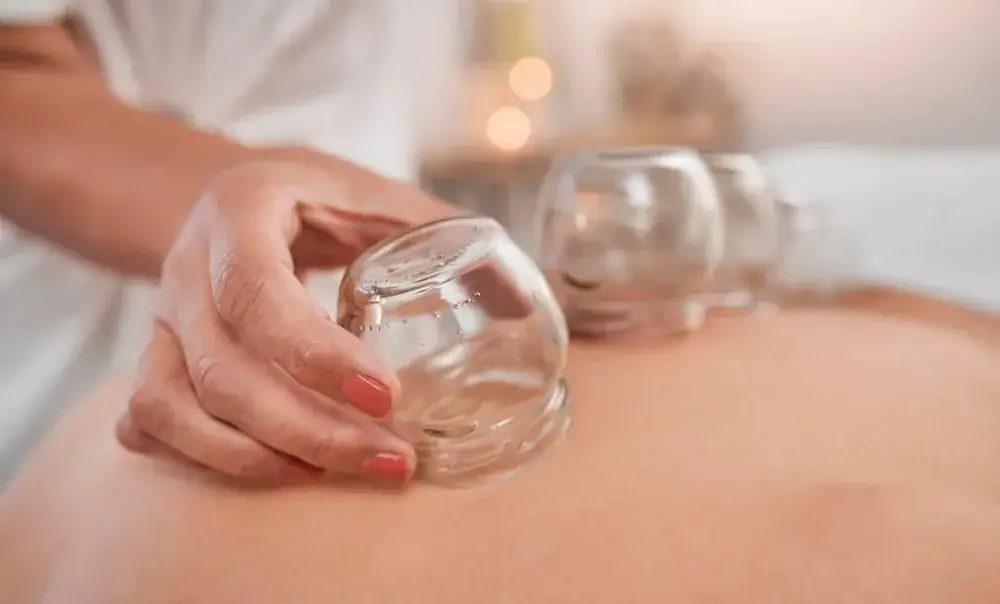
During treatment, silicone or plastic cups are placed on targeted areas—usually your back, shoulders, neck, or legs depending on where you’re restricted. The therapist creates suction either manually or with a pump, pulling tissue upward into the cup. This feels like a strong pulling sensation, not sharp pain. Cups may stay stationary for several minutes or get moved across muscle groups to release broader areas.
The suction increases blood flow to tissue that’s been tight or restricted, helps break down scar tissue and adhesions, and gives your therapist a way to work deeper into muscle layers without aggressive pressure. You’ll likely see circular marks afterward—that’s normal and they fade within a few days.
Most patients need multiple sessions. Chronic conditions don’t resolve in one visit. Your therapist will integrate cupping with other physical therapy techniques like manual therapy, therapeutic exercise, or movement training to address the full picture of why you’re in pain.
Ready to get started?
Cupping works well for musculoskeletal pain—the kind caused by tight muscles, restricted fascia, or overuse injuries. That includes chronic low back pain, neck pain from poor posture or repetitive strain, shoulder tightness, and muscle soreness that limits your training or daily activities.
Athletes recovering from intense workouts see faster recovery times because cupping helps clear metabolic waste like lactic acid and improves oxygen delivery to fatigued muscles. If you’re training for something or just trying to stay active without constant soreness, this speeds up the process.
Long Island residents dealing with arthritis-related stiffness, post-surgical rehabilitation, or workplace injuries also respond well. Nearly half of U.S. adults have a musculoskeletal condition, and many are looking for non-pharmaceutical options that actually work. Cupping provides that without the risks tied to long-term medication use.
One thing to know: this isn’t a magic fix. It’s part of a broader physical therapy plan. You’ll get the best results when cupping is combined with corrective exercise, ergonomic adjustments, and consistent follow-through on your end. The treatment creates an opportunity for your body to heal—you still have to do the work.
Cupping has moderate-quality research backing its effectiveness for specific types of pain—particularly chronic low back pain, neck pain, knee osteoarthritis, and myofascial pain syndrome. It’s not a cure-all, but it’s also not placebo.
The mechanism is straightforward: suction pulls blood into restricted tissue, which reduces inflammation, breaks up adhesions in fascia, and improves tissue mobility. When muscles are chronically tight or scarred down from old injuries, this mechanical intervention gives your body a chance to reset and start moving properly again.
That said, cupping works best as part of a complete treatment plan. If you’re only doing cupping without addressing movement patterns, strength deficits, or ergonomic issues causing the problem, you’ll get temporary relief at best. We use it strategically within a broader rehab program—not as a standalone treatment.
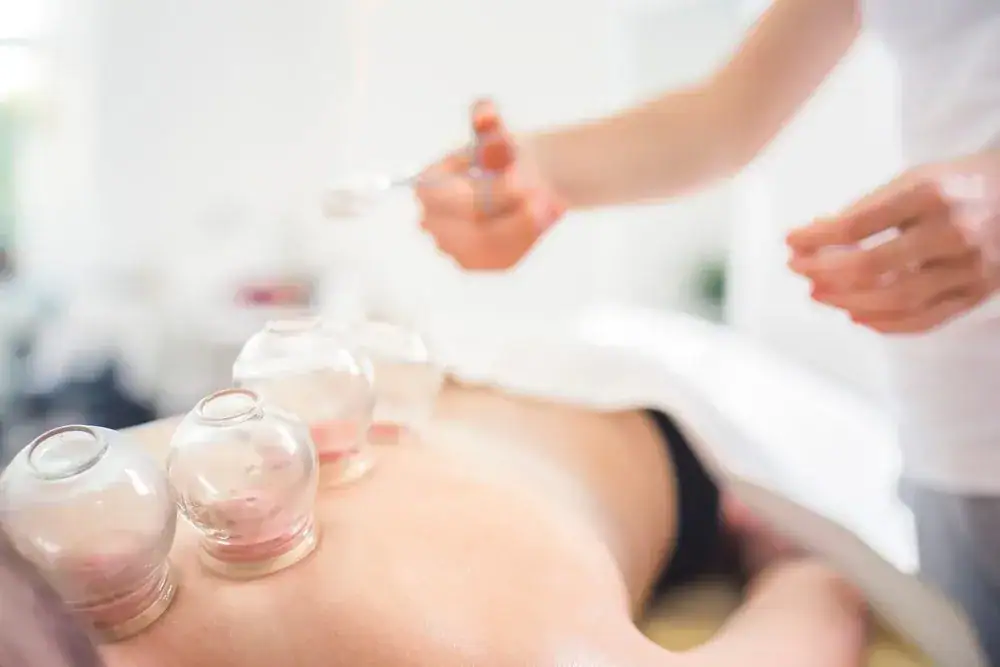
Dry cupping uses suction alone—no incisions, no blood removal. Cups are placed on your skin, suction is created, and they either stay in place or get moved around to release tight tissue. This is what we use because it’s low-risk and effective for musculoskeletal conditions.
Wet cupping involves making small cuts in the skin before applying suction, which draws out small amounts of blood. It’s rooted in traditional Chinese medicine and is thought to remove toxins, though the evidence for that is limited. Wet cupping carries higher infection risk and requires stricter sanitation protocols.
For pain relief, muscle tension, and improving range of motion, dry cupping has the research support and is the safer option. It’s what you’ll receive at Medcare—no cutting, no blood, just controlled suction applied by a licensed physical therapist who knows how to use it correctly.
Yes, cupping typically leaves circular marks that look like bruises. They’re caused by blood being pulled to the surface of your skin during treatment. The marks aren’t painful—they’re just visible.
How dark the marks appear depends on how restricted your tissue is and how much suction was used. Areas with more tension or poor circulation tend to show darker discoloration. The marks usually fade within three to seven days, sometimes sooner if your circulation is good.
These aren’t actual bruises in the sense of trauma or injury. Your therapist isn’t damaging tissue—they’re increasing blood flow to areas that need it. If you have an event coming up where the marks would be visible and that’s a concern, mention it before treatment so timing can be adjusted. But for most people, the marks are a non-issue and fade quickly.
It depends on what you’re treating and how long you’ve had the problem. Acute muscle soreness from a recent workout or minor strain might respond in one to three sessions. Chronic pain that’s been present for months or years typically requires six to eight sessions or more as part of ongoing physical therapy.
Your therapist will assess your condition during the first visit and give you a realistic timeline. If you’re dealing with something like chronic low back pain or long-term neck stiffness, expect cupping to be one tool used over several weeks alongside other interventions like manual therapy and corrective exercise.
Some patients feel immediate relief after the first session—less tightness, better movement. Others notice gradual improvement over multiple visits as tissue restrictions break down and circulation improves. Consistency matters more than intensity. Showing up for scheduled sessions and following through on home exercises will determine how quickly you improve.
Cupping therapy is often covered when it’s provided by a licensed physical therapist as part of a documented treatment plan for a medical condition. Since our therapists are licensed PTs, cupping is typically billed under physical therapy services—not as alternative medicine.
Coverage depends on your specific insurance plan and whether you’ve met your deductible. Most plans cover physical therapy visits with a copay, and cupping would fall under that. You’ll want to verify your benefits before starting treatment to understand what your out-of-pocket cost will be.
If you’re paying out of pocket, cupping sessions in the New York area generally range from $50 to $150 depending on session length and what else is included in the visit. We can provide cost estimates upfront and work with you on billing questions so there are no surprises. The key is that this is clinical treatment delivered by licensed professionals, which makes it more likely to be covered than cupping done at a spa or wellness center.
Yes. Cupping speeds recovery by improving blood flow to fatigued muscles, which helps clear lactic acid and other metabolic waste that builds up during intense training. Better circulation means more oxygen and nutrients reach damaged tissue, so you recover faster between workouts.
Athletes use cupping to reduce muscle soreness, improve flexibility, and maintain range of motion during heavy training cycles. If you’re dealing with tight hip flexors from running, shoulder stiffness from swimming, or general muscle fatigue that’s slowing you down, cupping can help you get back to training sooner.
It’s not a replacement for proper warm-ups, cooldowns, or rest days—but it’s a useful tool when you’re pushing hard and need your body to keep up. We work with active patients regularly and know how to time cupping sessions around training schedules for maximum benefit. You’ll get better results if cupping is part of a structured recovery plan, not just something you do randomly when you’re sore.
Other Services we provide in Brookville