
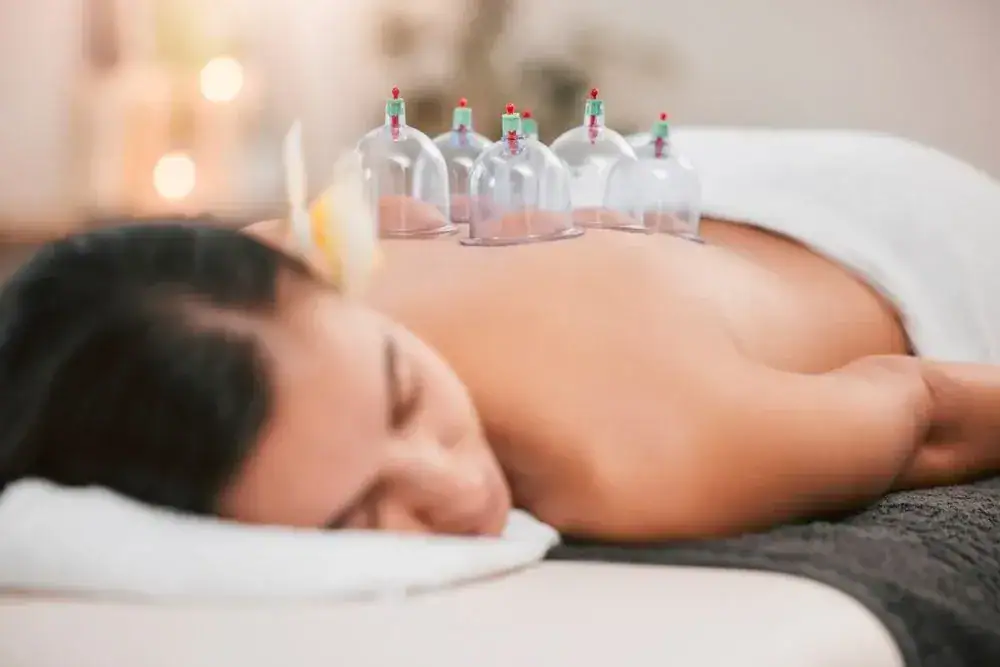

You’ve tried massage. Maybe acupuncture. Possibly medications that barely touched the problem. The pain keeps showing up—in your back, your neck, your shoulders—and it’s limiting what you can do.
Cupping therapy works differently. It increases blood flow to oxygen-starved tissue, which means your muscles actually start healing instead of just feeling temporarily better. Fresh nutrients reach the areas that need them most, and waste products like lactic acid get flushed out.
Most patients notice something right away. Maybe it’s easier to turn your head. Maybe your shoulder doesn’t catch when you reach overhead. Some people feel significant relief after one session. Others need a few treatments before the deeper patterns start to release.
Either way, you’re not masking symptoms. You’re addressing what’s causing the tightness, the trigger points, and the restricted movement. That’s why the results tend to stick around longer than other approaches you may have tried.
We’ve been treating patients across Long Island for years, including right here in Bridgehampton, NY. Our physical therapists are trained in modern cupping techniques—not just certified, but experienced in using it as part of a complete treatment plan.
We’re not a spa offering cupping as an add-on. This is clinical therapy. Every session starts with an evaluation, and every treatment is tailored to what your body actually needs. You’re not getting a one-size-fits-all protocol.
Bridgehampton patients come to us because they want real answers, not temporary fixes. Whether you’re dealing with a sports injury, chronic neck pain, or lingering tightness that won’t go away, we treat the root cause—not just the symptoms.
Your first visit starts with a conversation. We need to understand what’s going on—how long you’ve been dealing with pain, what makes it worse, and what you’ve already tried. Then we assess your movement, your posture, and the specific areas causing problems.
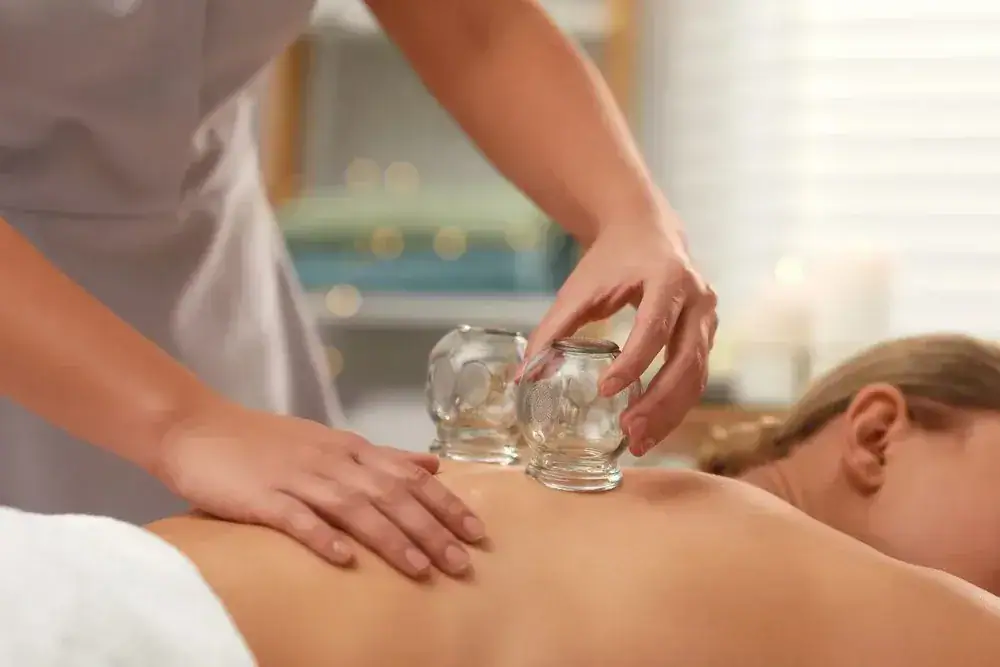
From there, we apply cups to targeted areas using a variable pressure pump. This isn’t the old-school fire method. We control the exact amount of suction, which means we can adjust it to your comfort level. Most people describe the sensation as a reverse deep tissue massage—it’s pulling instead of pushing, and it usually feels good, not painful.
The cups stay on for a few minutes while they do their work. They’re increasing circulation, releasing fascial restrictions, and helping break up scar tissue or adhesions that limit your mobility. When we remove them, you might see circular marks on your skin. Those typically fade within a week or two and they’re a normal part of the process.
Depending on your condition, we may combine cupping with other physical therapy techniques—manual therapy, stretching, strengthening exercises. The goal isn’t just relief. It’s getting you back to full function.
Ready to get started?
Cupping works especially well for chronic neck pain, low back pain, and stubborn muscle tightness that hasn’t responded to other treatments. We see a lot of athletes dealing with IT band issues, rotator cuff problems, and hamstring strains. Runners, tennis players, golfers—anyone who’s active and dealing with repetitive stress injuries.
It’s also effective for fibromyalgia, tension headaches, and general muscle soreness that lingers longer than it should. If you’ve got trigger points that keep coming back or scar tissue from an old injury, cupping helps release those restrictions in ways that manual therapy alone sometimes can’t.
In Bridgehampton, NY, we treat a mix of patients. Some are weekend warriors who overdid it. Others are dealing with desk-related pain from sitting all day. A few are recovering from surgery and need help regaining mobility. What they all have in common is they want a non-invasive option that actually works.
Evidence supports cupping for several conditions, and we’ve seen it firsthand. One runner with over a year of IT band pain reported instant relief after just three minutes. After two sessions, he was back to his normal routine. That’s not unusual. When cupping is applied correctly, the results can be surprisingly fast.
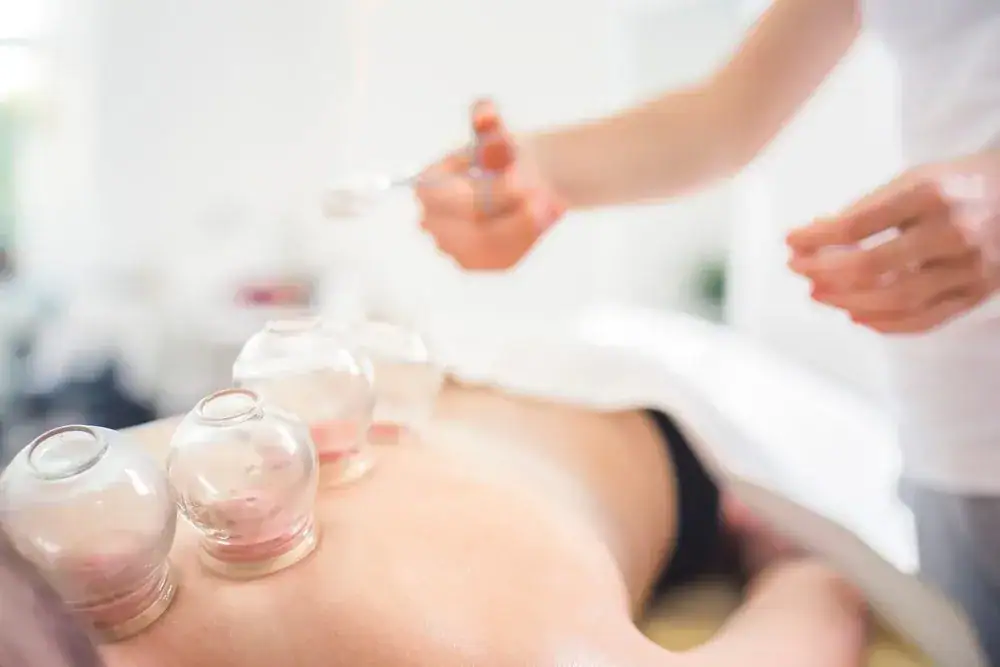
Yes, and there’s evidence to back it up. Research shows cupping is effective for chronic neck pain, low back pain, and fibromyalgia. It works by increasing blood circulation to areas that aren’t getting enough oxygen and nutrients, which speeds up healing and reduces inflammation.
When you’ve been dealing with pain for months or years, tissues can become stiff, adhesed, and starved of fresh blood flow. Cupping pulls blood to the surface, breaks up fascial restrictions, and helps release trigger points that keep muscles locked up. It’s not a placebo effect—it’s a mechanical change in how your soft tissue moves and functions.
Most patients notice improvement within a few sessions. Some feel relief immediately. The key is consistency and combining it with other physical therapy techniques when needed. If you’ve tried everything else and you’re still hurting, cupping might be the missing piece.
Yes, cupping typically leaves circular marks that look like bruises. They’re not actually bruises in the traditional sense—they’re caused by blood being drawn to the surface as part of the healing process. These marks are temporary and usually fade within one to two weeks.
The intensity of the marks depends on how much suction is used and how much stagnation or restriction exists in that area. If your tissue is really tight or inflamed, the marks may be darker. That’s normal and nothing to worry about.
Most people don’t mind the marks once they understand what’s happening. Athletes wear them like badges of honor. If you have an event or occasion where you need to avoid visible marks, just let us know ahead of time and we can adjust the treatment or choose different areas. But for most patients, the relief they get far outweighs any temporary discoloration.
Massage pushes into tissue. Cupping pulls tissue up and away from the body. That difference matters because some restrictions respond better to traction than compression. If you’ve ever had a massage that felt good in the moment but didn’t create lasting change, cupping might address what massage couldn’t reach.
Cupping also increases local circulation more dramatically than most manual techniques. It draws blood and lymphatic fluid to the area, which helps flush out metabolic waste and deliver fresh oxygen. This makes it especially useful for areas that feel chronically tight or slow to heal.
We often combine cupping with other physical therapy methods—stretching, joint mobilization, strengthening exercises. It’s not an either-or situation. Cupping enhances what we’re already doing and helps patients progress faster. Think of it as another tool that gives us more options to solve your specific problem.
Most people find cupping comfortable, even enjoyable. The suction creates a pulling sensation that feels like a deep stretch or a reverse massage. It’s not painful—it’s more of a release. Some areas might feel tender if there’s a lot of tightness or inflammation, but we control the pressure with a variable pump, so we can adjust it to your tolerance.
If something feels too intense, you tell us and we dial it back. There’s no reason to white-knuckle through a session. The goal is therapeutic benefit, not discomfort. Most patients relax during treatment, and some even fall asleep.
After the session, you might feel a little sore, similar to how you’d feel after a deep tissue massage or a tough workout. That soreness usually fades within a day or two, and it’s a sign that your body is responding. Drink plenty of water afterward and avoid intense activity for a few hours. That’s really all the aftercare you need.
It depends on what we’re treating and how long you’ve been dealing with it. Acute issues—like a recent muscle strain or a flare-up from overuse—might respond in one to three sessions. Chronic problems that have been building for months or years usually take longer, often four to six sessions or more.
Some patients notice significant improvement right away. Others need a few treatments before the deeper patterns start to shift. We’ll give you a realistic timeline after your initial evaluation, and we’ll adjust the plan as you progress. If something’s not working, we change course. If you’re improving faster than expected, we don’t drag it out.
The goal is always to get you better and keep you better. That might mean a short series of cupping sessions combined with exercises you do at home. Or it might mean integrating cupping into a broader physical therapy plan. Either way, we’re focused on results, not just racking up appointments.
In most cases, yes—when it’s provided as part of physical therapy treatment. Cupping isn’t usually billed separately. It’s a technique we use during your physical therapy session, which means it falls under your PT benefits. If your insurance covers physical therapy, cupping is typically included.
We verify your coverage before you start treatment, so there are no surprises. You’ll know what your copay or deductible responsibility is upfront. If you have questions about your specific plan, our front desk team can walk you through it or contact your insurance company directly.
Even if you’re paying out of pocket, cupping is often more affordable than ongoing medications, injections, or other interventions that only provide temporary relief. You’re investing in a treatment that addresses the root cause, not just the symptoms. And for most people dealing with chronic pain, that’s worth it.
Other Services we provide in Bridgehampton