
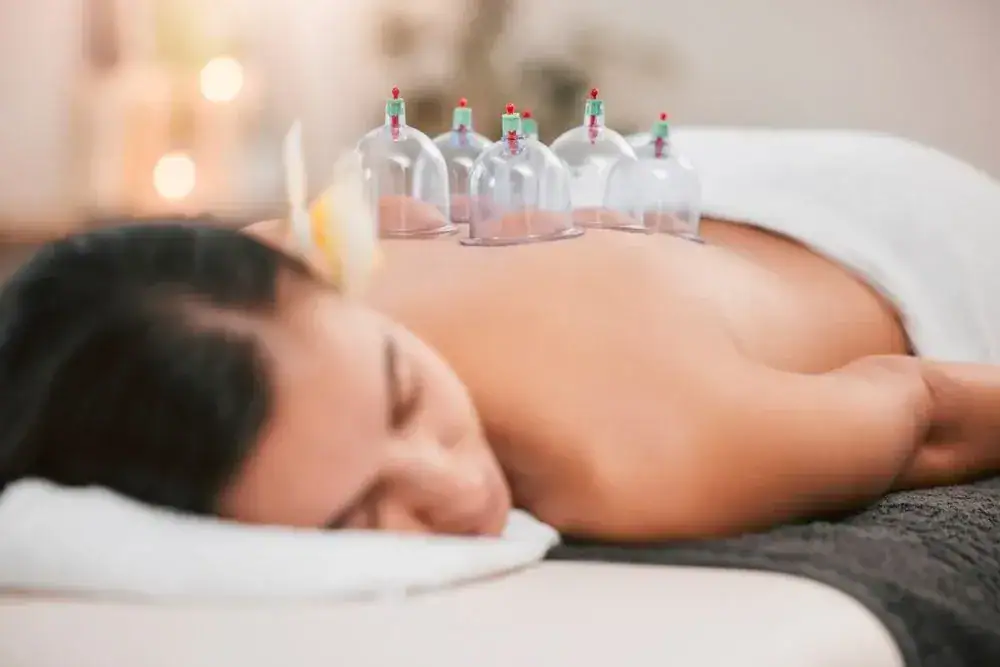

You’ve tried heat. You’ve tried rest. You’ve adjusted your routine, bought the ergonomic chair, stretched before bed. And still, that knot in your shoulder blade won’t budge. That lower back tightness keeps showing up every afternoon.
Cupping therapy works differently. It uses controlled suction to lift tissue away from the muscle, increasing blood flow to areas that have been tight for too long. That negative pressure releases fascia, breaks up adhesions, and gives your body the reset it’s been asking for.
The result isn’t just temporary relief. It’s improved range of motion. Less stiffness when you wake up. The ability to sit through a meeting or play with your kids without bracing for discomfort. You’re not masking pain—you’re addressing what’s causing it.
Most people notice a difference after the first session. Some feel looser immediately. Others see the real shift after two or three treatments, once inflammation starts dropping and movement becomes easier. Either way, you’re not waiting months to feel like yourself again.
We’ve been treating patients across Long Island for years, and our Bohemia location brings that same level of care to your neighborhood. We’re not a spa offering cupping as an add-on. We’re licensed physical therapists who use cupping as part of a real treatment plan.
That matters because cupping isn’t a one-size-fits-all solution. Where the cups go, how long they stay, how much suction is applied—it all depends on what’s actually wrong. Our team evaluates your pain, your movement patterns, and your goals before we ever place a cup.
Bohemia residents deal with the same issues we see across Suffolk County: desk jobs that wreck posture, weekend warrior injuries, chronic tension from stress and long commutes. We’ve built our practice around treating real people with real schedules who need results, not just relaxation.
Your first visit starts with an evaluation. We ask about your pain—where it is, when it started, what makes it worse. We test your range of motion and check for trigger points or areas of restriction. This isn’t a massage intake form. It’s a clinical assessment.
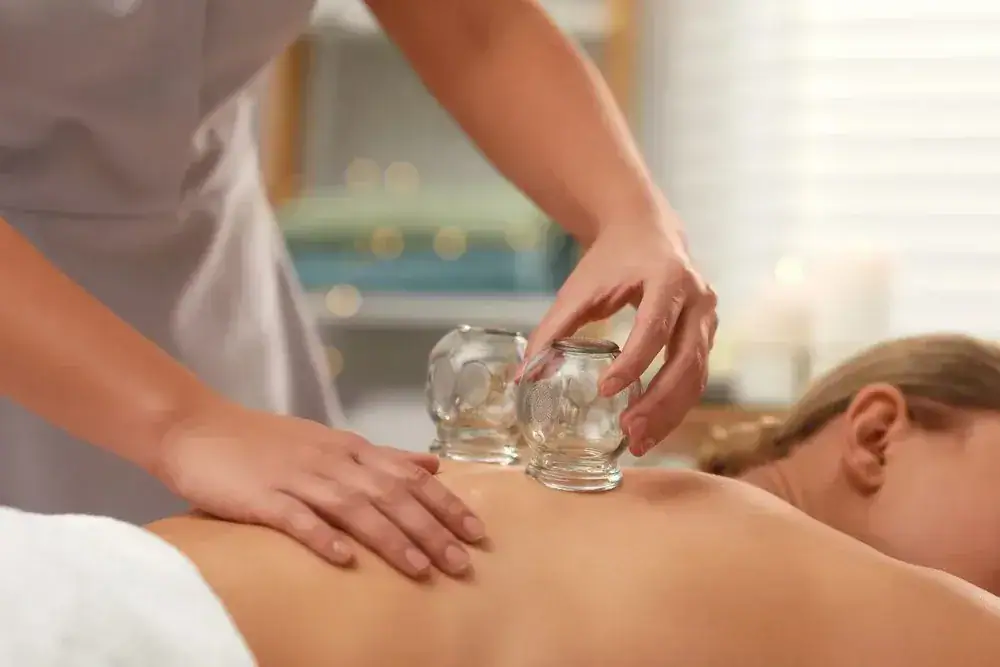
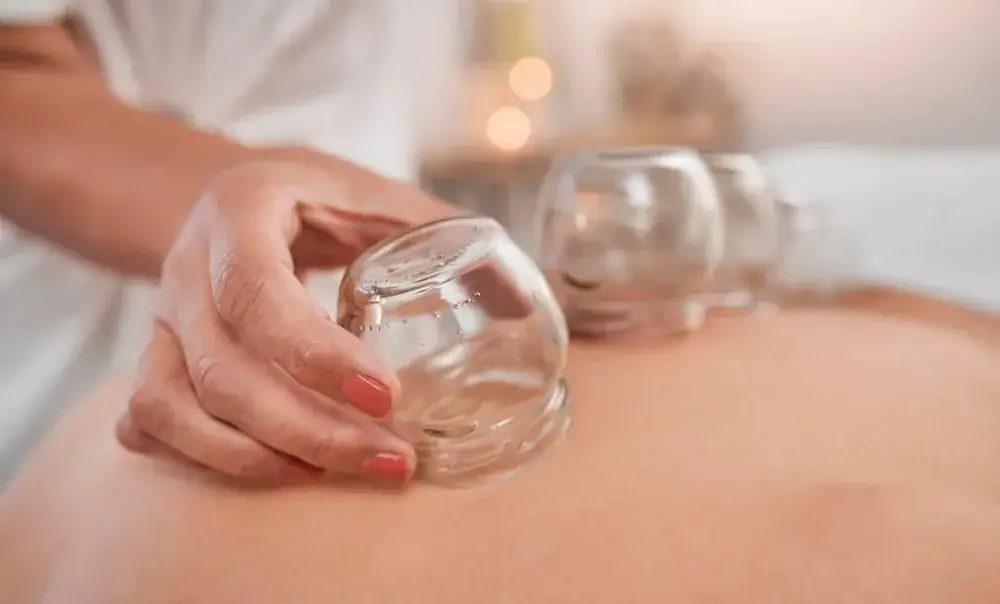
Once we know what we’re dealing with, we place cups on the targeted areas. These are usually silicone or glass cups that create suction against your skin. The suction pulls tissue upward, which increases circulation and creates space between layers of fascia that have been stuck together.
You’ll feel the pull, but it shouldn’t hurt. Most people describe it as a tight, stretching sensation—like a deep tissue massage, but in reverse. We leave the cups in place for five to fifteen minutes depending on the area and your tolerance. Some techniques involve sliding the cups across the skin to release broader sections of muscle.
After we remove the cups, you’ll see circular marks. They’re not bruises in the traditional sense—they’re caused by increased blood flow to the area. They fade within a few days to a week. You might feel sore afterward, similar to how you’d feel after a tough workout. That’s normal. Drink water, move gently, and let your body process the work.
Sessions typically last thirty to sixty minutes. Most treatment plans involve weekly visits for three to six weeks, then we reassess. Some people continue with maintenance sessions once a month. Others are good after a handful of treatments.
Ready to get started?
Cupping therapy is effective for chronic neck and back pain, especially when it’s tied to muscle tightness or poor posture. If you spend hours at a desk or behind the wheel, this is one of the better tools we have for releasing that built-up tension.
Athletes use it for recovery. Runners dealing with IT band issues, lifters with shoulder impingement, tennis players with elbow pain—cupping helps reduce inflammation and speeds up healing between training sessions. It’s not a magic fix, but it shortens recovery time when combined with proper rehab.
We also treat headaches and migraines that stem from neck tension, rotator cuff issues, sciatica, and general muscle soreness that won’t go away on its own. If your pain is musculoskeletal and tied to soft tissue, there’s a good chance cupping can help.
Here in Bohemia and the surrounding Long Island areas, we see a lot of repetitive strain injuries—people whose jobs or hobbies have created chronic tightness over time. Cupping works well for that because it addresses the tissue directly, not just the symptoms. You’re giving your muscles a chance to release patterns they’ve been holding onto for months or even years.
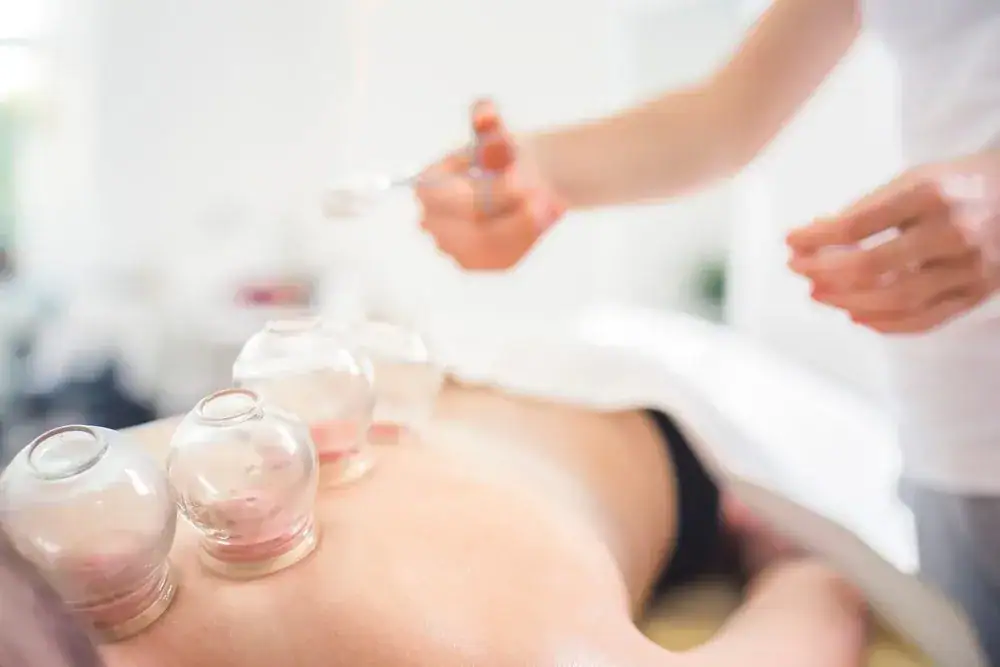
Cupping has been used for thousands of years across multiple cultures, but the reason it’s stuck around is because it works for specific types of pain. Research shows it’s effective for chronic musculoskeletal pain, particularly when combined with physical therapy. It’s not a cure-all, but for muscle tightness, trigger points, and restricted fascia, it’s one of the more reliable non-invasive options.
The suction created by the cups increases blood flow to areas that aren’t getting enough circulation. That helps reduce inflammation, speeds up healing, and releases adhesions in the tissue. When muscles have been tight for a long time, they develop these sticky points where fascia layers bind together. Cupping pulls them apart.
It’s not a trend when it’s administered by a licensed physical therapist who knows anatomy and understands what’s causing your pain. It becomes a trend when it’s offered at a spa with no clinical reasoning behind it. There’s a difference.
You’ll have circular marks where the cups were placed, but they’re not bruises in the way most people think of them. Bruises happen when blood vessels break due to impact. Cupping marks happen because of increased blood flow and the drawing of stagnant blood to the surface.
The marks can range from light pink to deep purple depending on how much tension or stagnation was in that area. They’re not painful to the touch. Most fade within three to seven days. If your tissue was really tight or inflamed, they might last a bit longer.
Some people don’t mark much at all. Others mark heavily on the first session and less on subsequent ones as circulation improves. You can still go about your day normally—they just look dramatic. If you have an event or a reason you don’t want visible marks, let us know ahead of time and we can adjust pressure or placement.
Massage uses compression—pushing down into the muscle to release tension. Cupping uses decompression—pulling tissue up and away from the muscle. That difference matters because some types of pain respond better to lifting than pressing.
When fascia is stuck or muscles are locked up deep below the surface, massage can only go so far. Cupping creates negative pressure that reaches deeper layers without the discomfort of heavy pressure. It also promotes drainage through the lymphatic system, which helps reduce swelling and flush out metabolic waste.
Both have their place. We often use them together. Cupping is particularly useful for trigger points, areas that are too sensitive for deep pressure, and chronic tightness that hasn’t responded to other treatments. If you’ve been getting massages and they feel good in the moment but don’t create lasting change, cupping might be the missing piece.
Yes, and that’s actually one of the most effective ways to use it. Cupping isn’t a standalone treatment here—it’s integrated into your overall plan. If you’re already doing physical therapy for an injury or chronic condition, cupping can enhance your results by releasing tissue restrictions that limit your progress.
For example, if you’re rehabbing a shoulder injury and you’ve hit a plateau with range of motion, cupping can release the fascia around the shoulder blade and upper back, giving you more mobility to work with. If you’re treating lower back pain and certain muscles won’t relax no matter how much you stretch, cupping helps reset that tension so your exercises are more effective.
We evaluate whether cupping makes sense for your specific case. Not everyone needs it, but when it fits, it speeds up recovery and helps you get more out of each session. You’re not adding extra appointments—we build it into the time you’re already spending with us.
Most people feel some level of relief after the first session—looser muscles, less stiffness, better range of motion. But one session isn’t going to undo months or years of chronic tightness. Real, lasting change usually takes three to six sessions depending on what we’re treating.
If you’re dealing with acute pain from a recent injury, you might only need a few treatments. If you’re managing chronic pain that’s been building for years, it takes longer to retrain the tissue and break those patterns. We reassess after the first few sessions to see how you’re responding and adjust from there.
Some people continue with maintenance sessions once or twice a month after their initial treatment plan. Others are good with just the short-term series. It depends on your body, your activity level, and whether the underlying cause of your pain has been addressed. We’re not interested in keeping you coming back forever—we want you functional and pain-free.
When cupping is part of a physical therapy treatment plan, it’s often covered under your PT benefits. We bill it as part of your session, not as a separate service. That means if your insurance covers physical therapy, there’s a good chance cupping is included.
Coverage varies by plan, so we recommend calling your insurance provider to confirm your benefits before your first visit. We can also verify coverage on our end and let you know what to expect. Most major insurance plans cover physical therapy services, and since we’re licensed therapists providing cupping as a clinical treatment, it’s typically reimbursable.
If you’re paying out of pocket, sessions generally range from sixty to one hundred dollars depending on length and complexity. We’re transparent about costs upfront—no surprises, no hidden fees. You’ll know what you’re paying before we start treatment.
Other Services we provide in Bohemia