
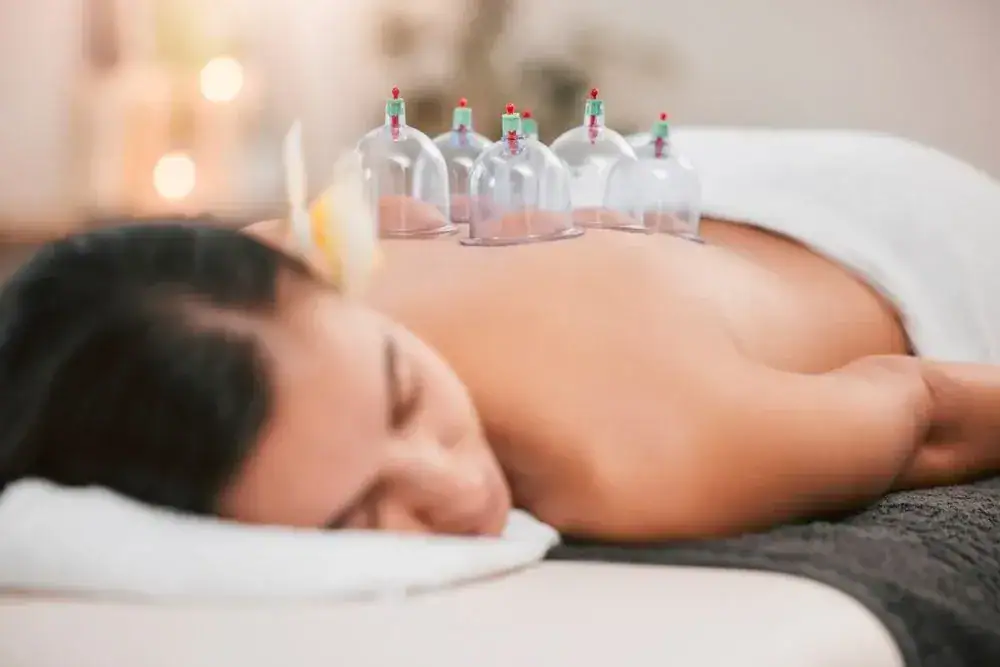

You wake up without that constant ache in your lower back. You reach for something on a high shelf without wincing. You get through your day without counting down the hours until you can lie down again.
That’s what cupping therapy does when it’s done right. The suction pulls blood flow to tight, oxygen-starved tissue. Knots start to release. Inflammation drops. Range of motion improves—not just for a few hours, but in a way that builds over time.
Research backs this up. Moderate to high-quality evidence shows cupping significantly reduces chronic neck pain, low back pain, and knee osteoarthritis pain. It’s not a miracle. It’s increased circulation, fascial release, and targeted muscle relaxation working together.
You’re not masking symptoms. You’re addressing what’s causing them. And you’re doing it without another pill, another injection, or another reason to leave your house when moving hurts.
Medcare Therapy Services has served Long Island for over 15 years. Our licensed physical therapists and occupational therapists bring clinical-grade treatment to your home—not because it’s trendy, but because it works better for people dealing with real pain and mobility limitations.
We accept Medicare and most commercial insurance plans. Our team manages every detail, from verifying your coverage to coordinating your schedule. You’re not navigating this alone.
Blue Point residents deal with the same challenges as the rest of Suffolk County—aging in place, recovery from surgery, chronic conditions that make travel difficult. We built our service around those realities. You get one-on-one care from a licensed professional who shows up on time, treats you with respect, and actually listens.
First, your physical therapist evaluates your pain, range of motion, and treatment history. This isn’t a one-size-fits-all approach. They’re mapping out where the tension is, what’s referring pain elsewhere, and how cupping fits into your overall care plan.
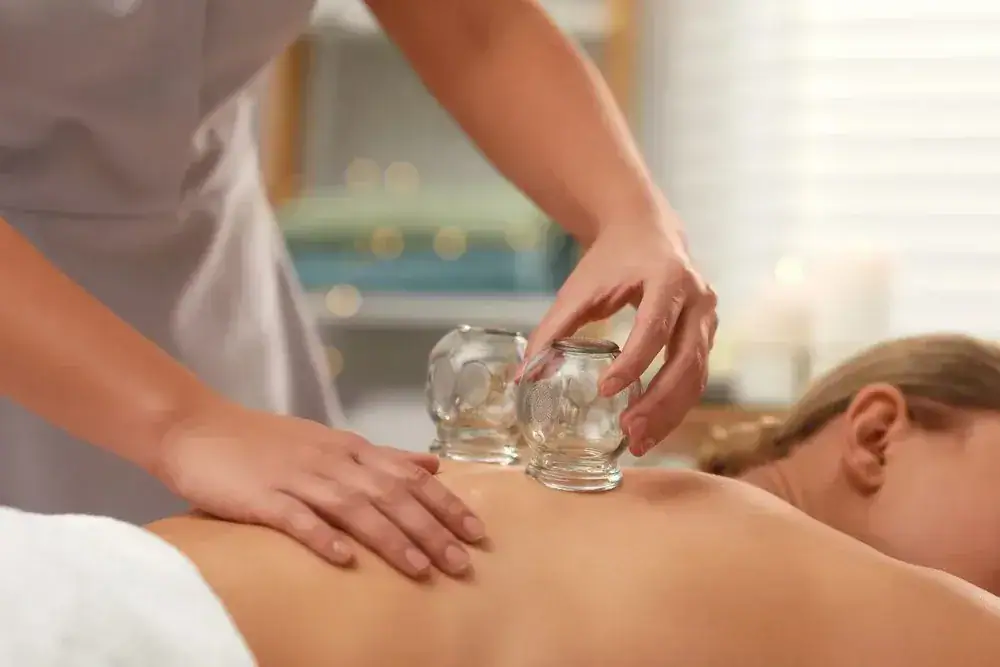
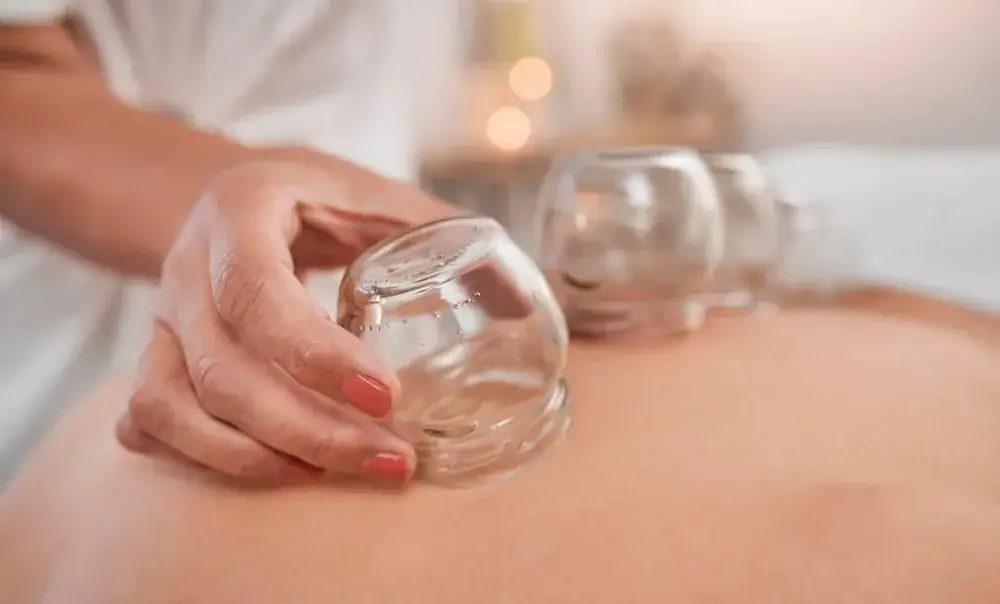
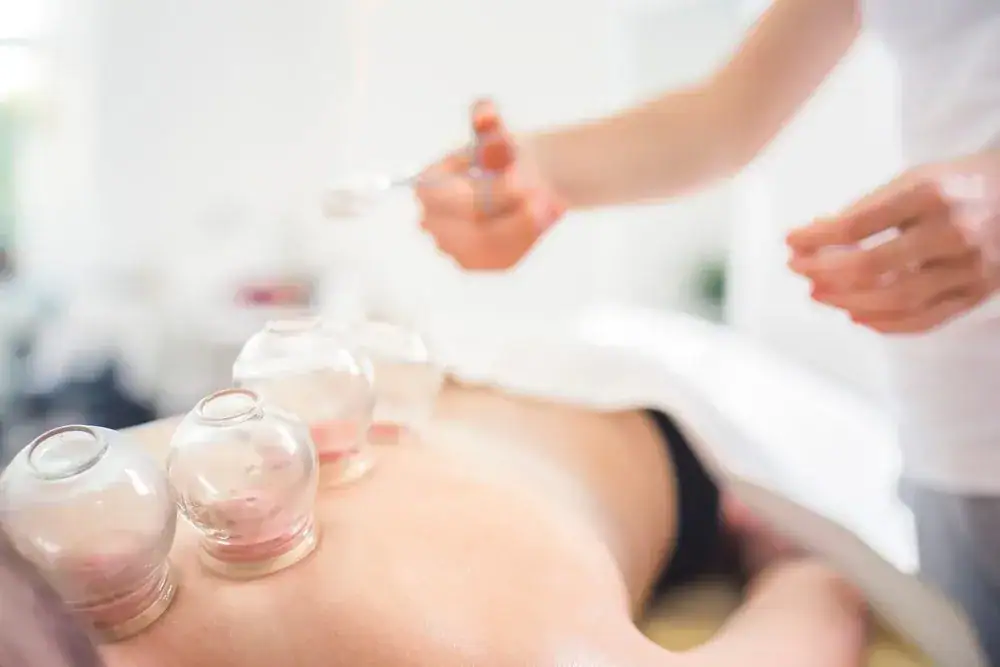
During the session, cups are placed on your skin using suction—either through a pump or heat, depending on the technique. Dry cupping is the standard method we use in evidence-based musculoskeletal practice. The suction lifts tissue, increases blood flow, and mechanically separates fascial layers that have become dense or restricted.
Most people feel immediate relief. Some feel it build over the next day or two as inflammation decreases and circulation improves. You might have circular marks where the cups were placed—they’re not painful, just visible for a few days.
Your therapist will combine cupping with other physical therapy techniques as needed. Stretching, manual therapy, strengthening exercises—it all works together. You’re not getting cupping in isolation. You’re getting a treatment plan designed around your specific condition and goals.
Ready to get started?
You get a licensed physical therapist who comes to your Blue Point home with everything needed for your session. No commute. No waiting room. No trying to drive home after treatment when you’re sore or exhausted.
Cupping therapy addresses chronic pain conditions common across Long Island—lower back pain, neck tension, fibromyalgia, knee osteoarthritis. Research shows it works for these conditions, and clinical practice confirms it. Athletes use it for faster recovery and reduced muscle soreness. People with desk jobs use it for tension that builds up in the shoulders and upper back.
Your sessions are covered by insurance in most cases, because this is physical therapy—not spa treatment. It’s clinical. It’s documented. It’s part of a care plan that includes measurable goals and progress tracking.
You also get the benefit of consistency. Same therapist. Same quality of care. Same attention to detail that comes from a practice that’s been operating across multiple Long Island locations since 2010. We’re not new to this, and we’re not experimenting with your recovery.
It works, and there’s research to prove it. Clinical reviews show moderate to high-quality evidence that cupping significantly improves pain and disability for conditions like chronic neck pain, low back pain, and knee osteoarthritis. Single sessions can provide immediate pain relief, and repeated sessions build on that improvement.
The mechanism isn’t mysterious. Cupping increases local blood flow, delivering oxygen and nutrients to tissue that’s been tight and restricted. It mechanically lifts fascial layers, reducing densification and improving mobility. It helps break up those rope-like knots in your muscles that don’t respond to stretching alone.
That said, it’s not magic. It works best when combined with other physical therapy techniques—stretching, strengthening, manual therapy. You’re not going to cure decades of chronic pain in one session, but you will notice a difference. Most people feel relief right away, and that relief deepens as treatment continues.
Dry cupping is safe when performed by a licensed physical therapist. Most experts agree it’s a low-risk therapy, especially compared to medications or injections. The most common side effect is circular marks where the cups were placed—they look like bruises but aren’t painful. They fade within a few days to a week.
Some people feel slight soreness after their first session, similar to how you might feel after a deep tissue massage. That’s normal. Your body is responding to increased blood flow and tissue release. Drinking water and moving gently afterward helps.
Serious side effects are rare and almost always linked to improper technique or unqualified practitioners. That’s why credentials matter. Our physical therapists are licensed, trained, and experienced in cupping as part of evidence-based musculoskeletal practice. They know how to adjust suction, placement, and duration based on your tissue response and pain tolerance.
In most cases, yes. Cupping therapy is covered when it’s part of a physical therapy treatment plan, which is how we deliver it. We accept Medicare and nearly all commercial insurance plans, and we handle the verification process for you.
Coverage depends on your specific plan, your diagnosis, and medical necessity. Conditions like chronic pain, post-surgical recovery, mobility limitations, and musculoskeletal injuries typically qualify. We’ll review your benefits before your first session so there are no surprises.
Home-based physical therapy is often covered at the same rate as clinic-based care, especially when mobility or transportation is a barrier. If you’re having trouble getting to a clinic because of pain, limited mobility, or lack of transportation, that strengthens the case for home care. We document everything properly and work directly with your insurance company to make the process as smooth as possible.
It depends on what you’re treating and how long you’ve been dealing with it. Acute pain or muscle tension from a recent injury might respond in two to four sessions. Chronic conditions—pain you’ve had for months or years—usually need more. Six to ten sessions is common, sometimes more if the issue is severe or longstanding.
Research shows that single sessions of dry cupping can provide immediate pain relief, but lasting improvement comes from consistent treatment. Your physical therapist will evaluate your progress after each session and adjust the plan as needed. Some people need weekly sessions at first, then taper to every other week or monthly maintenance.
The goal isn’t to keep you in treatment forever. It’s to get you functional, pain-free, and able to manage your condition independently. Cupping is often combined with exercises and stretches you can do on your own between sessions. That combination—professional treatment plus home maintenance—is what creates long-term results.
The difference is training, intent, and integration with medical care. Spa cupping is relaxation-focused. Physical therapy cupping is treatment-focused. It’s part of a clinical plan designed to address specific musculoskeletal conditions, reduce pain, and improve function.
Our physical therapists are licensed healthcare providers. They assess your condition, identify the root cause of your pain, and use cupping as one tool within a broader treatment strategy. They know anatomy. They understand fascial restrictions, trigger points, and referral patterns. They adjust technique based on your tissue response and treatment goals.
Spa practitioners may have some training, but they’re not evaluating range of motion, tracking measurable outcomes, or coordinating with your doctor. They’re also not billing insurance, because what they’re doing isn’t medical treatment. If you want relaxation, go to a spa. If you want to fix the problem causing your pain, work with a licensed physical therapist who uses cupping as part of evidence-based care.
It helps with both. Muscle tension from stress is still muscle tension—it responds to increased blood flow, fascial release, and the parasympathetic relaxation response that cupping triggers. A lot of people hold stress in their neck, shoulders, and upper back. Cupping targets those areas effectively.
That said, if your tension is chronic and stress-related, cupping works best when paired with other strategies. Your physical therapist might include stretching, posture correction, breathing exercises, or ergonomic adjustments to address what’s causing the tension in the first place. Cupping relieves the symptoms, but you need to manage the source.
Many patients report that cupping is deeply relaxing. The suction, the stillness, the focused attention on areas that have been tight for months—it all contributes to stress reduction. Some research suggests cupping helps with anxiety and overall tension, not just localized muscle pain. You’re not just treating an injury. You’re giving your nervous system a chance to downregulate, which has benefits that go beyond the physical.
Other Services we provide in Blue Point