
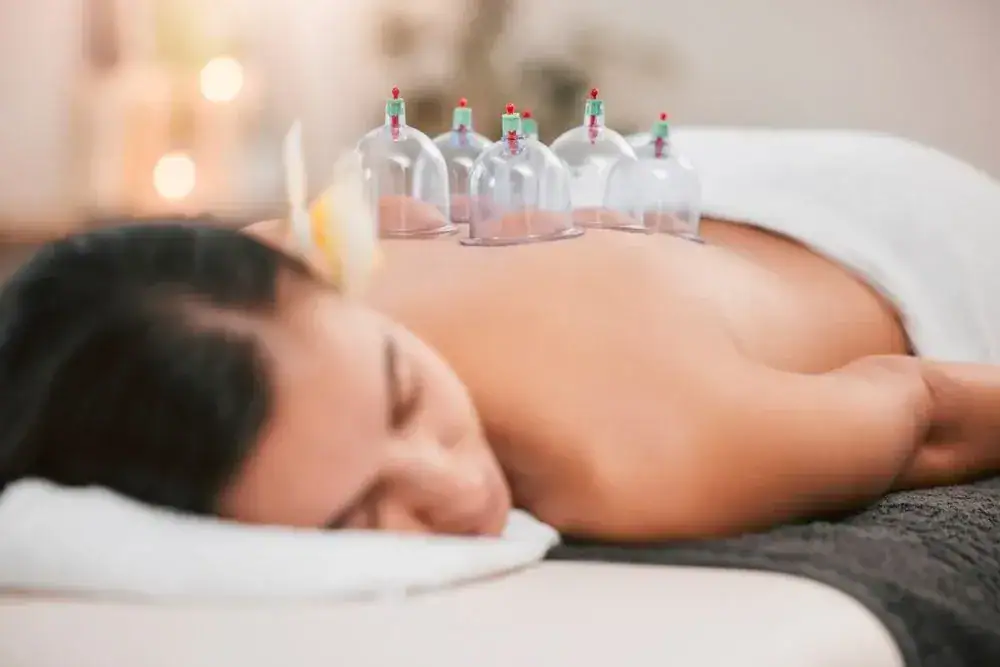

You’ve tried stretching. Maybe massage. Possibly medication. But that tightness in your back, that nagging shoulder pain, or the stiffness limiting your workouts—it’s still there.
Cupping therapy works differently. The suction pulls blood to the surface, releases fascial restrictions, and creates space for your muscles to glide the way they’re supposed to. You’re not just masking pain—you’re addressing what’s causing it.
Most people notice improved range of motion after the first session. Less guarding. Less compensation. And for chronic issues like lower back pain, neck stiffness, or post-workout soreness, cupping speeds up what your body’s already trying to do: heal itself.
It’s not a miracle. It’s mechanical. And when combined with the right movement plan, it works.
We’ve been treating patients across Long Island for years, including right here in Babylon, NY. Our physical therapists don’t just offer cupping as an add-on—we integrate it into full treatment plans based on what your body needs.
Every profile is verified. Every therapist is licensed. And every treatment follows the same standard: no shortcuts, no guessing, no handing you off to someone undertrained.
Babylon residents deal with everything from desk-job neck pain to sports injuries to post-surgical recovery. We see it daily. And because we’re local, we understand how active this community is—and how frustrating it is when pain keeps you from staying that way.
Your therapist starts with an assessment. Where’s the pain? What makes it worse? What have you already tried?
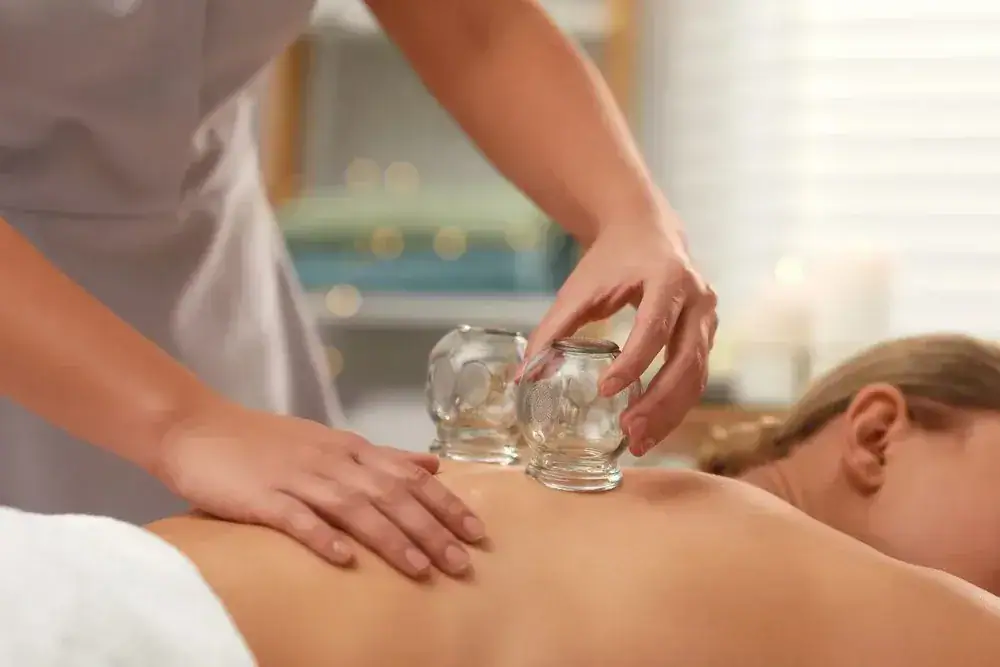
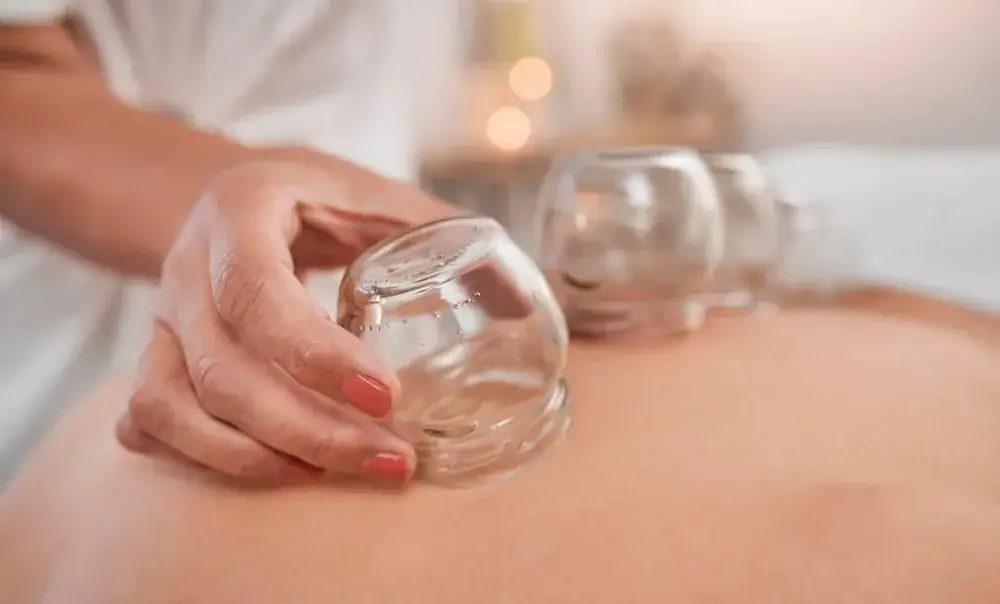
Then comes the cupping. We place cups on targeted areas—usually your back, shoulders, neck, or legs—and create suction using either a pump or heat. The suction pulls tissue upward, increasing blood flow and releasing tension in the fascia (the connective tissue around your muscles).
You’ll feel pressure, maybe some tightness. It’s not painful, but it’s not nothing either. Most people describe it as intense in a good way.
Sessions typically last 15 to 45 minutes depending on what we’re treating. Afterward, you might see circular marks where the cups were placed—that’s normal and fades within a few days. What lasts longer is the relief.
We often combine dry cupping with manual therapy, targeted exercises, or other physical therapy techniques. It’s not cupping alone that fixes the problem—it’s cupping as part of a bigger plan that gets you moving better and feeling stronger.
Ready to get started?
Cupping therapy here isn’t a spa treatment. It’s a clinical tool used by our licensed physical therapists to treat real musculoskeletal issues.
You’re getting an evaluation first—not just cups slapped on your back. We identify restrictions, test your range of motion, and figure out whether cupping is the right fit or if another approach makes more sense.
In Babylon, NY, we see a lot of patients dealing with chronic lower back pain from sitting all day, shoulder issues from repetitive strain, and knee pain from running or aging joints. Cupping helps with all of it when applied correctly. It increases circulation, reduces muscle tightness, and gives your nervous system a chance to stop guarding.
And because this is physical therapy, not just cupping, you’re also getting education. We’ll show you what to do at home, how to move differently, and what habits might be making things worse. The goal isn’t to keep you coming back forever—it’s to get you functional again.
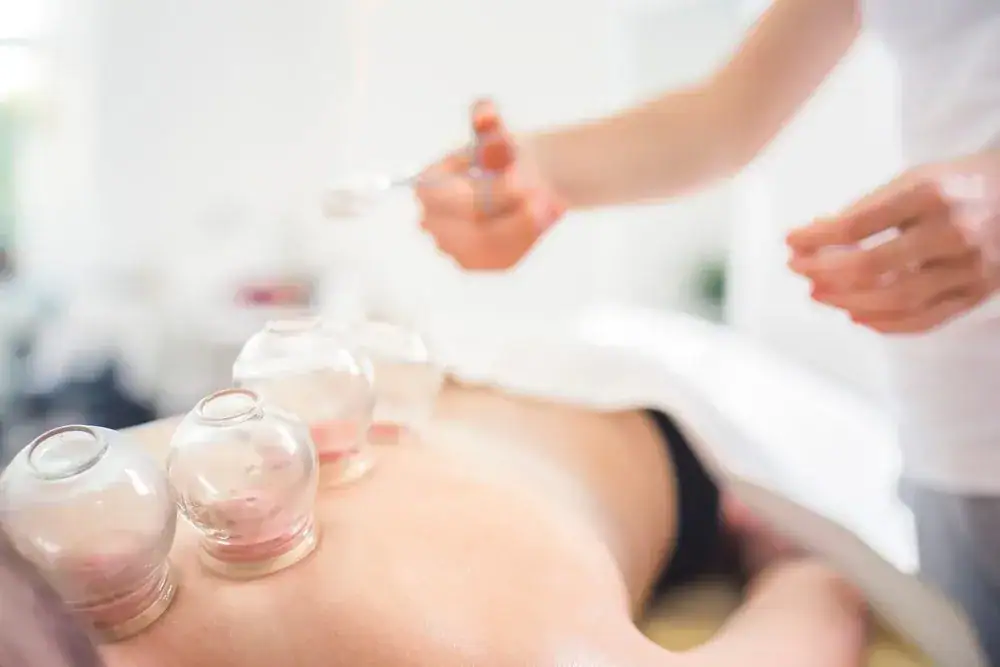
Yes, but it works best when it’s part of a broader plan. Cupping increases blood flow to tight, restricted areas and helps release fascial adhesions that contribute to chronic pain. Research shows moderate-quality evidence supporting cupping for chronic lower back pain and neck pain.
That said, cupping alone won’t fix everything. If your back pain is from poor posture, weak core muscles, or movement patterns that load your spine incorrectly, you need more than suction. You need strengthening, mobility work, and sometimes manual therapy.
At Medcare, we use cupping as one tool in a full physical therapy treatment plan. It’s effective—but it’s not magic. It’s mechanical, and it works when combined with the right exercises and education.
Intent and training. At a spa, cupping is usually about relaxation. At our physical therapy clinic in Babylon, NY, it’s about function.
Our therapists are licensed professionals trained in anatomy, biomechanics, and rehabilitation. We’re not just placing cups—we’re assessing movement dysfunction, identifying restrictions, and using cupping to address specific soft tissue problems that limit your mobility or cause pain.
You’ll also get a treatment plan that goes beyond the session. We’ll tell you what’s tight, what’s weak, and what you need to do between visits. Spa cupping feels good. Clinical cupping gets you better.
You’ll likely have circular marks where the cups were placed, but they’re not technically bruises. They’re caused by increased blood flow to the surface and usually fade within three to seven days.
The marks don’t hurt. They’re just visible. If you have an event coming up or you’re concerned about how they look, let your therapist know beforehand—we can adjust intensity or placement.
Some people mark more than others depending on skin sensitivity and how restricted the tissue is. The marks are actually a sign that the treatment is working—your body is responding by increasing circulation to areas that need it.
It depends on what we’re treating and how long you’ve had the problem. Acute issues like post-workout soreness or mild muscle strain might improve in one or two sessions. Chronic pain, old injuries, or long-standing tightness usually takes longer—often four to six sessions combined with other physical therapy techniques.
Most patients notice some improvement after the first session: better range of motion, less stiffness, easier movement. But lasting change comes from addressing the root cause, not just repeating cupping every week.
We’ll give you a realistic timeline during your evaluation. If cupping isn’t helping after a few sessions, we’ll adjust the plan. The goal is progress, not endless appointments.
If cupping is part of your physical therapy treatment plan, it’s often covered under your PT benefits. Insurance typically doesn’t cover cupping as a standalone service, but when it’s integrated into a documented treatment plan for a diagnosed condition, most plans will cover it.
We work with most major insurance providers. We’ll verify your benefits before you start and let you know what to expect in terms of coverage and any out-of-pocket costs.
If you’re paying out of pocket, we’ll give you transparent pricing upfront. No surprises. No hidden fees. Just clear information so you can make an informed decision about your care.
Absolutely. Athletes use cupping to speed recovery, reduce muscle soreness, and improve mobility between training sessions. The suction increases blood flow, which helps clear metabolic waste and deliver oxygen to fatigued muscles.
If you’re dealing with a pulled muscle, IT band tightness, or restricted hip mobility, cupping can help release tension and restore normal tissue glide. It’s especially useful for runners, lifters, and anyone doing repetitive movements that create chronic tightness.
That said, cupping works best when paired with proper warm-ups, cooldowns, and strength work. We’ll show you how to integrate it into your training routine so you’re not just recovering faster—you’re also preventing future injuries.
Other Services we provide in Babylon