
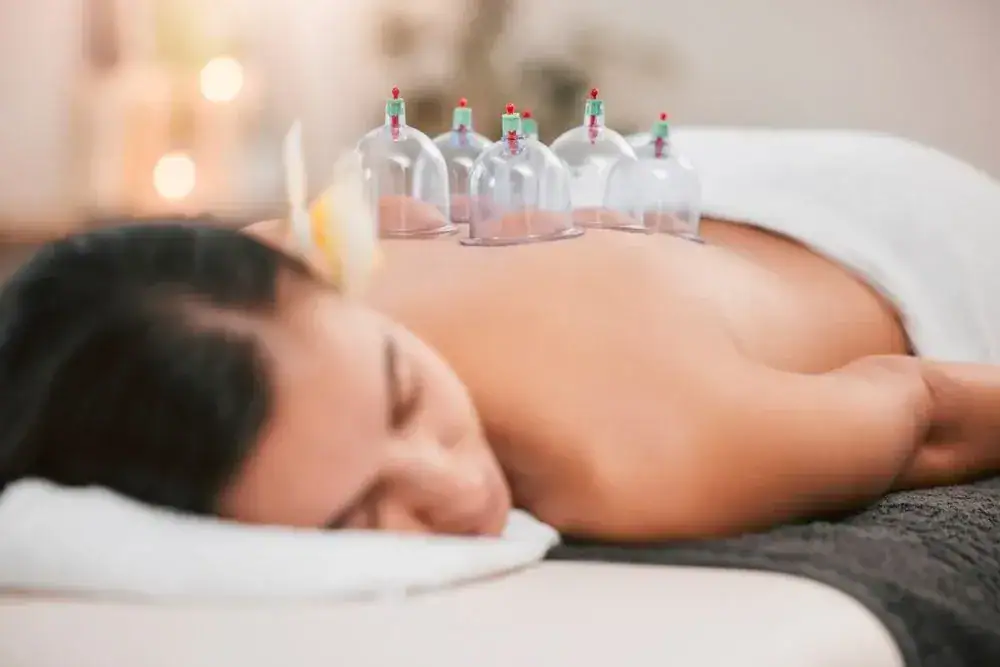

You’ve tried stretching. You’ve iced it. You’ve pushed through the tightness hoping it would go away on its own. But the knot in your lower back is still there. Your neck still locks up by mid-afternoon. And you’re tired of feeling like your body is working against you.
Cupping therapy uses controlled suction to pull blood flow to the surface, encouraging tight muscle fibers to release. That means less stiffness, better range of motion, and actual relief—not just temporary numbness. It’s particularly effective for chronic low back pain, neck tension, and knee discomfort that hasn’t responded well to other treatments.
This isn’t about masking symptoms. It’s about addressing the tension at its source so your muscles can do what they’re supposed to: move freely, recover faster, and stop stealing your focus every time you bend over or turn your head.
We’ve been serving Oyster Bay Cove and the surrounding North Shore communities with personalized physical therapy for years. We’re not a high-volume clinic that rushes you through six sessions and sends you on your way.
Our team integrates cupping therapy into comprehensive treatment plans designed around your specific pain points and recovery goals. Every profile is verified, every treatment is documented, and every patient gets the time and attention their condition actually requires.
We know the Oyster Bay Cove community values quality, transparency, and results. That’s exactly what we deliver—without the upselling, without the runaround, and without treating you like a number.
Your first visit starts with an evaluation. We don’t just ask where it hurts—we assess your range of motion, identify compensatory patterns, and figure out what’s actually causing the problem. That’s how we know whether cupping therapy makes sense for your situation or if another approach is better.
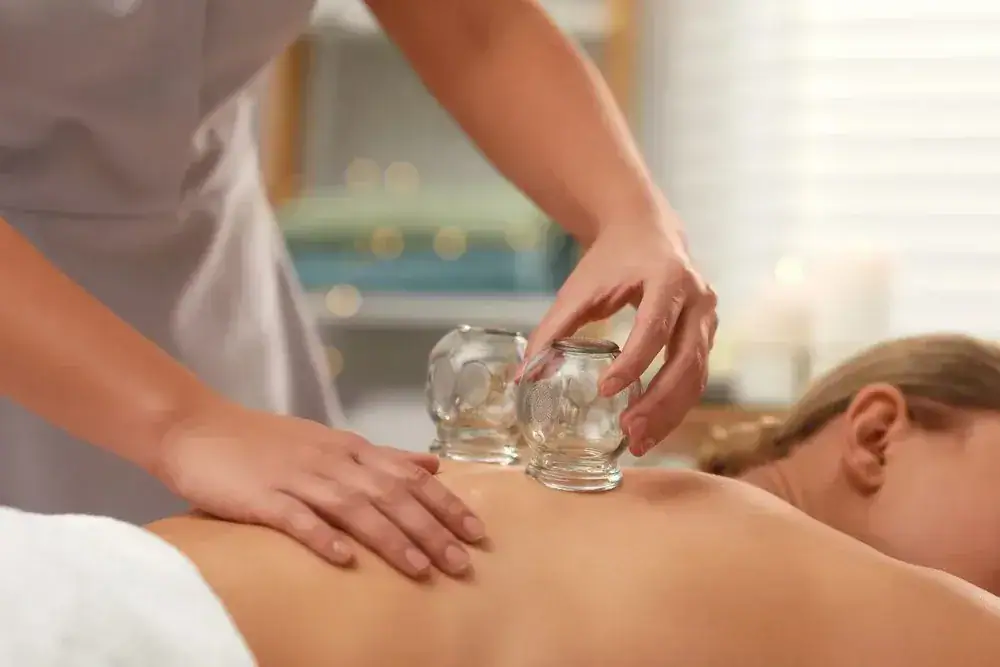
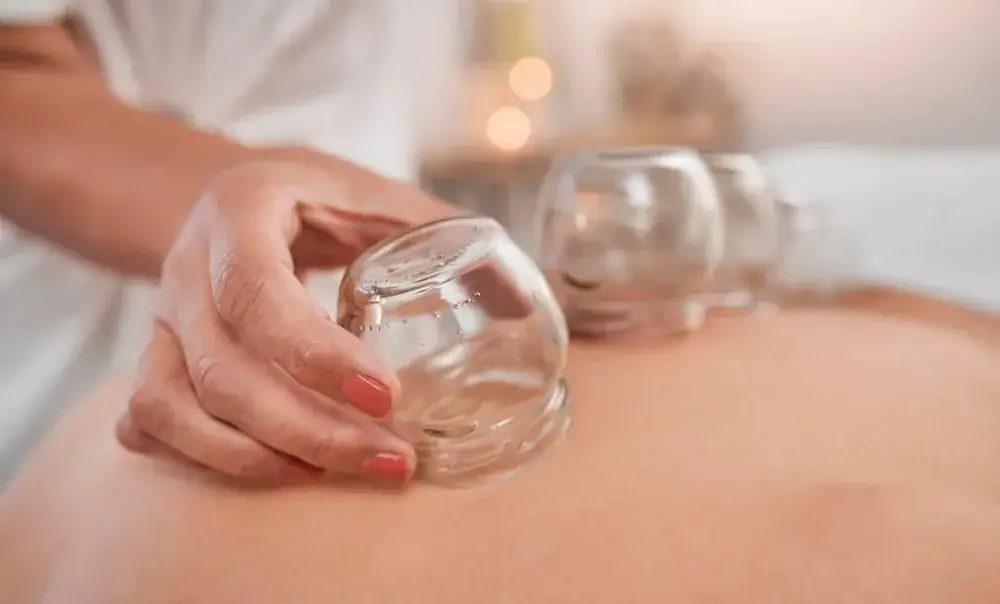
If cupping is a good fit, we’ll apply cups to the affected area using suction. This draws blood to the surface and creates space for tight tissue to release. Most people feel immediate relief in tension. Some notice improved mobility right away. Others need a few sessions before the deeper patterns start to shift.
Sessions typically last 20 to 30 minutes, and you can combine cupping with other physical therapy techniques like manual therapy or targeted exercises. We’ll also give you a clear plan for what to do between visits—because six appointments won’t fix anything if you’re not supported outside the clinic.
You might see some circular marks afterward. They’re not bruises—they’re a sign that blood flow increased to the area. They fade within a few days and don’t hurt.
Ready to get started?
Cupping therapy isn’t new. It’s been used for thousands of years across multiple cultures, and modern research backs up what practitioners have known all along: it works for pain relief, muscle relaxation, and improved circulation.
In Oyster Bay Cove, where active lifestyles and demanding schedules are the norm, we see a lot of people dealing with repetitive strain, sports-related tightness, and stress-driven tension. Cupping fits well into those scenarios because it’s low-risk, non-invasive, and doesn’t require you to stop doing what you love while you recover.
The treatment improves blood flow to areas that aren’t getting enough oxygen or nutrients. It reduces inflammation. It helps your nervous system calm down so your muscles can actually let go. And because it’s part of a larger physical therapy plan at Medcare, you’re not just getting temporary relief—you’re building long-term resilience.
We also see strong results when cupping is combined with corrective exercises and patient education. Understanding why your pain exists in the first place makes it easier to prevent it from coming back. That’s the difference between a quick fix and a real solution.
Cupping therapy has moderate-quality evidence supporting its effectiveness for chronic pain conditions like low back pain, neck pain, and knee osteoarthritis. It’s not a placebo, and it’s not just temporary relief if it’s done correctly and combined with other treatments.
The suction increases blood flow to areas that are tight or inflamed, which helps reduce pain signals and encourages tissue repair. Most people feel some immediate relief in muscle tension, but the deeper benefits build over multiple sessions—especially when paired with exercises that address the root cause.
If you’ve been dealing with pain for months or years, one session won’t fix everything. But as part of a structured physical therapy plan, cupping can significantly reduce pain levels and improve how your body moves and recovers.
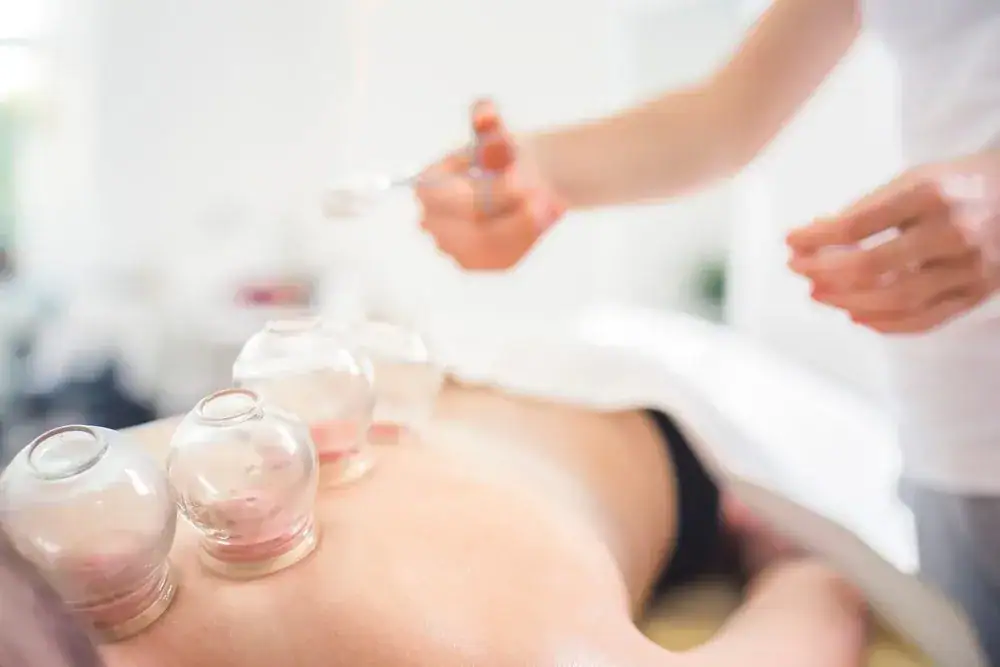
Dry cupping uses suction alone—no needles, no incisions, no blood. Cups are placed on your skin, and a vacuum is created either through heat or a mechanical pump. The suction pulls tissue upward, increasing circulation and releasing muscle tightness.
Wet cupping, by contrast, involves small incisions and controlled bleeding. It’s used in some traditional medicine practices, but it’s not what we do at Medcare. Dry cupping is safer, less invasive, and just as effective for pain relief and muscle relaxation.
There’s also something called myofascial decompression, which is essentially dry cupping used by physical therapists. The technique is the same—we’re just applying it within a clinical framework that includes assessment, treatment planning, and follow-up care. That’s what separates a spa treatment from a therapeutic intervention.
It depends on your plan and how the treatment is billed. When cupping is part of a physical therapy session—meaning it’s integrated into your overall care plan and not a standalone service—it’s often covered under your PT benefits.
We recommend calling your insurance provider before your first visit to confirm your coverage and ask about any copays or session limits. Some plans cap physical therapy at a certain number of visits per year, which is something you’ll want to know upfront.
Our team can also provide documentation and billing codes to help you navigate the process. We’ve worked with most major insurers in the Oyster Bay Cove area, so we’re familiar with what’s typically covered and what isn’t. If cost is a concern, bring it up during your evaluation—we’ll work with you to create a plan that fits your budget and your recovery goals.
It varies based on what you’re treating and how long you’ve been dealing with it. Acute muscle tightness from a recent injury might respond in two to three sessions. Chronic pain that’s been building for months or years usually takes longer—often six to eight sessions before you see lasting improvement.
The key is consistency. Spacing sessions too far apart means you lose momentum. Coming in once or twice a week for the first few weeks gives your body a chance to adapt and start holding the changes we’re making.
We’ll give you a realistic timeline during your evaluation based on your specific condition. And if cupping isn’t delivering results after a few sessions, we’ll adjust the approach. You shouldn’t have to guess whether it’s working—you should feel the difference.
Cupping is considered low-risk, especially when performed by a trained physical therapist. The most common side effect is circular marks on your skin where the cups were placed. They look like bruises but don’t hurt, and they typically fade within three to seven days.
Some people feel lightheaded during or right after treatment, especially if it’s their first session. That’s usually because of the increased blood flow and nervous system response. We monitor you throughout the session and adjust pressure or duration if needed.
Cupping isn’t appropriate for everyone. If you’re on blood thinners, have a skin condition in the treatment area, or are pregnant, we’ll discuss alternatives. That’s why the evaluation matters—we don’t just apply cups and hope for the best. We assess whether it’s safe and effective for your specific situation before moving forward.
Yes. Cupping works well alongside other physical therapy techniques like manual therapy, corrective exercises, and even modalities like heat or electrical stimulation. It’s designed to complement your overall treatment plan, not replace it.
If you’re already seeing another provider—chiropractor, massage therapist, acupuncturist—let us know during your evaluation. We’ll coordinate care to make sure everything works together and nothing conflicts. The goal is to support your recovery, not add more appointments just for the sake of it.
At Medcare, we build treatment plans around what actually helps you get better. If cupping fits into that plan, great. If something else makes more sense, we’ll tell you. You’re not locked into one approach, and you’re not pressured to do more than what your condition requires.
Other Services we provide in Oyster Bay Cove