
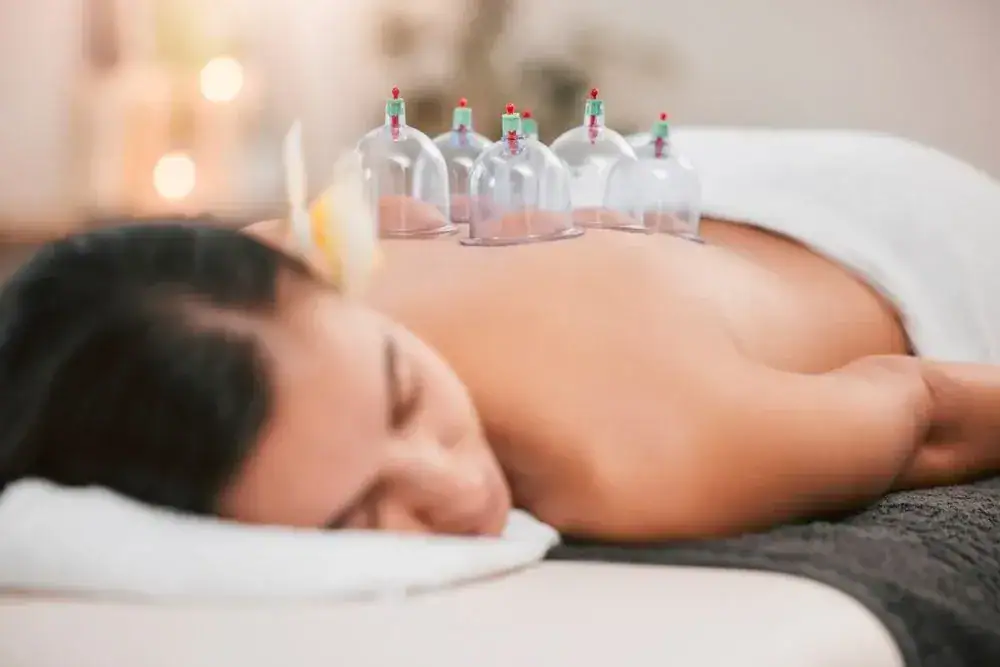

You wake up without that familiar ache in your lower back. You turn your neck to check your blind spot without wincing. You get through your day without constantly adjusting how you sit or stand to avoid triggering that spot.
That’s what cupping therapy does when it’s done right. The suction pulls blood to tight, painful areas and gives your muscles room to release tension they’ve been holding for months or years. Many people feel relief during their first session.
It works for chronic back pain, neck stiffness, knee problems, and muscle soreness that won’t quit. Not because it’s magic, but because it addresses circulation and inflammation at the source. Your body already knows how to heal itself. Cupping just removes some of the obstacles in the way.
This isn’t about managing pain forever. It’s about reducing it enough that you can move freely again, sleep through the night, and stop planning your life around what hurts.
We’ve been treating patients across Long Island for over a decade. We bring licensed physical therapists to your home in Oceanside because not everyone can make it to a clinic, and frankly, not everyone should have to.
Our therapists are trained in cupping therapy as part of a complete physical therapy approach. We accept Medicare and most commercial insurance, and you don’t need a prescription to start treatment for up to 30 days or 10 visits.
Oceanside residents deal with the same issues we see across Nassau County: aging in place, post-surgical recovery, chronic pain from years of physical work, and mobility limitations that make leaving home difficult. We meet you where you are. Literally.
First, your therapist evaluates where you’re feeling pain and checks your range of motion. They’re looking at how your muscles move, where you’re compensating, and what’s actually causing the problem versus what just hurts.
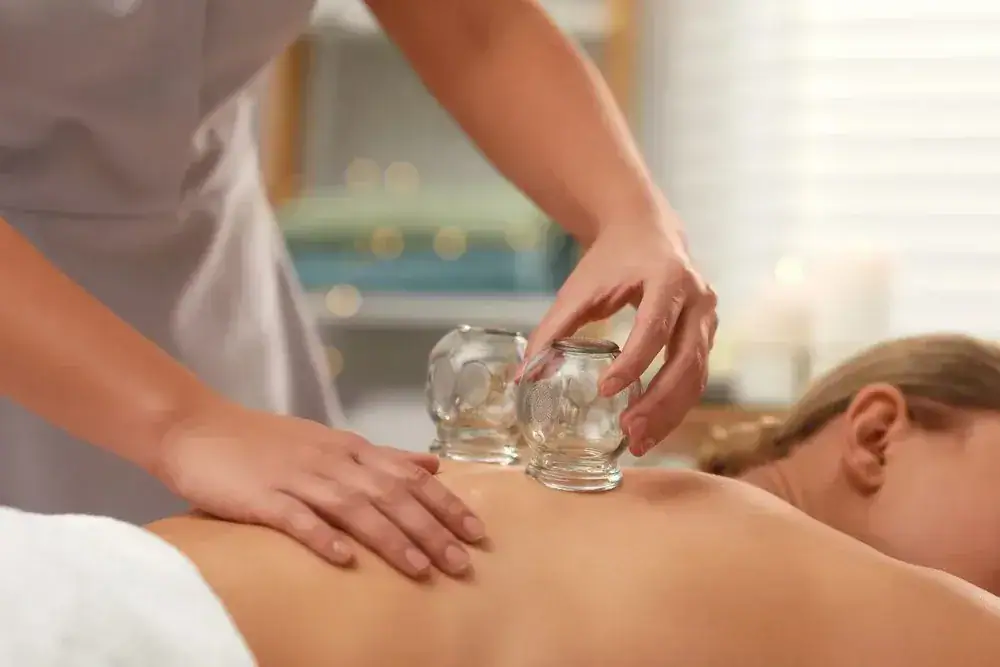
Then comes the cupping. Small cups are placed on your skin, usually on your back, neck, shoulders, or legs. The suction pulls your skin up slightly, which increases blood flow to that area and helps release the fascia and muscle tissue underneath. You’ll feel pressure, maybe some pulling, but it shouldn’t hurt. Most people say it feels like a deep tissue massage.
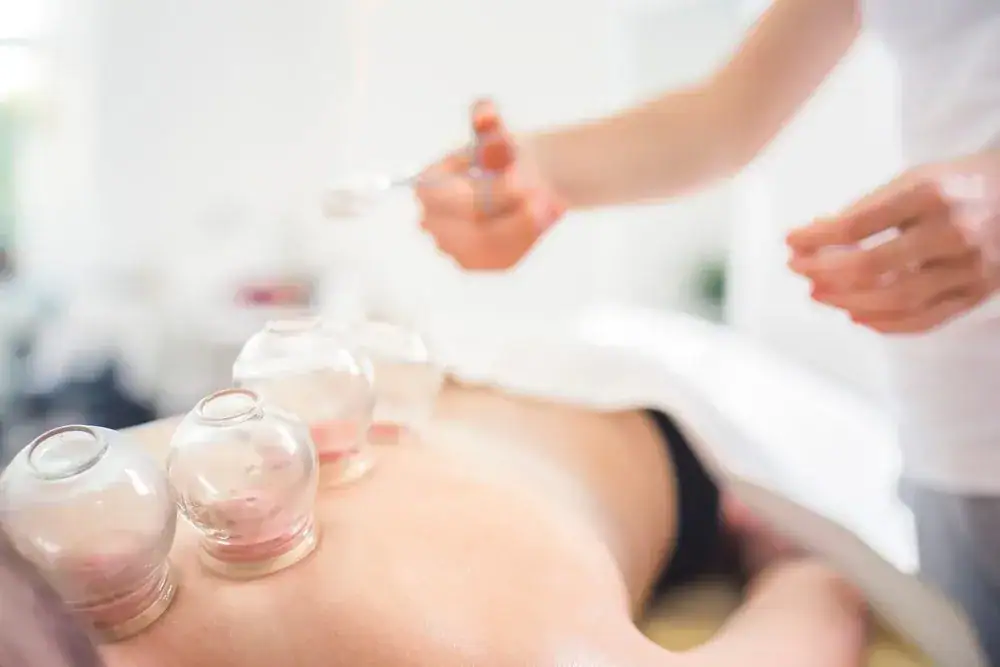
The cups stay on for 5 to 15 minutes depending on what your body needs. Some therapists use stationary cupping where the cups stay in one place. Others use gliding cupping, moving the cups across your muscles to cover more area.
Afterward, you might have circular marks where the cups were. They’re not bruises, they’re just where blood was drawn to the surface. They fade in a few days. What lasts longer is the relief.
Your therapist will likely combine cupping with stretching, strengthening exercises, or other hands-on techniques. The goal isn’t just to make you feel better for a day. It’s to improve how your body moves so the pain doesn’t keep coming back.
Ready to get started?
You get one-on-one attention for the full session. No waiting rooms, no rotating between three patients at once, no rushing through your appointment because someone else is scheduled in the same slot.
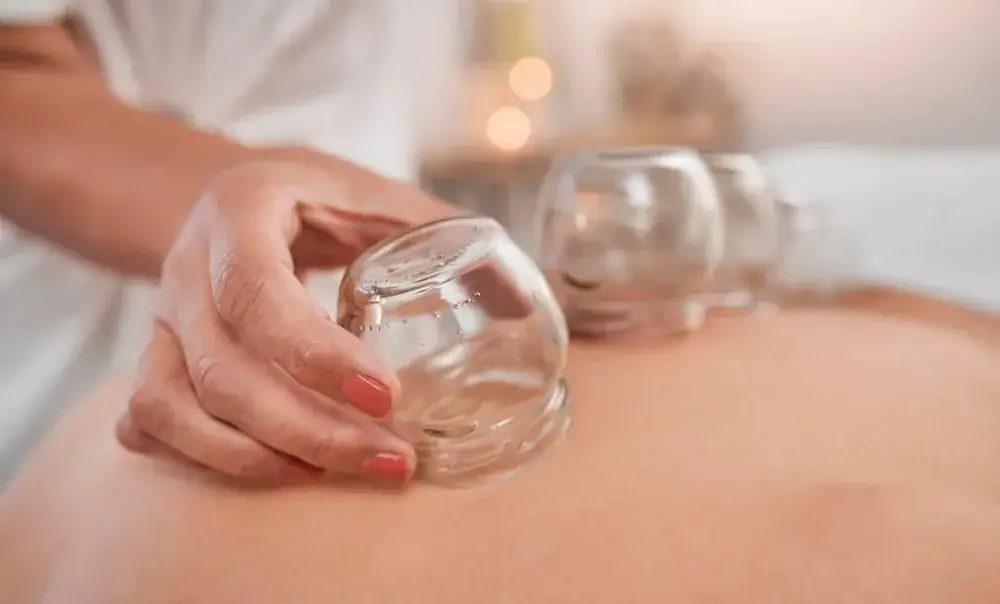
Your therapist brings everything needed for cupping therapy and any additional physical therapy treatments. That includes the cups, any manual therapy tools, and a personalized treatment plan based on your specific condition.
In Oceanside, many of our patients are older adults managing chronic conditions, people recovering from surgery who aren’t cleared to drive yet, or individuals with mobility challenges that make getting to appointments exhausting. Home therapy removes those barriers. You’re also more relaxed in your own space, which actually helps treatment work better.
We work with your insurance directly. Most sessions are covered under Medicare or commercial plans, and we handle the billing and authorization paperwork. If you’re paying out of pocket, we’ll tell you the cost upfront.
Sessions typically run 45 to 60 minutes. Frequency depends on your condition. Some people need twice a week initially, others once a week. Your therapist will recommend a schedule based on what’s realistic and what will actually help.
Cupping has clinical research backing its effectiveness for chronic pain, particularly lower back pain, neck pain, and knee osteoarthritis. Studies show it reduces pain and improves function better than medication alone in many cases.
The relief isn’t just temporary if it’s part of a broader treatment plan. Cupping increases blood flow and reduces inflammation, which helps your muscles relax and recover. But if you go right back to the same activities or positions that caused the pain without addressing movement patterns or strength, the pain will return.
That’s why we combine cupping with exercises and education. You’re not just getting a treatment done to you. You’re learning how to move differently, strengthen weak areas, and manage your condition long-term. The cupping gives you enough relief to actually do the work that leads to lasting improvement.
You’ll likely have circular marks where the cups were placed, but they’re not technically bruises. Bruises happen from impact that damages blood vessels. Cupping marks appear because suction draws blood to the surface of your skin.
The marks are usually dark red or purple and can last anywhere from a few days to a week, depending on how much suction was used and how your body responds. They don’t hurt. Most people forget they’re there until they look in a mirror.
If you have an event coming up where the marks would bother you, tell your therapist beforehand. They can adjust the suction level or place cups in areas that won’t be visible. The marks aren’t necessary for cupping to be effective. They’re just a common side effect of the increased circulation.
Cupping therapy is typically covered when it’s performed by a licensed physical therapist as part of your physical therapy treatment plan. Medicare and most commercial insurance plans cover physical therapy services, and cupping falls under that umbrella.
We accept Medicare and nearly all commercial insurances. We verify your coverage before starting treatment and handle the authorization process. You won’t be surprised by unexpected bills.
If your plan requires a copay for physical therapy, that applies to sessions that include cupping. If you’re within your annual therapy visit limit and the treatment is medically necessary, it’s usually covered. We’ll let you know exactly what your responsibility is before your first appointment.
Massage uses pressure to push into your muscles and release tension. Cupping does the opposite by using suction to pull your tissue upward, which creates space between your skin, fascia, and muscle layers.
That pulling action increases blood flow differently than massage. It also releases adhesions in your fascia, the connective tissue that wraps around your muscles. When fascia gets tight or stuck, it restricts movement and causes pain. Cupping helps free it up.
We use cupping as one tool within a complete treatment approach. You might get cupping, manual therapy, and specific exercises in the same session. The goal is to improve how your body functions, not just make you feel relaxed for an hour. Massage is great for stress relief and general tension. Cupping is more targeted for pain relief and mobility problems.
Yes. Neck and shoulder tension is one of the most common reasons people try cupping therapy, and it’s one of the areas where it works best.
The muscles in your neck and upper back get tight from poor posture, stress, repetitive movements, or compensation for pain somewhere else. Cupping increases circulation to those muscles, helps them relax, and reduces the inflammation that makes everything feel stiff and sore.
Your therapist will place cups along your upper traps, between your shoulder blades, and possibly along the sides of your neck depending on where you’re holding tension. The suction gives those muscles permission to let go. Most people feel looser and can turn their head more easily right after treatment. To keep the tension from coming back, your therapist will also work on strengthening weak muscles and correcting the patterns that caused the tightness in the first place.
Most people notice some improvement after the first or second session. How many sessions you need total depends on what you’re treating and how long you’ve had the problem.
Acute issues like a recent muscle strain might only need a few sessions. Chronic pain that’s been building for years usually requires more, often 6 to 12 sessions over several weeks. Your body needs time to change movement patterns and build strength, not just get temporary relief.
Your therapist will give you a realistic timeline after your evaluation. They’ll also reassess your progress regularly and adjust the plan if you’re not improving as expected. If cupping isn’t helping after a few sessions, they’ll try a different approach. The goal is results, not just racking up appointments.
Other Services we provide in Oceanside