
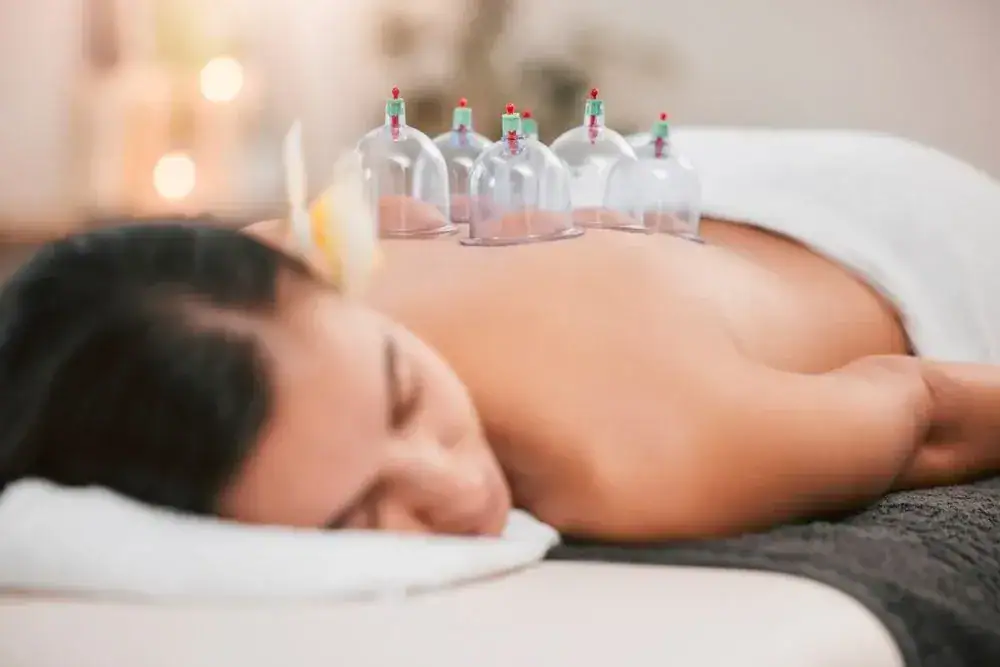

You’re dealing with pain that won’t quit. Lower back tightness that flares up every time you sit too long. Shoulder tension that makes reaching overhead feel like a chore. Neck stiffness that turns checking your blind spot into a whole production.
You’ve tried heat packs, stretching, maybe even medication that barely takes the edge off. The pain keeps coming back because the root issue—restricted blood flow, tight fascia, built-up tension—never really gets addressed.
Cupping therapy works differently. By placing suction cups on targeted areas, we increase blood flow to muscles that have been starved of circulation. That means less inflammation, faster healing, and actual relief that lasts beyond the appointment. Your muscles relax. Your range of motion improves. Daily movements stop feeling like obstacles.
This isn’t about masking symptoms. It’s about giving your body what it needs to recover properly so you can get back to doing what matters without constantly managing discomfort.
Medcare Therapy Services has been treating patients across Long Island for years, including right here in North Wantagh. We’re not a wellness spa offering cupping as a side service. We’re licensed physical therapists who integrate dry cupping into comprehensive treatment plans designed around your specific condition.
Every session is performed by trained professionals who understand musculoskeletal anatomy, pain patterns, and how to combine cupping with other physical therapy techniques for better outcomes. We don’t just place cups and set a timer—we assess your movement, identify restrictions, and treat the areas that need it most.
North Wantagh residents come to us because we’re transparent about what cupping can and can’t do, we accept most insurance plans, and we focus on measurable progress. You’re not getting a one-size-fits-all approach. You’re getting a treatment plan built around your pain, your goals, and your schedule.
Your first visit starts with an evaluation. We ask about your pain—where it is, when it started, what makes it worse. We assess your movement and identify areas of restriction or tension that might be contributing to the problem.
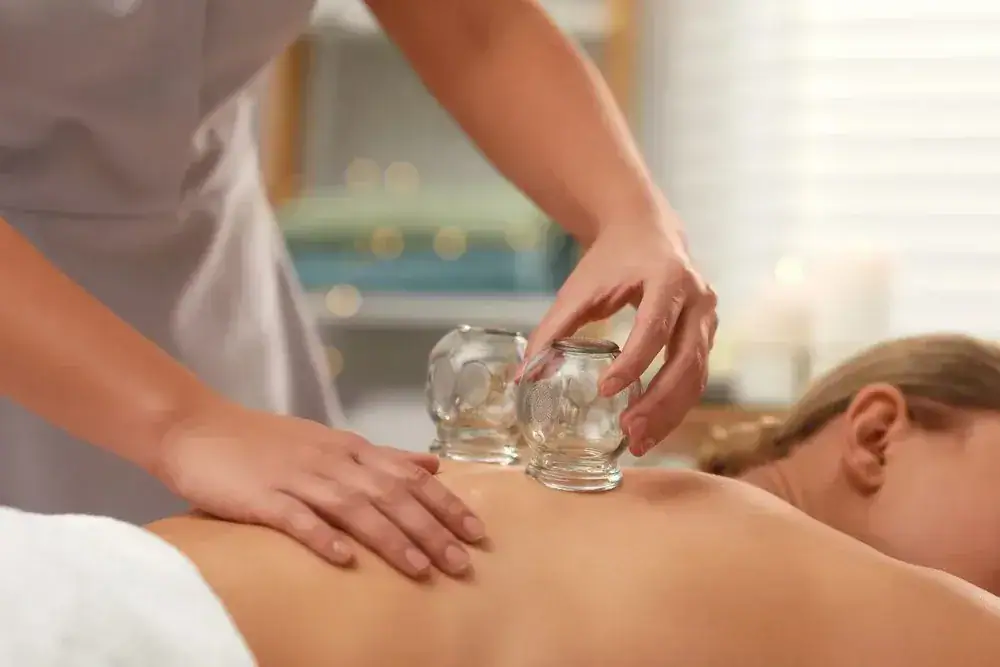
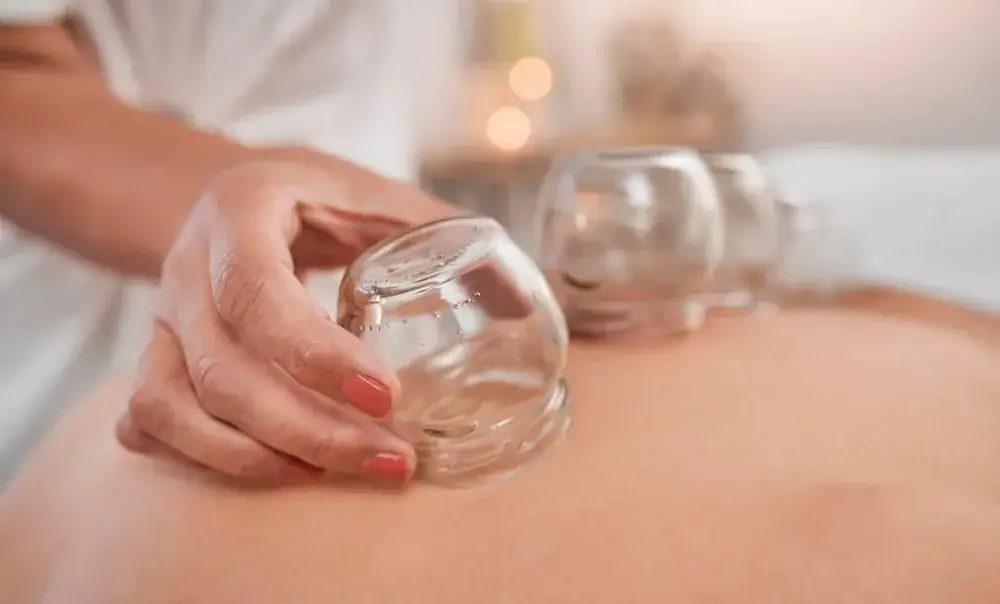
Then we explain how cupping fits into your treatment. We place silicone or glass cups on specific areas using suction to pull blood toward the surface. This increases circulation, releases tight fascia, and helps your muscles relax in ways that manual therapy alone sometimes can’t achieve.
The cups stay in place for several minutes while you rest. Some people feel immediate relief. Others notice improvement over the next day or two as inflammation decreases and mobility improves. We often combine cupping with stretching, strengthening exercises, or manual therapy depending on what your body needs.
Most patients see the best results with a series of sessions spaced over a few weeks. We track your progress, adjust the treatment as needed, and give you exercises to do at home so the benefits last. You’re not locked into endless appointments—we’re focused on getting you better and keeping you that way.
Ready to get started?
Cupping therapy works well for chronic lower back pain, neck and shoulder tension, headaches, muscle soreness from overuse, and recovery after injury. If you’re an athlete dealing with tight muscles or someone whose desk job has left you with persistent stiffness, cupping can help.
Here in North Wantagh, we see a lot of working professionals with stress-related tension and active adults managing pain from old injuries that never fully healed. The suction from cupping increases local blood flow by 20-30%, which speeds up the removal of metabolic waste and enhances tissue repair. That’s not marketing language—that’s what actually happens at a cellular level.
We also use cupping alongside other physical therapy treatments. If you’re already doing exercises to strengthen your core or improve posture, adding cupping can accelerate your progress by releasing restrictions that limit your movement. It’s not a replacement for rehab—it’s a tool that makes rehab more effective.
You’ll leave each session with clear instructions on what to do next, whether that’s specific stretches, activity modifications, or a follow-up plan. We’re not interested in keeping you dependent on appointments. We want you functional, pain-free, and confident managing your own recovery.
Yes, but it works best when combined with other treatments. Cupping increases blood flow to areas that are tight or inflamed, which helps reduce pain and improve mobility. For chronic lower back pain specifically, cupping can release fascia restrictions and muscle tension that contribute to ongoing discomfort.
That said, cupping alone won’t fix underlying issues like weak core muscles or poor movement patterns. We use it as part of a broader treatment plan that includes strengthening exercises, posture correction, and manual therapy. Most patients notice improvement within a few sessions, but lasting relief comes from addressing the root cause—not just treating symptoms.
If your back pain is related to muscle tension, overuse, or restricted movement, cupping can make a real difference. If it’s caused by a structural issue like a herniated disc, we’ll assess whether cupping is appropriate or if you need a different approach.
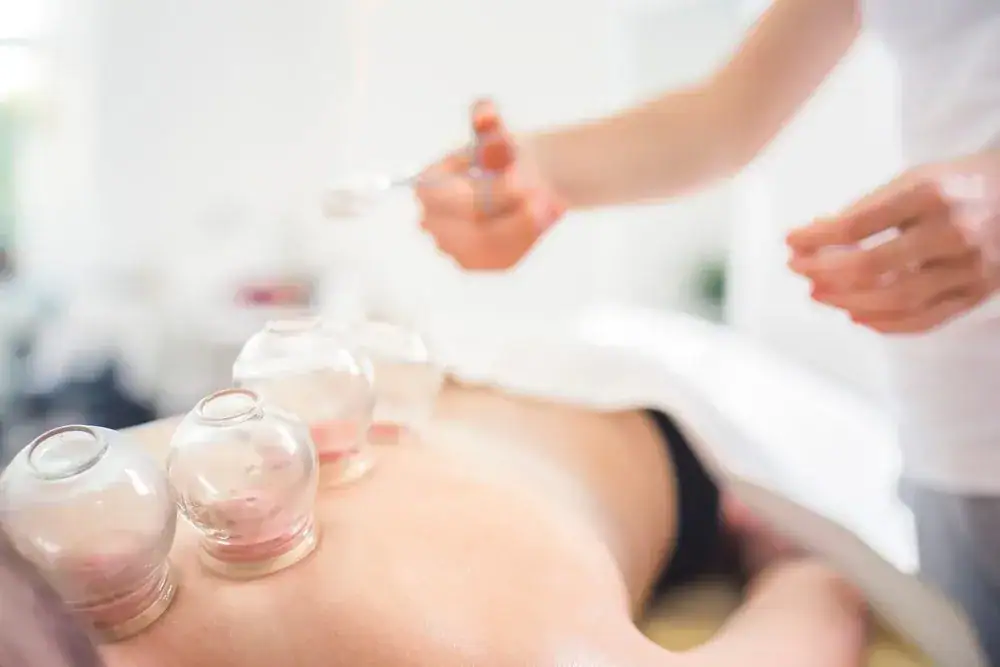
Dry cupping is safe when performed by a licensed physical therapist. The suction pulls blood toward the surface of your skin, which can leave circular marks that look like bruises. These marks aren’t painful—they’re just a sign that blood flow increased in that area. They typically fade within a few days to a week.
Some people don’t get marks at all, depending on their skin sensitivity and the amount of suction used. We adjust the intensity based on your comfort level and treatment goals. The marks aren’t harmful, but if you have an event coming up where visible marks would be an issue, let us know and we can modify the treatment.
Cupping is low-risk, but it’s not for everyone. If you have certain skin conditions, blood clotting disorders, or are pregnant, we’ll discuss whether it’s appropriate for you. We always evaluate your health history before starting treatment to make sure cupping is both safe and effective for your situation.
Most people notice some improvement after the first session, but lasting relief usually takes a series of treatments. For acute muscle tension or soreness, you might only need two to four sessions. For chronic pain that’s been building for months or years, expect closer to six to eight sessions spaced over several weeks.
We track your progress at every appointment. If you’re not improving by the third session, we reassess and adjust the treatment plan. The goal isn’t to keep you coming indefinitely—it’s to get you functional and teach you how to maintain those results on your own.
Frequency matters too. Sessions spaced three to five days apart tend to work better than weekly visits because your body has time to respond to the increased circulation without losing momentum. We’ll recommend a schedule based on your condition, but you’re never locked into a rigid plan. If life gets busy or you need to adjust, we work with your schedule.
If cupping is part of your physical therapy treatment plan, many insurance plans will cover it. We accept most major insurance providers, and cupping is typically billed under physical therapy services rather than as a separate alternative treatment.
Your out-of-pocket cost depends on your specific plan, deductible, and copay structure. Some plans cover physical therapy with a copay as low as $20 per visit, while others may require you to meet a deductible first. We recommend calling your insurance provider before your first appointment to confirm your coverage and understand any costs upfront.
If you don’t have insurance or your plan doesn’t cover physical therapy, we can discuss self-pay options. We’re upfront about pricing—no surprises, no hidden fees. Our focus is making sure you get the treatment you need without unnecessary financial stress.
Cupping at a spa is usually focused on relaxation and general wellness. Cupping at a physical therapy clinic like Medcare is a targeted treatment for specific musculoskeletal conditions. We’re not placing cups randomly—we’re assessing your movement, identifying restrictions, and treating the areas causing your pain.
Our therapists are licensed professionals trained in anatomy, biomechanics, and injury rehabilitation. We know how to integrate cupping with other techniques like manual therapy, therapeutic exercise, and neuromuscular re-education. That means you’re getting a comprehensive approach designed to fix the problem, not just make you feel good for an hour.
Spa cupping isn’t necessarily bad—it just serves a different purpose. If you’re dealing with chronic pain, limited mobility, or recovering from an injury, you need clinical expertise and a structured treatment plan. That’s what we provide. If you just want to unwind and try cupping for curiosity, a spa might be fine. But if you want measurable improvement, come see us.
Yes, especially if your headaches are related to neck and shoulder tension. Cupping can release tight muscles in the upper trapezius, levator scapulae, and suboccipital areas—all common contributors to tension headaches. By improving blood flow and reducing muscle tightness, cupping often decreases headache frequency and intensity.
For migraines, the evidence is more mixed. Some patients find relief when cupping is combined with other treatments that address posture, stress, and muscle imbalances. We can’t promise cupping will eliminate migraines, but if muscle tension is a trigger for you, it’s worth trying as part of a broader plan.
We typically place cups along the neck, shoulders, and upper back during treatment. Most patients feel a noticeable reduction in tension immediately after the session. If your headaches improve, we’ll build a maintenance plan that includes exercises and lifestyle modifications to keep them from coming back. If cupping doesn’t help after a few sessions, we’ll explore other options or refer you to a specialist if needed.
Other Services we provide in North Wantagh