
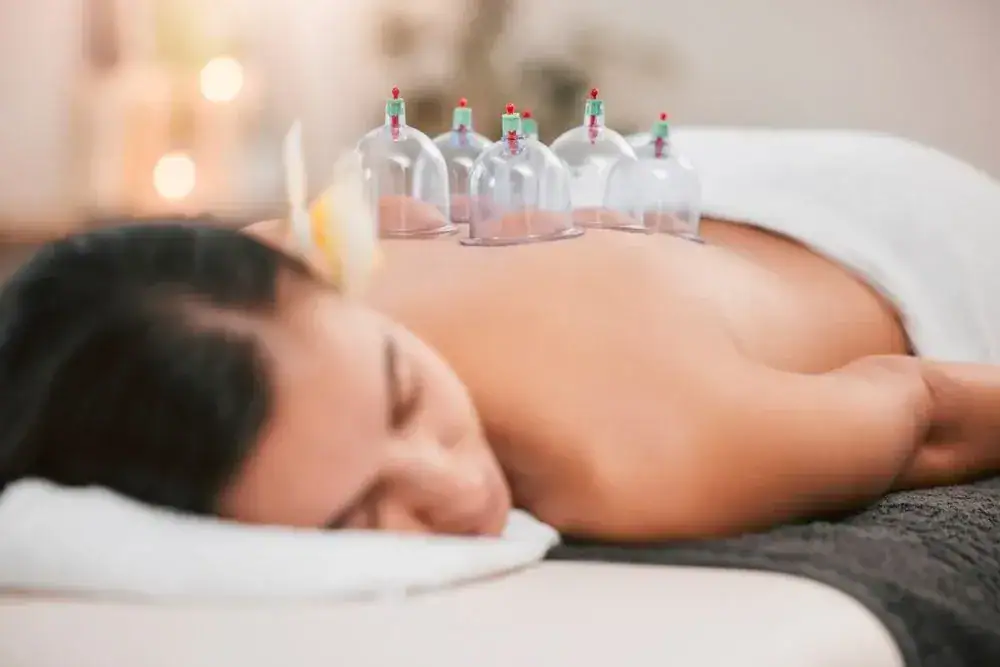

You’re not looking for temporary relief that wears off by dinner. You want to move through your day without that constant reminder in your lower back, shoulder, or neck.
Cupping therapy works by improving blood flow to tight, painful areas and releasing tension trapped deep in muscle tissue. The suction created during treatment lifts the skin and underlying tissue, which helps reduce inflammation and allows your muscles to relax in ways stretching alone can’t reach.
Most people notice less stiffness within the first few sessions. That means bending down without bracing yourself first. Reaching overhead without that sharp pull. Sleeping through the night because your body isn’t waking you up every two hours.
This isn’t about chasing a cure. It’s about getting back to the activities that matter without constantly managing discomfort or wondering when the next flare-up is coming.
Medcare Therapy Services has been treating patients across Long Island since 2010. Our physical therapists are licensed, trained in cupping therapy techniques, and Medicare certified—which means this isn’t some side service tacked onto a massage menu.
In North Patchogue and throughout Suffolk County, we see a lot of patients dealing with chronic pain tied to arthritis, old injuries that never fully healed, or muscle tightness from years of repetitive strain. Cupping fits into a broader treatment plan that might also include manual therapy, targeted exercises, or myofascial release.
You’re treated by the same therapist throughout your care. No rotating faces. No repeating your history every visit. Just consistent, professional treatment that adjusts as you improve.
Your first visit starts with an evaluation. Your therapist will ask about your pain—where it is, how long you’ve had it, what makes it worse. They’ll also assess your range of motion and muscle tightness to determine if cupping is appropriate for your condition.
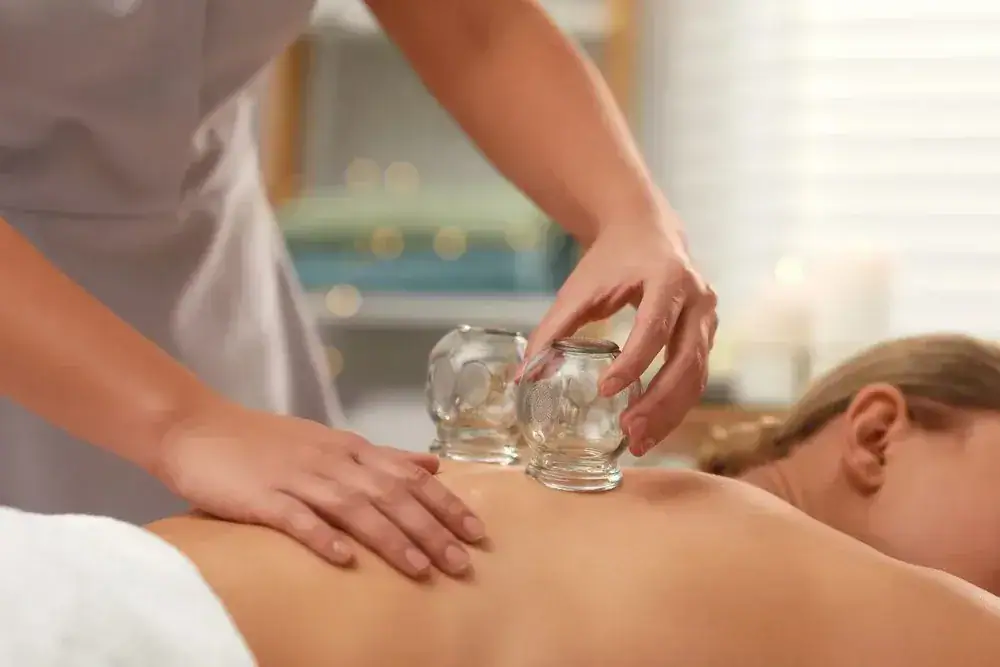
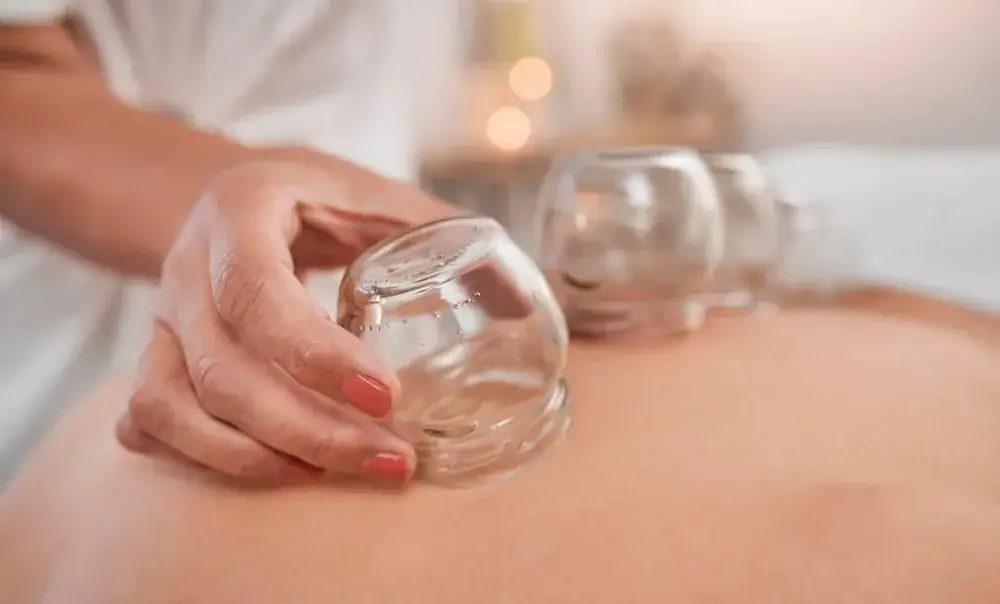
During the treatment itself, small cups are placed on your skin over the affected area. Suction is created either through heat (fire cupping) or a manual pump (dry cupping). The cups stay in place for several minutes, pulling blood to the surface and creating space in the tissue below.
You’ll feel a pulling sensation, but it shouldn’t hurt. Some people find it uncomfortable at first, others find it oddly relieving. Afterward, you’ll have circular marks that look like bruises—they’re not. They’re caused by blood pooling near the surface and typically fade within a week or two.
Most patients start with cupping once or twice a week, combined with other physical therapy techniques. Your therapist will adjust frequency and placement based on how you respond. Some people feel looser immediately. Others notice the difference a day or two later once inflammation settles.
Ready to get started?
Cupping works well for people dealing with chronic lower back pain, neck stiffness, shoulder tightness, or muscle soreness that doesn’t respond to stretching alone. It’s also used by athletes recovering from sports injuries or anyone trying to regain mobility after surgery.
In North Patchogue, we see a lot of patients over 50 dealing with arthritis-related stiffness or lingering pain from old injuries. Cupping helps by increasing circulation to areas that have become tight and restricted over time. It’s not a replacement for physical therapy exercises or manual treatment—it enhances them.
Sessions typically last around 60 minutes and include cupping as part of a broader treatment plan. You’re not just getting cups slapped on and sent home. Your therapist will combine cupping with hands-on work, movement training, and a plan you can continue at home.
Because our therapists are licensed and this is delivered within a physical therapy setting, most insurance plans cover it—including Medicare. That’s not always the case when cupping is offered at spas or wellness centers, where it’s often considered alternative medicine and billed out of pocket.
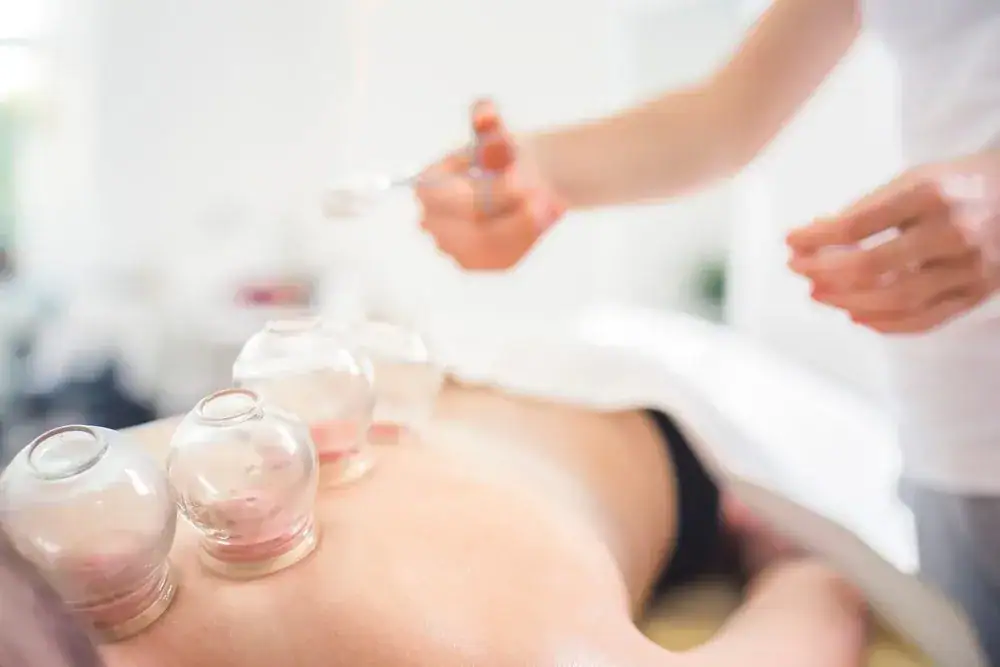
Cupping has been studied for its effects on pain, and research supports its use for reducing muscle soreness, improving blood flow, and decreasing localized pain—especially when combined with physical therapy. It’s not a miracle cure, but it’s also not just placebo.
The suction created during cupping increases circulation to the treated area, which helps reduce inflammation and flush out metabolic waste that builds up in tight muscles. It also creates a decompression effect, which can release fascial restrictions that contribute to chronic tightness.
That said, cupping works best as part of a complete treatment plan. If you’re only doing cupping and nothing else, you’re missing the bigger picture. Physical therapy combines cupping with strengthening, mobility work, and education so you’re not dependent on treatment long-term. You’re building capacity to manage pain on your own.
You’ll have circular marks where the cups were placed, but they’re not technically bruises. Bruises happen when blood vessels break due to trauma. Cupping marks are caused by blood being drawn to the surface, which is part of the therapeutic effect.
The marks are usually dark red or purple and can last anywhere from a few days to two weeks, depending on how much suction was used and how your body responds. Some people’s marks fade quickly. Others take longer. It’s not a sign that something went wrong—it’s just how cupping works.
If the appearance of the marks is a concern, let your therapist know. They can adjust the intensity or placement so marks are less visible, though that may reduce some of the therapeutic benefit. Most patients stop worrying about the marks after the first session once they realize how much better they feel.
Cupping is generally safe when performed by a licensed physical therapist who’s been trained in the technique. Risks are minimal but can include skin irritation, mild discomfort during treatment, or temporary marks that take longer to fade.
Cupping isn’t appropriate for everyone. If you’re on blood thinners, have a bleeding disorder, or have skin conditions in the treatment area, your therapist will either modify the approach or recommend a different treatment. Pregnant women and people with certain medical conditions should also discuss cupping with their doctor first.
The biggest risk comes from improper technique or using cupping when it’s not indicated. That’s why it matters who’s doing it. At Medcare, cupping is performed by licensed physical therapists as part of a clinical treatment plan—not as a standalone service. Your therapist evaluates whether it’s appropriate for your condition and monitors your response throughout care.
Most people start noticing a difference within two to four sessions, but the total number depends on what you’re treating and how long you’ve had the problem. Acute muscle tightness from a recent injury might respond quickly. Chronic pain that’s been building for years usually takes longer.
Your therapist will give you a clearer timeline after your initial evaluation. Typical treatment plans involve one to two sessions per week for several weeks, combined with other physical therapy techniques. As you improve, frequency decreases and the focus shifts to maintaining progress and preventing recurrence.
Some patients continue occasional cupping sessions even after their pain resolves, especially if they’re active or have physically demanding jobs. Others complete their treatment plan and don’t need it again. It depends on your goals and how your body responds. The point isn’t to keep you coming forever—it’s to get you functional and give you tools to stay that way.
When cupping is performed by a licensed physical therapist as part of a physical therapy treatment plan, it’s typically covered by Medicare and most commercial insurance plans. It’s billed as part of your physical therapy visit, not as a separate alternative medicine service.
Coverage can vary depending on your specific plan, deductible, and whether you’ve met your out-of-pocket maximum for the year. We’re Medicare certified, and we work with most major insurance providers in the North Patchogue area. Our staff can verify your benefits before you start treatment so there are no surprises.
If cupping is offered outside a physical therapy setting—like at a spa or wellness center—it’s often considered alternative medicine and not covered by insurance. That’s one reason why receiving cupping from a licensed PT makes a difference. You’re getting clinical treatment that’s integrated into a broader care plan, and it’s more likely to be covered by your insurance.
Dry cupping uses suction alone—no needles, no incisions, no bloodletting. Cups are placed on the skin and suction is created using either a manual pump or heat. The cups stay in place for several minutes, then are removed. It’s the most common type of cupping used in physical therapy settings.
Wet cupping involves making small incisions in the skin before applying the cups, which draws out a small amount of blood. Fire cupping uses a flame to create suction inside a glass cup before placing it on the skin. Both techniques are used in traditional medicine practices but are less common in clinical physical therapy.
At Medcare, we use dry cupping because it’s effective, low-risk, and integrates well with other physical therapy techniques like manual therapy and therapeutic exercise. There’s no bleeding, no needles, and no additional risk beyond the temporary marks left by the suction. It’s straightforward, evidence-supported, and appropriate for most patients dealing with muscle pain or tightness.
Other Services we provide in North Patchogue