
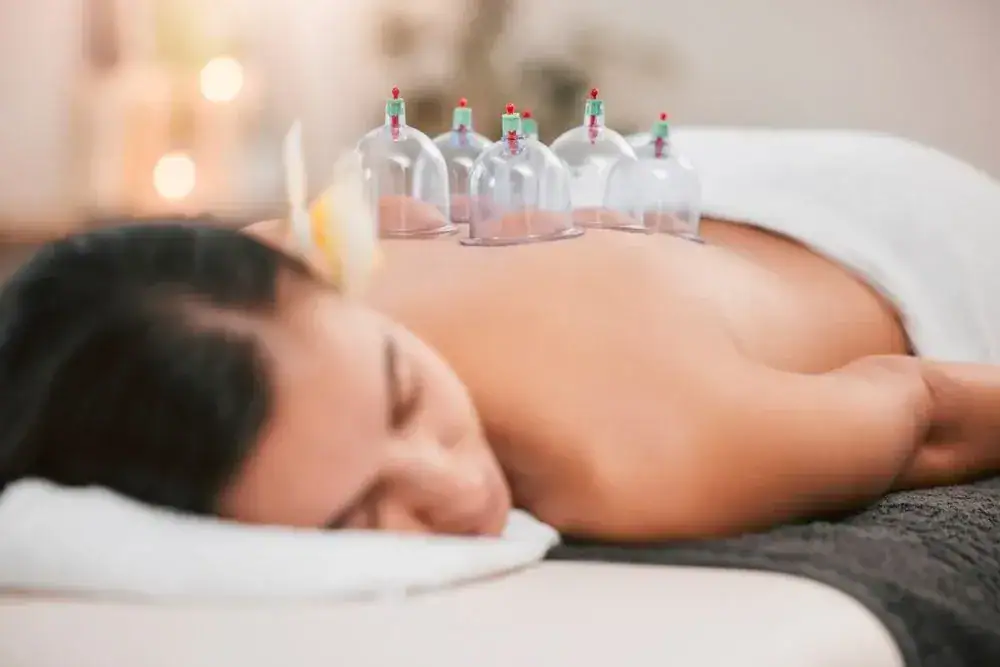

You’re dealing with back pain that makes mornings miserable. Or shoulder tightness that’s been there so long you’ve forgotten what normal feels like. Maybe it’s knee pain limiting your weekend runs, or neck tension that turns into headaches by Wednesday.
Cupping therapy works by creating suction that lifts tissue, increases blood flow, and releases the fascia that’s been locked down for months or years. That means less pain when you move, better range of motion in joints that felt stuck, and muscles that finally relax instead of staying tight all day.
Most people notice a difference after the first session. Not a cure, but real change. The kind where you can turn your head to check your blind spot without wincing, or get through your workday without that constant ache in your lower back.
This isn’t about temporary relief that fades by tomorrow. It’s about addressing what’s causing the restriction in the first place so your body can actually heal.
We’ve been treating patients across Long Island for years, with locations in Smithtown and Speonk serving the Nissequogue community. Every cupping session is performed by a licensed physical therapist trained in myofascial decompression techniques.
That matters because cupping isn’t something you want done by someone who took a weekend course. Our therapists assess your specific condition, determine if cupping is appropriate for your case, and integrate it with other manual therapy techniques when needed.
Nissequogue residents deal with the same issues we see across the North Shore: desk jobs causing chronic neck and shoulder pain, active lifestyles leading to sports injuries, and an aging population managing arthritis and mobility limitations. We’ve built our practice around treating those exact problems with evidence-based methods that actually work.
Your first visit starts with an assessment. We look at your pain patterns, test your range of motion, and figure out what’s actually causing the problem. Not every pain issue needs cupping, and we’ll tell you straight if something else makes more sense.
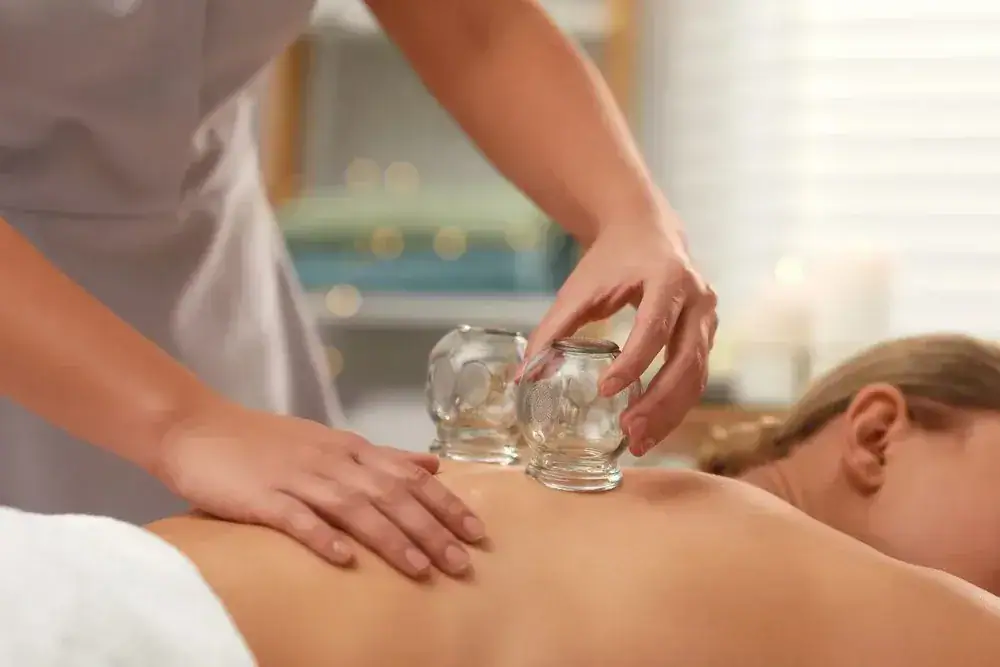
If cupping is appropriate, we use either stationary cups or dynamic cupping depending on what your tissue needs. Stationary cupping places cups on specific tight areas for several minutes to increase blood flow and release deep tension. Dynamic cupping involves moving the cups across your skin to break up adhesions and restore fascial glide between muscle layers.
The suction feels intense but shouldn’t be painful. You’ll see circular marks afterward that look like bruises but aren’t. They’re caused by blood flow to the surface and typically fade within a few days to a week.
Most treatment plans involve cupping combined with other physical therapy techniques like manual therapy, therapeutic exercise, or instrument-assisted soft tissue work. The goal is always the same: reduce your pain, improve your function, and get you back to doing what you need to do.
Ready to get started?
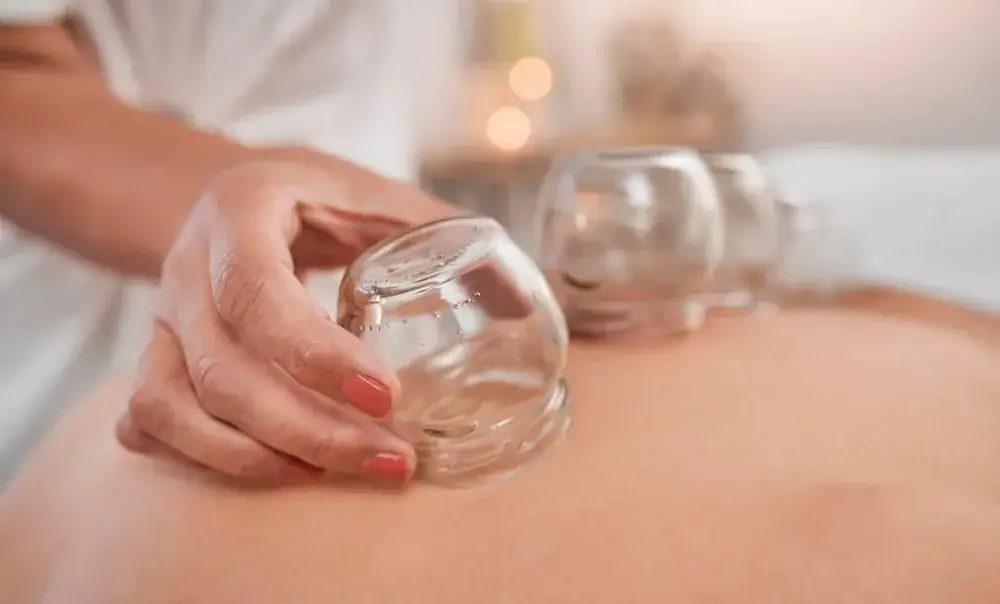
Dry cupping uses negative pressure to lift tissue away from underlying structures. This is different from massage, which compresses tissue down. That lifting action creates space, allows fresh blood flow into areas that have been restricted, and releases trigger points that traditional manual therapy sometimes can’t reach.
Myofascial decompression is the clinical term for therapeutic cupping. It targets the fascia, which is the connective tissue wrapping around your muscles. When fascia gets stuck or restricted from injury, poor posture, or repetitive stress, it limits how your muscles move and causes pain. Cupping releases those restrictions.
In Nissequogue and the surrounding North Shore communities, we commonly treat office workers with upper back and neck pain from computer work, athletes dealing with IT band syndrome or shoulder impingement, and older adults managing chronic lower back pain or knee arthritis. Cupping works particularly well for these conditions because it addresses the soft tissue restrictions that develop over time.
Each session is customized based on what your body needs that day. Some weeks you might need more aggressive treatment, other weeks we back off and focus on maintenance. You’re not locked into a one-size-fits-all protocol.
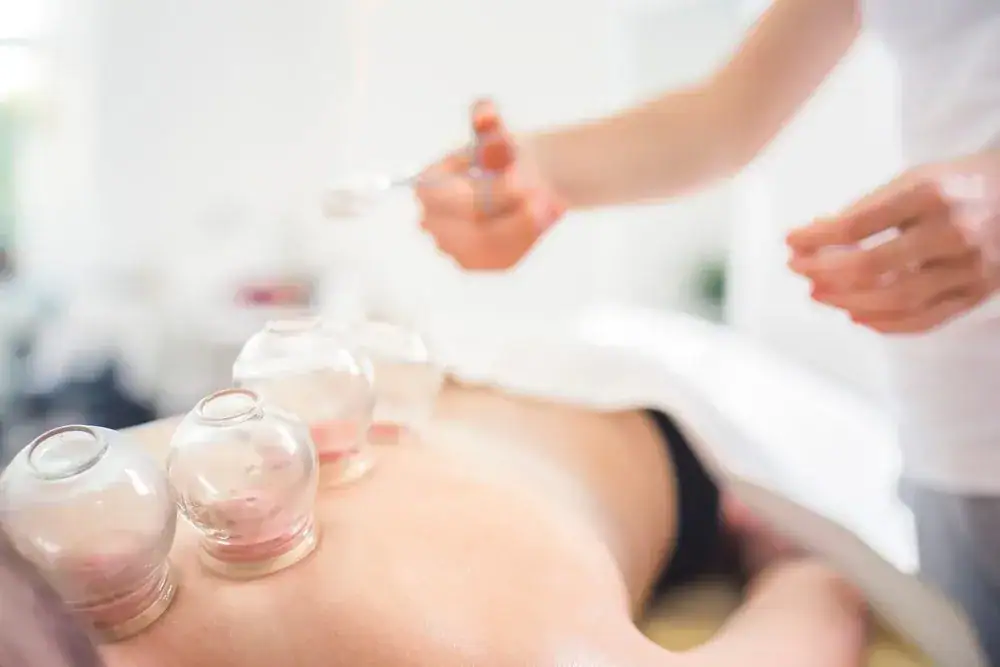
Yes, but it’s not magic. Research shows cupping can significantly reduce chronic back pain when combined with other physical therapy treatments. The mechanism is pretty straightforward: it increases local blood flow to tissue that’s been tight and restricted, reduces muscle tension, and helps break up adhesions that limit movement.
Most people with chronic back pain have multiple things going on. Tight muscles, yes, but also poor movement patterns, weak stabilizers, or joint restrictions. Cupping addresses the soft tissue component effectively, but you’ll get better long-term results when it’s part of a complete treatment plan that includes corrective exercise and movement retraining.
Expect to feel some relief after your first session, but real improvement takes consistency. We typically see significant changes within four to six sessions when patients are also doing their home exercises.
Training, assessment, and treatment goals. At a spa, cupping is usually done for general relaxation by someone with minimal medical training. At a physical therapy clinic, it’s performed by a licensed PT who’s evaluated your specific condition and is using cupping as a targeted intervention for a diagnosed problem.
We’re not just placing cups randomly on your back. We’re identifying exactly which muscles are restricted, which fascial planes aren’t gliding properly, and which trigger points are referring pain to other areas. Then we’re using cupping strategically to address those specific issues.
The other difference is integration. We combine cupping with manual therapy, joint mobilization, therapeutic exercise, and other evidence-based treatments. You’re not just getting cupping and sent home. You’re getting a comprehensive approach to fixing what’s actually wrong.
Yes, cupping typically leaves circular marks that look like bruises but aren’t actually bruises. They’re caused by blood being drawn to the surface of the skin. The marks don’t hurt and aren’t a sign of tissue damage.
How dark the marks are depends on how restricted your tissue is and how much stagnation exists in that area. Areas with more tension and poor circulation tend to mark darker. As your tissue health improves with repeated treatments, the marks usually become lighter.
Most marks fade within three to seven days. Some people barely mark at all, others mark heavily. If you have an event coming up where you’ll be wearing something that shows your back or shoulders, let us know and we can adjust cup placement or intensity. The marks are normal and expected, but we understand they’re not always convenient.
Most people feel some difference after one session, but meaningful improvement takes four to six sessions minimum. Chronic pain didn’t develop overnight and it won’t disappear overnight either.
Your treatment frequency depends on your condition severity and how your body responds. Acute issues might need twice weekly sessions initially, then taper to weekly, then every other week for maintenance. Chronic conditions often start weekly for a month, then spread out as you improve.
We’re not interested in keeping you coming forever. The goal is to get you functional, teach you how to maintain the improvements, and discharge you. Some people need occasional tune-up sessions when old patterns start creeping back, and that’s normal. But you shouldn’t need ongoing weekly treatment indefinitely unless you’re dealing with a progressive condition.
Cupping works well for both. Athletes use it for recovery, injury treatment, and performance enhancement. It’s particularly effective for muscle strains, tendinopathy, IT band syndrome, and shoulder issues common in overhead athletes.
The recovery benefit comes from increased blood flow and reduced muscle tension after hard training. Many athletes notice they’re less sore and can train harder more frequently when cupping is part of their routine. For acute injuries, cupping helps reduce inflammation and speeds healing by improving circulation to damaged tissue.
That said, cupping isn’t a replacement for proper training, adequate rest, or addressing movement dysfunction. If you keep injuring the same area, there’s usually a biomechanical issue that needs correction. We use cupping as one tool within a larger treatment plan that includes movement assessment, corrective exercise, and sport-specific rehabilitation.
Usually yes, because it’s billed as part of your physical therapy treatment, not as a separate service. When a licensed physical therapist performs cupping as a manual therapy technique during your PT session, it falls under your standard physical therapy benefits.
Coverage depends on your specific insurance plan, deductible, and whether you’ve met your out-of-pocket maximum. We verify benefits before you start treatment so you know what to expect. Most plans cover physical therapy with a copay per visit, and cupping is included in that visit cost.
If you’re paying out of pocket, cupping is included in the session rate. We don’t charge separately for it because it’s just one technique we use during your treatment time. The focus is on getting you better, not on nickel-and-diming you for every intervention we use.
Other Services we provide in Nissequogue