


You’re not looking for temporary fixes. You want to move without wincing, sleep without repositioning every hour, and get through your day without planning around pain.
Cupping therapy increases blood flow to tight, overworked muscles. That means more oxygen, faster healing, and less stiffness. Most people notice a difference after the first session—not weeks later.
It works for chronic neck pain, lower back issues, shoulder tension, and the kind of muscle tightness that makes simple movements feel like a chore. No pills. No invasive procedures. Just targeted relief that helps your body do what it’s supposed to do.
The suction loosens fascial restrictions and breaks up adhesions that limit your range of motion. You’ll feel it when you reach for something overhead or bend down to tie your shoes. Movement becomes easier because the underlying tension is actually addressed.
We’ve built our reputation across Long Island for one reason: we focus on what actually works for you, not what’s easiest for us. Our team includes licensed physical therapists who integrate cupping into comprehensive treatment plans—not as a gimmick, but as a proven modality for musculoskeletal pain.
New Cassel residents deal with the same issues we see everywhere: aging joints, repetitive strain from work, old injuries that never fully healed. The difference is how we approach it. Every treatment plan is built around your specific pain points, your schedule, and your goals.
We manage multiple locations with the same standard: verified credentials, secure patient data, and transparent communication. You’re not getting shuffled through a system. You’re working with professionals who’ve treated thousands of cases and know how to adjust when something isn’t working.
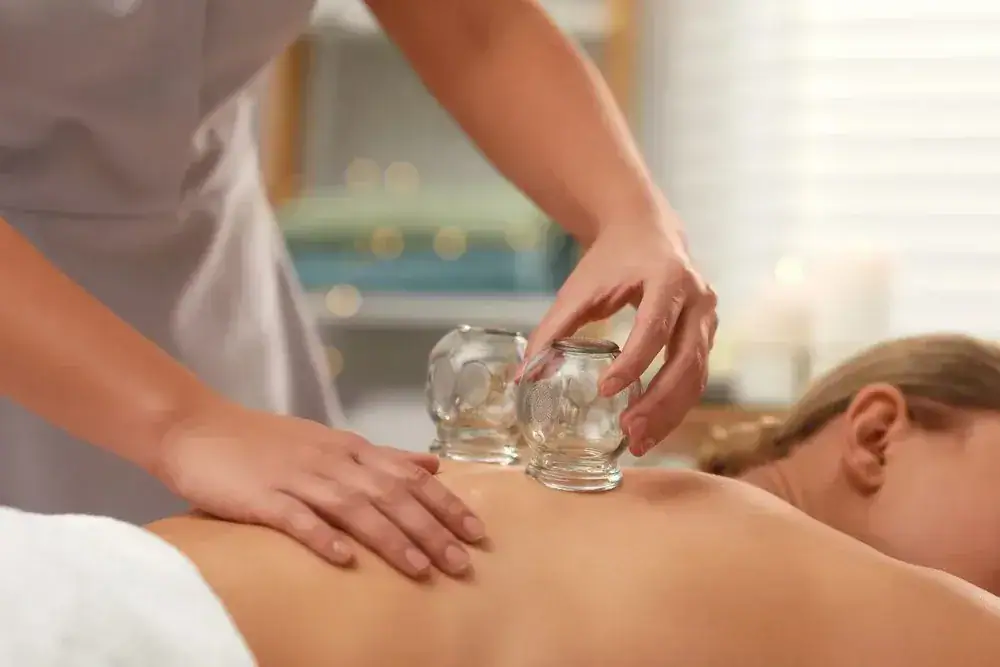
First, your therapist evaluates where you’re holding tension and what’s limiting your movement. This isn’t guesswork. We’re looking at posture, range of motion, and how your muscles respond to pressure.
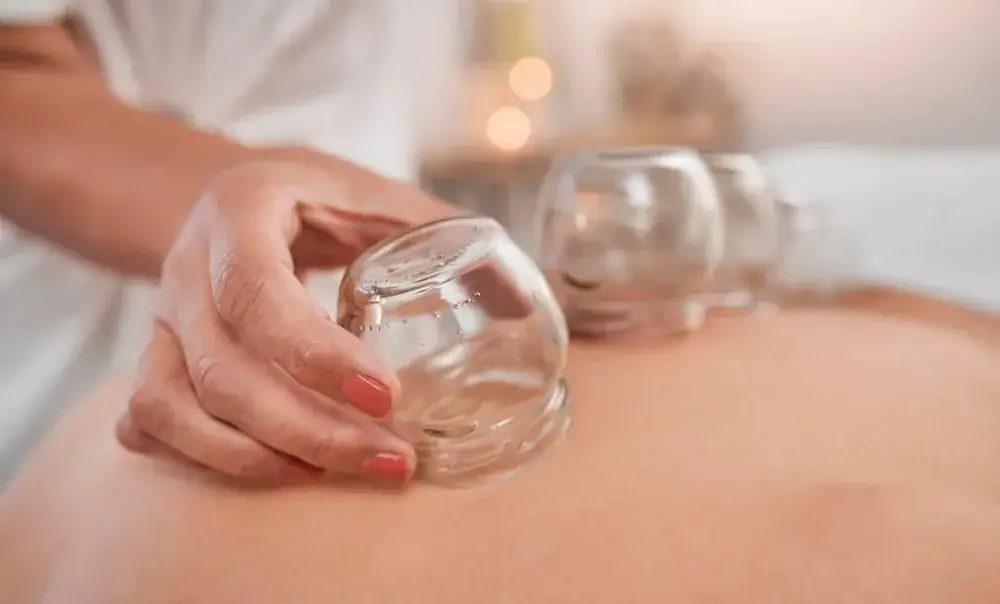
Then we place cups on specific areas—usually your back, shoulders, or neck. The suction pulls tissue upward, which increases circulation and releases tight fascia. You’ll feel the pull, but it shouldn’t hurt. Most people say it’s more relieving than uncomfortable.
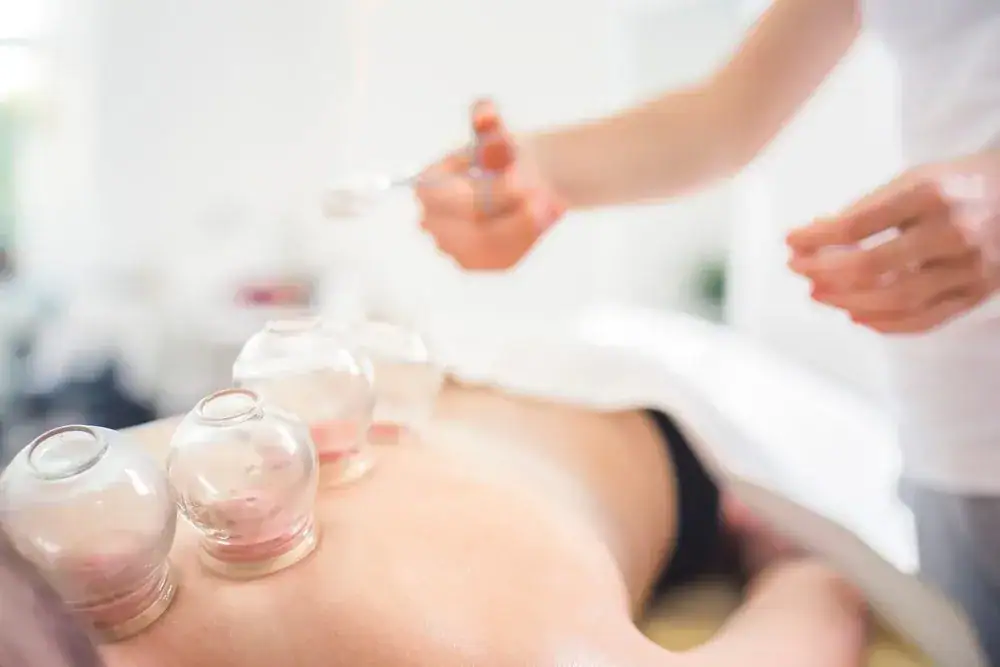
The cups stay on for 5 to 15 minutes depending on what we’re treating. During that time, blood flow ramps up to the area. That’s what creates those circular marks you might’ve seen—they’re not bruises, just evidence that stagnant blood is moving again.
After we remove the cups, many people feel immediate looseness in areas that were locked up. That’s the fascia releasing. We often combine this with stretching or manual therapy to maximize the effect and retrain your muscles to move correctly.
You might need a few sessions depending on how chronic the issue is. But the goal is always the same: less pain, better movement, and a clear path to staying that way.
Ready to get started?
Cupping isn’t a standalone miracle. It’s a tool that works best when integrated with physical therapy. At Medcare, that means you’re getting a full evaluation, a personalized plan, and follow-up that adjusts as you improve.
We use dry cupping, which is non-invasive and doesn’t involve any cutting or bleeding. It’s safer, cleaner, and just as effective for the conditions we treat most often: chronic lower back pain, neck stiffness, fibromyalgia, and sports-related muscle strain.
New Cassel has a growing population of older adults dealing with age-related pain and mobility loss. Cupping helps because it addresses circulation and tissue health—two things that decline as we age. It’s also effective for younger patients recovering from repetitive stress or athletic injuries.
You’ll also get guidance on stretches, posture corrections, and movement patterns that prevent the pain from coming back. That’s the part most people skip, and it’s why they end up back in pain six months later. We don’t just treat symptoms. We help you understand what caused them so you can avoid a repeat.
The treatment itself takes 30 to 45 minutes. You can usually return to normal activities the same day, though we recommend avoiding intense workouts for 24 hours to let your muscles recover.
Yes, and the research backs it up. A 2023 review found that cupping provides measurable relief for musculoskeletal conditions, especially chronic neck and back pain. It’s not a placebo effect—it’s increased blood flow and fascial release doing the work.
Most people feel a difference after one session, but chronic issues usually need a series of treatments. Think of it like this: if your back has been tight for months or years, one session won’t undo all of that. But it will start the process, and each session builds on the last.
The key is combining cupping with other physical therapy techniques. Stretching, strengthening, and posture work make sure the relief lasts. Cupping gets you out of pain faster. The rest keeps you out.
Dry cupping uses suction only. Wet cupping involves small incisions to draw out blood. We use dry cupping because it’s less invasive, safer, and just as effective for pain relief and muscle tension.
Dry cupping is what most physical therapists and chiropractors use. It’s cleaner, has fewer risks, and patients recover faster. You’ll see those circular marks on your skin, but they fade in a few days to a week. No cuts, no bleeding, no extended downtime.
Wet cupping has its place in certain traditional medicine practices, but for musculoskeletal pain and mobility issues, dry cupping gives you the results without the extra risk. That’s why it’s become the standard in clinical settings.
Usually between three days and two weeks, depending on how much stagnant blood was in the area. Darker marks mean more congestion, which actually indicates the treatment is working.
These aren’t bruises in the traditional sense. Bruises happen from trauma that damages blood vessels. Cupping marks come from drawing old, stagnant blood to the surface so your body can clear it out and replace it with fresh, oxygenated blood.
If you’re worried about appearance, plan accordingly. Don’t schedule cupping right before a beach day or an event where you’ll be showing your back or shoulders. But also know that the marks are a sign of healing, not damage. Most patients stop caring about them once they feel the relief.
Absolutely. Desk work creates chronic tension in your neck, shoulders, and upper back because you’re holding the same position for hours. Cupping releases that built-up tightness and restores blood flow to muscles that have been starved of oxygen.
The problem with desk posture isn’t just the position—it’s that your muscles get stuck in that position. Fascia tightens, circulation slows, and you end up with knots that don’t release on their own. Cupping breaks that cycle by mechanically pulling tissue upward and forcing fresh blood into the area.
We usually combine cupping with postural training and strengthening exercises. That way, you’re not just treating the symptoms every few weeks. You’re fixing the root cause so the tension doesn’t keep coming back. It’s a much smarter approach than just living with the pain or popping ibuprofen daily.
It depends on your plan, but many insurance policies cover cupping when it’s part of a physical therapy treatment plan. We bill it as a therapeutic modality, not a standalone alternative treatment.
The best approach is to call your insurance provider and ask if physical therapy services are covered, and whether modalities like cupping are included. Most plans that cover PT will cover cupping as part of your session. We can also provide documentation and codes to help you get reimbursed if needed.
Even if insurance doesn’t cover it fully, the cost is usually far less than ongoing pain medication, injections, or surgical interventions. And the results tend to last longer because you’re addressing the actual problem, not just masking it. It’s worth a conversation with our billing team to see what your out-of-pocket would be.
Many people feel noticeably looser and less painful immediately after their first session. That said, the full effect usually builds over 24 to 48 hours as inflammation decreases and blood flow normalizes.
Acute issues—like a pulled muscle or sudden neck stiffness—often respond faster than chronic conditions. If you’ve been dealing with pain for months or years, expect a few sessions before you see lasting change. But even chronic cases usually show some improvement after the first treatment.
The goal isn’t just short-term relief. It’s retraining your body to move correctly and breaking the pain cycle for good. Cupping jump-starts that process by giving your muscles the circulation and flexibility they need to heal. From there, we build on it with strengthening and movement work to make sure the pain doesn’t come back.
Other Services we provide in New Cassel