
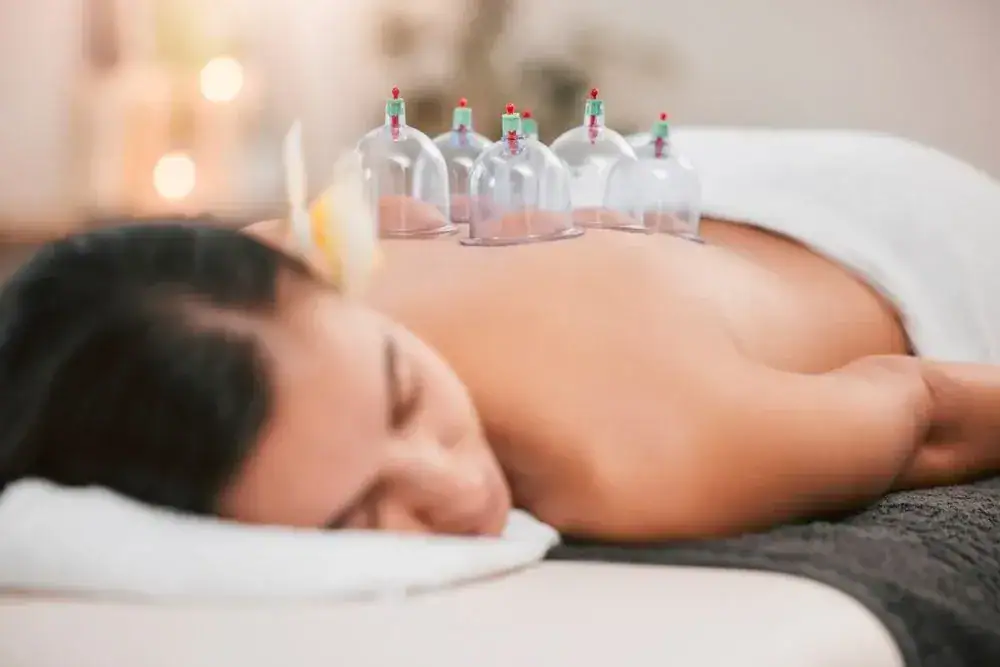

You’re not looking for temporary relief. You want to sleep through the night without waking up stiff. You want to reach for something on a high shelf without wincing. You want to get through your day without planning around when the pain will hit hardest.
Cupping therapy works by creating suction on your skin that pulls fresh blood flow into tight, painful areas. That increased circulation helps break up the knots and tension that keep you stuck in a pain cycle. It’s not masking anything—it’s giving your body what it needs to actually heal.
Most people notice a difference right away. Some feel looser after one session. Others need a few treatments before the relief sticks. But the goal is the same: getting you back to normal without adding another pill to your routine or another surgery to your medical history.
We’ve been treating patients across Long Island for over a decade at Medcare Therapy Services. We run multiple locations, including Physical Therapy Associates of Smithtown and Speonk Physical Therapy, and we’ve built our reputation on doing things the right way—licensed professionals, personalized treatment plans, and no shortcuts.
We accept Medicare and most major insurance, so you’re not stuck paying out of pocket for care that should be covered. Every treatment is delivered by our trained, licensed therapists who understand how cupping fits into a broader recovery plan. We’re not a spa offering relaxation sessions—we’re a clinical practice focused on measurable outcomes.
Nesconset patients come to us because we’re local, we’re accessible, and we don’t treat you like a number. You’ll see the same faces, work with the same team, and get care that’s built around your schedule and your specific condition.
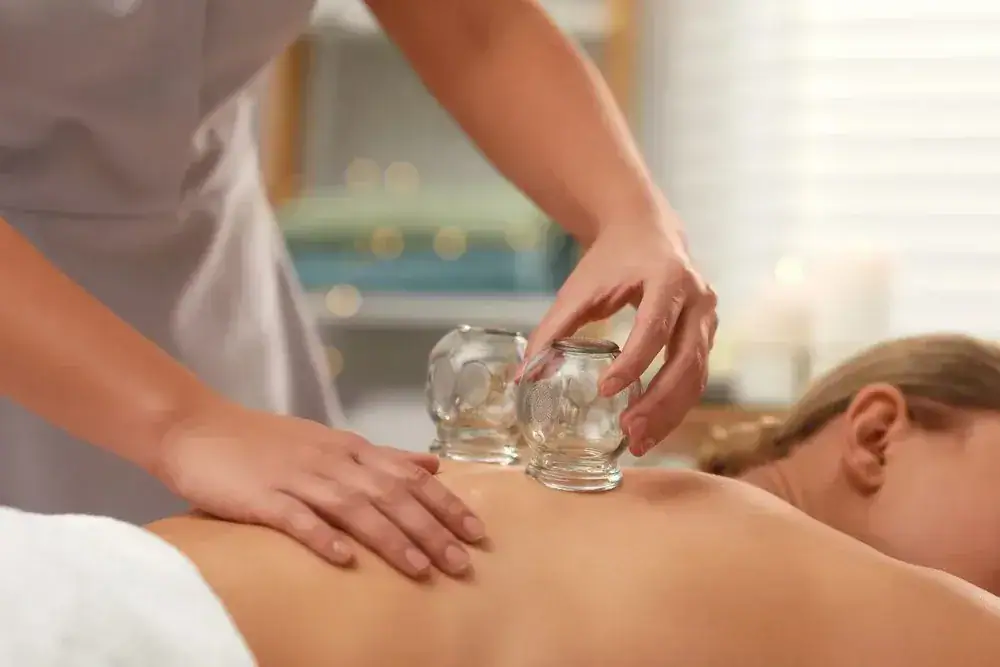
Your first visit starts with an evaluation. We need to understand what’s causing your pain, how long you’ve been dealing with it, and what you’ve already tried. That conversation shapes everything that comes next.
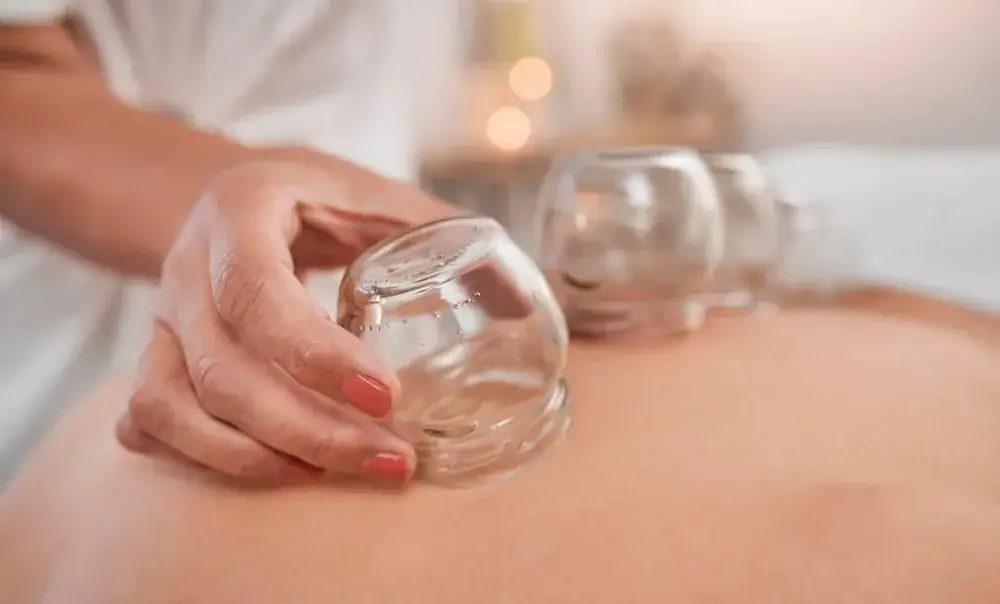
During the actual cupping session, we place small cups on your skin—usually on your back, shoulders, or neck, depending on where you’re hurting. The cups create suction, either through heat or a manual pump. You’ll feel a pulling sensation, but it shouldn’t hurt. Most people say it’s more of a deep pressure, like a strong massage.
We leave the cups on for 5 to 15 minutes. While they’re working, blood flow increases to those areas, which helps reduce inflammation and loosen up tight muscles. When we remove the cups, you might have circular marks on your skin. They’re not bruises—they’re a sign that stagnant blood moved out and fresh circulation moved in. Those marks fade within a few days.
Some people feel immediate relief. Others need a few sessions before the pain starts to drop off. We’ll track your progress and adjust the treatment plan as needed. If cupping alone isn’t enough, we’ll combine it with physical therapy or other techniques to get you where you need to be.
Ready to get started?
Every cupping session is part of a larger treatment plan. We don’t just slap cups on your back and call it a day. You’re working with a licensed physical therapist who’s trained in multiple modalities, so if cupping isn’t the full answer, we have other tools ready.
In Nesconset and across Long Island, we’re seeing more patients turn to cupping because they’re tired of managing pain with medications that come with side effects. Cupping offers a non-invasive option that works with your body’s natural healing process. It’s especially effective for chronic neck pain, lower back pain, and muscle tension from repetitive strain or old injuries.
You’ll also get education on what’s happening and why. We explain how the suction works, what the marks mean, and what you should expect between sessions. If you’re an athlete dealing with recovery issues, we’ll talk about how cupping fits into your training schedule. If you’re older and dealing with arthritis or circulation problems, we’ll adjust the intensity and frequency to match your tolerance.
This isn’t a one-size-fits-all service. It’s a clinical treatment delivered by people who understand pain management, musculoskeletal health, and how to get you functional again without unnecessary interventions.
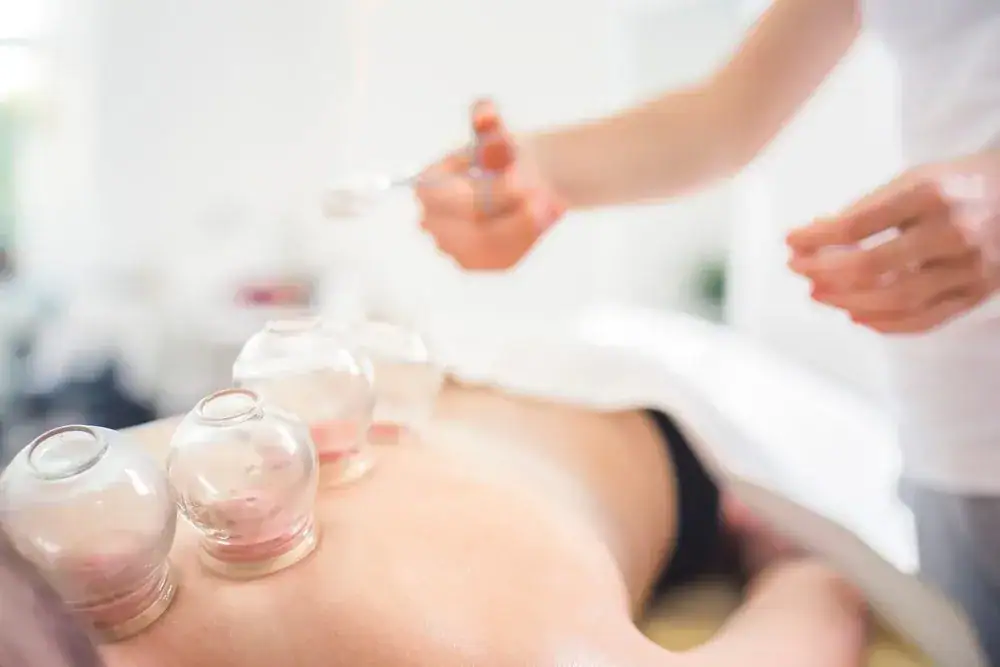
Cupping has been studied for conditions like chronic neck pain, lower back pain, and fibromyalgia, and the research shows it can be effective—especially when combined with other therapies like physical therapy or massage. It’s not a miracle cure, but it’s also not just hype.
The suction increases blood flow to areas that aren’t getting enough circulation. That helps reduce inflammation, relax tight muscles, and speed up recovery. For some people, that’s enough to break the pain cycle. For others, it’s one piece of a bigger treatment plan.
If you’ve been dealing with pain for months or years and nothing else has worked, cupping is worth trying. Just make sure you’re working with a licensed professional who knows how to assess your condition and adjust the treatment based on your response.
The circular marks left by cupping aren’t technically bruises. Bruises happen when blood vessels break. Cupping marks happen when suction pulls stagnant blood to the surface. They look similar, but they don’t hurt like bruises do.
Most marks fade within three to seven days. If your circulation is sluggish or you have a lot of built-up tension, the marks might be darker and take a bit longer to disappear. That’s normal. As your body responds to treatment and circulation improves, the marks usually get lighter with each session.
If you’re worried about how they look, plan your first session when you don’t have a big event coming up. Once you see how your body reacts, you’ll have a better sense of timing for future appointments.
It depends on what you’re treating and how long you’ve been dealing with it. Acute pain—like a pulled muscle or recent injury—might respond in one or two sessions. Chronic pain that’s been building for months or years usually takes longer.
Most people start with one session per week for three to four weeks. If you’re seeing improvement, we’ll space them out. If progress is slow, we might increase frequency or add other treatments to support the cupping.
The goal isn’t to keep you coming back forever. It’s to get you functional, reduce your pain, and give you tools to maintain the progress. Some people only need a handful of sessions. Others use cupping as part of ongoing maintenance, especially if they’re managing a chronic condition or training hard as an athlete.
Cupping is often covered when it’s part of a physical therapy treatment plan, and we accept Medicare and most major insurance plans. Coverage depends on your specific plan and whether cupping is deemed medically necessary for your condition.
We’ll verify your benefits before you start treatment so there are no surprises. If cupping is covered, you’ll typically pay whatever your normal copay or coinsurance is for physical therapy services. If it’s not covered, we’ll let you know upfront what the cost will be.
Don’t assume it’s not covered just because it’s considered alternative therapy. Many insurance companies recognize cupping as a legitimate treatment for musculoskeletal pain, especially when it’s delivered by a licensed therapist in a clinical setting. We handle the billing and work directly with your insurance to make the process as simple as possible.
Cupping is popular with athletes because it speeds up muscle recovery and reduces soreness after intense training. It works by increasing blood flow to fatigued or injured muscles, which helps clear out metabolic waste and bring in fresh oxygen and nutrients.
If you’ve strained a muscle, pulled something during a workout, or you’re dealing with repetitive stress from your sport, cupping can help. It’s not a replacement for rest or proper rehab, but it’s a solid tool for getting back to training faster.
We see a lot of runners, weightlifters, and weekend warriors who use cupping as part of their recovery routine. Some come in after a tough workout to prevent soreness. Others use it to treat specific problem areas that keep flaring up. The key is timing it right and combining it with the rest of your recovery plan—stretching, strengthening, and smart training adjustments.
Dry cupping is the most common type. It uses suction alone—no needles, no blood, no fire left on your skin. The cups create a vacuum that pulls your skin up, increases circulation, and loosens tight tissue. It’s straightforward, non-invasive, and effective for most pain conditions.
Wet cupping involves making small cuts in the skin and using suction to draw out a small amount of blood. It’s used in some traditional medicine practices, but it’s not what we do here. Dry cupping gives you the same circulation and pain relief benefits without any cutting or bleeding.
There’s also fire cupping, where a flame is briefly placed inside the cup to create suction, and massage cupping, where the cups are moved around on oiled skin. We use whichever method makes the most sense for your condition. Most patients respond well to standard dry cupping, but we’ll adjust the technique based on what your body needs and how you respond.
Other Services we provide in Nesconset