
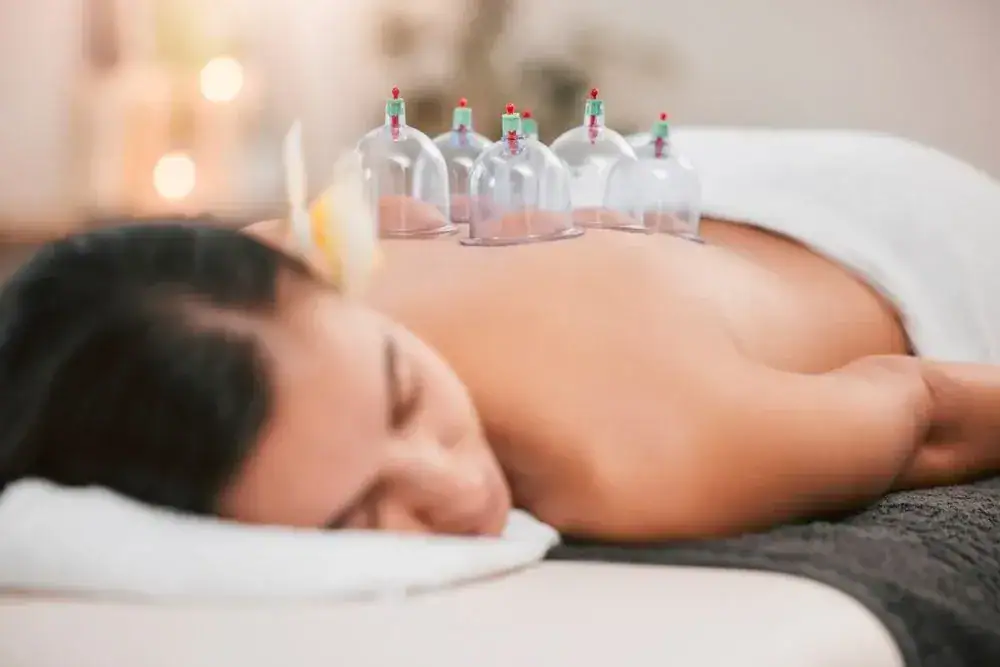

You sleep through the night. Your shoulders drop away from your ears. That nagging tightness in your back stops dictating what you can and can’t do during your day.
Cupping therapy works by increasing blood flow to areas where your muscles have been holding tension for weeks, months, or longer. The suction pulls stagnant blood and inflammation to the surface, which tells your body to send fresh oxygen and nutrients to that exact spot. Your muscles start to release. Movement gets easier.
This isn’t about masking symptoms. It’s about addressing what’s causing the pain in the first place—whether that’s chronic neck tension from desk work, lower back pain that’s kept you out of the gym, or muscle stiffness that makes simple tasks feel exhausting. You’re not just getting temporary relief. You’re giving your body what it needs to actually heal.
We’ve been treating patients across Long Island with a straightforward approach: assess what’s wrong, explain what will help, and deliver treatment that actually works. Our team includes licensed physical therapists who integrate cupping into comprehensive care plans—not as a trendy add-on, but as a clinically supported method for pain relief and muscle recovery.
We know Muttontown residents deal with the same stress, commute strain, and physical demands that affect people throughout Nassau County. That’s why our treatment plans are built around your schedule, your pain points, and your goals. We verify every detail of your care, keep your information secure, and make sure you understand what’s happening at every step.
You’re not walking into a high-pressure sales pitch. You’re sitting down with someone who knows how to help.
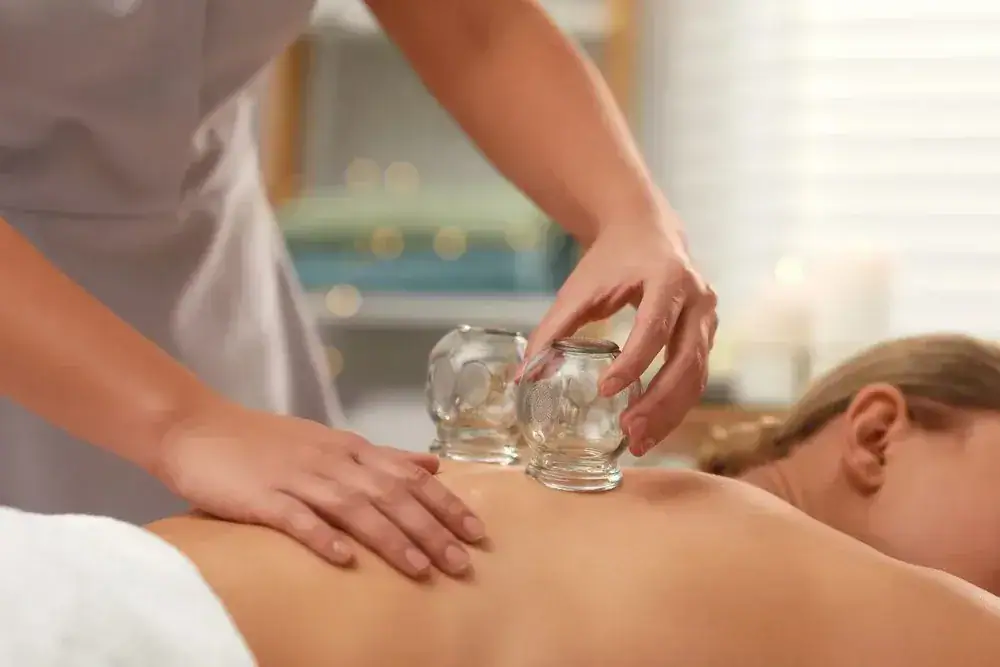
First, your therapist evaluates where you’re holding tension and what’s causing your pain. They’re looking at your range of motion, asking about your daily routine, and identifying the areas that need attention. This isn’t a cookie-cutter approach.
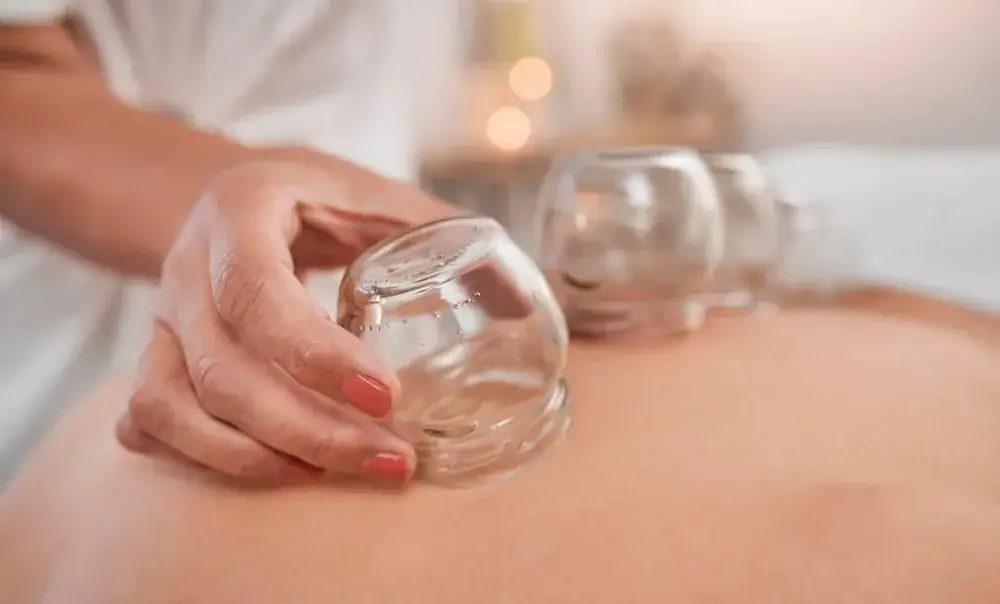
Then comes the cupping itself. Your therapist places specialized cups on targeted areas of your skin—usually your back, shoulders, or neck. The cups create suction that draws blood to the surface and releases the fascia and muscle tissue underneath. Some practitioners use fire cupping, a traditional method that’s been used for thousands of years. Others use modern suction pumps. Both work.
You’ll feel the pull, but it shouldn’t hurt. Most people describe it as a deep pressure that actually feels relieving. The cups stay in place for several minutes while your muscles start to let go.
Afterward, you’ll see circular marks where the cups were placed. These aren’t bruises—they’re a sign that stagnant blood and toxins are being cleared out. The color and intensity of the marks actually tell your therapist how much tension was in that area. They fade within a few days to a week.
Your therapist will give you clear aftercare instructions: hydrate, avoid intense workouts for a day, and pay attention to how your body feels as it continues to release.
Ready to get started?
Cupping is clinically supported for chronic neck pain, low back pain, and fibromyalgia. It’s also used to treat sports injuries, reduce trigger points, improve circulation, and speed up recovery time after physical strain. If you’ve been dealing with muscle tension that won’t quit, this is one of the most effective non-invasive options available.
In Muttontown and across Long Island, we see a lot of patients whose pain comes from stress, repetitive motion, or sitting in the same position for hours every day. Cupping helps break that cycle. It reduces inflammation, calms your nervous system, and gives your muscles permission to finally relax.
Beyond pain relief, cupping supports lymphatic drainage, which can reduce puffiness and improve skin health. Some patients use it for respiratory issues or digestive problems. It’s also a powerful tool for athletes looking to recover faster between training sessions.
Physical therapy costs in New York can add up fast, but studies show that physical treatment care can lower overall medical costs by up to 72%. You’re not just investing in short-term relief—you’re reducing your long-term dependence on medications, injections, and more invasive interventions down the line.
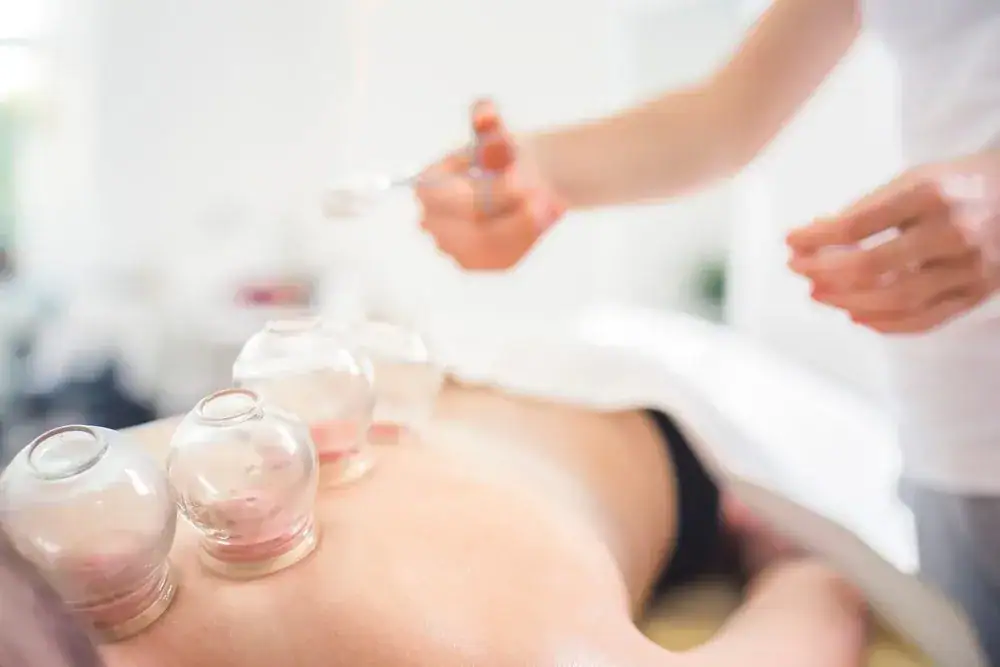
Yes. Evidence supports cupping as an effective treatment for chronic low back pain, and we integrate it into our physical therapy practice as part of comprehensive pain management.
Here’s why it works: back pain often comes from muscles that have been tight for so long they’ve restricted blood flow to the area. Cupping increases circulation to those exact spots, which helps reduce inflammation and allows the muscle tissue to release. For a lot of people, that means less pain and better mobility after just a few sessions.
Cupping isn’t a miracle cure, but it’s a proven method that addresses the root cause of muscle-related back pain rather than just covering up the symptoms. If your back pain is related to muscle tension, poor posture, or repetitive strain, cupping can make a real difference.
Yes, cupping leaves circular marks where the cups were placed. They look like bruises, but they’re not—they’re a result of bringing stagnant blood and toxins to the surface so your body can clear them out.
The color of the marks actually tells us something useful. Darker marks mean there was more stagnation in that area. Lighter marks mean less. It’s a diagnostic tool as much as it is a side effect.
Most marks fade within three to seven days, depending on how much tension was in the area and how your body responds. They don’t hurt, and they’re not a sign of damage. If the marks bother you or you have an event coming up, just let your therapist know ahead of time—we can adjust the treatment or work on areas that won’t be visible.
Massage works by applying pressure to push into your muscles. Cupping works by creating suction to pull your muscles and fascia upward. Both increase blood flow, but they do it in opposite ways.
Cupping tends to go deeper. The suction reaches layers of tissue that are harder to access with hands alone, which is why it’s especially effective for chronic pain, trigger points, and areas where you’ve been holding tension for a long time.
That said, cupping and massage aren’t competitors—they’re often used together. We combine cupping with manual therapy, stretching, and other techniques to give you the most complete treatment possible. If you’ve tried massage and it helped but didn’t fully solve the problem, cupping might be the missing piece.
Cupping is safe when performed by a licensed, trained practitioner. It’s been used for thousands of years and is now supported by clinical research as an effective treatment for pain and inflammation.
The most common side effect is the circular marks left behind, which fade on their own. Some people feel a little lightheaded right after treatment, especially if it’s their first session—that’s normal and usually passes quickly. Drinking water before and after your session helps.
Cupping isn’t recommended if you’re pregnant, have a bleeding disorder, or are on blood thinners. If you have skin conditions or open wounds in the treatment area, we’ll work around them or suggest waiting until you’ve healed. We’ll go over your medical history before starting to make sure cupping is a good fit for you.
It depends on what you’re treating and how long you’ve been dealing with it. Some people feel noticeably better after one session. Others need a series of treatments to see lasting results.
For acute pain or muscle tension, you might only need two to four sessions. For chronic conditions like ongoing back pain or fibromyalgia, you’ll likely benefit from regular treatments over several weeks. We’ll assess your progress and adjust the plan as you go.
The good news is that cupping has cumulative benefits. Each session builds on the last, so even if you don’t feel 100% after the first treatment, you’re still making progress. Most patients start to notice real improvement—better sleep, less stiffness, more range of motion—within the first few sessions.
Absolutely. In fact, that’s how cupping works best. We integrate cupping into personalized treatment plans that may also include manual therapy, therapeutic exercises, stretching, and other evidence-based techniques.
Cupping helps prepare your muscles for other treatments by increasing blood flow and reducing tension. That means you get more out of the hands-on work we do afterward. It also speeds up recovery, so you’re not spending months in treatment when a few focused sessions could get you back to normal.
We’ll build a plan based on your specific condition, your goals, and how your body responds. You’re not locked into one approach—you’re getting a comprehensive strategy designed to actually fix the problem.
Other Services we provide in Muttontown