


You stop planning your day around what hurts. That’s what happens when cupping therapy starts working—the stiffness in your neck loosens, your lower back stops locking up mid-afternoon, and you can move through your routine without that constant reminder that something’s wrong.
Cupping increases blood flow to the areas that need it most. It pulls tension out of tight muscles and helps break up the fascial restrictions that keep you stuck in the same pain loop. You’re not masking symptoms—you’re addressing what’s actually causing the discomfort.
Most people notice a difference after the first session. Some feel immediate relief. Others notice they’re sleeping better or moving easier within a few days. Either way, the goal is the same: get you back to doing what you need to do without pain dictating the terms.
We’ve been treating patients across Long Island for over a decade. We’re not new to this area, and we’re not experimenting with trends. Cupping therapy is part of how we help people recover faster and stay out of pain longer.
Our physical therapists are licensed, trained, and experienced in dry cupping techniques. We don’t hand you off to an assistant or rush you through a template. You get a real evaluation, a clear plan, and treatment that’s built around what your body actually needs.
Mount Sinai patients come to us because they want more than just a few exercises and a heating pad. They want someone who understands how pain affects daily life and knows how to treat it effectively.
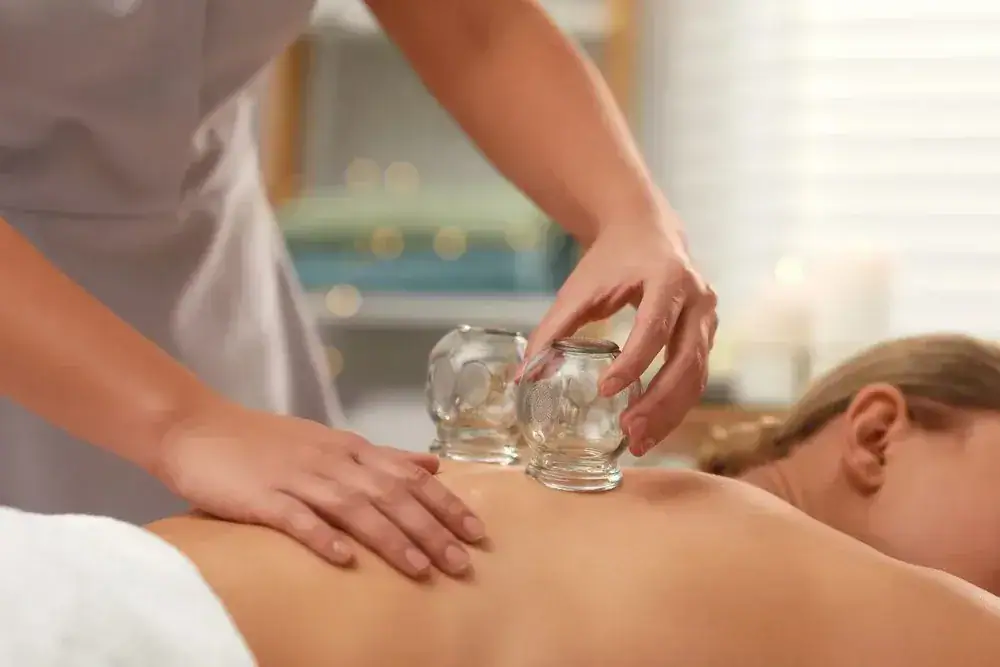
Your first visit starts with an evaluation. We need to know where the pain is, how long it’s been there, and what makes it better or worse. That tells us whether cupping is the right fit and how to use it alongside other treatments.
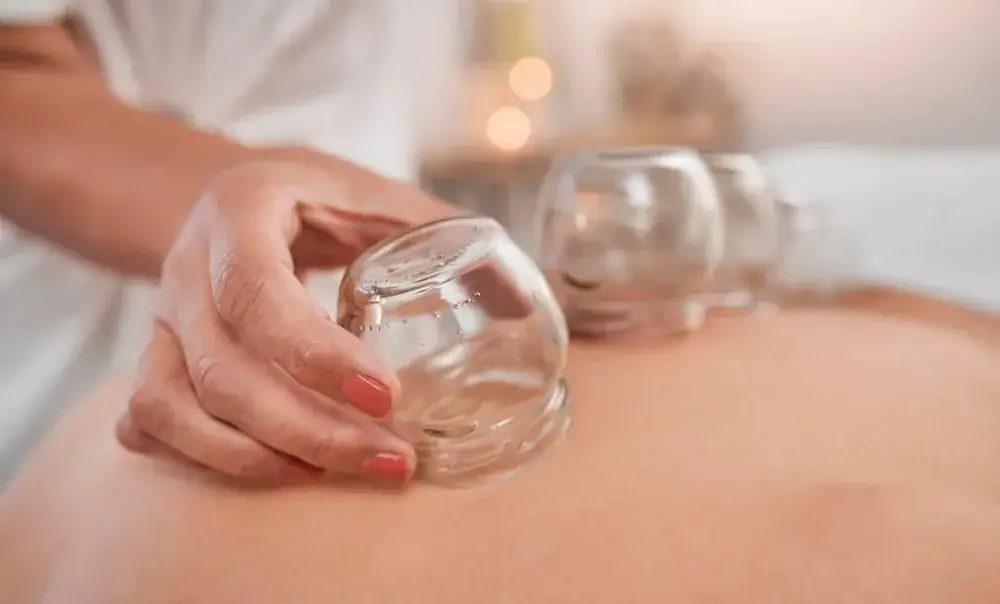
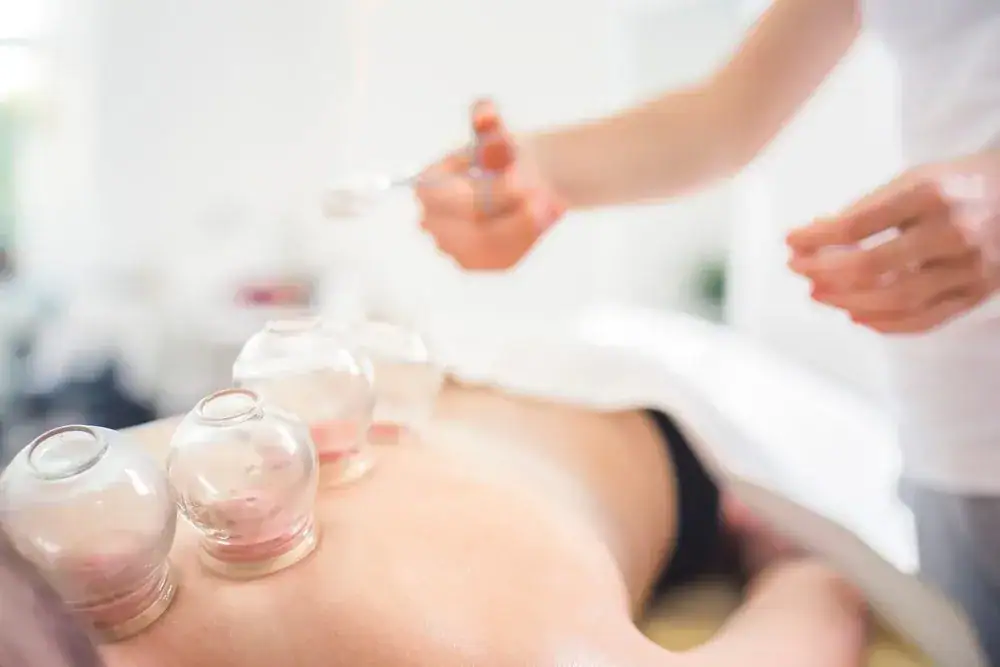
During the session, we place cups on the affected area to create suction. This lifts the tissue, increases circulation, and helps release muscle tension. Dry cupping doesn’t involve needles or incisions—it’s suction-based and safe when done by a trained therapist.
Sessions typically last 15 to 30 minutes depending on the area being treated. You might see some temporary circular marks where the cups were placed—that’s normal and fades within a few days. Most people feel looser and less restricted right after treatment.
We usually combine cupping with other physical therapy techniques like stretching, strengthening exercises, or manual therapy. That’s because cupping works best when it’s part of a bigger plan that addresses mobility, strength, and long-term function—not just short-term relief.
Ready to get started?
Cupping therapy works well for back pain, neck pain, shoulder tightness, and knee discomfort. We also use it to treat myofascial pain, sports injuries, post-surgical recovery, and chronic conditions like arthritis or tension headaches.
Mount Sinai patients often come in dealing with pain that’s been around for months or even years. They’ve tried medication, rest, or basic stretching—but nothing’s really fixed the problem. Cupping helps because it targets the deeper tissue restrictions and improves blood flow in ways that surface-level treatments can’t.
If you’re recovering from an injury, cupping can speed up healing by reducing inflammation and increasing range of motion. If you’re dealing with chronic tightness or limited mobility, it helps release the fascial layers that are keeping you stuck. And if you’re an athlete or just someone who stays active, cupping supports faster recovery and better performance.
We don’t use cupping as a standalone treatment. It’s most effective when combined with movement-based therapy, strengthening, and hands-on techniques that help your body adapt and improve over time—not just feel better for a day or two.
Yes, and the research backs it up. Studies show that cupping significantly reduces pain and improves function in people with chronic low back pain—often more effectively than medication or standard care alone.
The reason it works is because it addresses what’s happening in the tissue. Chronic back pain usually involves tight muscles, restricted fascia, and poor circulation in the affected area. Cupping mechanically lifts and separates those layers, which reduces tension and helps your body start healing instead of just compensating.
You’re not going to fix years of back pain in one session. But most people notice less stiffness and better mobility within the first few treatments, especially when cupping is combined with strengthening and movement work. That’s the difference between short-term relief and actually getting better.
Dry cupping is safe when performed by a licensed physical therapist. It’s non-invasive, doesn’t involve needles or blood, and has very few risks compared to other pain management options.
You will likely see circular marks where the cups were placed. Those aren’t bruises—they’re the result of increased blood flow to the area. The marks are temporary and usually fade within three to seven days. Some people get darker marks than others depending on how much tension or restriction is in the tissue.
If you’re concerned about visible marks, let your therapist know. We can adjust the intensity or placement based on your comfort level and what you have coming up. The goal is effective treatment that fits into your life—not something that makes you self-conscious for a week.
It depends on what you’re treating and how long the problem’s been there. Acute injuries or recent pain might respond in two to four sessions. Chronic conditions usually take longer—closer to six to eight sessions before you see lasting improvement.
Some people feel immediate relief after the first session. Others notice gradual changes over a few weeks as mobility improves and pain decreases. We track your progress and adjust the plan based on how your body responds.
Cupping isn’t a one-and-done fix. It works best as part of an ongoing treatment plan that includes strengthening, stretching, and functional movement. If you’re only doing cupping without addressing the underlying weakness or mobility issues, the pain will likely come back. That’s why we build a complete plan—not just a series of cupping appointments.
Absolutely. Neck pain and tension headaches often come from the same source—tight muscles in the neck, shoulders, and upper back that restrict movement and reduce blood flow to the area.
Cupping helps release that tension by lifting the tissue and increasing circulation. When the muscles relax and the fascia starts moving properly again, the headaches usually decrease or go away entirely. We often combine cupping with manual therapy and posture correction to address the root cause, not just the symptoms.
If your headaches are related to muscle tension, stress, or poor posture—especially if you sit at a desk all day—cupping can make a real difference. But if your headaches have other causes, we’ll identify that during the evaluation and refer you to the right specialist if needed. We’re not here to treat everything—just what we know we can help with.
In most cases, yes. Cupping is considered a physical therapy modality, so if your insurance covers physical therapy, it typically covers cupping as part of your treatment plan.
We accept most major insurance plans, including private insurance, Medicare, and Medicaid. Coverage varies depending on your specific plan, deductible, and benefits. Our team will verify your insurance before your first visit and let you know what to expect in terms of co-pays or out-of-pocket costs.
If you don’t have insurance or prefer to pay out of pocket, we can discuss pricing upfront. The goal is to make treatment accessible and transparent—no surprise bills or confusing charges after the fact. You should know what you’re paying for before you commit to anything.
The difference is training, intent, and integration. Cupping at a spa is usually focused on relaxation or general wellness. Cupping at a physical therapy clinic is a clinical treatment designed to address specific pain, dysfunction, or injury.
Our physical therapists are licensed healthcare providers trained in anatomy, biomechanics, and rehabilitation. We use cupping as part of a larger treatment plan that includes evaluation, diagnosis, and targeted interventions. We’re not just placing cups and hoping for the best—we’re treating specific tissue restrictions, improving mobility, and tracking measurable outcomes.
Spa cupping isn’t necessarily bad, but it’s not the same thing. If you’re dealing with chronic pain, limited range of motion, or recovering from an injury, you need someone who understands how to assess and treat the problem—not just provide temporary relaxation. That’s what you get at Medcare.
Other Services we provide in Mount Sinai