
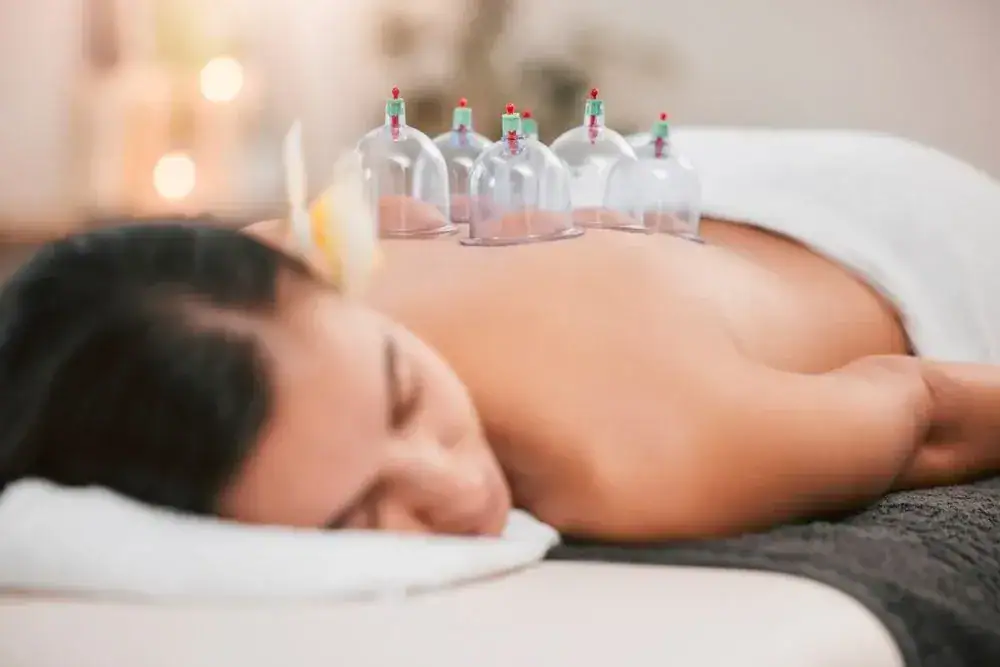

You know that deep ache in your back that won’t quit? The shoulder tension that’s been there so long you’ve forgotten what loose feels like? Cupping therapy works by creating suction on your skin that pulls blood to the surface and encourages your muscle fibers to release.
Most people feel the difference during the first session. That constant tightness starts to ease. Your range of motion improves—you can reach overhead without wincing, turn your neck without your whole body following.
The treatment itself takes 10 to 15 minutes per area. Cups stay in place while suction does the work, increasing blood flow and softening the tissue that’s been locked up. You’re not masking pain or managing symptoms. You’re addressing what’s causing the problem in the first place.
For chronic conditions like lower back pain, neck stiffness, or knee discomfort, cupping reduces inflammation at the source. Studies back this up—moderate-quality evidence shows real improvement in pain levels and mobility. You get relief that lasts beyond the appointment.
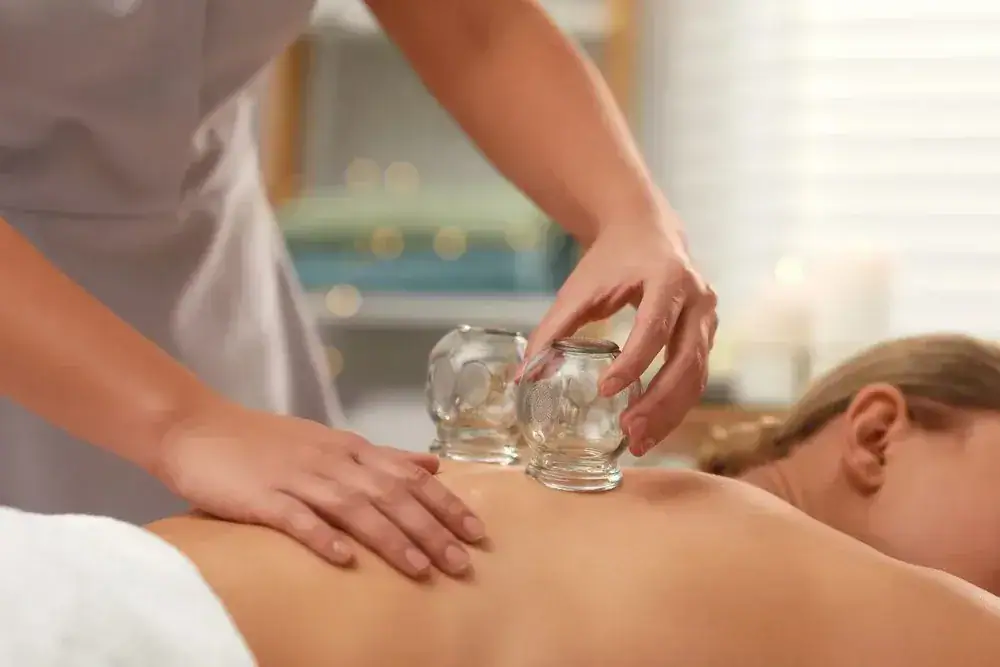
Your therapist arrives at your home in Mastic with everything needed for your session. First visit starts with an evaluation—where’s the pain, how long has it been there, what makes it better or worse. This isn’t a questionnaire. It’s a conversation.
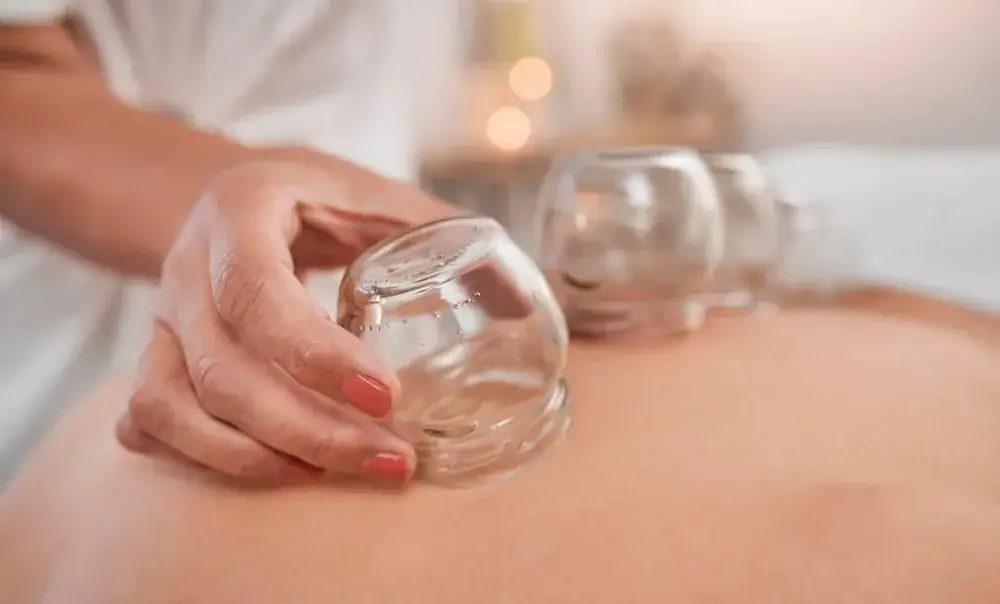
Once we understand what’s going on, we’ll explain how cupping can help your specific situation. Dry cupping uses suction cups placed on your skin over the problem areas. The vacuum effect pulls tissue upward, increasing circulation and releasing fascial restrictions that limit movement.
You’ll feel the suction, but it shouldn’t hurt. Most people describe it as a tight pulling sensation that actually feels good once muscles start to release. Cups stay in place for 10 to 15 minutes while you relax.
After we remove the cups, you might see circular marks where they were placed. These aren’t bruises—they’re areas where blood has been drawn to the surface. They fade within a few days and indicate the therapy is working.
We’ll also incorporate other techniques as needed—manual therapy, targeted exercises, movement education. Cupping is effective on its own, but it works even better as part of a complete treatment plan designed around your goals.
Ready to get started?
Cupping therapy is particularly effective for chronic muscle tension and pain that hasn’t responded well to other treatments. If you’ve been dealing with persistent lower back pain, neck stiffness, or shoulder tightness, this approach targets the deep tissue restrictions causing your discomfort.
We also treat knee osteoarthritis pain, post-surgical scar tissue that limits mobility, and sports-related muscle strains. For Mastic residents managing conditions that make leaving home difficult, in-home cupping removes the barrier of transportation while delivering the same clinical outcomes.
The treatment increases blood flow to areas that aren’t getting enough circulation. Better blood flow means more oxygen and nutrients reaching damaged tissue, which speeds recovery. It also helps reduce inflammation naturally—your body’s healing response kicks in without relying on medication.
Many of our Mastic patients are dealing with chronic pain conditions. According to recent data, over a third of adults 65 and older experience chronic pain, with 13.5% reporting high-impact pain that limits daily activities. Cupping offers a non-invasive option that works alongside your other treatments, not against them.
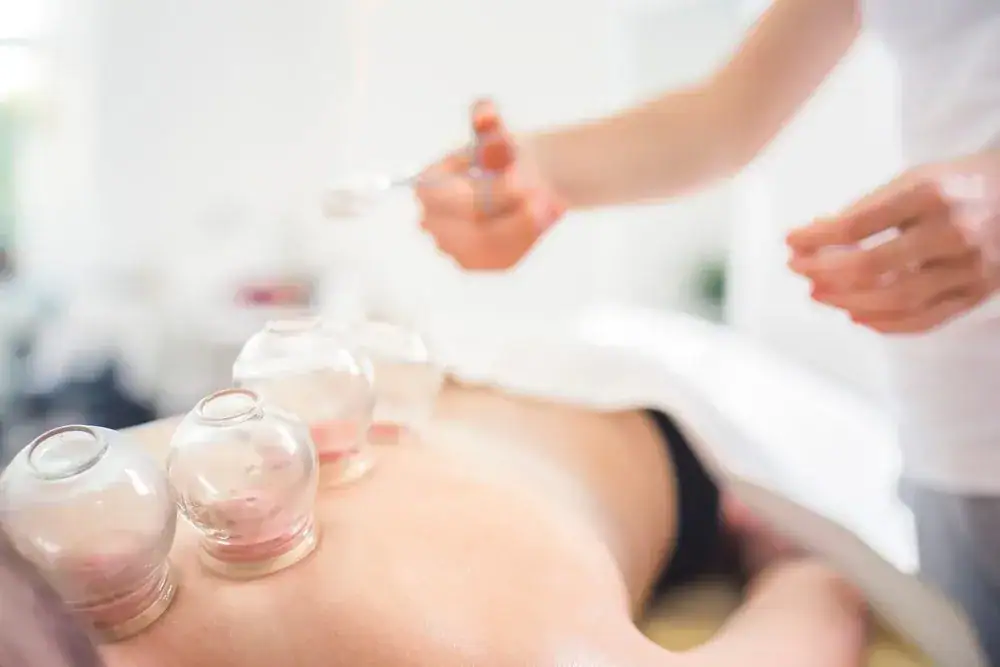
Yes, and there’s research to support it. Studies show cupping therapy significantly reduces chronic lower back pain and improves function. The mechanism is straightforward—suction increases blood circulation to painful areas, releases tight muscle fibers, and reduces inflammation in the tissue.
What makes it effective for back pain specifically is how it addresses fascial restrictions. Your fascia is the connective tissue wrapping around muscles. When it gets tight or adheres to surrounding structures, movement becomes restricted and painful. Cupping mechanically lifts and separates those fascial layers.
You’re not just getting temporary relief. Regular cupping sessions help retrain tissue to move properly again. Most patients notice improvement within three to four sessions, though chronic conditions may need ongoing treatment. The key is consistency and combining cupping with exercises that reinforce the gains you’re making.
You’ll likely see circular marks where the cups were placed, but these aren’t bruises in the traditional sense. Bruises happen when blood vessels break due to impact. Cupping marks appear because suction draws blood to the surface, which is actually part of the therapeutic effect.
The marks can range from light pink to deep purple depending on how much stagnation or restriction was in that area. More discoloration usually means more congestion in the tissue—which is exactly what we’re trying to address. They typically fade within three to seven days.
If you’re concerned about visible marks, let your therapist know. We can adjust suction intensity or place cups in areas that clothing will cover. The treatment is still effective with lighter suction, though you may need a few extra sessions to see the same results.
Medicare covers physical therapy services that include cupping when it’s part of a medically necessary treatment plan. The key is that cupping must be provided by a licensed physical therapist and used to treat a diagnosed condition—not as a standalone wellness service.
We accept Medicare and handle the documentation required for coverage. Your doctor provides a referral or prescription for physical therapy, we evaluate your condition, and if cupping is appropriate for your treatment plan, it’s included in your covered sessions.
Most commercial insurance plans follow similar guidelines. We accept nearly all major insurers serving the Mastic area. During your first call, we’ll verify your specific coverage and explain any out-of-pocket costs upfront. No surprises.
The treatment itself is identical—same techniques, same equipment, same licensed therapists. The difference is where it happens and how that affects your experience and results.
When you’re treated at home, you’re already in a comfortable environment. No stressful drive, no navigating a waiting room, no rushing to make an appointment time. For people dealing with chronic pain or mobility limitations, that alone reduces the physical and mental burden of getting care.
You also get more consistent treatment. When therapy is convenient, you’re far more likely to stick with the schedule. Consistency is what drives results with cupping—regular sessions that build on each other. We’ve seen better outcomes with home-based patients simply because they don’t miss appointments due to transportation issues or bad pain days.
Yes, and here’s why. Massage works primarily on muscle tissue from the outside in, using pressure and manipulation. Cupping works from the inside out, using suction to lift tissue away from underlying structures. It’s a different mechanical force that reaches restrictions massage can’t always address.
When you have deep fascial adhesions or scar tissue limiting movement, the pulling action of cupping is often more effective than compression. It creates space between tissue layers that have been stuck together, which is especially useful for chronic tightness that hasn’t responded to other manual therapy.
Many of our patients come to us after trying massage, stretching, and other treatments without lasting relief. Cupping doesn’t replace those approaches—it complements them. We often use cupping to release deep restrictions, then follow up with targeted exercises to maintain the mobility you’ve gained.
Most people feel some improvement after the first session—less tightness, better range of motion, reduced pain when moving. But one session won’t resolve a chronic condition you’ve been dealing with for months or years.
For acute issues like a recent muscle strain or post-workout soreness, you might only need two to four sessions. Chronic conditions like ongoing back pain, neck stiffness, or restricted shoulder mobility typically require six to eight sessions before you see significant, lasting change.
The real answer depends on your specific situation—how long you’ve had the problem, what’s causing it, and how your body responds to treatment. After your initial evaluation, we’ll give you a realistic timeline based on what we’re seeing. Some patients continue with maintenance sessions every few weeks once their pain is under control, others complete a treatment series and move on. We adjust based on your progress, not a predetermined schedule.
Other Services we provide in Mastic