

You wake up and your back doesn’t scream at you. You reach for something on a high shelf without wincing. You get through your day without constantly adjusting how you sit or stand.
That’s what effective pain relief looks like. Not just masking symptoms with another pill, but addressing the tension and restricted blood flow that’s been causing the problem in the first place.
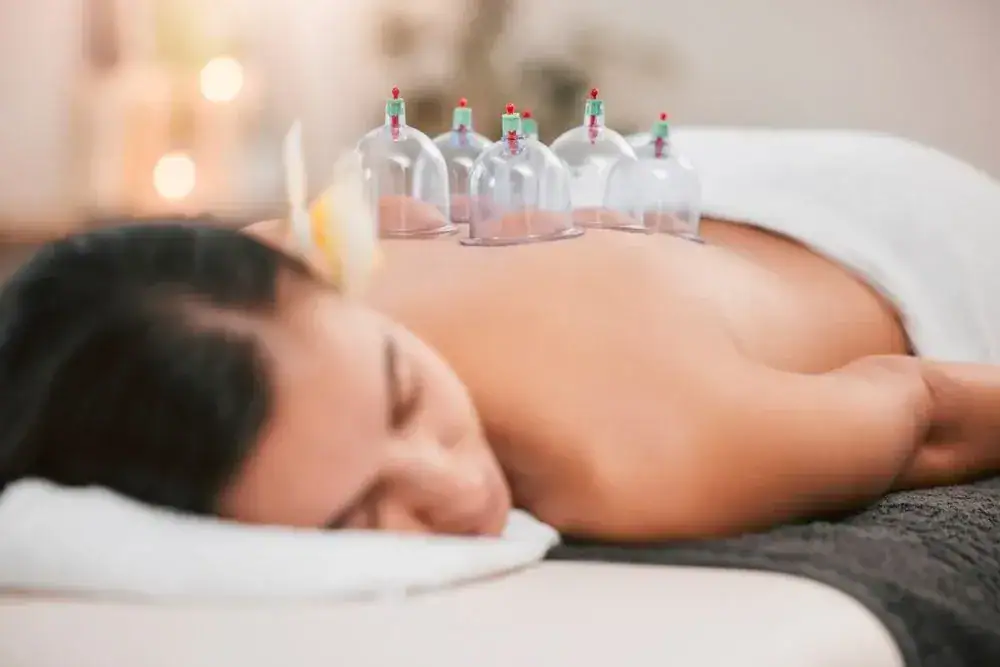
Cupping therapy works by creating suction on your skin that pulls blood to the surface, breaks up adhesions in your fascia, and helps your muscles finally relax. Most people feel some relief right after their first session. The tightness eases. Range of motion improves. You can take a full breath without bracing against discomfort.
If you’ve been dealing with chronic back pain, neck tension, or muscle soreness that won’t quit, this approach gives your body what it needs to start healing. No incisions. No prescriptions with side effects you didn’t sign up for. Just targeted treatment that works with your body’s natural recovery process.
We’ve built our reputation in Long Beach, NY by showing up consistently for patients who need real solutions. We’re not a revolving door of therapists who barely know your name.
When you come here, you get personalized treatment plans based on what’s actually wrong—not a one-size-fits-all protocol. Our team includes licensed physical therapists who understand how cupping fits into a broader recovery strategy, whether you’re an athlete trying to get back on the field or someone in their sixties just trying to garden without paying for it the next day.
Long Beach has an aging population dealing with arthritis, declining mobility, and chronic pain that makes daily life harder than it should be. We see it every day. That’s why we combine evidence-based techniques like dry cupping with manual therapy, therapeutic exercises, and patient education. You deserve to understand what’s happening in your body and how to take care of it.
First, we talk. You tell us where it hurts, how long it’s been going on, and what you’ve already tried. We assess your range of motion, check for areas of tension or restriction, and figure out if cupping is the right fit for what you’re dealing with.
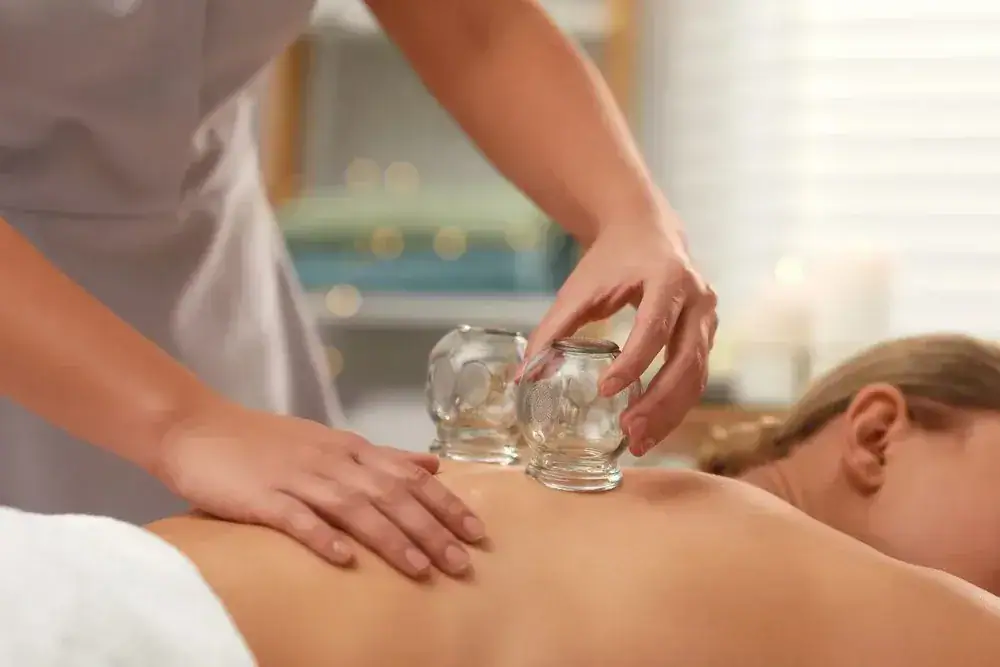
During the actual treatment, we place specialized cups on your skin—usually on your back, shoulders, neck, or wherever the pain is concentrated. The cups create suction that draws blood to the area and lifts the tissue slightly. It’s not painful. Most people say it feels like a deep tissue massage, with some pressure and pulling but nothing sharp or unbearable.
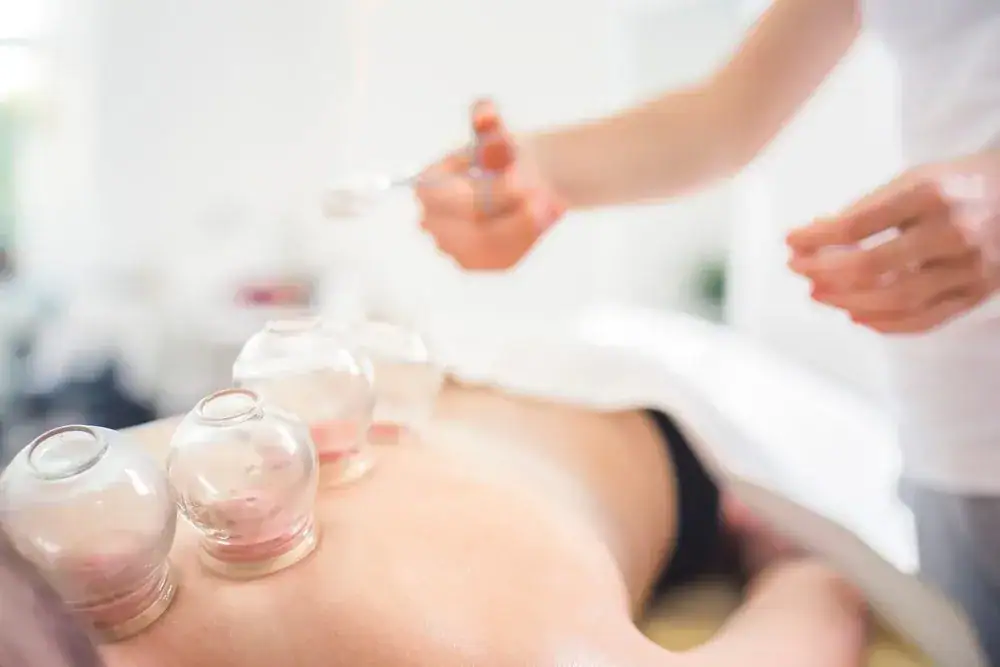
We typically leave the cups in place for five to fifteen minutes. You might see circular marks afterward—they’re not bruises, just evidence of increased blood flow to the surface. They fade within a few days.
After your session, many people notice immediate improvements in how their muscles feel. Less spasm. More flexibility. The deeper benefits build over time, especially when you come back for follow-up sessions and combine cupping with stretching or strengthening exercises we prescribe.
You’re not locked into anything. We recommend a treatment plan based on your specific condition, but you’re in control of how often you come in and what else you want to try.
Ready to get started?
Cupping isn’t a standalone miracle. It works best when it’s part of a complete plan that addresses why you’re in pain in the first place.
At Medcare, that means you’re also getting access to manual therapy techniques that loosen tight fascia, therapeutic exercises that rebuild strength and stability, and education on how to move differently so you’re not re-injuring yourself every week. We treat the whole picture.
For Long Beach residents dealing with the physical toll of aging—arthritis, osteoporosis, reduced mobility—this integrated approach makes a real difference. You’re not just getting temporary relief. You’re learning how to manage your pain long-term and maintain the progress you make here.
We also understand that getting to a clinic isn’t always easy. That’s why we offer home-based therapy options for patients who have trouble traveling. You get the same one-on-one attention and professional care, just in a setting that’s more accessible for your situation.
Insurance coverage varies, but we’ll work with you to figure out what’s covered and what your options are. The goal is to make effective treatment reachable, not to pile on more stress about costs.
It works, and there’s research to back it up. Studies show that cupping significantly improves pain and disability, with effects that often outlast standard medication or usual care. That doesn’t mean it’s magic—it means the technique addresses real physiological issues like poor circulation, muscle adhesions, and fascial restrictions that contribute to chronic pain.
You’ll find the most benefit when cupping is combined with other treatments. If you’re dealing with ongoing back pain, neck stiffness, or muscle soreness that hasn’t responded well to other approaches, cupping gives your body a different kind of input that can break the pain cycle.
Most patients report noticeable pain reduction after just a few sessions. Some feel relief immediately. The key is consistency and pairing it with exercises or lifestyle changes that support long-term recovery, not just short-term symptom management.
It depends on what you’re treating and how your body responds. For acute issues like a pulled muscle or sudden flare-up, you might benefit from sessions a few times a week initially. For chronic conditions, once a week is common until you start seeing sustained improvement.
The research suggests that weekly sessions provide the most benefit for ongoing pain management. But this isn’t a rigid rule. Some people do well with every other week once they’ve gotten past the worst of it. Others need more frequent treatment at first and then taper off as their symptoms improve.
We’ll assess your progress as we go and adjust the frequency based on what’s actually working. You’re not locked into a preset number of visits. The goal is to get you feeling better and then give you the tools to maintain that progress on your own.
Cupping is generally safe when performed by a trained professional. The circular marks you see after treatment aren’t bruises—they’re caused by blood being drawn to the surface. They typically fade within three to seven days and don’t cause any lasting damage to your skin or tissue.
The biggest risk is minor discomfort during treatment or temporary skin irritation, which is rare. If you have certain conditions like bleeding disorders, skin infections, or are pregnant, cupping might not be appropriate. That’s why we do a thorough assessment before starting any treatment.
Serious side effects are uncommon. The therapy has been used safely in hospitals and clinics worldwide for decades. As long as you’re working with someone who knows what they’re doing and uses proper technique, the risk profile is low compared to many other pain management options.
Cupping is effective for a range of musculoskeletal issues. We use it to treat neck pain, shoulder tension, knee pain, muscle soreness from overuse or injury, and general stiffness that limits your mobility. It’s also helpful for athletes recovering from intense training or people dealing with repetitive strain injuries.
Beyond pain relief, cupping improves circulation and can help with muscle recovery after surgery or injury. Some patients use it as part of their rehab for conditions like arthritis or chronic tension headaches that stem from tight neck and shoulder muscles.
It’s not a cure-all, but it’s a valuable tool for conditions where restricted blood flow, fascial adhesions, or muscle tension are contributing factors. If you’re not sure whether your specific issue would benefit from cupping, we can evaluate your situation and let you know honestly whether it’s worth trying or if another approach makes more sense.
Yes, and that’s usually how we recommend using it. Cupping works well alongside manual therapy, stretching, strengthening exercises, and other rehab techniques. When you combine treatments, you’re addressing multiple aspects of the problem at once—improving blood flow with cupping while also building stability and correcting movement patterns with exercise.
Research shows that integrating cupping into a broader physical therapy plan significantly improves both pain relief and functional capability. You get faster results and more sustainable improvement than relying on any single treatment alone.
At Medcare, we design treatment plans that make sense for your specific condition. That might mean starting with cupping to reduce acute pain and inflammation, then transitioning to exercises that prevent the problem from coming back. Or it might mean using cupping as an ongoing complement to strength work. Either way, you’re getting a comprehensive approach that’s tailored to what your body actually needs.
It depends on your insurance. Some plans require a referral from your primary care doctor before covering physical therapy services, including cupping. Others allow direct access, meaning you can schedule an appointment without seeing your doctor first.
New York is a direct access state for physical therapy, so legally you don’t need a referral to start treatment. But insurance coverage is a different story. We recommend checking with your insurance provider to understand what’s required for your specific plan.
If you do need a referral, it’s usually a quick process. Your doctor writes a script for physical therapy, you bring it to your first appointment, and we handle the rest. If you’re paying out of pocket or your plan doesn’t require referrals, you can call and schedule directly. We’ll walk you through what’s needed either way.
Other Services we provide in Long Beach